Travel has a way of pulling attention outward, toward the view, the menu, the next train to catch. That’s exactly the moment a practiced hand can slip into a bag or a back pocket without anyone noticing. Some destinations have earned a reputation for this kind of petty theft not because they’re dangerous in a broader sense, but because they combine dense crowds, famous landmarks, and a steady flow of distracted visitors.
Italy

Italy shows up at the top of nearly every European pickpocketing index compiled in recent years, and the numbers back up the reputation. Visitors to Italy’s Colosseum, Trevi Fountain and Pantheon in Rome as well as the Duomo di Milano in Milan and the Gallerie Degli Uffizi in Florence mentioned the highest volume of stolen personal items on online travel reviews, equating to 478 pickpocketing mentions for every million British visitors. Rome in particular has seen a sharp jump: the city experienced a 51.3% rise in reported robberies in 2024, with pickpocketing incidents surging to 33,455 cases.
The trouble spots follow a predictable pattern. The Colosseum, Trevi Fountain, Vatican queues, Termini train station, and Bus 64, sometimes called the “pickpocket express” from Termini to the Vatican, are prime targets, and a fake petition scam is widespread where a group surrounds a visitor with a clipboard while hands go through pockets. Crowded photo stops are another weak point, since hands can slip into open handbags during photo stops or wallets can disappear as groups squeeze past each other on narrow walkways.
France

France ranks close behind Italy in most European theft indexes, and Paris carries most of that reputation. Pickpocketing incidents are frequently reported in Paris around the Eiffel Tower and other popular spots such as the Arc de Triomphe, Cathédrale Notre-Dame de Paris, and the Louvre Museum. Fraud figures reinforce the concern, with France ranking second overall, with 212,186 travelers falling victim to con artists.
Passports and phones have become a particular focus for thieves in the capital. French authorities have issued repeated advisories warning that mobile phones and passports are now prime targets, particularly in crowded transport hubs and around the city’s major train stations, with thousands of foreign passports reported stolen each year in the capital alone. That volume of complaints is part of why officials keep pushing awareness campaigns, though the continued volume of complaints suggests that Paris will remain on any list of Europe’s most dangerous cities for tourist theft through 2026.
Spain

Spain tends to top the raw numbers when it comes to reported scams and theft affecting foreign visitors. The highest level of fraud among tourists has been recorded in Spain, where a study by Go.compare found 1,054,729 reported cases of fraud. Barcelona is usually singled out within the country, and one 2024 comparison found the pickpocketing rate in Barcelona is 25% higher than in Amsterdam and Paris.
Certain neighborhoods and transit lines carry a heavier share of the risk. High-risk zones include Las Ramblas, the Gothic Quarter, Sagrada Familia entrance queues, Park Guell, the metro (especially Line 3), and Barceloneta Beach. Officials elsewhere have echoed the same warning, noting that petty crime, including pickpocketing and bag snatching, is common in larger cities such as Madrid and Barcelona and that thieves often target tourists.
The Netherlands
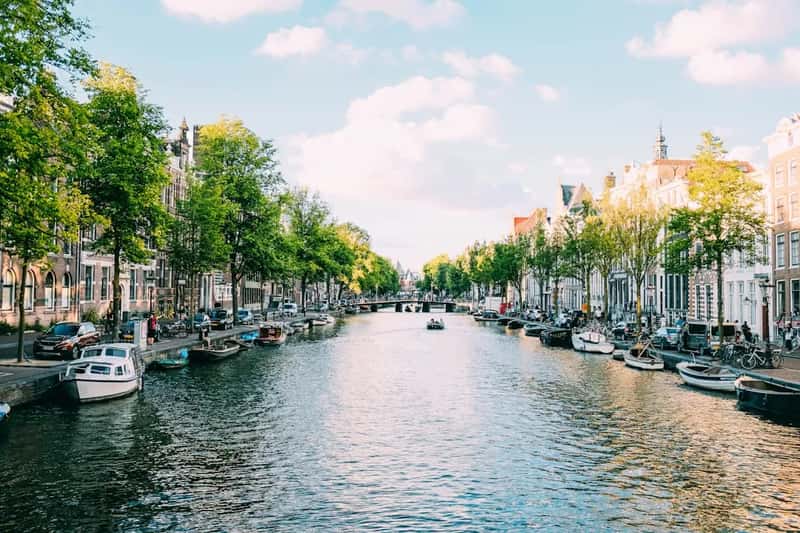
Amsterdam’s canals and nightlife draw enormous crowds, and thieves have adapted to that traffic. Amsterdam’s Red Light District is notorious for pickpocketing, with 100 mentions per million visitors, and the Anne Frank Museum and Rijksmuseum were also picked out as particularly dangerous spots. A common scam involves impersonation rather than a simple grab. Amsterdam has drawn attention for scams that exploit the city’s reputation for permissiveness and its complex network of canals and nightlife streets, with a recurring pattern of thieves posing as police officers who claim to be investigating counterfeit currency or drugs.
Official travel security guidance treats this as an ongoing, not fading, concern. Amsterdam remains one of Europe’s most theft-prone visitor environments even though the country’s violent-crime image is comparatively mild, with Quotezone ranking the Netherlands fifth in Europe and listing the Red Light District as the country’s worst hotspot. Museum queues near the Van Gogh Museum and the surrounding subway stations round out the areas where visitors are told to stay alert.
Thailand

Thailand’s shift onto this list is more recent, and it reflects a broader change in tourist theft patterns across Asia. Bangkok has been ranked the world’s number one pickpocket and scam hotspot for 2025, with the Grand Palace receiving the most mentions of scams and theft in visitor reviews globally. The scoring behind that ranking was notably high compared to other cities on the list, with Bangkok scoring 83.45 on the ranking of pickpocketing and scams hotspots worldwide.
The risk extends well beyond the capital and beyond simple pickpocketing. Phuket, Thailand’s largest island, recorded 4.14 mentions per 1,000 reviews, mostly related to jet ski scams and overcharging at tourist spots, while Pattaya faces ongoing challenges with deceptive taxi services and counterfeit product sellers. Markets and temple complexes remain the most reported locations, since the Grand Palace was marked as the worst site in the world for tourism crime, while Wat Pho and the Chatuchak Weekend Market also stood out for the number of pickpocketing and scam reports.