

Across most of the world, the legal right to end a marriage is treated as a basic civil liberty. Men and women walk into family courts with roughly equal standing, and the process, however painful, belongs to both parties. That picture changes dramatically in a handful of countries where personal status law is governed by religious or deeply patriarchal frameworks. In those places, a woman’s ability to leave her marriage is not simply a legal matter. It depends, directly or indirectly, on whether a man allows it.
The countries below share a legal architecture built around the Islamic concept of talaq, which grants husbands the unilateral power to dissolve a marriage by declaration, while wives must navigate a far more restricted and often insurmountable set of conditions. The gap is not cultural or informally tolerated. In each case, it is written into statute.
1. Afghanistan: Divorce Rights Effectively Abolished Under the Taliban
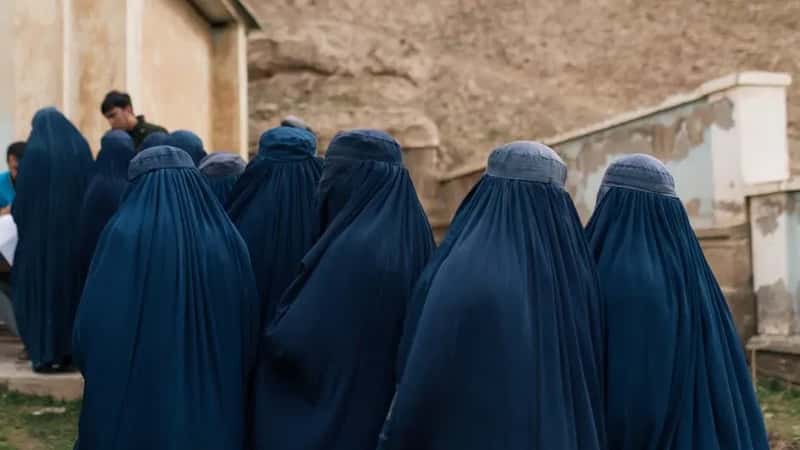
No country on this list presents a bleaker picture than Afghanistan. The Taliban have cancelled all court orders for women seeking divorce, and there is no longer a functioning legislative body in Afghanistan, nor a constitution. The absence of a constitutional framework means there is nothing to appeal to, no legal anchor that could protect a woman’s right to exit a marriage through due process.
A letter reviewed by the Afghanistan Analysts Network, sent from the Supreme Court to the Khost provincial court on April 7, 2024, stated that a judicial form of separation known as tafriq “is suspended until further notice.” That leaves women with only the most extreme and humiliating alternatives. Women are prohibited from representing themselves in court and instead must be represented by a male family member. A 2025 UN CEDAW Committee expert statement confirmed that divorce for women has become almost impossible in practice.
2. Iran: The Law on Paper, and the Reality Behind It

Iran’s Civil Code is precise in the inequality it enshrines. Under Iranian law, a man can divorce his wife without needing her consent or a specific reason. He simply needs to pay her mahrieh (promised dowry) and any other legal entitlements. Women face the opposite situation entirely. A woman could divorce only if her husband signed a contract granting her that right, could not provide for his family, violated the terms of the marriage contract, or was a drug addict, insane, or impotent.
Even when limited legal avenues exist, the institutional barriers compound the problem. According to a report by the state-run Tabnak website, notary offices across Iran, including in major cities like Tehran, Isfahan, Tabriz, and Karaj, are systematically refusing to register divorce rights for women. The consequences for women who persist are severe. Divorce proceedings initiated by women last longer in courts, often resulting in women giving up some of their rights, including the payment of mahriye, to accelerate the settlement. In 2024, Iran ranked 143 out of 146 countries assessed in the World Economic Forum’s Global Gender Gap Report, reflecting the broad scope of gender-based legal inequality in the country.
3. Saudi Arabia: Reform at the Edges, Inequality at the Core

Saudi Arabia has introduced incremental changes to its personal status system in recent years, but the foundational inequality in divorce law remains firmly in place. The three permissible methods of divorce under Saudi family law include talaq, the husband’s unilateral tool for divorce; khul’, the wife’s request for divorce contingent on her husband’s consent; and faskh, marital termination by judicial decree. The first option is available to men at will. The second two are substantially more difficult for women to access in practice.
Filing for divorce is incredibly difficult for women in Saudi Arabia. The law only permits a woman to obtain a divorce with her husband’s approval or if he has caused her harm. However, in reality, it is still extremely tough for Saudi women to obtain a judicial divorce. A February 2025 update to the Personal Status Law introduced some procedural refinements, but Saudi Arabia’s longstanding male guardianship system has historically limited women’s legal autonomy, with this system vesting male guardians with legal authority over women’s personal decisions, and the guardian’s consent remained required in multiple areas, including the woman’s marital decisions and her divorce.
4. Yemen: A Two-Tier System Written Into Statute

Yemen’s Personal Status Law creates a divorce system where the asymmetry between men and women is explicit and unambiguous. Yemeni men have the right to divorce their wives at any time without justification, while a woman must go through a process of litigation in which she justifies her reason for nullifying the marriage contract. That litigation threshold is not simply a formality. It requires producing grounds, witnesses, and navigating a court system that treats women’s testimony unequally. Before the court, a woman is considered only half a person, meaning it takes the testimony of two women to equal the testimony of one man.
A woman may seek redemptive divorce, known as khul’, by paying back the dower to the husband and forgoing all her financial rights. A khul’ divorce requires the agreement of the husband, and there is no provision in the law to authorize a judge to rule for khul’ without the husband’s consent. This means that even the route most commonly described as a woman’s independent exit still requires male approval. Family matters are often subject to customary law, particularly in rural and tribal areas, which may sometimes conflict with statutory law. In practice, this compounds the barriers further, particularly outside urban centers.
5. Pakistan: Structural Inequality Embedded in Law

Pakistan operates a dual-track divorce system where the legal experience differs dramatically depending on your gender. In Pakistan, men can use talaq divorce to end their marriage by stating three times that they want a divorce. This process must be registered with the Union Council to be validated. Women face a fundamentally different path. Women cannot divorce without providing a listed reason and following the process through court. The inequality between male and female access to divorce is written directly into the legal framework. A woman must meet a defined threshold of justification, while a man is simply required to declare his intention.
A woman can pursue khula, a wife-initiated divorce, but this route typically requires either the husband’s cooperation or a court willing to grant it over his objection, which is not guaranteed. Islamically, only the husband has the right of talaq, unless the power of talaq has also been provided to the wife in the marriage contract, known as talaq i tafweez. That provision, in theory, allows some women to negotiate divorce rights into their marriage contract beforehand, but it depends entirely on the husband’s willingness to include such a clause. Women who did not secure that right in writing at the time of marriage have no equivalent fallback.
The Broader Pattern: How Divorce Law Reflects Gender Inequality

These five countries are not outliers in a random sense. They reflect a coherent legal tradition rooted in classical Islamic jurisprudence, where divorce in Islam is permitted, but the theology provides different rules for husbands from wives. Husbands may initiate divorce through talaq, for any reason without requiring the wife’s agreement. That theological asymmetry has been absorbed into civil codes and personal status laws in ways that vary in severity but share a common premise: a woman’s exit from marriage depends on male will, judicial discretion, or both.
Divorce is a basic exercise in access to justice. It is the primary recourse for women who are victims of domestic violence, child marriage, or financial subjugation at the hands of a spouse. When that recourse is conditional on a man’s consent, the legal system effectively hands abusers a veto over their victims’ freedom. In 2024, one in four countries saw backlash on women’s rights, a reminder that legal equality is not a settled matter even beyond the five countries covered here. The countries that have moved toward reform demonstrate that change is possible, but the starting point in each of these five cases remains a legal system that does not treat women as fully independent persons before the law.