Moving abroad usually comes with a long list of worries, and medical costs sit near the top for most people. Yet a handful of European countries quietly offer something that surprises many newcomers: tax funded healthcare systems that extend to legal residents almost as generously as they do to citizens. Once the paperwork is sorted, doctor visits, hospital stays, and even chronic disease management often cost little more than a modest registration fee or a small copay.
That said, “practically free” doesn’t mean there are no strings attached. Residency status, employment, and how long you’ve lived somewhere all shape what you actually pay. Here’s a closer look at five countries where the public system genuinely delivers for expats willing to navigate the registration process.
Spain and its regionally run national health system

Spain’s public healthcare, known as the Sistema Nacional de Salud, is open to expats through several routes including employment based Social Security contributions, the S1 form for EU and UK pensioners, the Convenio Especial paid scheme, or eventual permanent residence, depending on nationality, visa, and time already spent in the country. The system is funded through general taxation and Social Security contributions, with care largely free at the point of use for those entitled to it. Administration is spread across the country rather than centralized, since 17 autonomous communities such as Madrid, Catalonia, and Andalusia each run their own regional health services.
Once entitlement is confirmed, the actual process is fairly straightforward. As one guide notes, registration is a two step process where you first prove entitlement at the INSS, then collect your regional health card at your local health center. It’s worth noting that residents only need to pay a proportion of prescription charges along with regular public health insurance payments, though dental and optical services are not covered by the SNS, so expats will need to pay for these privately or through separate insurance.
Portugal’s SNS and its trade off between low cost and long waits

Portugal’s Serviço Nacional de Saúde is a tax funded system, and legal residents, including expats with residency permits, are entitled to access it. Getting in the door means first obtaining a NIF tax number and Social Security number, then registering at the local health center. Costs for those already enrolled tend to be modest, with consultations typically costing between five and ten euros, basic emergency room visits around fifteen to twenty euros, and many services such as chronic disease treatment provided for free.
The catch, and it’s a real one, involves access rather than price. As of the end of December 2025, over 1.5 million people in Portugal were without an assigned family doctor, according to the SNS transparency portal. That’s why many expats keep a private policy to cover routine GP visits while the family doctor waiting list moves, and to access faster specialist consultations. Even so, the public safety net remains real: without a family doctor you can still use the SNS 24 phone line, walk in consultations at your health center, and emergency services.
Greece and its low cost route through the ESY system

Greece runs a public system called ESY that, according to multiple sources, provides free medical care for Greek citizens and residents, a benefit that can also extend to expats, unemployed individuals, and EU citizens. Access generally comes through work, since expats who pay into public insurance through EFKA, the main social security fund for employees and self employed workers, become eligible for care. The path starts with a specific number, because applying for public healthcare in Greece requires getting a social security number called AMKA.
For EU nationals visiting rather than settling permanently, the European Health Insurance Card still does a lot of heavy lifting. The card can be used to pay for medical services in Greece, and cardholders can visit a physician in a PEDY national primary healthcare facility and benefit from various dental procedures, though private healthcare costs aren’t covered. Once someone is properly registered through employment, the benefits extend to family too, since expat residents who pay into the Social Insurance Institute have access to free or inexpensive public healthcare for themselves and their families.
Italy’s SSN, where residency status decides your cost
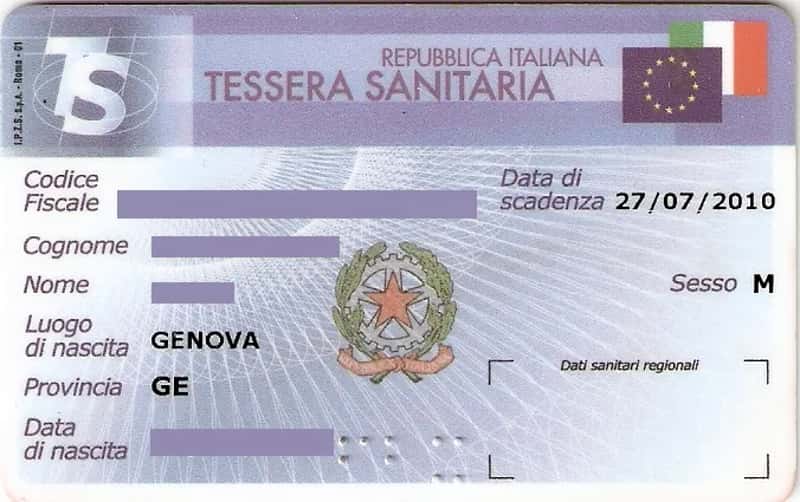
Italy’s Servizio Sanitario Nazionale is built around the idea that where you stand legally, not where you come from, determines your rights. Access to the SSN isn’t based on nationality but on legal residence status, which determines whether someone qualifies for mandatory registration, which is free, or needs voluntary registration, which involves an annual fee. For EU citizens who settle for the long run, registering with the SSN is both possible and required once official residency is secured.
The financial side has shifted recently, and it’s worth knowing about if you’re budgeting ahead. Fees before 2024 were dramatically lower, sitting around 387 euros minimum for general residents, but a 2023 law increased them substantially to bring foreign contributions closer to what Italian taxpayers pay through general taxation. Once registered, though, the coverage itself is comprehensive: the service includes general practitioners, specialist consultations, hospital treatment, prescription medications, and preventive care at minimal direct cost to registered residents, and cardholders receive a tessera sanitaria health card along with the ability to choose a family doctor.
The Czech Republic’s efficient and affordable public model

The Czech public system has a reputation for punching above its weight, and the numbers back that up somewhat. Since the country was rebranded in 1993 after the fall of communism, it has succeeded in implementing a public healthcare program considered one of the finest in the European Union. Coverage is broad rather than narrow, since public insurance generally covers everything everywhere, meaning treatment for a flu, an accident, or several chronic conditions at once happens for free in any Czech hospital.
For working expats specifically, the contribution structure is fairly clear. Employees pay four and a half percent of gross salary for public health insurance, with the employer matching that with nine percent, while self employed expats pay a minimum of roughly 2,968 koruna per month, about 120 euros, calculated on the minimum base. EU citizens moving for work don’t have to wait long for coverage either, since those working in the Czech Republic are automatically enrolled in the public system.
Final thoughts on chasing affordable care in Europe
None of these five systems hand out completely free care to anyone who shows up. What they offer instead is something arguably better for long term planning: a clear, legal path where paying into the system, whether through payroll taxes, a modest annual fee, or Social Security contributions, unlocks care that would cost a fortune elsewhere.
The trade offs differ by country. Spain and the Czech Republic tend to reward people who work locally, Portugal and Greece ask for patience with waiting lists and paperwork, and Italy’s costs now depend heavily on which registration category applies to you. Anyone seriously considering a move should treat these systems as a starting point for research rather than a guarantee, since rules shift from year to year and region to region within each country.