South America rewards travelers who ditch the rental car and just start walking, but only in certain places. The continent’s geography swings from flat river deltas to Andean peaks thousands of meters above sea level, and that terrain has everything to do with whether a city feels like a pleasant stroll or an exhausting climb.
Some capitals have spent the last decade widening sidewalks, adding pedestrian-only streets, and building bike lanes to encourage foot traffic. Others simply cannot escape their own elevation or crumbling infrastructure, no matter how much charm they offer. Here is a closer look at where to lace up your walking shoes, and where you might want to hail a cab instead.
Buenos Aires, Argentina
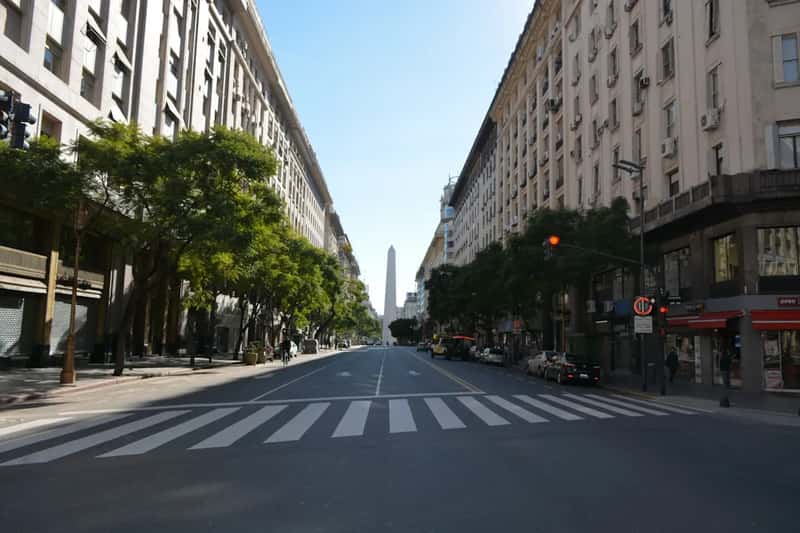
Buenos Aires stands out as the only South American city to crack the global top twenty for walkability, landing at fifteenth place in a recent AllClear ranking. The Argentine capital’s historic neighborhoods, pedestrian zones, and vibrant street culture contribute to its walkability. The city is largely flat, which removes the elevation headaches that plague so many of its neighbors.
Local authorities have backed this up with real investment rather than just good luck. Increasing sidewalk space and building networks of bicycle lanes have put Buenos Aires on the map as the most bicycle and pedestrian-friendly city in Argentina. Neighborhoods like Palermo, Recoleta, and San Telmo each have their own walking rhythm, and the Subte subway system fills in the gaps when a neighborhood is too far to cover on foot.
Santiago, Chile
Santiago has quietly become the walkability benchmark for the whole region. Recent international urban livability and mobility rankings have put Santiago, Chile, firmly in the spotlight, crowning it the most walkable city in South America. Much of that reputation comes down to its compact layout and the Andes framing nearly every view.
Specific neighborhoods do the heavy lifting here. Large parts of the city, especially neighborhoods like Providencia, Lastarria, Bellas Artes, and Ñuñoa, are designed around walkable streets, wide sidewalks, parks, cafés, museums, and cultural venues within short distances. On top of that, every Sunday from 9am to 2pm, thanks to the CicloRecreoVía initiative, many of Santiago’s main streets are converted into cycle-only zones, with more than 40,000 people cycling across the city.
Montevideo, Uruguay
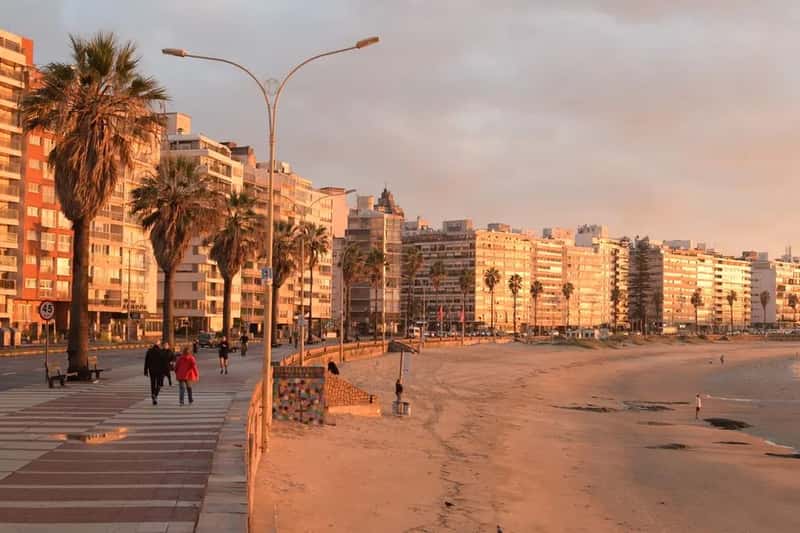
Montevideo rarely gets the same tourist buzz as Buenos Aires or Rio, but it may be the most underrated walking city on the continent. Montevideo is notably walkable, especially in areas like Ciudad Vieja and along the Rambla, and the city’s compact central layout allows travelers to accomplish many daily errands on foot. The Rambla, a coastal promenade stretching for miles along the Río de la Plata, is one of the more relaxing urban walks anywhere in South America.
Uruguay’s broader reputation for calm, orderly cities plays a role too. Uruguay is generally considered the safest country in South America for family travel, and Montevideo is calm and walkable, while Colonia del Sacramento is gentle and pedestrian-friendly. The city does have some rough patches on its sidewalks, but nothing that seriously disrupts a day of exploring on foot.
Cartagena, Colombia
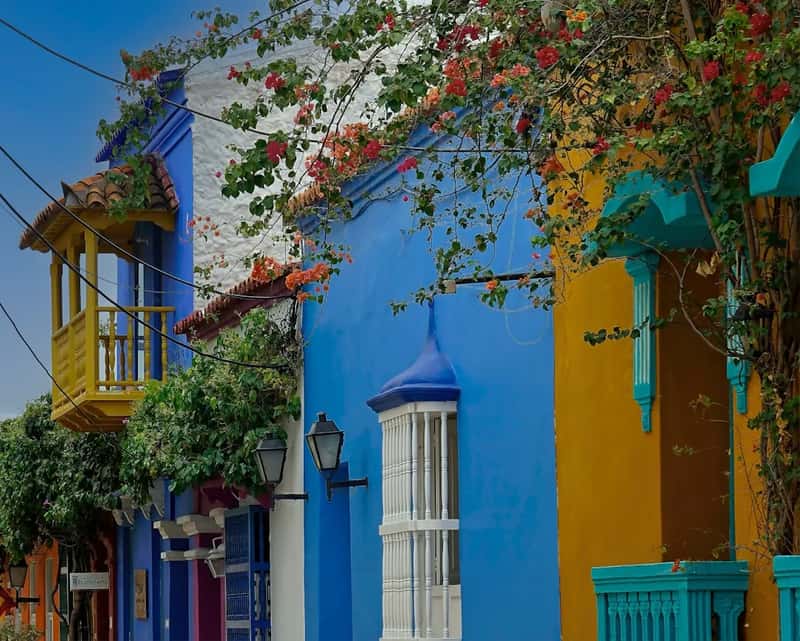
Cartagena’s walled colonial core is one of the most visually rewarding places to walk in the entire region. Cartagena’s walled old city is one of the most photogenic urban spaces in South America and is generally considered safe for tourists during the day. The flat, compact layout inside the old walls makes it easy to cover the entire historic district without ever needing transport.
That said, the city’s walkability is not uniform once you step outside the tourist core. It sits toward the bottom of some regional safety rankings because the neighbourhood gradient is steep, meaning conditions change quickly block by block. Visitors who stay within the walled city and Getsemaní tend to have the smoothest experience, with narrow cobblestone streets built for foot traffic rather than cars.
Lima, Peru
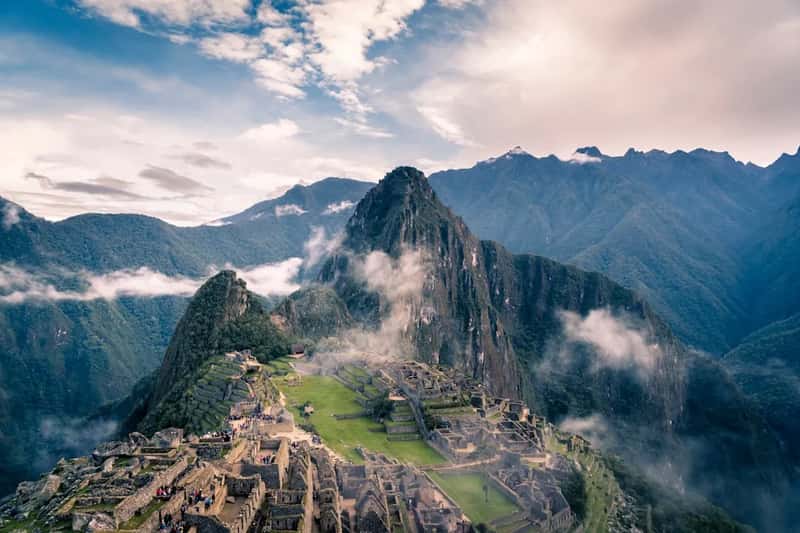
Lima is a sprawling metropolis, but its coastal neighborhoods punch well above their weight for walkability. Miraflores, San Isidro, and Barranco all feature clifftop parks, wide boardwalks, and a density of cafés and shops that rewards wandering rather than driving. Latin American cities such as Santiago, Medellín, Mexico City, Buenos Aires, Cartagena, Cusco, Bogotá and Lima confirm that walkable visitor districts are not limited to Europe.
The comparison to safer, more compact cities is telling. Lima’s tourist neighbourhoods are comparable to Cusco’s centre when you stay inside them, though the risk profile changes dramatically by district. Stick to the well-trodden coastal districts, and Lima becomes one of the more pleasant surprises for walkers in South America.
La Paz, Bolivia (avoid)
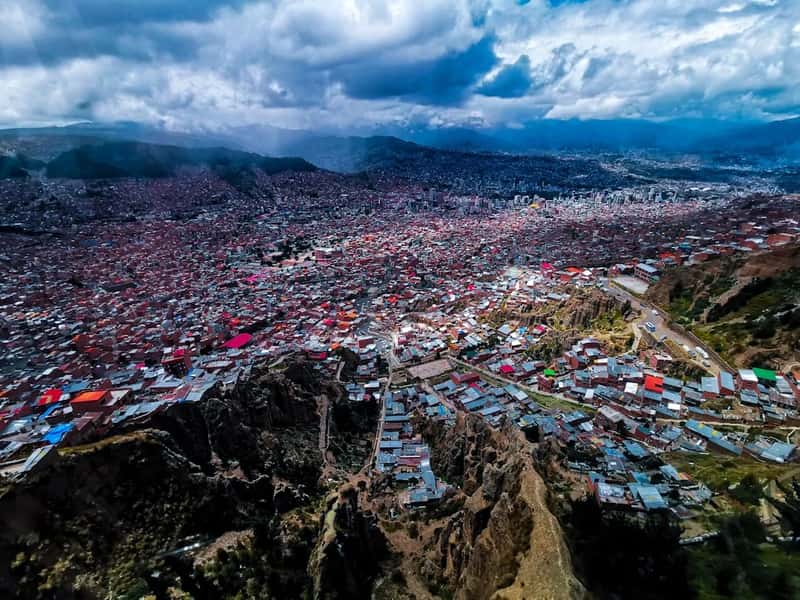
La Paz sits at the opposite end of the spectrum from Santiago or Montevideo, and altitude is the main culprit. Bolivia’s La Paz has been ranked as the most challenging city for pedestrians, scoring 99.6 out of 100 on a Walking Difficulty Score, with its high altitude and steep streets presenting unique challenges for those navigating the city on foot. Even short walks between neighborhoods can feel like a hike given the thin air above 3,600 meters.
The city’s dramatic topography, carved into a canyon, means streets rarely run flat for more than a block or two. Visitors often find themselves out of breath simply crossing a plaza, let alone covering the kind of distances that feel effortless in a place like Buenos Aires. La Paz has plenty of cultural rewards, but it demands a cable car or taxi far more often than a good pair of walking shoes.
Bogotá, Colombia (avoid)
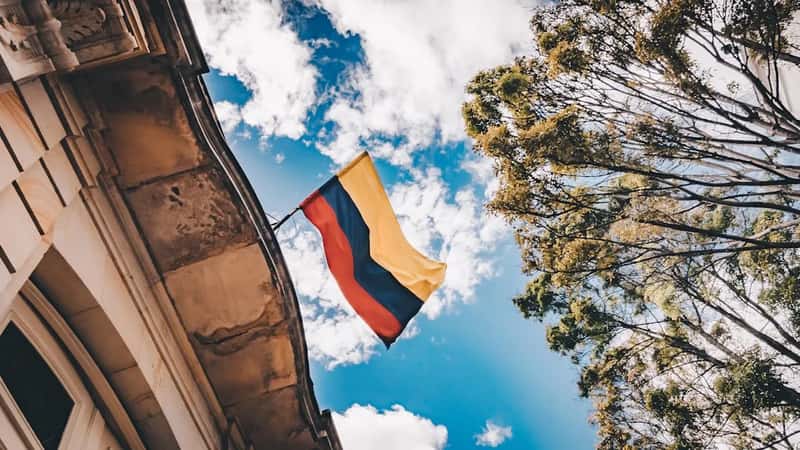
Bogotá presents a strange contradiction. On paper, it performs well on certain planning metrics, yet on the ground it consistently ranks among the toughest cities in the world for pedestrians. Bogotá, Colombia’s high-altitude capital, ranks as the second least walkable city with a score of 94.5, and despite improvements in pedestrian infrastructure, the city’s location in the Eastern Cordillera contributes to its challenging terrain.
Altitude is only part of the problem. Similar to other cities in South America, many of Bogota’s sidewalks and curb ramps have fallen into disrepair, with large cracks and potholes in the pavement. Add in the elevation change and the general wear on pedestrian infrastructure, and Bogotá becomes a city better explored in short bursts, with a taxi or the TransMilenio bus system covering the rest.
Final thoughts
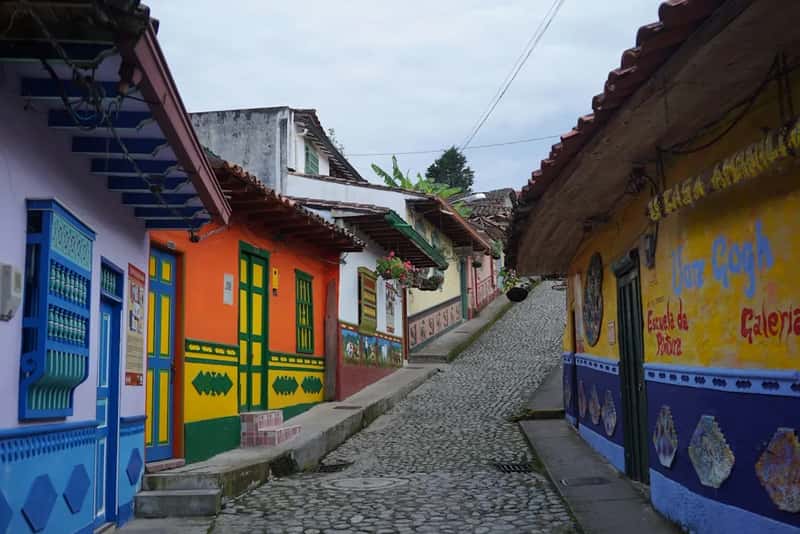
The pattern across South America is fairly consistent. Flat, coastal, or lowland cities like Buenos Aires, Santiago, and Montevideo have invested in sidewalks and pedestrian zones and it shows in how effortless they feel on foot. Cities built into mountains or high plateaus, no matter how historic or beautiful, often ask more of a pedestrian’s lungs and knees than most travelers expect. Knowing which category a destination falls into before you pack your bags can save a trip from turning into an unplanned cardio workout.