Most Americans still get behind the wheel every morning, and for good reason: in the vast majority of the country, a bus or train simply can’t compete with a car on convenience. But a small handful of cities have built transit networks dense enough, frequent enough, and fast enough that skipping the car isn’t a sacrifice. It’s the smarter move. Americans lost an average of 63 hours to traffic delays in 2024, the highest level ever recorded, according to the Texas A&M Transportation Institute’s Urban Mobility Report[1], and that number alone changes the math in places where rail and bus systems can sidestep the gridlock entirely.
Money matters too. Owning and operating a new vehicle costs an average of $11,577 a year, according to AAA’s 2025 Your Driving Costs analysis[1]. In cities where parking is scarce and tolls are steep, that number climbs even higher. Here are the five U.S. cities where the numbers, the infrastructure, and the daily experience all point toward transit as the genuinely better option.
New York City

New York remains the one city in America where owning a car is optional rather than assumed. Citywide, nearly 71% of New York households have access to at least one vehicle, according to the latest data, while NYC still maintains the lowest car ownership rate in the nation at around 45.6% for the city proper[2]. That gap shows up in daily commuting habits too, since of the 3.8 million workers in the city, only 27 percent commute via car, truck, or van, while only 8 percent of Manhattanites drive to work[3]. The subway simply covers more ground, more often, than a car ever could in Manhattan traffic.
Ridership numbers back up the trend. 2025 subway ridership increased to 1,282 million, up 7.3% year-over-year and reaching approximately 75% of 2019 pre-pandemic levels[4]. Part of that surge likely traces back to a major policy shift, since congestion pricing in Midtown and Lower Manhattan, which took effect in January 2025, may be partly why ridership keeps climbing, as more commuters shift away from driving downtown[1]. Weekend service has improved as well, with the MTA increasing weekend service on subways by more than 5 percent compared to 2019, and on-time performance rising to 86.6 percent in 2025, up from 80.5 percent in 2022[5]. For anyone weighing a car against a subway card in New York, the subway wins on nearly every practical measure.
Washington, D.C.
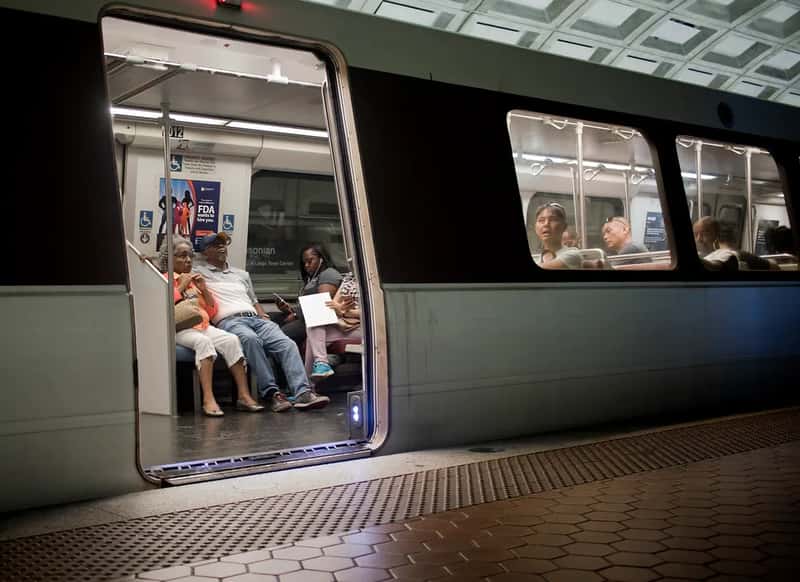
Washington doesn’t have New York’s density, but it has something almost as valuable: a transit system that closes the time gap with driving better than nearly anywhere else in the country. The typical transit commute in the District is just 8.6 minutes slower than the typical commute time for a driver, the smallest difference among cities in which a significant percentage of the population relies on transit[6]. That’s a remarkably tight margin, especially once you factor in the stress and cost of navigating D.C.’s notoriously congested downtown streets and pricey parking garages.
The tradeoff is cost. One drawback to public transportation in D.C. is the cost, since the District has some of the highest fares for transit of any U.S. city, with a monthly pass costing more than $230[6]. Still, when you weigh that fare against the expense of owning a car, insuring it, and paying for downtown parking, transit often comes out ahead financially as well as in raw commute minutes. For federal workers and downtown professionals who don’t want to fight Beltway traffic twice a day, Metrorail and Metrobus remain the rational choice.
Boston
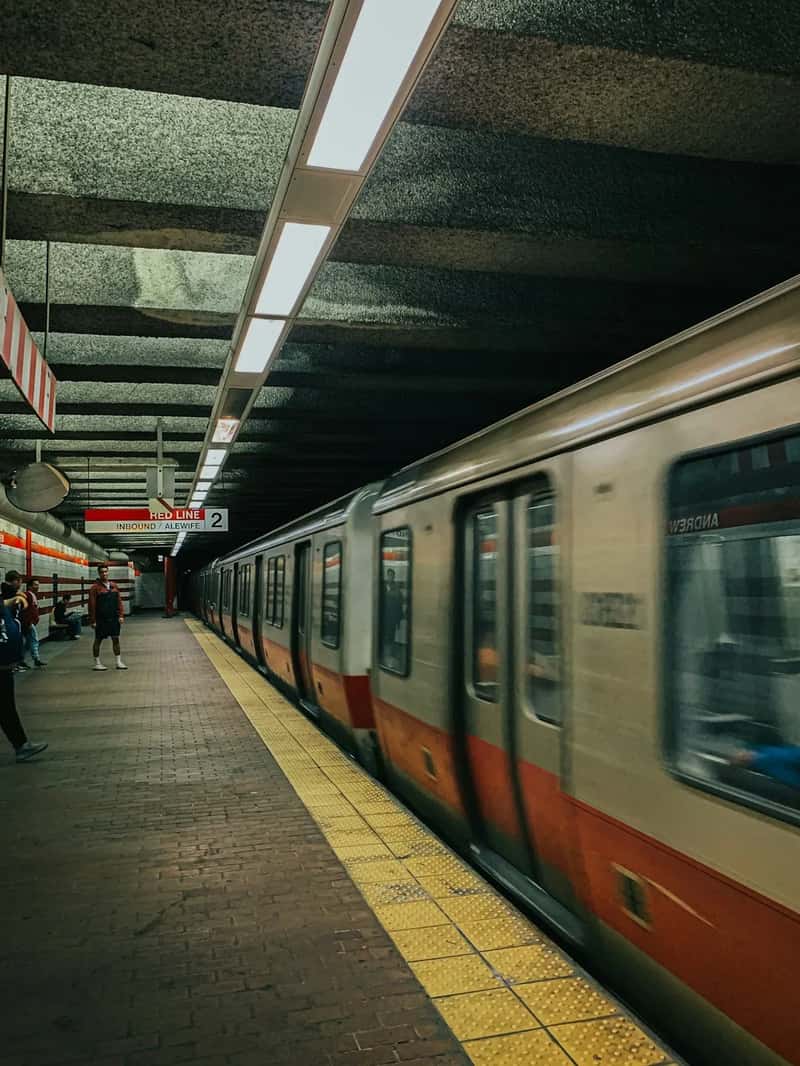
Boston built its identity around walkable neighborhoods and a subway system old enough to be nicknamed simply “the T.” The Massachusetts Bay Transportation Authority handles all public transportation in Boston through a subway system consisting of five separate lines and an extensive bus network, handling about 390 million rides per year[6]. That scale matters in a city where narrow colonial-era streets were never designed for modern car volume.
Boston also stands out for how many residents skip both cars and trains entirely. The percentage of commuters that primarily use transit to get to work in Boston is 34%, fifth highest in the U.S.[6] A big part of that comes from the city’s academic population, since college towns tend to have the highest share of walking commuters, and Boston, home to 44 institutions of higher learning, overperforms[7] on foot traffic alone. Between walkers and transit riders, a huge share of Boston’s workforce never has to sit in the city’s infamous traffic at all.
San Francisco
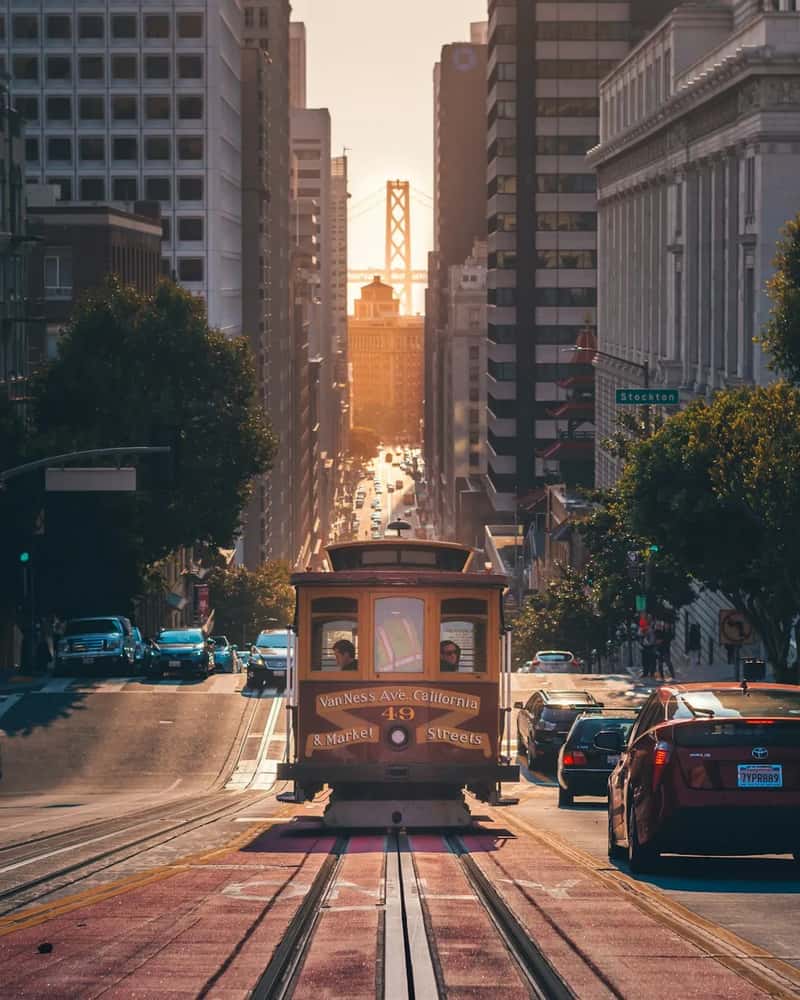
San Francisco pairs a genuinely useful transit network with one of the most bike-friendly cultures in the country, and together they make driving feel almost unnecessary for city residents. Muni, the San Francisco Municipal Railway, operates a system of buses and light rail trains that handles over 220 million passenger rides every year[6], and it connects seamlessly with BART for anyone commuting in from the East Bay. BART moves commuters to and from nearby cities such as Oakland and Berkeley[6], extending the reach of San Francisco’s transit far beyond city limits.
The system’s quality shows up in independent rankings too. San Francisco holds the second-highest Transit Score in the United States, rated at 77.1 by Walk Score based on access to rail, bus, and frequency of service[8]. Add in the city’s cycling culture, where San Francisco leads in the share of commuters who bike to work, likely due to its favorable weather conditions and strong biking culture and infrastructure[7], and you get a city where a car often becomes more liability than asset, given the hills, the parking scarcity, and the notoriously snarled bridge approaches.
Chicago
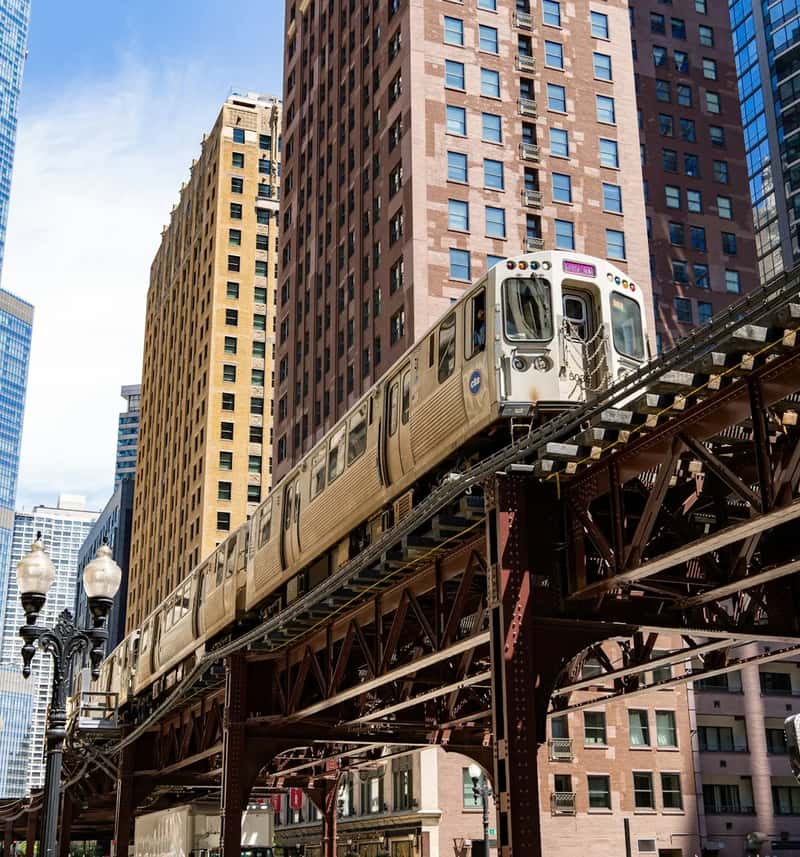
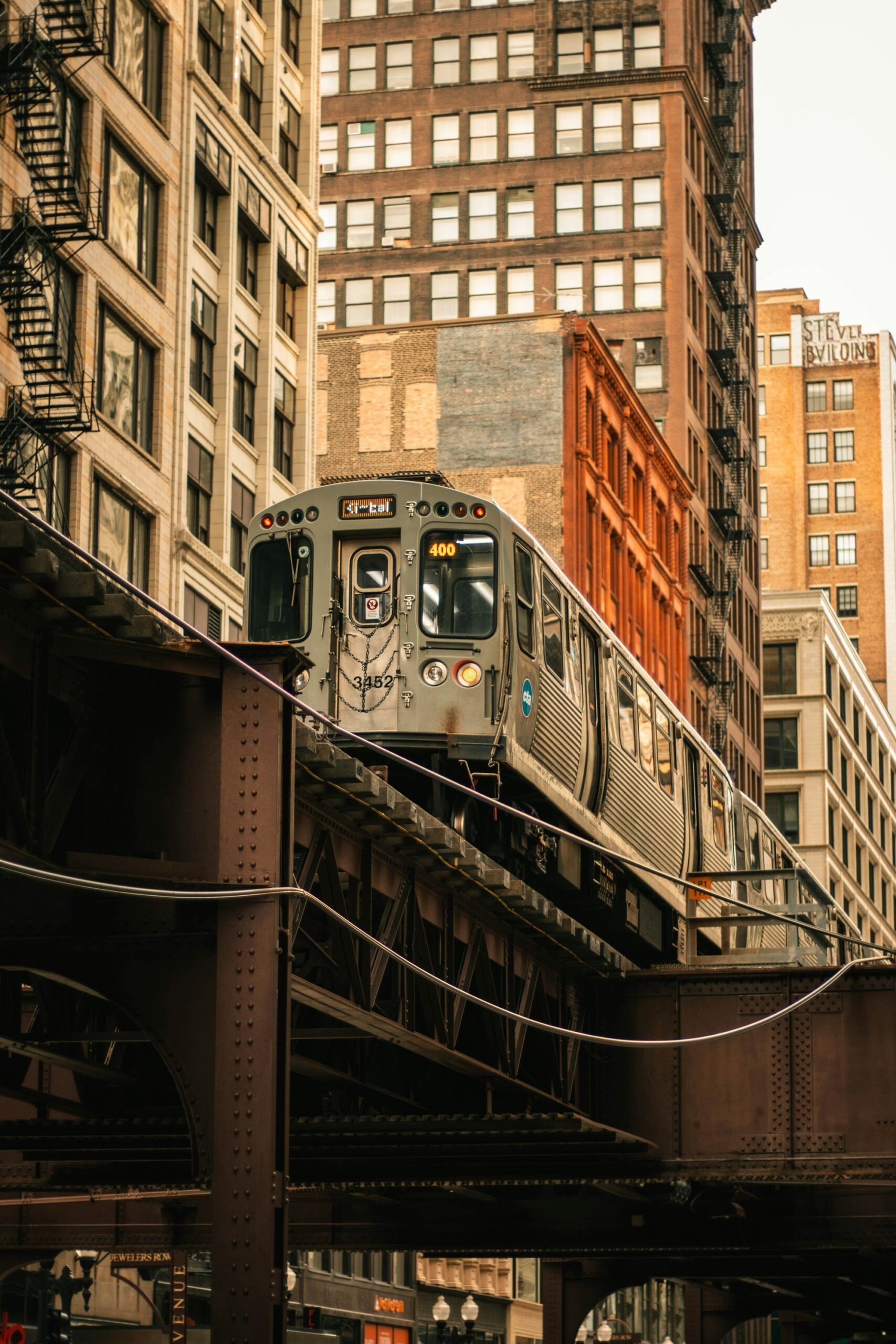
Chicago’s transit system has a claim few American cities can match: it’s simply been around longer, and it shows in how thoroughly it’s woven into the city’s geography. Chicago’s transit system is among the oldest in the U.S., having been in operation since 1892, when the South Side Rapid Transit began operation[6]. The elevated L train and an extensive bus grid give Chicagoans a way to cross the city’s sprawling footprint without ever touching the Kennedy or Dan Ryan expressways during rush hour.
That matters because Chicago’s roads are consistently ranked among the most congested in the country, with commuters facing long delays whether they’re headed downtown from the North Side or the South Side. The Metra commuter rail system extends that reach even further into the suburbs, giving residents of the broader metro area a genuine alternative to driving into the Loop. For a city built on a grid that predates the automobile, it’s fitting that its train network still does a better job moving people than its highways do.
None of these five cities have solved every transit problem. Fares are climbing in some, service gaps persist in others, and suburban commuters everywhere still face longer, less convenient options than their downtown-dwelling counterparts. Still, in New York, Washington, Boston, San Francisco, and Chicago, the numbers tell a consistent story: dense populations, mature rail networks, and genuinely painful driving conditions have combined to make transit not just an alternative, but often the smarter bet. For millions of residents in these five cities, the daily question isn’t whether to drive or ride. It’s simply which train to catch.