
Retirement math has changed for a lot of people. Pensions stretch less far than they used to, healthcare costs at home keep climbing, and the idea of trading a shrinking nest egg for a smaller, quieter life abroad has stopped sounding like a fantasy and started sounding practical. The countries below aren’t obscure hideaways with spotty plumbing. They offer reliable internet, modern hospitals, and established expat communities, all while costing a fraction of what a comparable lifestyle runs in the United States, Canada, or Western Europe.
What ties these six places together is a combination of low everyday costs and legal, workable paths to residency. None of them require you to rough it. You can still get good coffee, see a competent doctor, and find people who speak your language, just without the financial pressure that comes with retiring somewhere expensive.
Portugal: Europe’s most accessible retirement visa

Portugal remains the country most people mention first when they start researching retirement abroad, and the numbers explain why. As of June 2026, the cost of living in Portugal is roughly 31 percent lower than in the USA, including rent, and almost 27 percent lower than in the UK, according to Numbeo. The country’s D7 visa, often called the Passive Income Visa, is built specifically for retirees living off a pension, rental income, or dividends rather than a job.
To qualify, applicants need a stable passive income of €920 per month in 2026 and minimum savings amounting to €11,040 annually. That is one of the lowest thresholds anywhere in Europe. Day to day life is manageable too, since a single person can live comfortably outside Lisbon or Porto for €1,500 to €2,000 per month. Choose a smaller town in the Alentejo or the interior and your budget stretches even further, all while you keep access to Portugal’s public healthcare system and the wider Schengen Area.
Panama: the dollarized retiree’s paradise with legal discounts

Panama built its entire retirement program around making foreigners feel financially comfortable the moment they arrive. The Pensionado Visa is a residency permit that allows you to retire in Panama for life, so long as you have a lifetime pension or annuity of at least $1,000 USD per month. Unlike most countries, approval grants permanent residency right away rather than a temporary status you have to renew year after year.
What makes Panama unusual is the legal discount structure that comes with the visa. Discounts under Law 6 of 1987 include 50% off hotels on weekdays, 50% off entertainment, 25% off restaurants, 25% off airline tickets, 25% off utilities, 20% off private doctor visits, 15% off hospital bills, and 10% off prescription medications. Because the balboa is pegged to the US dollar, there’s no currency guesswork either. Retirees who settle in Boquete, Coronado, or Panama City generally find that a couple can live comfortably on $2,000 to $3,000 per month.
Mexico: proximity and community for North American retirees

Mexico’s appeal is straightforward: it’s close, familiar, and full of other expats who’ve already figured out how to make the transition work. Roughly 1.5 million Americans live there, drawn by proximity, low cost of living, established expat communities, and direct flights to most US airports. Cities like Mérida, Lake Chapala, and Querétaro have built genuine retiree infrastructure over the past two decades, from English-speaking clinics to social clubs.
Budgeting is fairly predictable, with a realistic monthly retirement budget running $1,500 to $2,500 depending on city and lifestyle. It’s worth knowing that visa paperwork got stricter recently. Mexico tightened the financial requirements in 2025 to 2026 and consulates now use UMA-based calculations, with most consulates requiring around $4,400 per month in net income for a Temporary Resident visa, or roughly $70,000 to $80,000 in proven savings over the past 12 months. That’s a higher bar than it used to be, but plenty of retirees with modest pensions still clear it through savings rather than income alone.
Colombia: affordable spring weather for pensioners

Colombia has quietly become one of Latin America’s more compelling retirement stories, helped along by a climate that barely changes month to month in cities like Medellín. The cost of living there can be 70 percent less than in the United States and Canada, and in places like Medellín, the climate is perfect year round. The country’s Pensionado visa, a type M migrant visa, doesn’t set an age minimum, which is unusual among retirement programs.
The visa is intended for foreigners who earn more than three times the Colombian minimum wage through a pension, social security, or disability payment, around $1,410 USD per month in 2026. Once settled, most retirees find that a comfortable, high-quality retirement lifestyle in Colombia typically costs between $1,500 and $3,000 USD per month depending on lifestyle and city of choice. Medellín in particular has earned its nickname, since it enjoys year-round temperatures of 17 to 28 degrees Celsius, has the largest expat community in the country, and offers excellent infrastructure alongside world-class restaurants.
Vietnam: Southeast Asia’s rock-bottom cost of living

If pure affordability is the deciding factor, Vietnam is hard to beat. It has the lowest cost of living on most comparison lists, with a single retiree able to live well on $1,000 to $1,500 per month outside Hanoi and Ho Chi Minh City. Coastal cities like Da Nang and Nha Trang have become favorites for their beaches, mild winters, and slower pace of life.
The catch is visas. Vietnam doesn’t offer a dedicated retirement visa, which forces most expats into workarounds, since Vietnam doesn’t have a retirement visa at all. Most retirees rely on renewable tourist visas or periodic visa runs to neighboring countries instead. Even with that inconvenience, the savings can be significant, since Vietnam has even lower rents than Thailand in many cities, and a couple might live well on $1,200 a month in Da Nang or Nha Trang.
Greece: Mediterranean living without the Western Europe price tag
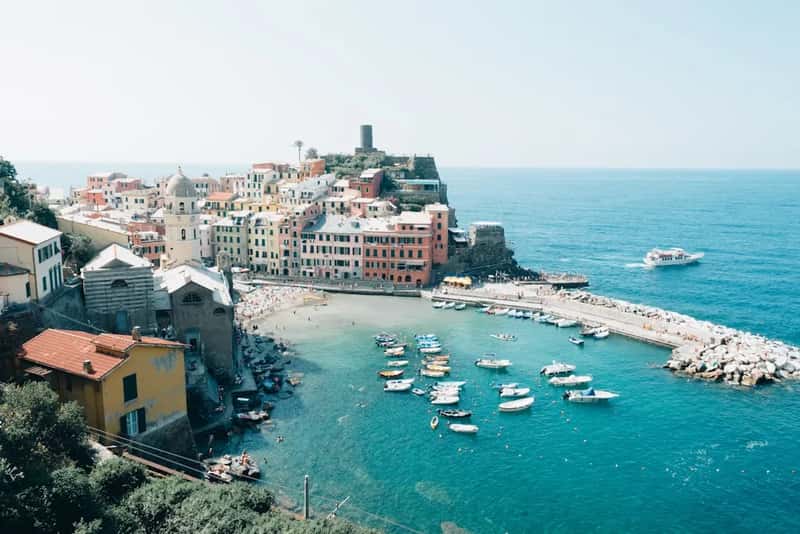
Greece has moved up fast on retirement rankings, and the appeal isn’t hard to understand once you factor in the climate and the price gap with the rest of Western Europe. Greece has leapfrogged to the top spot for 2026 thanks to its sun-soaked climate, with more than 300 sunny days a year, affordable living, and a welcoming Mediterranean lifestyle. The pace of life outside Athens tends to be unhurried, and island living remains within reach for retirees on a modest budget.
Costs vary by region, but the general picture is encouraging. Average monthly costs run roughly €1,500 for a single retiree and €2,500 to €3,000 for a couple, including rent. Many people who move there report even bigger savings than that estimate suggests, since many expats live on about one third of their former US budget in Greece. Combined with EU healthcare access and a genuinely dramatic change of scenery, it’s easy to see why so many retirees now put Greece near the top of their list.
Final thoughts

None of these six countries ask retirees to choose between affordability and comfort. Portugal and Greece offer EU healthcare and infrastructure at a discount, Panama and Colombia give Latin America’s climate and community at a fraction of North American prices, and Mexico and Vietnam prove that proximity or sheer low cost can each be a reason on their own. The right fit ultimately depends on what matters most to an individual retiree, whether that’s healthcare access, visa simplicity, climate, or just how far a fixed income can realistically stretch. What’s clear across all six is that a comfortable retirement no longer has to come with a large price tag attached.