There’s a quiet assumption most people carry into a chocolate shop: that the countries growing the most cocoa must also be the ones making the best chocolate. It’s a reasonable guess, and it’s mostly wrong. The nations that harvest the beans and the nations that turn them into something worth savoring are, more often than not, entirely different places, separated by oceans, decades of craft tradition, and very different economic incentives.
That gap between growing and making is really what this ranking is about. Some countries here supply the raw material the whole industry depends on, yet rarely taste the finished product themselves. Others import nearly every bean they use and still manage to define what “good chocolate” even means. Ranked from the least polished reputation to the most refined, here are six countries shaping the chocolate on shelves worldwide.
1. Ivory Coast: the bean powerhouse with a limited finished product
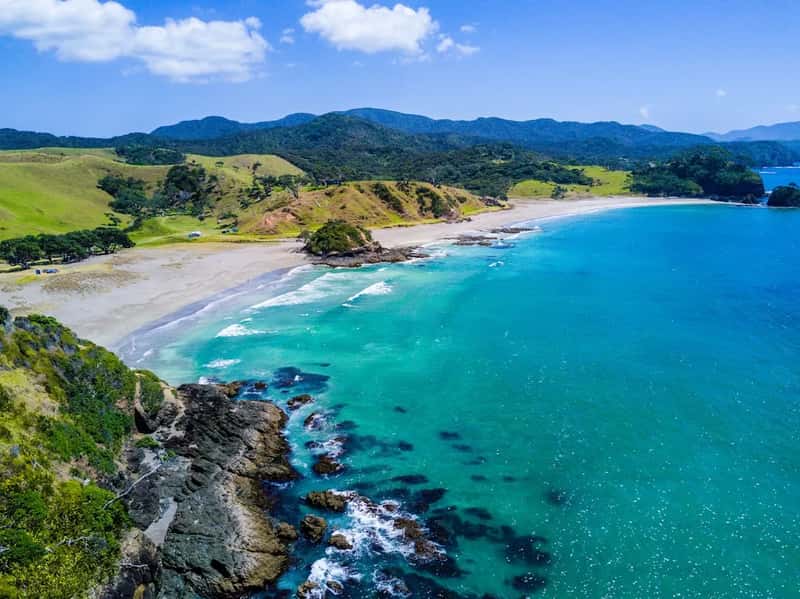
No country grows more cocoa than Ivory Coast. The country supplies over 30% of the world’s cocoa beans, with production reaching 2,200,000 tonnes in the 2024/2025 season. The cocoa industry accounts for 40.2% of the country’s export income and employs approximately 600,000 farmers, with roughly 6 million people relying on the sector to survive. As of 2022, Ivory Coast was the world’s largest exporter of cocoa beans, with exports totalling $3.33 billion.
What Ivory Coast doesn’t have, at least not yet, is much of a domestic chocolate industry to match its farming scale. Less than 5 percent of the cocoa produced there is estimated to go into local confectionery production or beverages. A handful of companies are trying to change that. Chocolate manufacturer CEMOI supports cooperatives in artisanal chocolate production, seeking to develop an Ivorian chocolate market. It’s a start, but for now the country remains the world’s cocoa farm rather than its chocolate kitchen, which is exactly why it sits at the bottom of this list.
2. Ghana: reliable beans, a chocolate identity still forming
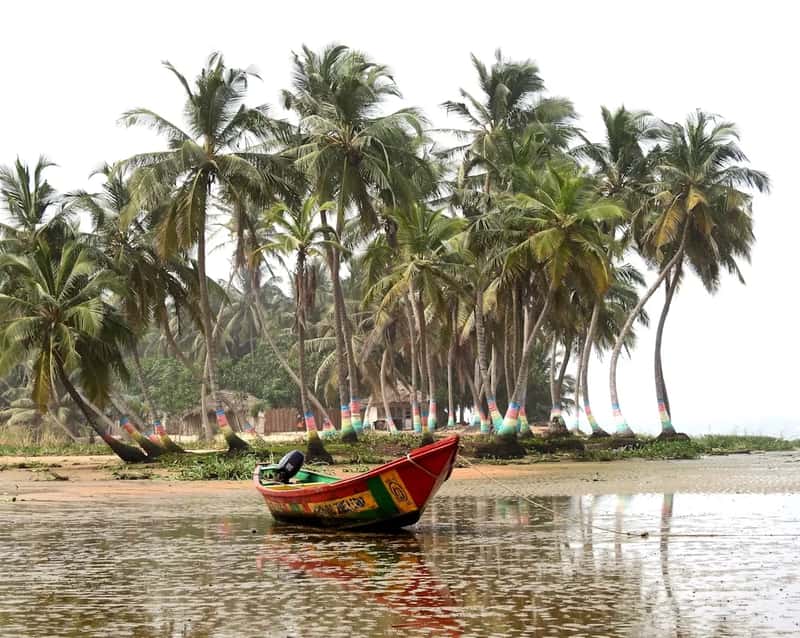
Ghana holds the number two spot in raw cocoa output, and its partnership with Ivory Coast shapes the entire global supply. Ghana is the second largest cocoa producer in the world, contributing around a fifth of the world’s cocoa every season. Together, Ghana and Ivory Coast account for around 60% of global supply. Recent seasons have been rough, though. Ghana’s harvest, which once exceeded 1 million tonnes, declined to under 500,000 tonnes in a recent season due to poor weather and disease.
Where Ghana pulls ahead of Ivory Coast is in ambition around processing and quality control. Ghana aims to process 50% of its cocoa domestically and has taken notable steps to improve local processing capacity. It also introduced certification schemes such as Fairtrade and Rainforest Alliance that especially promote the economic situation of small-scale farmers. Ghana has even leaned into consumer culture around its own product. The country celebrates National Chocolate Day, coinciding with Valentine’s Day, to boost local consumption. It’s still a producer nation first, but a more deliberate one.
3. Ecuador: small volume, exceptional flavor
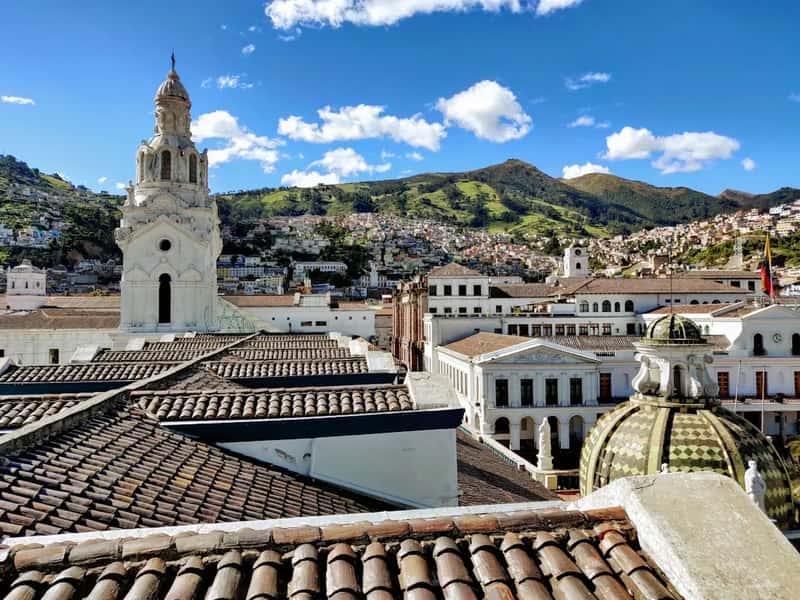
Ecuador doesn’t compete on tonnage, but it dominates a much rarer category. Côte d’Ivoire and Ghana remain the two largest cocoa-growing countries, followed by Ecuador with 12% of global production. Within the tiny slice of cocoa considered exceptional, Ecuador is the undisputed leader. Ecuador accounts for an estimated 61% of the world’s Fine Flavour cacao, followed by Peru and Colombia. That distinction matters enormously to chocolatiers hunting for something beyond ordinary bulk beans.
The variety behind this reputation is called Nacional. Nacional is native to Ecuador and is generally regarded as the most coveted cacao variety in the world, cherished for its aroma and flavor profile rather than its yield, which is low. A wave of small Ecuadorian bean-to-bar makers has emerged in recent years, choosing quality over mass production and building direct relationships with growers. The country has even earned comparisons to a famous wine region for how seriously its terroir is treated by chocolate professionals, a nod that fine cacao growing carries the same regional prestige as fine grapes.
4. France: technique, terroir, and the grand cru mindset

France doesn’t grow a single cocoa bean commercially, yet French chocolatiers have shaped how the rest of the world thinks about quality chocolate. Houses like Valrhona, founded in the Rhône Valley in the early twentieth century, helped popularize the idea of single-origin “grand cru” chocolate decades before the term became a marketing staple elsewhere. That approach borrowed directly from French wine culture: treat the origin of the bean, the terroir, and the fermentation process with the same seriousness a vintner treats a vineyard.
France also enforces some of the strictest craft standards in the confectionery world through its Meilleur Ouvrier de France competition, which includes a dedicated chocolatier category and pushes technique to an obsessive level. French chocolate makers tend to favor precision over flash, working with beans sourced from Venezuela, Madagascar, and Ecuador rather than relying on any domestic supply. The result is chocolate judged less on branding and more on how well a maker understands the raw material they’re working with, which is a different kind of excellence than volume or heritage alone.
5. Belgium: the praline capital with global reach
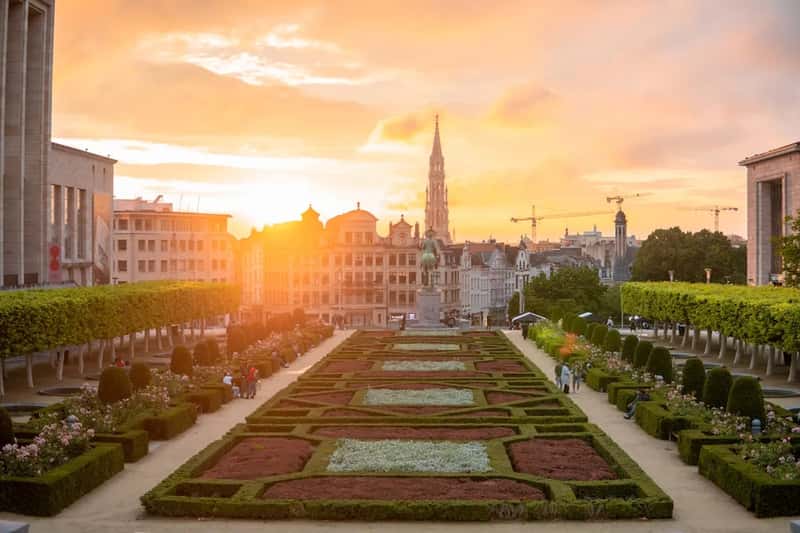
Belgium turned chocolate into both an art form and an export machine. The praline is an invention of the Belgian chocolate industry, as is the ballotin, a kind of packaging associated with high-quality chocolate designed by Louise Agostini in 1915. Quality has been legally protected there since the nineteenth century. The composition of Belgian chocolate has been regulated by law since 1894, when a minimum level of 35% pure cocoa was imposed to prevent adulteration. That early commitment to standards helped the country build a reputation that still holds today.
The scale of the modern industry is hard to overstate. Belgium produces over 800,000 tonnes of chocolate every year, much of which is exported, making it one of the world’s leading chocolate exporters, second only to Germany. Those exports are worth 5.5 billion euros a year. The craft heritage was formally recognized in 2025, when Brussels honoured the tradition and craftsmanship of Belgian chocolate by designating it as an Intangible Cultural Heritage in the Brussels-Capital Region. With more than 200 chocolate shops and 2 museums dedicated to chocolate in Brussels alone, and locals eating around seven kilograms of it a year, Belgium earns its spot near the very top.
6. Switzerland: the country that keeps setting the standard
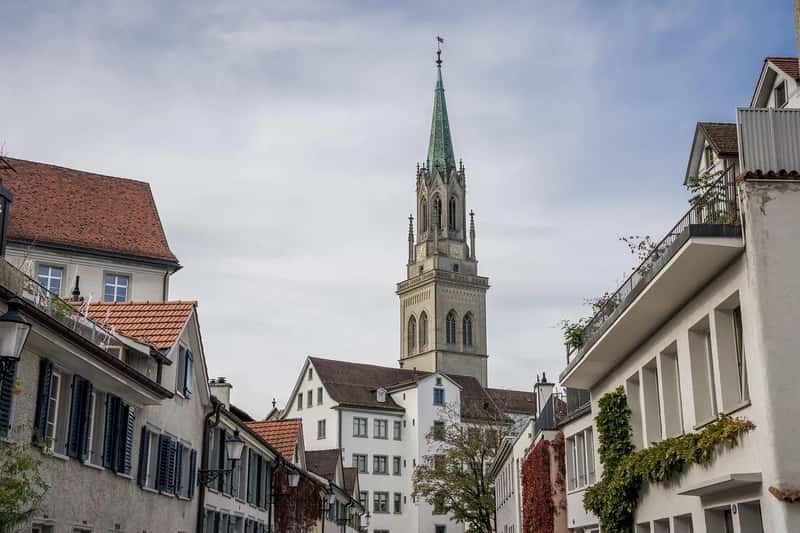
Switzerland grows no cocoa at all, which makes its dominance of the chocolate world almost paradoxical. The sector has 100% dependency on imported raw cocoa, since Switzerland has no domestic cocoa production. Yet Swiss chocolatiers invented two of the techniques that still define chocolate today. Milk chocolate was invented in Switzerland by a man named Daniel Peter in 1887. Not long after, the conching process was created by Rodolphe Lindt, which significantly improved the smoothness of chocolate.
Consumption figures confirm just how embedded chocolate is in daily Swiss life. Per capita chocolate consumption in Switzerland reached 10.3 kilograms in 2025, of which 6.1 kilograms was Swiss-made chocolate and 4.2 kilograms was imported. The country is also home to two of the industry’s biggest names, since large multinationals like Barry Callebaut, headquartered in Zurich, and Lindt & Sprüngli, headquartered in Kilchberg, were both founded in Switzerland. Sourcing has become a point of pride too. In 2023, 82% of Swiss cocoa imports came from sustainable production, already surpassing the national goal of 80% by 2025. Between the invented techniques, the household names, and the consumption habits to match, Switzerland remains the benchmark the rest of the industry still measures itself against.