For years, certain countries seemed untouchable on the world’s travel wish list. They had the beaches, the history, the food, the Instagram-ready backdrops that kept tour operators busy and airlines adding new routes. Now, though, a mix of politics, price shocks, safety worries, and geopolitical turmoil is quietly reshaping where people actually book their trips.
The shift isn’t always dramatic. Sometimes it shows up as a single-digit dip in arrivals that barely makes headlines. Other times it’s a headline-grabbing collapse tied to war or diplomatic fallout. Either way, the numbers from 2024 through 2026 tell a consistent story: a handful of once-beloved destinations are losing their grip on travelers, and the reasons behind it are worth understanding before you plan your next trip.
United States

The United States has found itself in an unusual position lately. It stood alone as the only country among 184 economies to see international visitor spending decrease from 2024 to 2025.[1] That is a striking statistic for a country that has long been one of the top destinations on earth, and it reflects a combination of tighter immigration enforcement, political tension with allies, and shifting perceptions of safety.
The drop-off shows up clearly by nationality. In the first half of 2025, Canadian arrivals to the U.S. dropped nearly 18% year over year, representing a decline of more than 1,750,000 visits, with political rhetoric and new visa fees appearing to dampen enthusiasm.[1] Visitors from Western Europe declined 5.5% compared to the same period one year earlier, while arrivals from Africa plummeted 15.6% in November 2025.[1] Even Denmark, a close ally, saw a steep pullback, with visitors from Denmark down 19% by July 2025, as some joined the boycott over Trump’s threats to annex Greenland, an autonomous Danish territory.[2]
Thailand

Thailand built its modern tourism economy on a reputation for being affordable, welcoming, and safe. That reputation has taken a serious hit. In 2025, Thailand received almost 33 million international visitors, down around 7.2 per cent from 2024.[3] The steepest losses have come from a market Thailand once relied on heavily.
Prior to the COVID-19 pandemic, Chinese tourism was significant in Thailand, with around 11 million Chinese visitors in 2019 alone, but by 2025 that number fell to just 4.5 million.[3] Much of the damage traces back to a wave of negative publicity around scam operations and safety scares. A series of negative incidents, including a call centre scam involving a Chinese actor and reports of boat accidents, damaged Thailand’s reputation among Chinese travellers, feeding a “Thailand is unsafe” narrative circulating on Chinese social media.[4] Industry leaders have openly criticized the pace of the government’s response, with one travel association president noting that the government “has been slow to reassure tourists about safety or take action to instill confidence in prospective travellers.”[5]
Ireland

Ireland has long traded on its friendly reputation, green landscapes, and lively pub culture, but cost is now working against it. At the end of 2025, Ireland experienced a drop in its tourist numbers by six per cent compared to 2024.[3] That is a meaningful pullback for a country whose economy leans heavily on visitor spending.
The core issue seems to be straightforward economics. Rising prices, including high accommodation, restaurant, and holiday costs, make competing, cheaper destinations more alluring for tourists, and Ireland is the second-most expensive country in the EU, second only to Denmark.[3] On top of that, air access has been a sticking point, since the Dublin Airport passenger cap, a 32 million annual passenger limit originally enforced to manage local road traffic, has played a part in falling numbers even though it has since been suspended.[3] For budget-conscious travelers comparing Ireland against Southern Europe or Eastern Europe, the math increasingly doesn’t add up.
Israel
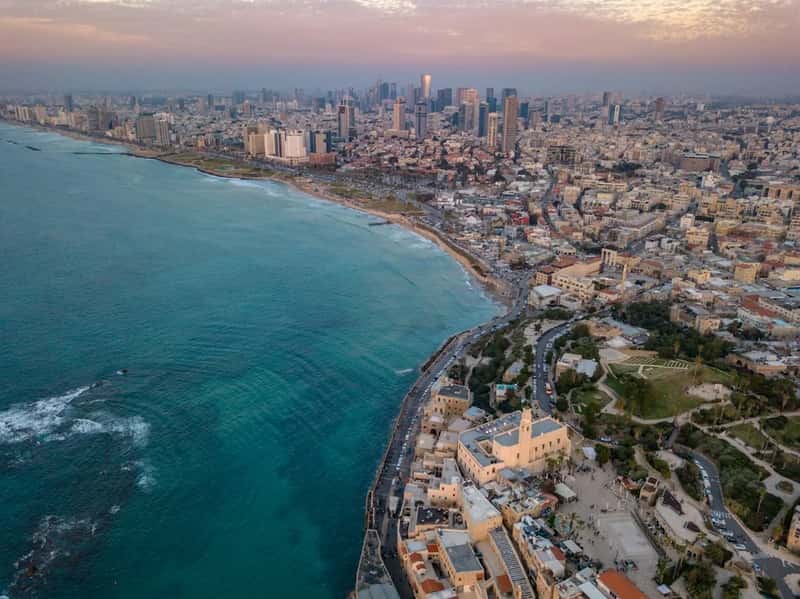
Few destinations illustrate how quickly geopolitics can empty out a tourism sector like Israel. Due to the ongoing Israel-Gaza war, tourism to Israel has dropped significantly, the sharpest decline out of any country in recent tourism data.[3] For a country that once drew steady streams of religious pilgrims, history buffs, and Mediterranean beachgoers, the change has been stark.
The decline isn’t a short-term blip tied to a single news cycle. The war and wider regional security concerns have reduced tourism, as official travel warnings and disruption to international travel to Israel continue.[3] Airlines have repeatedly suspended and reinstated routes depending on the security situation, and government travel advisories from the United States and other countries have kept caution levels elevated, making it harder for the country to plan any kind of steady tourism recovery.
China

China’s inbound tourism numbers tell a quieter but equally telling story of decline. In 2024, 32.0 million international visitors traveled to China, representing a 10% decrease from the 35.5 million visitors in 2023.[1] That is a notable step backward for a country that used to be one of the most visited nations on the planet.
The scale of the shift becomes clearer when you zoom out further. This puts China at roughly half its 2019 peak, when the country welcomed over 65 million tourists.[1] Visa complications, lingering perceptions from years of strict pandemic-era border policies, and competition from other Asian destinations have all played a role in keeping international arrivals well below where they once stood, even as Beijing has rolled out visa-free entry programs to try to reverse the trend.
Maldives

The Maldives built its entire brand around overwater bungalows and effortless luxury, but 2026 has been a rough year for arrivals. Tourism in the Maldives experienced a noticeable decline in 2026, with the country welcoming 851,483 tourists so far in the year, a decrease of 6 percent compared to the same period in 2025.[6] That is a jarring reversal for a destination that entered the year expecting record numbers.
The monthly breakdown shows just how sudden the shift was. Tourist arrivals dropped by 20.7 percent in March compared to the same month in 2025, and the slowdown deepened further in April, when arrivals declined by more than 24 percent year-on-year.[7] The Middle East market, a critical feeder for the islands, was hit even harder, with arrivals from the Middle East tumbling by over 45 percent compared to the previous month and more than 68 percent below March 2025 levels.[8] Much of this ties back to regional conflict disrupting flight paths, since many travelers reach the Maldives through Gulf carriers and Middle Eastern hub airports, and disruptions, rerouted flights, and higher fuel costs are making the journey more complicated and expensive.[9]
What This Shift Really Means for Travelers

None of these six countries have become undesirable overnight. Each still offers what made it famous in the first place: Thailand’s temples and beaches, Ireland’s charm, the Maldives’ turquoise water, China’s history, Israel’s cultural depth, and the sheer variety of the United States. What’s changed is the calculus travelers are making, weighing cost, safety perception, political friction, and convenience against destinations that used to feel like automatic choices.
It’s also a reminder that tourism trends can turn quickly and for very different reasons in each place, from currency swings and airport policy to war and diplomatic disputes. Some of these declines may prove temporary as governments adjust policy or regional tensions ease. Others may signal a longer structural shift in how the global travel map is being redrawn. Either way, travelers weighing their next trip now have more reason than ever to look past reputation alone and check the current reality on the ground.