Ask any expat what they miss least about home, and safety often tops the list before salary or scenery ever comes up. It’s the small stuff, really: not flinching when footsteps get closer on a dark street, or leaving a phone on a café table without a second thought. Across recent surveys from Gallup, InterNations, and national statistics offices, a handful of countries keep showing up again and again as places where people abroad say they can walk home alone without that low hum of anxiety.
Singapore

Singapore sits at the very top of nearly every recent safety ranking that asks people how they feel after dark. At the very top of the rankings stands Singapore, where an extraordinary 98% of respondents say they feel safe walking alone at night. That figure comes from the 2025 Gallup World Poll, and it isn’t a fluke result from one unusually calm year.
This is not just a statistic; it reflects decades of consistent policy, urban planning, and social trust, with low crime rates, strict law enforcement, and efficient public infrastructure combining to make Singapore one of the safest urban environments in the world. Expats living there often describe a kind of predictability to daily life, where late-night MRT rides or a walk back from a hawker centre simply don’t register as risky. Singapore’s consistent placement near the top of InterNations’ city rankings only reinforces how normal that sense of security has become for residents.
Denmark
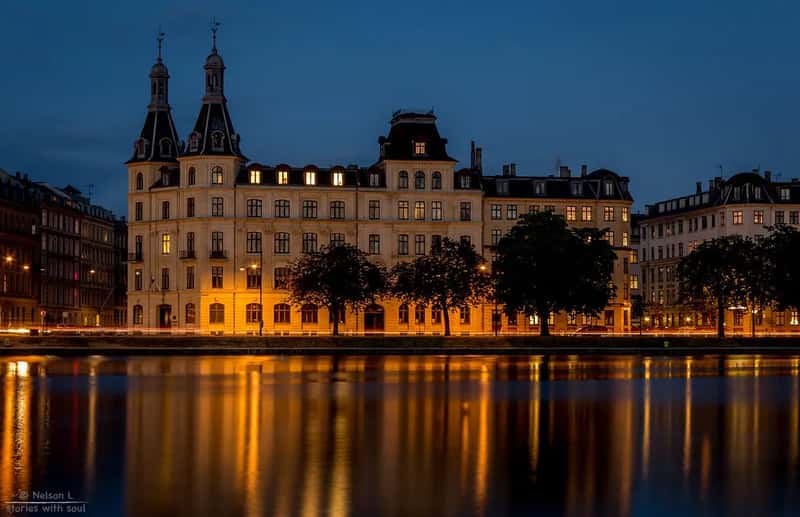
Denmark rarely makes headlines for safety in the way flashier destinations do, yet the numbers back up a quiet confidence among residents. Ranking eleventh in the Global Peace Index globally and eighth in Europe, Denmark has crime rates well below the European average, with a homicide rate of 0.5 and high perceived safety, with 85% of people saying they feel safe walking alone at night. That combination of low violent crime and strong institutional trust is a big part of why Copenhagen regularly draws expat families looking for a slower, steadier pace of life.
What stands out about Denmark isn’t just the statistics but how unremarkable safety feels day to day. Bicycles are left unlocked outside shops, children walk to school on their own from a fairly young age, and streets stay well lit and busy well into the evening. For expats coming from cities where personal security requires constant low-level vigilance, that shift alone can feel like the biggest adjustment of moving to Denmark.
Portugal

Portugal has become something of a poster child for expat safety in the past few years, particularly among retirees and remote workers relocating from the United States. It also ranked as the 7th safest nation on the Global Peace Index, a position it has held with only minor fluctuation for several years running. Cities like Porto and Lisbon, along with smaller coastal towns, consistently show up in expat surveys as places where solo walks after dinner don’t require any real forethought.
Longtime expats often describe an adjustment period where old habits from less secure environments take time to fade. Many newcomers arrive still bracing for danger that simply doesn’t materialize, whether that’s clutching a bag tightly or crossing the street to avoid a stranger. Over time, most say that instinct fades, replaced by the kind of relaxed awareness that comes naturally in a country with genuinely low violent crime.
Ireland

Ireland’s reputation for safety rests on more than just tourist-brochure charm. In Ireland, 76% of people say that they feel safe walking alone at night, according to the OECD. Ireland is the safest country among the most popular destinations for UK expats, thanks to its high score for peace and relatively low risks of crime and natural disasters.
Part of that sense of security traces back to Ireland’s long-standing political posture. As a neutral country, Ireland has a long-standing tradition of non-intervention in military conflicts and focuses on diplomacy and conflict resolution, which enhances its reputation as a peaceful nation. Petty theft does occur in busier parts of Dublin, but expats generally describe it as a minor nuisance rather than a genuine threat to personal safety.
Croatia
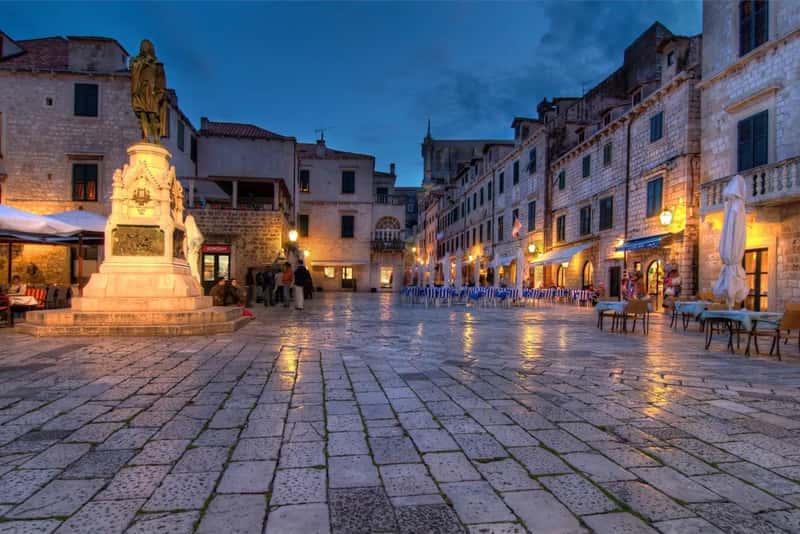
Croatia has quietly become one of Europe’s most reassuring places to walk around after sunset, and the data backs that up two years running. For the second year in a row, the World of Statistics has ranked Croatia at the top of a survey of 41 European countries for personal safety at night. That’s a notable achievement given how much tourist traffic the country now handles.
The crime rates here remain low despite a significant rise in tourism since the pandemic, with the most recent figures showing annual arrivals reaching 21.3 million for 2024, an increase of 4% on 2023. For expats settling in Zagreb, Split, or along the Dalmatian coast, that combination of heavy seasonal footfall and stubbornly low crime is part of what makes Croatia feel unusually livable. Neighboring countries like Slovenia and Iceland followed close behind in the same survey, but Croatia held onto the top spot.
United Arab Emirates

The UAE occupies a distinct spot on this list, driven less by social trust in the Nordic sense and more by strict enforcement and low tolerance for crime. The UAE has the lowest crime rates in the world, due to a combination of strict laws, efficient law enforcement, and cultural factors. That reputation has held steady for years, reinforced repeatedly by international survey data.
The broader Gulf region has emerged as a genuine outlier in recent safety surveys, and the UAE sits comfortably within that pattern. One of the report’s most striking findings is the dominance of the Gulf, with Oman, Saudi Arabia, Kuwait, Bahrain, and the United Arab Emirates all appearing in the global top ten. For expats in Dubai or Abu Dhabi, that translates into late-night walks along the Corniche or through busy malls feeling entirely unremarkable, a fact many newcomers from higher-crime cities still find hard to fully adjust to.