For years, the story about marriage in most wealthy nations has been one of steady retreat. Fewer weddings, later ceremonies, more couples choosing to skip the paperwork altogether. That narrative still holds true in plenty of places, but a handful of countries have started bending the curve in the opposite direction, at least for now.
Some of these upticks are tied directly to the pandemic years, when postponed weddings eventually got rescheduled. Others reflect deeper shifts in policy, economics, or simply timing. Either way, the numbers from 2023 and 2024 tell a more nuanced story than the usual headlines about marriage’s slow disappearance.
South Korea

South Korea’s marriage numbers spent more than a decade sliding, so the recent turnaround has caught demographers off guard. Marriages dropped to 191,690 in 2022, then increased by 1% to 193,657 in 2023, before surging 14.8% to 222,412 in 2024. That second jump wasn’t a small statistical blip. Even after accounting for pent-up demand from weddings postponed during the pandemic, the rebound represents the steepest growth in marriages in more than 30 years.
The ripple effects reached beyond wedding halls. Statistics Korea officials have pointed out that the agency noted the overall number of marriages declined during the COVID-19 pandemic but is now showing signs of recovery. The rebound mattered for another reason too, since marriage in South Korea tends to precede childbirth by a year or two, and the country’s birth rate ticked upward for the first time in nearly a decade right alongside it.
China

China’s marriage rebound came earlier and, in percentage terms, arrived with more force than South Korea’s. Marriages rose 12.4% in 2023, as more couples tied the knot after delays caused by the pandemic. That figure stood out even among neighboring countries also experiencing a post-lockdown wedding catch-up.
The knock-on effect on births followed a similar pattern to South Korea’s, though with its own timing. The number of births in China rose 5.8 percent to 9.54 million in 2024, also boosted by delays in marriages due to the pandemic. Whether the increase in weddings holds steady or fades once the delayed backlog clears is still an open question, and most demographers treat it as a short-term correction rather than a lasting trend reversal.
Spain

Spain’s marriage figures rarely make international headlines, but the country quietly became one of only two EU nations to see its marriage rate climb between 2023 and 2024. Between 2023 and 2024 the indicator decreased in 15 of the EU countries for which data are available, it was constant in 5, and increased in 2, namely Spain and Finland. That puts Spain in rare company within a bloc where the long-term direction has been almost uniformly downward.
The broader European backdrop helps explain why even a modest Spanish uptick stands out. Across the EU as a whole, the crude marriage rate fell by almost 25% between 2019 and 2020 because of the pandemic, before a slight increase brought it to an estimated 3.9 per 1,000 people in 2024. Spain moving against that grain, even slightly, suggests its recovery from pandemic-era disruption has outpaced most of its neighbors.
Finland
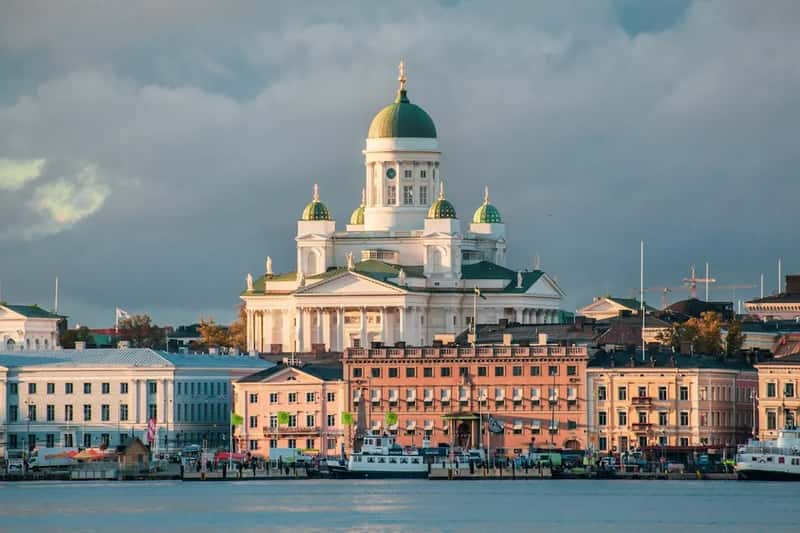
Finland sits alongside Spain as the second EU country where marriage numbers actually grew rather than shrank between 2023 and 2024. That places Finland in a small minority, given that Eurostat found the marriage indicator fell in the majority of member states over the same period. It’s a notable shift for a Nordic country that, like its neighbors, has long leaned toward cohabitation over formal marriage.
Finland’s divorce rate remains on the higher end within the EU, which makes the marriage uptick worth watching closely. In 2024, the highest crude divorce rates within the EU were reported in Latvia, Lithuania, and Estonia, Finland, and Sweden, each at 2.1 divorces per 1,000 persons. A rising marriage count paired with a persistently high divorce rate paints a more complicated picture than a simple “marriage is back” storyline would suggest.
Sweden

Sweden’s numbers tell a straightforward pandemic recovery story. The number of new marriages in Sweden dropped to around 70,000 in 2020 and 2021, largely because pandemic restrictions made it nearly impossible to celebrate a wedding with several guests. Once those restrictions lifted, couples who had delayed their ceremonies started booking venues again.
The recovery has held up reasonably well since then. In 2022 and 2023, the number of new marriages in Sweden climbed back above 80,000. That’s still short of the pre-pandemic range of 90,000 to 100,000 annual marriages, but the direction has clearly reversed course from the pandemic low point, even in a country where cohabitation has long been the social norm rather than the exception.
United States

The American picture is subtler than the rebounds seen in South Korea or China, but it’s real. With 31.2 women marrying per 1,000 unmarried women, the U.S. refined marriage rate remained stable in 2024, while more than 2 million women, specifically 2,390,482, married that year, a nominal increase of 29,452 women from 2023. It’s not a dramatic surge, but it does mark the second straight year of growth in raw marriage numbers after years of decline.
The trend isn’t evenly spread across the country. Utah had the nation’s highest marriage rate in 2024, with 24.5 new marriages for every 1,000 people. Regionally, more than two-thirds of the states in the Western region had high marriage rates, with 38 percent in the top quartile and 31 percent in the third quartile, suggesting the modest national uptick is being driven disproportionately by a handful of states rather than a uniform coast-to-coast shift.