Paying a power bill rarely makes headlines, yet in some countries the monthly total for electricity, heating, and water has become a genuine household stressor. Energy markets shifted dramatically after the disruptions of the past few years, and the aftershocks are still working their way through utility statistics in 2026. A look at six countries shows just how far apart the experience of a monthly bill can be, depending on where a person happens to live.
Germany

Germany consistently tops global rankings for utility costs, and Munich in particular has become something of a case study. According to Deutsche Bank data cited by Visual Capitalist, households in Munich pay on average $404 a month for utilities, up nearly 40% since 2020[1]. Frankfurt and Berlin are not far behind, with residents there paying €339 in Frankfurt and €333 in Berlin[2] for the same basic utility basket.
Part of the reason bills run so high has to do with how German rental contracts are structured. A distinctive feature in Germany is the concept of “Nebenkosten” (ancillary or additional costs), often included in the so-called “Warmmiete” (warm rent), meaning heating, water, and waste collection may be partially included in the rent while electricity is usually billed separately.[3] On top of that, households are required to pay a public broadcasting fee (Rundfunkbeitrag) of $18.36 per month, regardless of whether TV or radio is used.[3] During colder months, the numbers can climb sharply further, since monthly winter bills for gas and electricity in larger apartments or houses can reach $700 to $1000, especially when heating or air conditioning is used intensively.[3]
United Kingdom

The UK has spent the past couple of years adjusting to a new energy reality, and household bills reflect that shift. Since 2024, cooling demand has even started reshaping consumption patterns, as the UK has experienced increased demand for air conditioning, previously uncommon in British households.[3] On the wholesale side, the country sits among the priciest electricity markets anywhere, with Ireland, Italy, Germany, Belgium, and the UK all rank among the global top 10[4] for residential electricity prices.
Scotland’s capital tells a particularly striking story within the UK’s own borders. Edinburgh ranks second among the most expensive European cities for utility bills, with residents paying €346[2] a month on average. The strain has not been limited to households either, since several struggling businesses in the UK closed amid sky-high utilities costs due to the Russia-Ukraine war.[1] That combination of rising residential and commercial pressure has kept the UK firmly in conversations about Europe’s energy affordability crisis.
Czech Republic
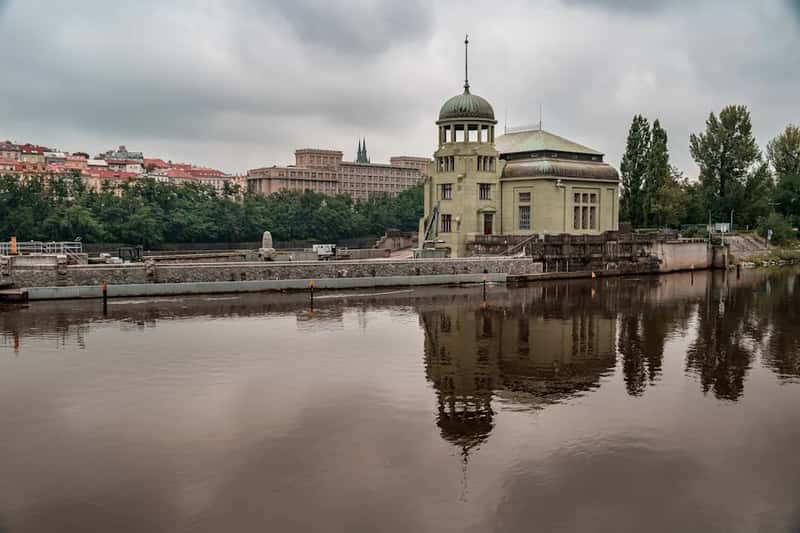
The Czech Republic, often referred to as Czechia, has faced some of the sharpest electricity price swings on the continent. With a per-kilowatt-hour price of $0.367, electricity in Czechia posted the highest year-on-year cost increase in all of Europe in 2022, largely attributed to inadequate government preparation for the effects of Russia’s invasion of Ukraine on the fossil fuel trade.[5] The government eventually stepped in, and in October 2022, the Czech government moved to establish caps on the prices of both electricity and natural gas for its citizens.[5]
Even with those caps in place, prices have stayed elevated compared to pre-crisis levels. As of mid-2024, the per-kilowatt-hour price in Czechia is $0.359[5], only marginally lower than the 2022 spike. This has kept the country among Europe’s costliest for basic utilities, with the realting.com global comparison noting that the Czech Republic rounds out the top five countries with the highest utility[3] expenses worldwide.
Estonia
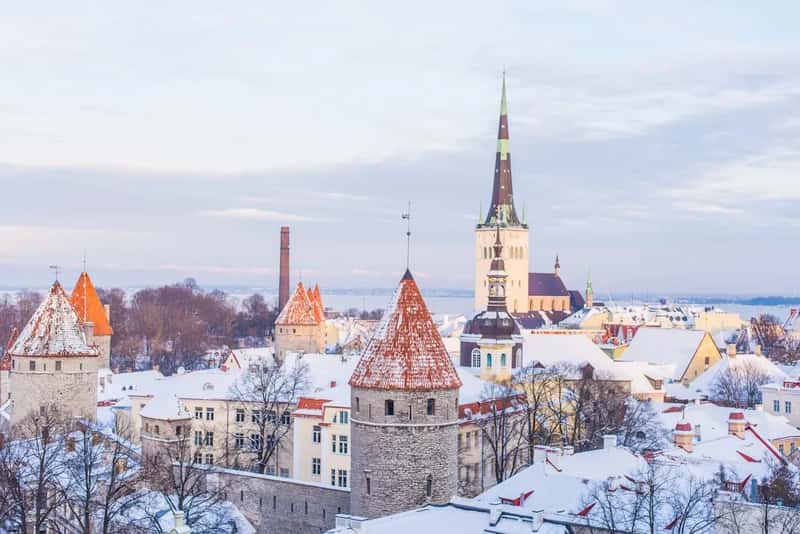
Estonia might not be the first country that comes to mind when thinking about expensive utilities, but its cold climate and import dependence push bills higher than many expect. Based on Numbeo-sourced comparisons, Estonia ranks third among countries with the highest utility expenses, with an average monthly cost of $325.[3] That places it ahead of much larger and wealthier economies in the same ranking.
The underlying cause is fairly straightforward once the geography is considered. The country’s cold climate results in significant heating needs, which are costly due to dependency on imported energy resources.[3] With long winters and limited domestic fossil fuel production, Estonian households end up absorbing a good deal of the volatility that comes with imported gas and electricity.
Poland

Poland’s capital has seen one of the steepest utility cost increases of any European city in recent years. Per Deutsche Bank figures reported by Visual Capitalist, in Warsaw, Poland the average monthly cost of basic utilities stands at $357, up from $176 in 2020.[1] That is roughly double in just a few years, a pace of increase matched by very few other capitals on the continent.
The broader national picture mirrors that trend. Coverage of the region’s energy scarcity has repeatedly grouped Poland with its neighbors, noting that consumers and businesses alike are watching their wallets in the UK, Poland, Austria and Czechia given energy scarcity.[1] Poland’s heavy historical reliance on coal for power generation, combined with the broader European push toward cleaner but pricier energy sources, has kept household bills under sustained pressure.
Bermuda

Bermuda stands out globally not for its overall utility basket but specifically for the price of electricity, which is the single biggest driver of high monthly bills there. According to a 2026 global ranking, Bermuda ranks as the most expensive region for electricity prices in 2026, followed by Ireland and Italy based on residential electricity rates.[6] The reasons are tied directly to its location and lack of domestic energy production.
As an isolated island territory, Bermuda has almost no choice but to import the fuel that powers its grid. Bermuda has the highest electricity prices due to its reliance on imported fuel and limited local energy production, and high transportation and infrastructure costs significantly increase electricity rates.[6] That pattern is not unique to Bermuda either, since five island economies rank among the world’s most expensive electricity markets, including Bermuda, the Cayman Islands, the Bahamas, Barbados, and Cape Verde.[4] Small, remote power grids simply lack the scale and domestic resources that keep costs down elsewhere.