There’s a strange kind of sticker shock that comes with apartment hunting these days. Scroll through listings in the country’s biggest metros and $2,500 barely covers a studio with a Murphy bed and a view of an air shaft. Yet in a handful of American cities, that same budget still buys something that actually feels like a home, with a real bedroom, a real kitchen, and sometimes even a balcony.
The gap between these markets and the coastal giants has only widened. While places like San Francisco and New York keep pushing rents past the $3,500 mark, a different set of cities has quietly stayed livable for people earning a solid but unspectacular income. Here’s where $2,500 a month still goes a long way in 2026.
Austin, Texas

Austin spent years as the poster child for runaway rent growth, but the story has flipped. A construction boom that added apartments faster than almost any other major city has pushed prices down for three straight years. Austin was the poster child of the rent correction, peaking at over $1,786 a month in mid-2022 and falling steadily since. At $1,526 a month, Austin rents are still 16.8% above 2019 levels, but that’s the lowest growth rate of any major Texas city.
That citywide average means $2,500 covers far more than a basic one-bedroom near downtown. In 2026, Austin residents can rent an average 784-square-foot apartment for $1,500 a month. Stretch that budget to $2,500 and you’re looking at a spacious two-bedroom in a newer building, often with a pool, a gym, and covered parking thrown in.
Dallas, Texas

Dallas has an image problem. The marketing photos show glassy Uptown towers with rooftop infinity pools, and the sticker prices to match. Images of glass-and-steel Uptown high-rises with rooftop pools and $2,500 rents dominate the city’s apartment marketing, but that’s one very small slice of Dallas. The city is enormous, and once you look past the flashiest neighborhoods, the numbers tell a much friendlier story.
Citywide, the averages are considerably lower than the glossy ads suggest. The citywide average rent for a one-bedroom apartment in Dallas sits around $1,355 to $1,475 a month, while two-bedroom units average $1,650 to $1,957. A $2,500 budget in Dallas comfortably lands you in a genuinely nice two-bedroom, with enough room left over to consider a unit with upgraded finishes or a garage spot.
Charlotte, North Carolina

Charlotte has grown fast without turning into a coastal-style rent trap, which makes it one of the more underrated options for renters chasing space. The city’s banking and finance sector keeps drawing new residents, but the housing stock has largely kept pace. The average rent in Charlotte sits at $1,865 a month as of 2026, about 4% below the national average.
Break it down by bedroom count and the picture gets even better for anyone with $2,500 to spend. Studios in Charlotte run around $1,432 a month, one-bedrooms around $1,395, and two-bedrooms around $1,725, with three-bedrooms at $2,050 and four-plus bedrooms at $2,450. That means a $2,500 budget in Charlotte can realistically stretch into a spacious three or even four-bedroom unit, not just a cramped one-bedroom.
Denver, Colorado
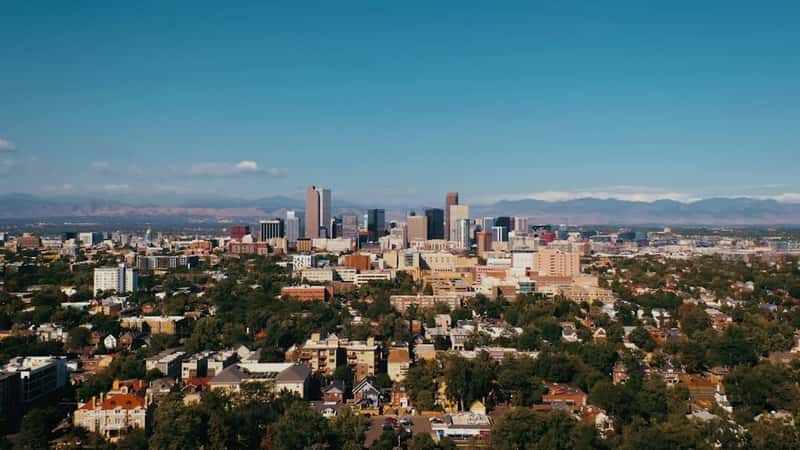
Denver sits in an interesting middle ground. It’s pricier than the Sun Belt darlings but nowhere close to the coastal extremes, and the mountain views help justify the difference. The average rent for an apartment in Denver is $1,906, a 1.91% decrease compared to the previous year, when the average rent was $1,943.
A $2,500 budget here doesn’t just cover the basics; it opens the door to genuinely comfortable living. Two-bedroom units in Denver average $2,214 for 1,062 square feet, ideal for roommates or small families. Push a little further and three-bedroom apartments deliver up to 1,371 square feet for $2,827, suitable for larger households. A tenant with $2,500 to spend is realistically choosing between a very solid two-bedroom or a modest three-bedroom, not scraping by on a studio.
Columbus, Ohio

The Midwest rarely gets credit for its rental market, but it deserves more attention than it gets. Cities across the region have kept housing costs manageable even as coastal metros spiraled upward. The Midwest is the most affordable U.S. region for two-bedroom apartments, averaging approximately $1,150 a month in 2026, less than half the West Coast average of roughly $2,850 a month.
Columbus fits neatly into that story while still offering a real city, with a growing tech and logistics presence and a large university population. Columbus, Ohio, ranks among the top affordable Midwest cities for two-bedroom rentals at roughly $1,300 a month. A $2,500 budget there isn’t just enough for a comfortable two-bedroom, it’s enough to land something closer to luxury, with in-unit laundry, updated appliances, and a decent-sized patio or balcony.
St. Louis, Missouri

St. Louis rarely shows up on “best places to live” lists, which is part of why it stays so affordable. The city has a deep stock of historic buildings and newer developments alike, and rents have remained flat even as other metros climbed. St. Louis, Missouri, is one of the more affordable Midwest cities for two-bedroom rentals, averaging around $1,050 a month.
With a $2,500 monthly budget, renters in St. Louis are operating in a completely different tier than the national average. That kind of spending power can mean a renovated loft in a historic warehouse district, a spacious three-bedroom house, or a newer apartment with amenities that would cost double in a coastal city. It’s a market where the ceiling is genuinely high relative to what most people pay.
What These Cities Have in Common
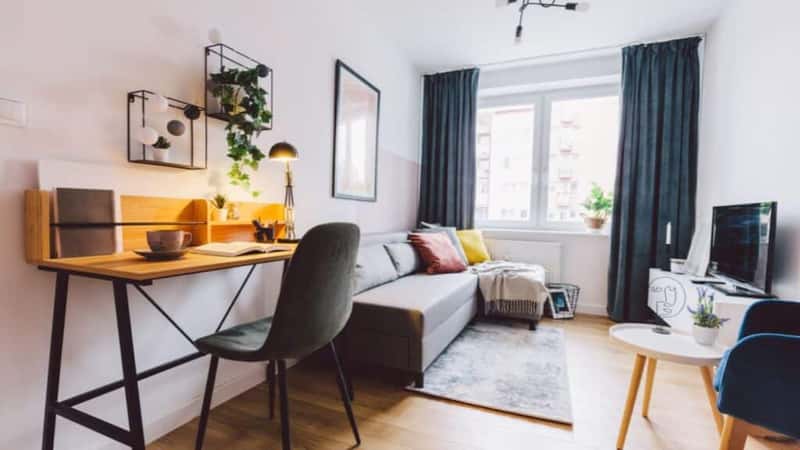
None of these six cities are secrets exactly, but they share a pattern that’s easy to miss if you only look at national headlines. Each one either built enough new housing to keep pace with demand, like Austin and Dallas, or never experienced the kind of coastal-style price spiral that reshaped cities like San Francisco and New York. Nationally, renters in the most expensive cities are paying more than double the average benchmark of $1,843.
That national divide is exactly why $2,500 feels so different depending on where you land. In one city it barely covers a shoebox studio; in another, it’s enough for a spacious two or three-bedroom with room to spread out. For renters willing to look past the usual suspects, these six markets prove that a comfortable, genuinely spacious apartment is still within reach without a six-figure salary attached to it.