Remote work stopped being a pandemic-era experiment years ago, and governments have noticed. What began as a scattering of niche visa programs has turned into a genuine competition, with finance ministries and tourism boards rewriting immigration rules to lure people who can work from anywhere and simply choose not to work from home.
Some countries are sweetening the deal with tax breaks, others with speed and simplicity, and a few with sheer ambition about what a remote worker’s spending power can do for a local economy. Here is a closer look at seven nations putting real effort, and real policy, behind the pitch.
Portugal

Portugal’s D8 visa has become something of a benchmark for the entire category. The D8 Digital Nomad Visa has quickly become one of the most popular options for remote workers seeking a base in Europe, requiring applicants to demonstrate stable remote income while offering a path toward longer-term residency that has attracted freelancers, entrepreneurs and remote employees looking for a foothold in the European Union. Lisbon, Porto, and the Algarve now host established nomad communities rather than just a handful of early adopters.
The tax picture has shifted, though, and it is worth knowing before packing a suitcase. Portugal’s well-known NHR regime closed to new applicants in 2025, so most new arrivals now pay Portugal’s standard progressive income tax rates once they become tax residents, though a narrower successor regime called IFICI offers a 20% flat rate for qualifying high-skilled professions in science, technology, and innovation. The country still leans hard into infrastructure and lifestyle appeal, betting that quality of life closes the gap left by a less generous tax regime.
Spain

Spain has paired its digital nomad visa with one of Europe’s more creative tax tools. Spain’s Digital Nomad Visa is ideal for remote workers attracted to a lifestyle that blends Mediterranean climate, highly walkable cities, and robust social services. Applicants generally need to clear an income bar that adjusts with the local minimum wage, and as of 2026 that threshold sits at roughly two thousand eight hundred euros a month.
The real draw for many is the so-called Beckham Law, named after the footballer who was among its first beneficiaries. Instead of paying Spain’s regular progressive income tax, which can go up to 47%, qualifying workers pay a flat rate of 24% on income earned in Spain, up to 600,000 euros per year. Not everyone qualifies, since the regime is built primarily around employees rather than freelancers, but for those who do, it turns Spain into one of the more tax-efficient bases in Western Europe.
Greece

Greece has taken a more direct approach: cut the tax bill dramatically and let the scenery do the rest of the selling. Greece offers one of the most generous tax incentives of any digital nomad visa program, a 50% income tax reduction for up to seven years for individuals who transfer their tax residence to Greece. That is a longer and deeper discount than most competing programs offer, and it applies on top of the country’s obvious appeal as a place to actually live.
The visa itself follows a fairly standard remote-work model, with income thresholds and health insurance requirements similar to other European schemes. The country also provides a 50% income tax reduction for the first seven years as a tax resident, alongside bilateral tax treaties to prevent double taxation. Combined with a lower cost of living than Western Europe, Athens and the islands have quietly become a serious alternative to the more crowded Lisbon and Barcelona nomad scenes.
Italy
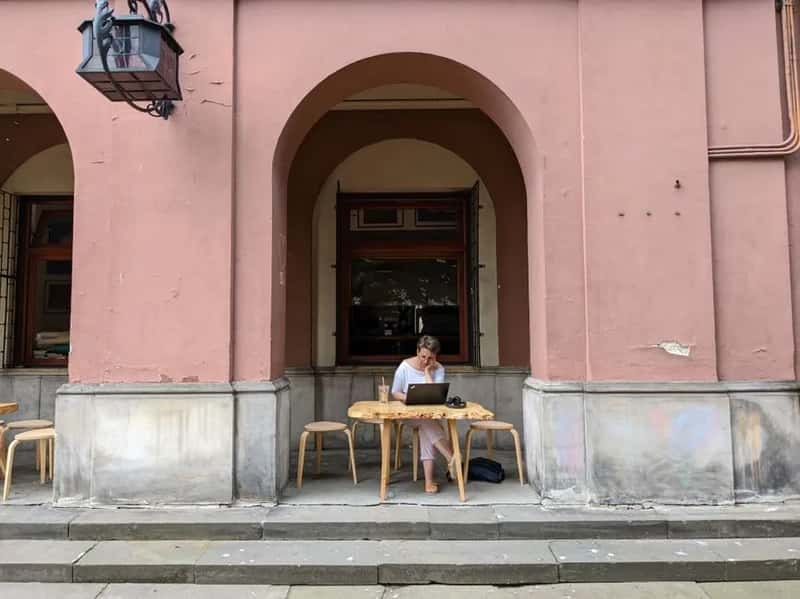
Italy came to the digital nomad visa game later than its neighbors, but it made up for lost time with an unusually generous regional twist. Italy launched its digital nomad visa, known as the Lavoratore da Remoto, for specialized professionals. The program targets skilled remote workers specifically, rather than opening the door to any freelancer with a laptop and a client list.
What sets Italy apart is what happens once you pick where to live within the country. Southern Italian regions offer an additional incentive of a 7% flat tax rate for up to ten years. That kind of long-horizon tax certainty is rare among digital nomad programs, most of which cap benefits at five to seven years, and it explains why smaller cities in Puglia, Calabria, and Sicily are increasingly marketing themselves to remote workers rather than just retirees.
United Arab Emirates

Dubai’s pitch is refreshingly blunt: no income tax, fast processing, and genuine residency rather than a tourist workaround. The UAE Virtual Working Programme is a one-year residence permit that allows remote employees, freelancers, and business owners to live in the UAE while working for employers or clients based outside the country, with an official minimum income requirement of 3,500 dollars a month and zero percent personal income tax. That structure has made the emirate a magnet for consultants and agency owners who want stability without a corporate sponsor.
The program has also proven durable rather than a passing marketing stunt. Dubai’s Virtual Working Programme, launched in October 2020, was created to attract global talent and remote professionals, designed for remote employees, freelancers, and international business owners who want to enjoy Dubai’s tax-free lifestyle, excellent infrastructure, and high quality of life, without needing a local sponsor. Six years on, the rules have only gotten more streamlined, with online applications and processing measured in days rather than months.
Estonia

Estonia can fairly claim to have started this entire trend. Estonia launched the world’s first dedicated digital nomad visa in 2020. That first-mover status still carries weight, backed by a genuinely tech-forward government infrastructure that predates the visa itself through its well-known e-Residency program.
The country has also chosen to raise its bar rather than lower it, which says something about the kind of nomad it wants to attract. Applicants must now demonstrate a minimum monthly income of 4,500 euros, verified over the previous six months, making it one of the highest income thresholds among European digital nomad programs. Combined with fast fiber internet and a compact, English-friendly capital in Tallinn, Estonia is positioning itself less as a budget destination and more as a base for established, higher-earning remote professionals.
Bulgaria

Bulgaria is the newest name on this list, and it arrived with one of the more aggressive tax pitches in the European Union. Bulgaria launched its digital nomad visa in December 2025, opening one of the lowest-tax routes into the European Union for remote workers, with a 10% flat rate among the lowest in the EU. For remote workers weighing EU membership against a lighter tax bill, that combination is hard to find elsewhere on the continent.
The timing also fits a broader pattern of Eastern and Southeastern European countries racing to catch up with Western Europe’s head start. Bulgaria opened a digital nomad route at the end of 2025, joining a wave of new European programs launched around the same time. Lower living costs in Sofia and Plovdiv, paired with genuine EU access, give Bulgaria a real shot at pulling nomads away from pricier Western capitals.
Final Thoughts

None of these seven countries are competing on identical terms. Portugal and Estonia lean on infrastructure and community, Greece and Italy compete on tax breaks, the UAE sells zero tax and speed, and Bulgaria is betting that a low flat rate paired with EU membership is enough to turn heads.
What ties them together is a simple recognition that remote workers spend money locally without competing for local jobs, which makes them an unusually easy population to court. As more governments watch this play out, the list of countries trying hardest will almost certainly keep shifting, and probably growing, in the years ahead.