We’ve been told our whole lives that money buys happiness. Get a bigger paycheck, a nicer house, a faster car, and surely you’ll feel better. It’s practically the unofficial motto of modern society. Yet some of the most fascinating data coming out of global research right now says something completely different – and honestly, it’s a little unsettling if you live in a wealthy country.
There are nations on this planet where people earn a fraction of what someone in Germany or the United States takes home, yet they rate their own lives with remarkable satisfaction. No yacht. No tech startup. Just community, culture, and something harder to measure. What’s their secret? Let’s dive in.
1. Costa Rica – The Country That Abolished Its Military to Buy Happiness

Here’s something that genuinely surprised me when I first came across it. In the 2025 World Happiness Report, Costa Rica placed 6th globally with a score of 7.274, making it the highest-ranked country in Latin America and the only non-European nation in the top seven. That’s an extraordinary achievement for a small Central American country that is, by most economic measures, far from wealthy.
Although roughly one in five citizens is estimated to live below the poverty line, all Costa Ricans have access to a good welfare system that includes universal healthcare, primary and secondary education, and relatively high pension benefits. So how does the government afford all of that? Costa Rica abolished its military in 1949 and has since invested those savings directly into its people.
The country demonstrates robust social networks and community bonds contributing significantly to its happiness score, while also scoring well on perceived freedom to make key life decisions. Think about what it means to live in a country where your neighbors genuinely have your back – that feeling alone changes everything. Costa Rica exemplifies how middle-income countries can achieve high happiness levels through strong social bonds, healthy institutions, and supportive communities, challenging purely economic approaches to wellbeing.
—
2. Mexico – Strong Family Ties and a Top 10 Debut
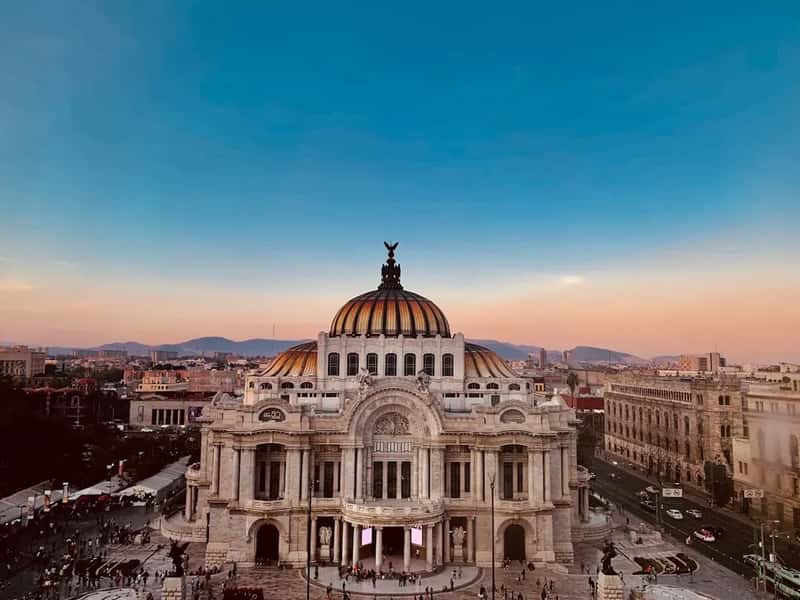
In the 2025 World Happiness Report, two countries from Latin America, Costa Rica and Mexico, entered the top 10 for the first time, jumping 6 and 15 spots respectively. Mexico’s leap of 15 places is staggering. Mexico’s vibrant traditions, strong family networks, and cultural pride push it into the top 10 of the world’s happiest countries for the first time in 2025, with citizens reporting high life satisfaction supported by strong social support from family and community.
Their GDP per capita is roughly a fifth of that of the richest nations in the world and roughly a third of that of the Nordic countries, but money, as the report has repeatedly demonstrated, truly does not buy happiness. That’s a line worth reading twice. In the pursuit of happiness, Mexico and other Latin American nations, with their large households and strong family ties, have many valuable lessons to teach us – life satisfaction is higher among couples with children and those who live with their extended family, and households of four to five people are associated with even more elevated levels of happiness.
The report also notes that Latin American countries dominate the rankings for positive emotions, with six Latin American nations in the top ten for this measure. Let’s be real – that’s not a coincidence. There’s something deeply woven into the culture of Latin America that Western nations are quietly, perhaps enviously, starting to notice.
—
3. Bhutan – The Tiny Kingdom That Invented Its Own Happiness Metric

If you want to talk about a country that took a philosophical stand against the cult of GDP, Bhutan is the one. Bhutan is one of the most striking examples on earth of a country that deliberately chose wellbeing over wealth. The term ‘Gross National Happiness’ (GNH) was coined by Bhutan’s 4th King, Jigme Singye Wangchuck, in the late 1970s, who asserted that happiness is more important than Gross Domestic Product – and this philosophy has shaped national policy ever since.
The concept implies that sustainable development should take a holistic approach towards notions of progress and give equal importance to non-economic aspects of wellbeing, with the GNH Index developed from 33 indicators categorized under nine domains. Those nine domains include psychological wellbeing, cultural diversity, community vitality, and ecological resilience – things that no stock market can price. Since the 4th King first stated that Gross National Happiness is more important than Gross Domestic Product, Bhutan’s GNH Index value has increased from 0.743 in 2010 to 0.781 in 2022.
The concept of GNH has often been explained by its four pillars: good governance, sustainable socio-economic development, cultural preservation, and environmental conservation. It’s a model that has drawn global attention and even influenced UN policy debates. For a landlocked Himalayan kingdom with a modest economy, that’s a legacy few countries can match.
—
4. Nicaragua – A Culture of Contentment Against the Odds

Nicaragua is one of the poorest countries in the Western Hemisphere by standard economic measures. Yet researchers consistently identify it as a place where people report meaningful life satisfaction that defies its income bracket. For countries like Costa Rica, Bhutan, Congo Brazzaville, Laos, and Nicaragua, the lesson is consistent: happiness is not simply purchased. It is built through relationships, culture, governance priorities, and the daily act of living alongside people you trust.
Happiness rankings are determined by analyzing comprehensive Gallup polling data from 149 countries in six particular categories: gross domestic product per capita, social support, healthy life expectancy, freedom to make one’s own life choices, generosity of the general population, and perceptions of internal and external corruption levels. Nicaragua scores notably on social support and generosity measures – categories that richer nations frequently underperform in despite their wealth.
High average levels of life satisfaction, comparable to those of wealthy countries, are reported for numerous populations that have very low monetary incomes, consistent with the notion that human societies can support very satisfying lives for their members without necessarily requiring high degrees of monetary wealth. Nicaragua is a living, breathing example of precisely that research finding.
—
5. Laos – Buddhism, Simplicity, and a Surprising Happiness Score

Laos doesn’t make many headlines in the Western press. It’s small, landlocked, and economically modest. Yet its happiness data has genuinely puzzled researchers in recent years. The happiness score for Laos in 2024 is 5.14 out of 10, which is a moderate level of happiness. Economic factors with emerging inflation remain the main reason for negatively affecting Laos’s happiness ranking. Despite these pressures, a score of 5.14 places Laos comfortably above the global midpoint and well above countries with similar or even higher income levels.
Much of what sustains wellbeing in Laos is deeply cultural. Buddhist values – emphasizing acceptance, community, and simplicity – permeate daily life in ways that buffer against the anxiety and dissatisfaction often associated with consumerism. Think about that for a moment. While wealthy countries are pouring money into mental health apps and productivity hacks, Laos is outperforming them on life satisfaction because of something far older and quieter.
The gap between economic rank and happiness rank is exactly what makes Laos so interesting to researchers. It’s one of the clearest examples of what scientists call the “happiness paradox” – the disconnect between a nation’s financial position and how its people actually feel about their lives. I find this case one of the most thought-provoking of them all.
—
6. Congo Brazzaville – Community Bonds in the Heart of Africa
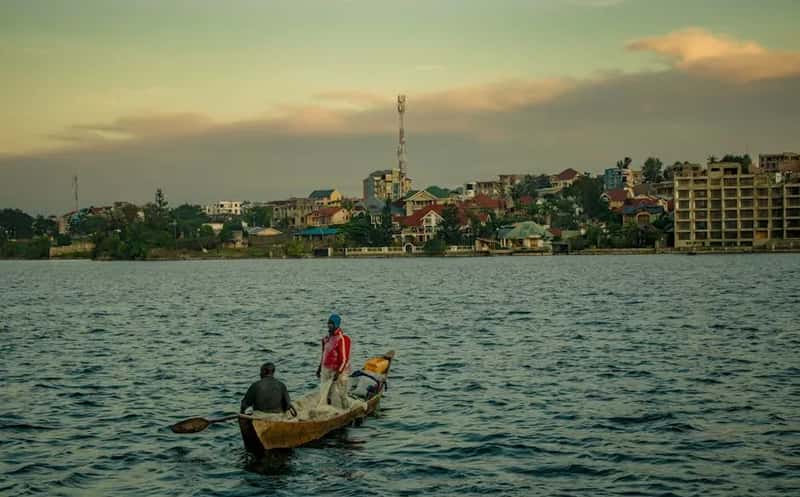
Africa as a region tends to score lower on aggregate happiness metrics, and Africa has the lowest average happiness scores worldwide, with Mauritius leading as the happiest African country while Sierra Leone remains near the very bottom due to widespread poverty, political corruption, and inadequate infrastructure. However, within this picture there are striking exceptions – and Congo Brazzaville is one that researchers have highlighted.
Researchers found that the belief in the kindness of others, as well as actively caring about and sharing with others, has strong effects on happiness, according to the 2025 World Happiness Report. In communities across Congo Brazzaville, extended family structures and collective social responsibility create a kind of informal welfare net that money simply cannot replicate. It’s easy to dismiss this until you look at the data carefully.
Trust in others is strongly associated with wellbeing, even more so than factors like income or employment. That single finding reframes everything we think we know about poverty and quality of life. Tightly knit communities where people genuinely look out for one another produce a form of daily security and meaning that neither GDP growth nor government transfers can fully replace.
—
The Science Behind It All – Why Money Isn’t the Full Story

It’s hard to say for sure why this pattern keeps showing up across such different countries and cultures. But the research is remarkably consistent. Richer countries tend to be happier – yet several Latin American countries continue to outperform expectations based on income alone. The World Happiness Report’s methodology goes well beyond bank balances to capture something closer to the full human experience.
The rankings are based on six key factors: GDP per capita, healthy life expectancy, social support, freedom to make life choices, generosity, and perceptions of corruption. In addition to life evaluations, the report examines emotional well-being through positive and negative affect indicators, such as laughter, worry, and sadness. The 2025 edition also emphasizes social trust and benevolence, analyzing behaviors like sharing meals, helping strangers, and returning lost wallets.
Researchers found that globally, benevolent acts were roughly ten percent more frequent in 2024 than in 2017 to 2019. So even in the aftermath of one of the worst global disruptions in a century, human kindness actually increased. Happiness isn’t just about economic growth – it’s about the quality of human connections, and the World Happiness Report 2025 shows that trust, kindness, and prosocial behaviour are the building blocks of resilient and fulfilling societies.
The seven countries in this article, each poor by conventional measures, have figured out something that some of the wealthiest nations on earth are still struggling to grasp. The evidence is there, clearly laid out in global data year after year. What do you think – does this change how you see wealth and happiness? Share your thoughts in the comments.