Retirement daydreams tend to start with big names: Lisbon, Barcelona, Nice. Yet a lot of people who actually make the move end up somewhere far smaller, a town where the baker knows your order and the morning walk to the market takes twenty minutes because you keep stopping to chat. That shift toward smaller places has only grown more pronounced in 2025 and 2026, as tax rules in several popular countries changed and cost of living in the big cities kept climbing.
What follows is a look at eight towns across Europe that consistently draw retirees looking for something quieter than a capital city but still full of life. Each one has its own rhythm, paperwork, and price tag, so the details matter as much as the charm.
Tavira, Portugal
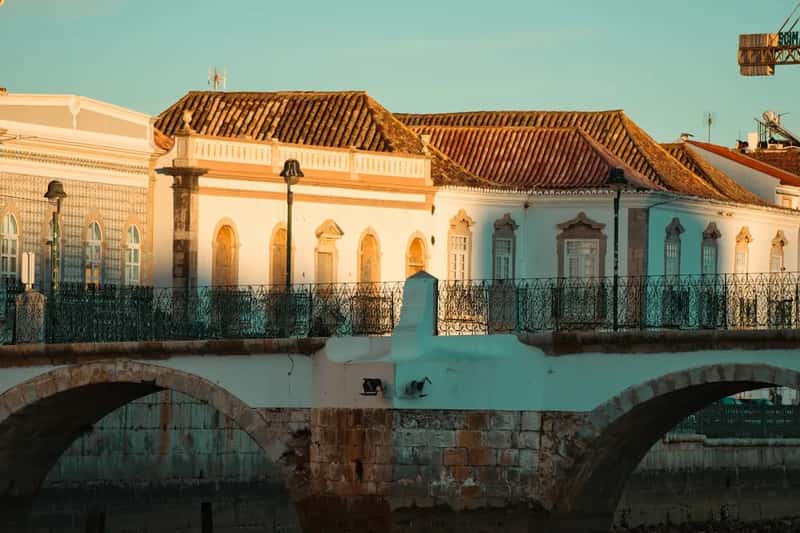
Tucked into the eastern Algarve, Tavira has kept a version of Portugal that feels older and calmer than the resort strips further west. The Roman bridge over the Gilão River and traditional cube houses with their pyramid roofs create an atmosphere that feels worlds away from the tourist strips further west. With a population hovering around 25,000, it’s large enough for real infrastructure but small enough to walk everywhere.
Retirees are drawn here partly because Tavira, on the quieter eastern Algarve, is whitewashed, walkable, low-key, and increasingly favored by retirees who want a small-town pace. Monthly budgets in this part of the Algarve run notably lower than the coast’s busier hubs, with interior and eastern Algarve towns like Silves, Loulé, Tavira, and Olhão offering excellent value at €1,400-2,200 per month. One thing worth knowing before applying: the NHR officially ended in March 2025 when the transitional phase closed for certain qualifying applicants, so new arrivals now pay standard progressive tax rates rather than the old flat-rate pension deal. The D7 visa itself remains reasonably accessible, with the 2026 €920/month single threshold (€1,380/month for couples) still among the lowest in the EU.
Sarlat-la-Canéda, France
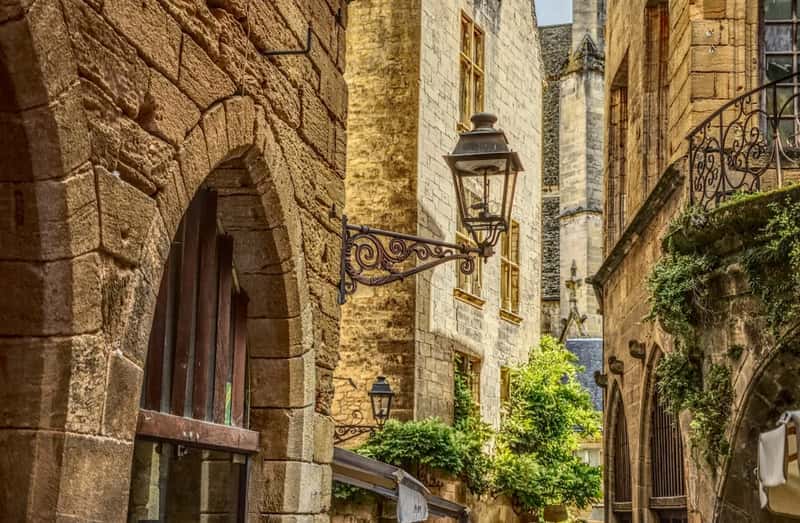
Sarlat sits in the heart of the Dordogne, a region built around stone villages, river valleys, and unhurried lunches. A beautifully restored medieval town, Sarlat is lined with restaurants, cafés, and bistros, and hosts several arts festivals and an English-language cinema, with expats often gathering in the main square for a stroll through Sarlat’s open-air market, considered one of the prettiest in all of France. It’s a town built for slow mornings rather than fast commutes.
Cost of living here still feels reasonable by Western European standards. Living in the Dordogne is surprisingly affordable, and a couple can live comfortably on a starting budget of $2,400 per month, depending on rental or property purchase costs. Renters can find a foothold without much trouble either, since a two-bedroom furnished apartment or village home in Sarlat-la-Canéda starts at $700 per month, with prices in surrounding villages being considerably lower. The town also has an established English-speaking network, as towns such as Bergerac, Sarlat-la-Canéda, and Eymet have long-established British communities, English-speaking social groups, and even English-language newsletters and events.
Ostuni, Italy
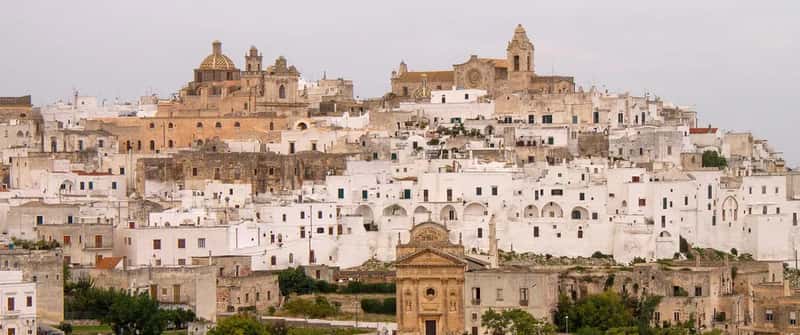
Known as the “White City” for its whitewashed hilltop center, Ostuni sits in Puglia, a region that has quietly become one of Italy’s most talked-about retirement spots. Puglia is a laid-back region in the boot of Italy known for its whitewashed towns, sun-drenched coastline and rustic cuisine, with expats drawn to towns like Lecce and Ostuni, with its well-preserved historic center. The pace here rewards people who like long meals and short to-do lists.
Financially, Puglia is one of the better bargains left on the Italian coast. International Living estimates that a single person can live comfortably in Puglia for $1,110 to $1,300 per month, while couples should budget $1,600 to $1,800. Non-EU retirees typically enter through Italy’s Elective Residency Visa, which requires a guaranteed income of 31,000 Euros (US$34,400) annually or 38,000 (US$42,170) for a couple. Smaller municipalities in the region can also unlock a notable tax break, since moving to a municipality with fewer than 20,000 inhabitants in certain Southern regions, including Puglia, Sicily, and Abruzzo, may qualify retirees for a 7% flat tax on all foreign income for 10 years.
Piran, Slovenia
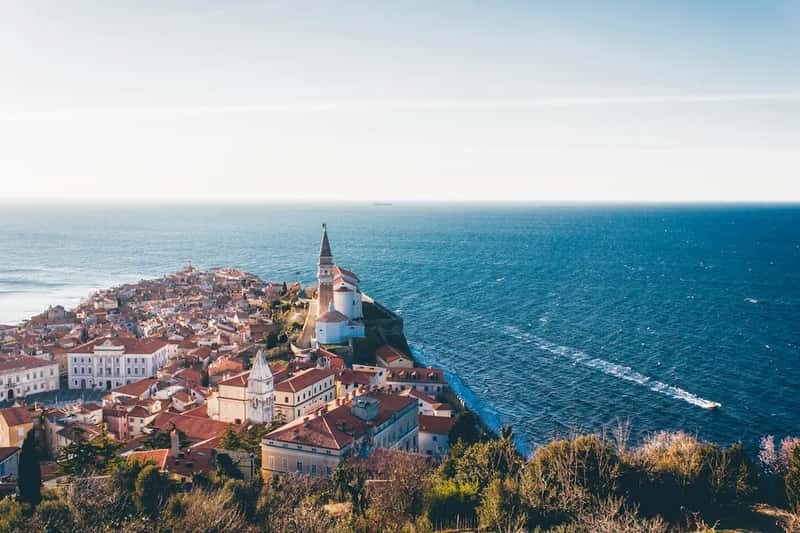
Piran rarely comes up in the usual retirement conversations, which is part of its appeal. This narrow peninsula town on the Adriatic still shows its Venetian past clearly, since the town’s Venetian architecture and narrow alleys evoke a sense of timelessness. Cars are largely banned from the old center, so daily life happens on foot, at a pace few coastal towns manage anymore.
Slovenia’s broader appeal comes down to a mix of safety, affordability, and EU membership. Combined with Slovenia’s EU membership, solid healthcare system, and relatively low cost of living compared to Italy just across the border, Piran offers a rare blend of postcard beauty and everyday practicality. Nationally, cost of living is nearly half that in the U.S., which stretches a modest pension further than in most Western European countries. For non-EU citizens, residency runs through a renewable one-year Elective Temporary Residence Permit for Other Purposes, leading to permanent residency after five years, available upon showing retirement income of around $15,000 a year per couple.
Kotor, Montenegro
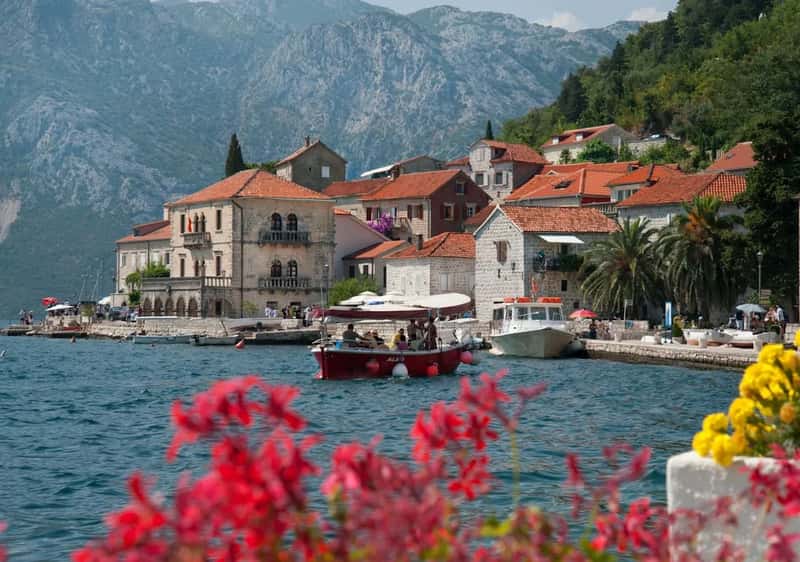
Set inside a fjord-like bay ringed by steep mountains, Kotor has one of the more dramatic settings on this list. Its well-preserved medieval architecture and UNESCO World Heritage status make it a fascinating place to explore. The wider setting is hard to overstate, as the Bay of Kotor is widely known as one of the most beautiful bays in the world, with striking tall mountains making a sharp contrast with the captivating beauty of the Adriatic Sea.
Costs remain notably lower than nearby EU coastal towns. Retirees can live comfortably in Montenegro on EUR 1,500-2,000 monthly as a single person, with a cost of living roughly 40% lower than Western Europe, decent healthcare, and a genuine community of expats who’ve already made the move. One caveat worth flagging: Montenegro is not an EU member, so residence rules apply to all foreign nationals, including EU citizens, who wish to stay beyond the standard short-stay limit of typically up to 90 days in a 180-day period. Since there is no dedicated retirement visa, the property-based residence route is the most common path for retirees who plan on settling in Kotor long term.
Sóller, Spain
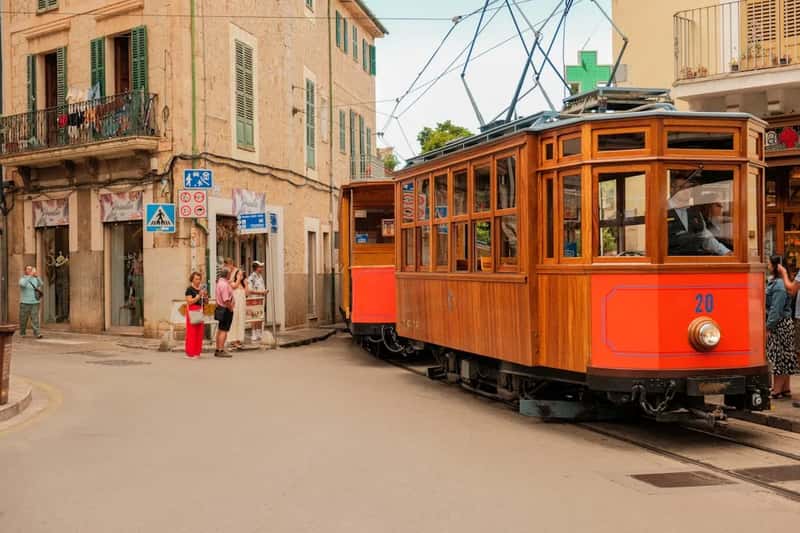
Most people picture Mallorca as beach clubs and cruise-ship crowds, but Sóller sits in a different world entirely. Wedged into a citrus-growing valley in the Serra de Tramuntana mountains, a range recognized by UNESCO for its terraced agricultural landscape, the town has kept much of its 19th-century character, from ornate townhouses funded by the old orange export trade to a narrow-gauge tram that still rattles down to the port. Life moves at a pedestrian pace here, helped along by the mountains that keep large-scale development out.
The town’s port area offers a bit more social life without losing the small-town feel, and the surrounding valley gives retirees hiking trails, orange groves, and a market square that still functions as the real center of daily life. Non-EU retirees generally settle in Spain through the country’s non-lucrative visa, which requires proof of sufficient passive income and private health insurance, while EU citizens can move freely and register locally. Property and rental prices in Sóller sit below the coastal resort towns nearby, even as demand from foreign buyers has picked up in recent years.
Nafplio, Greece
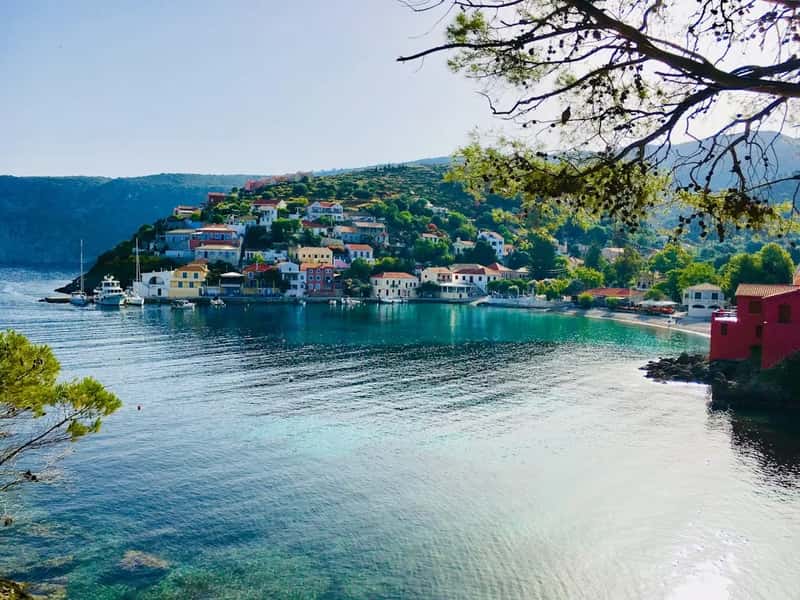
Nafplio holds a unique place in Greek history as the first capital of the modern Greek state, a role it played briefly in the early 1830s before Athens took over. That history shows in the layered architecture, a mix of Venetian fortresses, Ottoman-era buildings, and neoclassical townhouses lining the old harbor. It’s a compact town in the Peloponnese, close enough to Athens for occasional trips but far removed from the capital’s noise and traffic.
Daily life in Nafplio revolves around a walkable old town, waterfront cafés, and a slower southern European rhythm that many retirees say reminds them of Greece before mass tourism reshaped the islands. Greece has introduced residency routes aimed at financially independent retirees who can show a stable income and health coverage, alongside the country’s long-standing option for EU citizens to settle without a visa at all. Healthcare costs and everyday groceries remain lower than in most of Western Europe, though English fluency among older locals can be inconsistent outside the main tourist areas.
Kinsale, Ireland
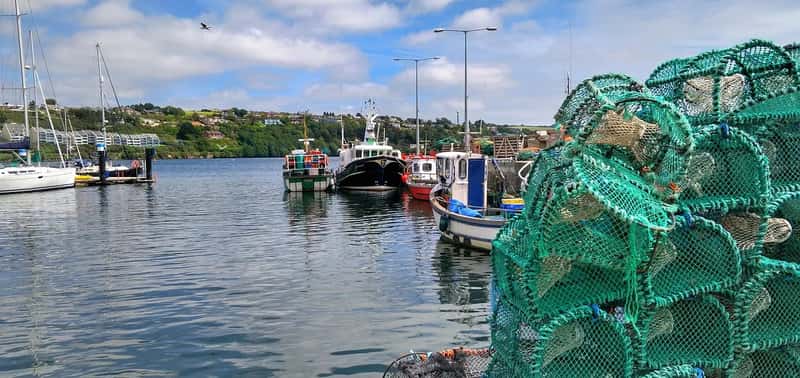
Kinsale sits on a natural harbor in County Cork, and it has built a reputation as something of a food town, with a dense cluster of restaurants and pubs for a place its size. Colorful shopfronts line narrow streets that slope down toward the marina, and the surrounding coastline offers walking paths, sailing, and a mild climate kept unusually temperate for its latitude by the North Atlantic Drift. It’s a rare small European town where retirees don’t need to learn a new language to feel at home.
Ireland offers a clear advantage for English-speaking retirees who want an EU country without the adjustment curve of Portuguese, Italian, or Greek. Non-EU nationals typically apply for residency as financially independent individuals, a route that requires proof of steady income and private health insurance but does not permit employment. EU citizens, meanwhile, can relocate to Kinsale without any visa process at all, which has helped keep a steady trickle of retirees arriving from Britain, the Netherlands, and Germany over the past several years.