Walk through any major city on trash day and you’ll get a rough sense of how much a household throws away. What’s harder to see is how that pattern scales up nationally, and how dramatically it differs from one country to the next. Wealthier nations tend to produce more waste per resident than poorer ones, but the gap between the top offenders and everyone else is often larger than most people assume.
Recent data from the Global Waste Index and Eurostat’s municipal waste statistics paint a fairly consistent picture of which nations are struggling most with per capita waste output. Some of the results are predictable. Others might surprise you, especially given how much effort certain countries have publicly invested in sustainability.
United States
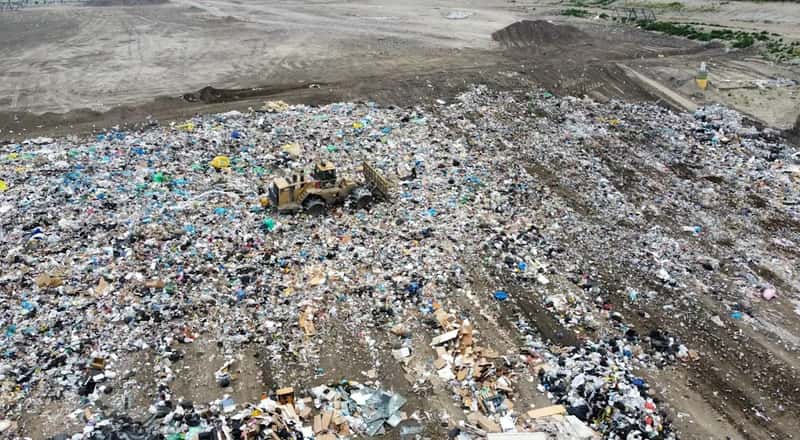
The United States remains the single largest generator of municipal solid waste per person among OECD nations. As in 2022, the country generating the most municipal solid waste is the US, which has actually hiked its output from 811 kg to 951 kg per capita. That’s not a small shift. It represents one of the steepest year over year increases recorded in the index.
The scale becomes even clearer when you factor in population. Although the U.S. accounts for about 4% of the global population, it generates 12% of MSW. A large share of that waste still ends up buried rather than recycled. The US sends 447 kg of its 951 kg of waste per capita to landfill. Recycling infrastructure hasn’t kept pace either, with the country’s rate trailing well behind European averages.
Israel

Israel presents an interesting case because it’s frequently cited as having the highest per capita waste generation figure of all, depending on how the data is framed. Israel has emerged as the country with the highest per capita waste generation, producing up to 650 kg of municipal waste per person annually. While that number sits below the US total, Israel’s overall management performance ranks worse once landfill reliance is factored in.
The core problem is disposal method rather than volume alone. Of this amount, 524 kg is landfilled, representing 80% of the country’s total waste, the highest landfill share among all analyzed nations. That combination of high generation and heavy landfill dependence is why Israel tops the list of worst performers in the most recent Global Waste Index rankings.
Chile
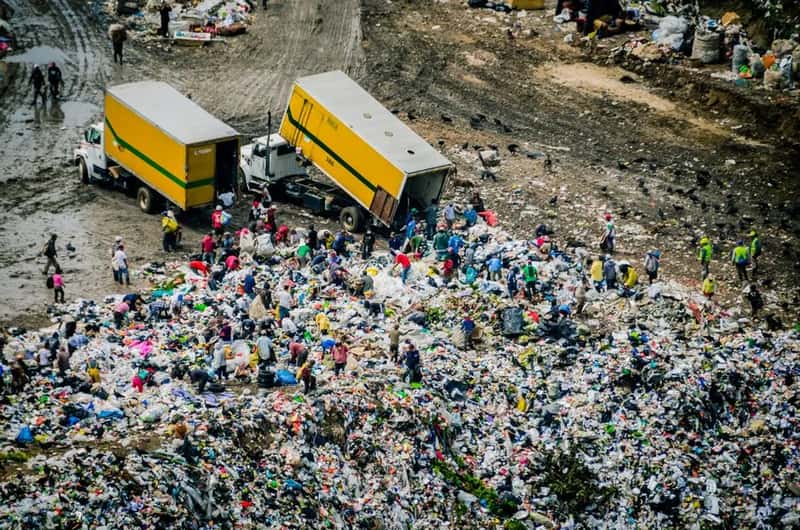
Chile has appeared near the bottom of international waste rankings consistently since at least 2019. Consistent with data from 2019 and 2022, Chile and the United States continue to rank among the world’s most significant waste polluters. The pattern hasn’t shifted much in the years since, despite growing regional attention to circular economy policies.
What sets Chile apart from some of the other high generators is the near total absence of recycling infrastructure. Chile follows closely, recycling almost none of its waste and disposing of the majority in landfills. Without a functioning recovery system, most of what gets thrown away simply stays buried, with little chance of being reprocessed into anything useful.
Canada
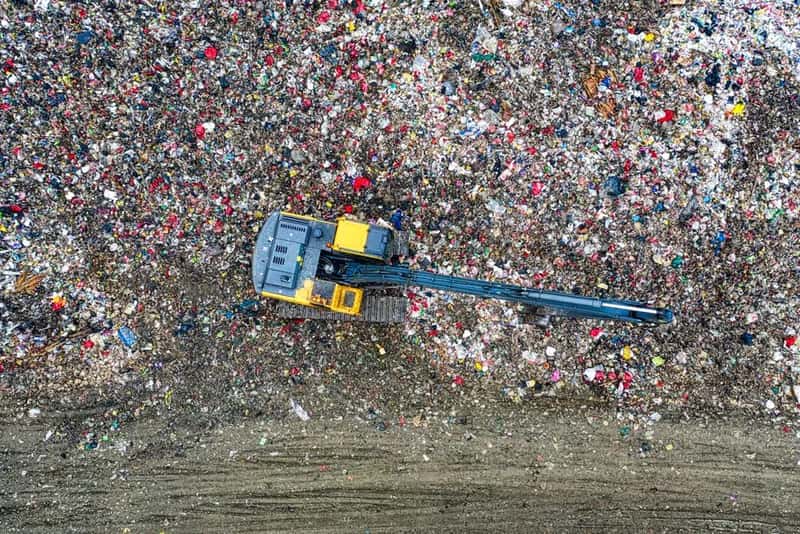
Canada doesn’t always get mentioned in casual conversations about wasteful nations, but the numbers tell a different story. Both Canada and the US rank at the bottom in terms of waste management, with alarming rates of landfill disposal. The two North American neighbors share strikingly similar weaknesses in this area.
Canada’s landfill dependence is actually worse proportionally than the US, even though its total generation figure is lower. In Canada the proportion is even higher: 486 kg out of 684 kg of all generated waste ends up in landfills. That’s roughly two thirds of everything generated going straight into the ground rather than through recycling or incineration.
Austria

Austria is a genuinely mixed case, and that’s part of what makes it worth including here. On one hand, the country generates some of the highest municipal waste volumes per person in the entire European Union. Austria (782 kg per person, 2023 data), Denmark (755 kg), and Belgium (699 kg) recorded the highest levels of municipal waste per person. In earlier years the figure climbed even higher, reaching well over 800 kilograms.
Yet Austria also stands out as one of the better performers when it comes to actually dealing with that waste responsibly. Austria recycles the highest amount of municipal waste, at 334 kilograms per capita, which represents 42%, even before the introduction of a national deposit return scheme. The country’s generation numbers have also climbed sharply over the past decade, with Austria among the nations showing the steepest increases in the region.
Denmark
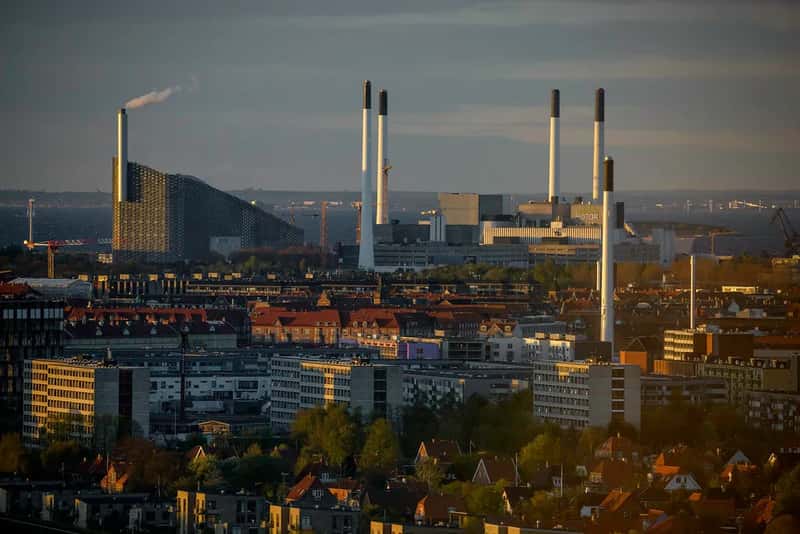
Denmark has held a spot near the top of European per capita waste rankings for years, and recent data confirms the trend hasn’t reversed. People generated the highest amount of municipal waste per person in Austria (803 kg per person, 2022 data), Denmark (802 kg, 2022 data), and Luxembourg (712 kg). Even with a slight decline more recently, Denmark’s totals remain among the highest recorded anywhere in the EU.
What softens the picture somewhat is how Denmark handles what it produces. The country is one of a small group that relies more heavily on incineration than landfilling, which is considered the less environmentally damaging of the two options. Only half of the 38 nations incinerate more than they deposit in landfill, the list being topped by Denmark, Switzerland, Belgium, and Norway. So while Denmark generates a lot, it’s also managing that volume more thoughtfully than several of its high output peers.
Luxembourg

Luxembourg is a smaller nation, but its per capita waste figures consistently rank among Europe’s highest. The amount of waste generated was highest in Austria (782 kg), Denmark (759 kg) and Luxembourg (718 kg). Given its small population, this kind of ranking says more about consumption intensity than about total volume.
The figure has stayed fairly stable across recent years rather than swinging wildly in either direction. Other countries to report high municipal waste levels per capita include Denmark (802kg), Luxembourg (721kg), Belgium (690kg), Cyprus (673kg) and Malta (618kg). Luxembourg’s economy, heavily oriented around finance and cross border commerce, likely contributes to consumption patterns that differ from more industrial or agricultural neighbors.
Belgium
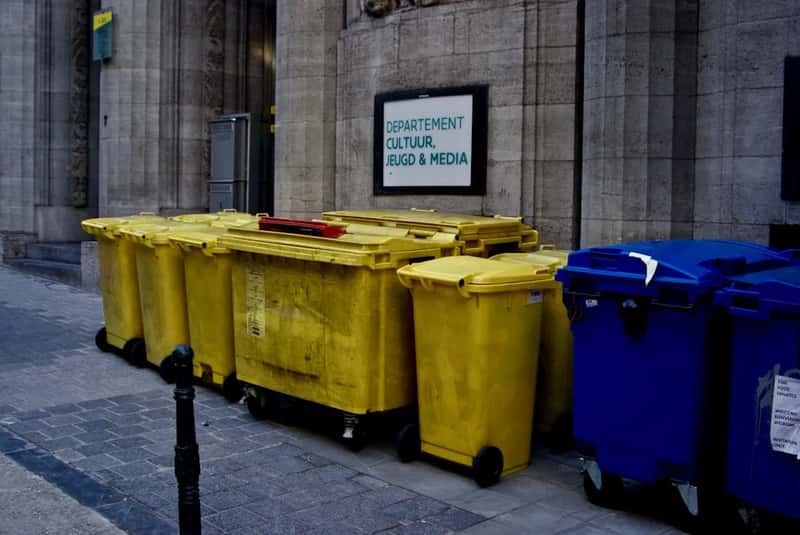
Belgium rounds out this list, and its recent trajectory is notable because the increase has been sharp rather than gradual. Austria (782 kg per person, 2023 data), Denmark (755 kg), and Belgium (699 kg) recorded the highest levels of municipal waste per person. That places Belgium firmly among the EU’s top per capita generators, even if it trails Austria and Denmark slightly.
The pace of change is what stands out most. Belgium (+274 kg), Czechia (+228 kg) and Austria (+217 kg) had the most significant increases. A jump of that size over roughly a decade suggests shifting consumption habits rather than a temporary blip, and it’s part of why Belgium keeps showing up near the top of these rankings year after year.
What the numbers actually tell us
Looking at these eight countries together, a pattern emerges that has less to do with national character and more to do with economic structure. Wealthier, highly urbanized economies with strong consumer spending tend to produce more waste per resident, almost regardless of how progressive their environmental policies are on paper. Austria and Denmark prove that a country can generate huge volumes of waste while still managing it more responsibly than a nation producing less overall.
The real distinguishing factor isn’t how much waste a country makes, but what happens to it afterward. Israel and Chile struggle because so much of their waste heads straight to landfill with little recovery. The United States and Canada face a similar issue at even larger scale. Meanwhile, countries like Denmark show that heavy generation doesn’t have to mean heavy landfill burden, provided the infrastructure for incineration and recycling is actually in place.