Population growth used to feel like a given, something that just happened in the background while the rest of the world sped along. That assumption no longer holds everywhere. In pockets of Eastern Europe and East Asia, the numbers are moving in the opposite direction, and the pace of that reversal has surprised even the demographers who track it closely.
Ukraine: A Nation Losing People Faster Than Any Other

No country illustrates the scale of demographic collapse quite like Ukraine. Ukraine stands apart with the steepest decline at -33%, losing roughly 16 million people, from 48.7 million in 2000 to an estimated 32.9 million in 2025. That is not a slow drift. It is a quarter century of loss compressed into a population trajectory that most countries never experience.
The reasons are not mysterious. Along with long-term economic factors, the war with Russia has accelerated Ukraine’s population decline. Refugee flows, casualties, and years of low fertility have combined into something demographers describe as the most extreme case of depopulation happening anywhere in the world right now.
Moldova: Losing a Quarter of Its People in Just Four Years

Moldova rarely makes international headlines, yet its population figures are startling. Moldova lost roughly a million people, about 25 percent of its population, between 2020 and 2024 and recorded an annual decline of 1.22 percent in 2024, making it the fastest-shrinking sovereign nation outside the small island states. That is a loss most countries would associate with war or catastrophe, not with a peacetime European nation.
The drivers here are familiar to the region: young people leaving for better wages in Western Europe, and a birth rate too low to offset that outflow. Moldova’s experience shows how quickly a small country can hollow out when emigration and low fertility reinforce each other year after year.
Bulgaria: Decades of Outward Migration Taking Their Toll

Bulgaria has been shrinking for so long that the trend has become part of its national conversation. Bulgaria’s population is expected to decline by 20.6% from 6.8 million in 2024 to 5.4 million in 2050. That is more than one in five residents disappearing from the country’s population within a single generation.
Unlike some neighbors, Bulgaria’s story is less about a collapsing birth rate and more about people leaving. Mass outbound migration is the largest contributor towards Bulgaria’s population decline. Workers head to Germany, Spain, and other EU economies, drawn by higher wages, and many simply do not return.
Latvia: A Fifth of the Population Gone Since Joining the EU
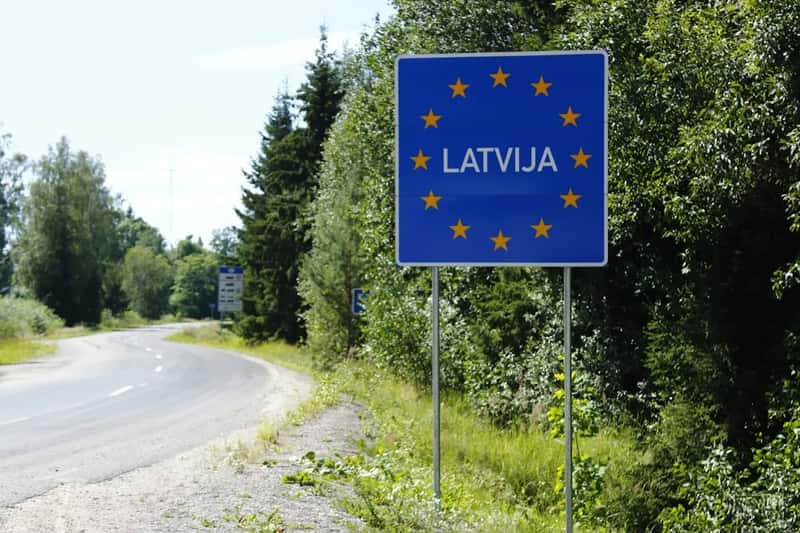
Latvia offers one of the clearest before and after pictures of what EU membership can do to a small country’s demographics. Latvia is expecting a 21.05% population loss between 2024 and 2050, and has lost about one-fifth of its population since joining the European Union in May 2004. Free movement opened the door, and hundreds of thousands walked through it toward Western Europe.
Economic opportunity abroad is only half the story. Latvia’s population loss is caused by economic migration and low birth rates. With fewer young families staying to raise children at home, the country faces a shrinking base of future workers even as emigration continues to draw away those already in the workforce.
Kosovo: The Steepest Annual Decline on the Continent

Among all the countries currently tracked for population decline, Kosovo stands out for the sheer speed of its contraction. Of the 43 countries currently experiencing population decline, Kosovo has the steepest decline at -5.39% per year, losing approximately 85,936 people annually. That kind of annual percentage loss is rare outside small island territories.
Kosovo’s situation reflects a mix of factors common across the Western Balkans. Young people continue to leave for jobs in Germany, Switzerland, and elsewhere in Western Europe, while birth rates have fallen well below what would be needed to replace those who go. The combination leaves fewer people behind each year, and an aging population left to manage the consequences.
Bosnia and Herzegovina: Below Replacement and Falling Fast
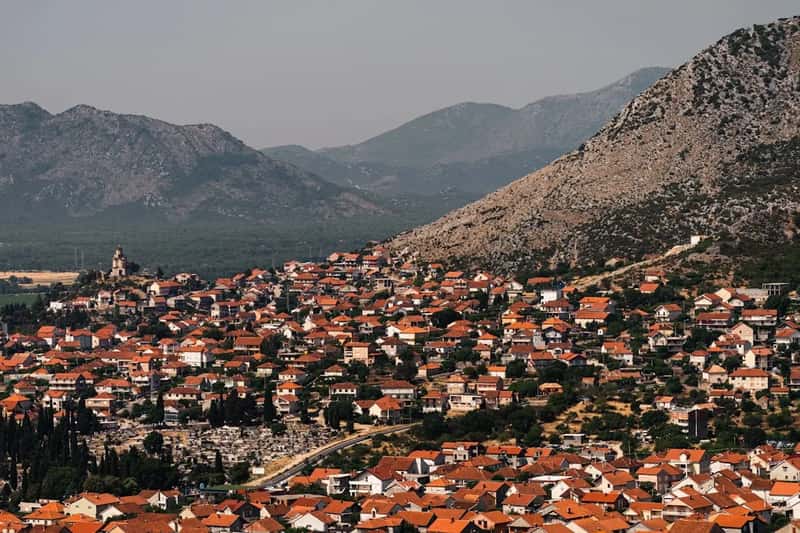
Bosnia and Herzegovina is projected to see one of the sharpest percentage declines anywhere in Europe over the coming decades. The population is projected to decline by 21.9%, shrinking from 3.2 million in 2024 to 2.5 million in 2050. Losing nearly a quarter of a national population within a single generation puts Bosnia among the most severely affected countries on the continent.
The underlying fertility numbers explain much of the trend. Bosnia and Herzegovina’s fertility rate is well below the population replacement rate of 2.1 births per woman at 1.26 births per woman. Combined with a steady outflow of younger residents seeking work abroad, the country is left with an aging population and a shrinking pool of people to support it.
Japan: Ten Straight Years of Record Low Births

Japan’s population decline is not new, but it keeps setting fresh records almost every year. The number of births in Japan dropped to 671,236 in 2025, down 14,937 year on year, confirming there were less than 700,000 births for the second successive year, and a record low for the tenth year running, based on comparable statistics available since 1899. The country’s total fertility rate fell alongside it. The total fertility rate, indicating the number of children a woman has in her lifetime, fell by 0.01 points to a new low of 1.14.
The gap between births and deaths keeps widening as well. Deaths outnumbered births by 918,253, marking the 19th consecutive year of natural decline in the population. Japan has tried wage subsidies, parental leave reforms, and tuition breaks, yet the demographic momentum built up over decades has proven difficult to reverse in any meaningful way.
South Korea: The World’s Lowest Fertility Rate

South Korea holds a demographic distinction no country wants: the lowest fertility rate on Earth. South Korea’s fertility rate stood at just 0.75 children born per woman in 2024. That figure sits far below the 2.1 needed simply to keep a population steady from one generation to the next.
The population trend that follows is stark, though there are recent signs of a modest shift. Population figures have now declined for four consecutive years, and the country’s GDP per capita recently slipped to fifth in Asia, behind Taiwan, whose fertility rate is only marginally higher. Even so, a small uptick in births during 2025 has not been enough to offset years of accumulated decline, and researchers caution that South Korea’s underlying demographic trajectory remains firmly downward.
Final Thoughts

These eight countries share very different histories, from war and mass emigration to some of the lowest birth rates ever recorded, yet they all point toward the same demographic reality reshaping large parts of Europe and East Asia. The causes vary from place to place, but the effect on labor markets, pension systems, and rural communities tends to look similar wherever it happens.
What comes next depends heavily on policy choices still being made in Seoul, Tokyo, Sofia, and beyond, and on whether emigration from countries like Moldova, Latvia, and Kosovo ever slows down. For now, the trend lines remain clear, and the numbers keep confirming just how fast some corners of the world are emptying out.