For decades, the assumption ran in one direction: people moved to the United States for opportunity, not away from it. That picture has been quietly shifting. A growing number of governments, facing aging workforces, tech shortages, and shrinking tax bases, are rolling out visa programs specifically designed to attract educated, employable foreigners, and American professionals are increasingly on their radar.
What makes this moment different from past waves of expat curiosity is the paperwork itself. Countries that once required years of employer sponsorship or convoluted point systems have simplified the process into something closer to a checklist. Below are nine places where that shift is most visible right now.
Canada’s Express Entry system rewards skills over connections

Canada remains one of the most transparent options for skilled Americans because its system does not rely on knowing the right person or having a pre-existing job offer. The Express Entry Federal Skilled Worker pathway uses a points-based system scoring age, education, language, and work experience, with no job offer required, though having one adds points. Processing tends to move faster than in many other developed countries.
Processing typically takes approximately six to eight months, though actual timelines vary. Provincial Nominee Programs add another layer of opportunity, since each province runs its own nomination stream targeting specific skills or demographics, and a provincial nomination adds 600 points to an Express Entry score, typically enough to guarantee an invitation. For Americans with a clean professional profile, Canada still offers one of the clearest routes to permanent residency in the developed world.
Portugal’s D8 visa turns remote income into residency

Portugal built its reputation as a haven for location-independent professionals through the D8, commonly known as the digital nomad visa. The visa targets non-EU and non-EEA nationals who work remotely for employers or clients based outside Portugal and can show stable income. The income bar is set relative to local wages rather than American salaries, which makes it accessible to a wide range of skilled workers.
Portugal’s official minimum wage sits at €920 gross per month in 2026, making the minimum monthly income threshold for Digital Nomad Visa applicants €3,680. Applicants also need savings on hand, since the baseline savings requirement equals 12 times the Portuguese minimum wage, which totals €11,040 for 2026. The old Non-Habitual Resident tax perk that once drew Americans in droves ended in January 2024, but the residency pathway itself remains intact and workable.
Spain pairs a digital nomad visa with a real tax break

Spain’s version of the remote-work visa carries an added incentive that few other countries can match: a meaningfully reduced tax rate for qualifying employees. Spain’s Digital Nomad Visa allows non-EU remote workers to live and work in Spain for up to five years, requiring a minimum income of €2,849 per month in 2026. That threshold is tied to Spain’s minimum wage, so it adjusts annually rather than staying fixed.
The real draw for many Americans is the so-called Beckham Law, since it offers visa holders a flat 24% income tax rate on earnings up to €600,000, compared to Spain’s standard rate of up to 47%. There are limits worth noting, as eligibility requires working remotely for a foreign employer or client, with no more than 20% of income coming from Spanish companies. For salaried employees rather than freelancers, the combination of income and tax relief is hard to beat in Western Europe.
Germany’s Blue Card targets shortage occupations directly
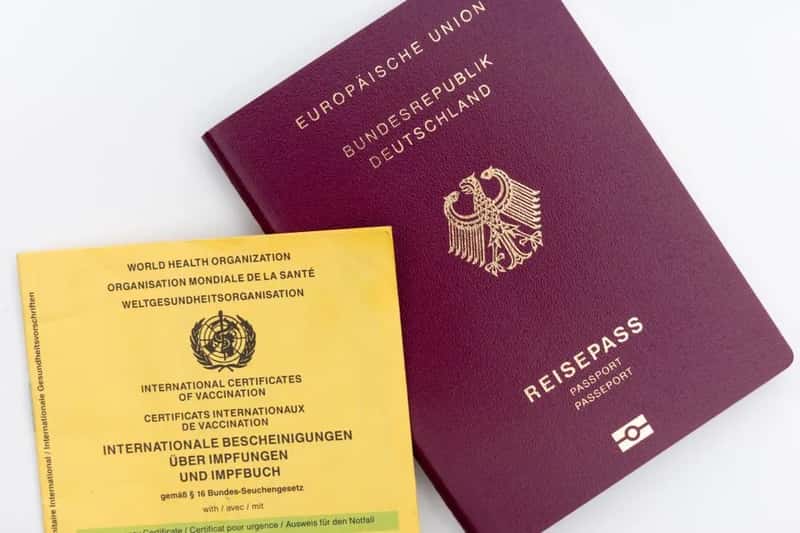
Germany has spent the past few years actively rewriting its immigration rules to plug gaps in engineering, healthcare, and IT. The country needs workers, and that fact shapes everything, with healthcare, engineering, manufacturing, and IT all facing shortages. The EU Blue Card is the main vehicle for skilled non-EU applicants, including Americans with a university degree and a job offer in hand.
The EU Blue Card is for highly skilled workers with a recognized degree and job offer, valid for four years, with permanent residency possible after 33 months, or 21 months with B1 German proficiency. Beyond the Blue Card, Germany also offers a freelancer route for independent professionals and creatives, plus a job-seeker visa that lets qualified applicants search for work on the ground rather than from abroad. Reduced bureaucracy, lower salary thresholds in shortage occupations, and fast processing have made Germany one of the more approachable large economies for skilled newcomers.
The Netherlands smooths the path through corporate sponsorship

Dutch immigration policy leans heavily on trusted employer relationships rather than lengthy government review, which speeds things up considerably. The Dutch government partners with trusted companies to reduce bureaucratic hurdles for skilled workers through its Highly Skilled Migrant Program. Salary thresholds scale with age, so younger professionals face a somewhat lower bar than more senior applicants.
Applicants under 30 need only earn about €4,129 per month, while those 30 and over need to earn about €5,670. Americans who prefer entrepreneurship over employment have a separate option, since the Dutch-American Friendship Treaty allows U.S. citizens to start a business in the Netherlands with a €4,500 investment. That treaty route, unique to the U.S.-Netherlands relationship, has quietly become one of the more popular workarounds for Americans who don’t want to wait on a sponsoring employer.
New Zealand courts skilled labor with multiple entry points

New Zealand’s appeal for Americans tends to be lifestyle first, immigration policy second, but the policy side has genuinely opened up in recent years. The Skilled Migrant Visa serves Americans with in-demand work experience or qualifications, an Investor or Business Visa covers those making qualifying financial investments, a Working Holiday Visa suits Americans under 30 wanting short-term work and travel, and an Essential Skills or Work Visa targets Americans offered jobs in sectors facing labor shortages. That range of options means there is rarely just one door into the country.
Tax policy sweetens the deal for new arrivals in a way many countries do not bother with. New Zealand taxes residents on worldwide income, but new residents may qualify for a four-year exemption on foreign income. For Americans holding onto U.S.-based investments or freelance clients, that grace period can offer real breathing room while they settle in.
Japan’s points system fast-tracks permanent residency

Japan’s Highly Skilled Professional visa is unusual in that eligibility is calculated rather than judged, which removes much of the guesswork common to other countries’ skilled visas. Unlike the ordinary work visa categories assessed qualitatively, HSP is assessed by an objective scoring table, so applicants either reach 70 points or they do not, making it one of the few Japanese visas where eligibility can be calculated in advance with near certainty. Points come from education, income, age, and language ability, among other factors.
The payoff for clearing the bar is substantial, and Japan has leaned further into this pathway recently. Applicants who reach 70 points can secure permanent residency in as little as 3 years, while 80 points cuts that down to just 1 year. Interest has surged accordingly, since HSP visa holders went from 592 to over 12,227 in five years, a roughly 1,965% increase, as of figures cited in early 2026. For high earners, Japan also runs a J-Skip track that skips the points calculation entirely for those meeting steep income and experience thresholds.
Estonia offers Europe’s most established remote-work route
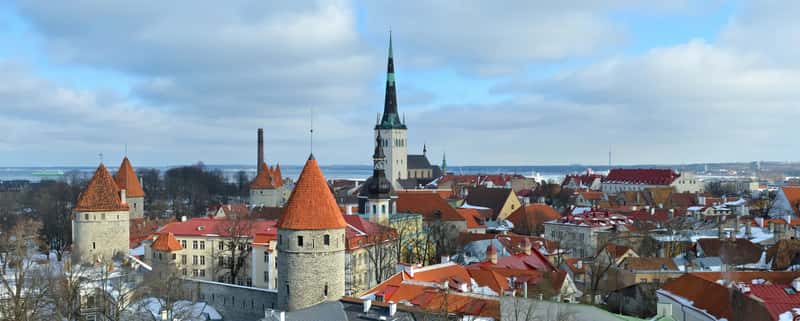
Estonia was first to the digital nomad visa concept, launching its program well before the pandemic made the category fashionable elsewhere. Estonia launched the world’s first dedicated digital nomad visa in 2020, valid for up to 1 year, though it is non-renewable, meaning holders must leave the Schengen zone afterward. The income requirement sits well below what wealthier Western European countries typically demand.
The visa requires proof of employment or active contracts with companies registered outside Estonia, along with a minimum gross income of EUR 3,504 per month, roughly 1.5 times the average Estonian salary. Skilled Americans who want something more permanent than a one-year stay tend to look at Estonia’s separate Startup Visa instead, since that route grants a temporary residence permit rather than a one-off stamp, valid for up to 5 years and extendable for up to 10 years at a time. Between the two programs, Estonia covers both short-term remote work and longer-term entrepreneurial settlement.
Australia keeps skilled migration central to its immigration model

Australia has long treated skilled migration as core national policy rather than a side program, and that focus has only sharpened as the country competes globally for talent. The General Skilled Migration stream, built around the Skilled Independent visa, uses a points test that weighs age, English proficiency, qualifications, and work experience, similar in spirit to Canada’s system but run entirely by the federal government rather than through provinces. Applicants do not need an employer sponsor for this particular visa class, which sets it apart from many employer-tied programs elsewhere.
For Americans in cutting-edge fields, Australia also runs a Global Talent visa aimed at leaders in sectors like technology, health, and advanced manufacturing, offering a more direct route to permanent residency for those who already have a strong professional track record. The country’s points-based system rewards younger applicants and those with Australian-recognized qualifications, so preparation and credential assessment matter more here than in some other programs. Combined with strong wages and a straightforward path to citizenship after permanent residency, Australia remains a steady, if selective, option for skilled Americans.
What this shift means for skilled Americans weighing a move

None of these nine countries is handing out visas indiscriminately. Every program still demands proof of income, professional credentials, or both, and most come with real tradeoffs in taxes, healthcare enrollment, or family logistics that require careful planning. What has changed is the transparency of the process itself: applicants can now check income thresholds, points tables, and processing times online before committing months to an application.
That clarity is arguably the biggest shift of the past few years. Where skilled migration once meant relying on an immigration lawyer to decode opaque rules, most of these countries now publish exact figures and timelines, letting applicants calculate their own odds before they ever submit paperwork. For skilled Americans who have been curious about a move abroad but wary of the bureaucracy, that predictability may matter more than any single visa’s headline benefit.