A passport is often the most powerful document a person will ever hold, yet most of us only think about it while waiting in an airport queue. The gap between the strongest and weakest travel documents has never been wider, and the 2026 edition of the Henley Passport Index, built on exclusive data from the International Air Transport Association, makes that gap impossible to ignore. Below is a closer look at the nine passports currently offering the broadest freedom of movement, followed by five that leave their holders with far fewer options.
1. Singapore
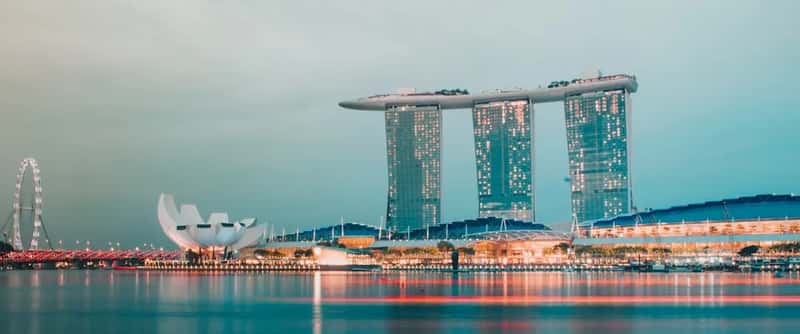
Singapore holds onto the number one spot for a second consecutive year, and by a comfortable margin. Singapore retains its position as the world’s most powerful passport with visa-free or visa-on-arrival access to 192 destinations. That single number puts it well ahead of every other country on the index, including its closest rivals in Asia.
The city-state’s diplomatic reach has been years in the making, built on trade relationships and a reputation for stability that governments elsewhere tend to trust. Singapore’s lead at 192 destinations represents 85% of the world’s travel destinations. Few other passports come close to offering that level of unrestricted global access.
2. Japan
Japan sits in a three way tie for second place in 2026, a shift from years when it held the top spot outright. Three countries tied for second place – Japan, South Korea and the United Arab Emirates – with visa-free access to 188 destinations, compared to Singapore’s 192. That is still an extraordinary result, even if it no longer sits alone at the summit.
Beyond the raw numbers, Japan’s passport strength reflects decades of quiet diplomatic groundwork across Asia, Europe, and the Americas. Japan notably regained visa-free access to China in 2025 for the first time since the pandemic, a significant diplomatic development. Small gains like that one keep adding up over time.
3. South Korea

South Korea shares that second place tie alongside Japan and the UAE, a position it has held onto through consistent expansion of its visa agreements. Much of that progress has come from outside the usual circles of wealthy trading partners. South Korea’s rise up the passport rankings reflects its expanding network of bilateral agreements, particularly with Latin American and African nations over the past decade.
That kind of diversification matters because it spreads a country’s travel freedom across regions rather than concentrating it in one bloc. South Korean citizens can now move through 188 destinations without needing a visa arranged in advance, a figure that places the country firmly among the world’s elite passports. It is a reminder that passport power is rarely built overnight.
4. United Arab Emirates
No passport has climbed faster over the past two decades than the UAE’s, and 2026 confirms that trend is far from over. The UAE is the country with the strongest performance in the 20-year history of the Henley Passport Index, adding 149 visa-free destinations since 2006 and climbing 57 places up the rankings. That is a transformation few other countries can match.
The reasoning behind the climb goes beyond simple economics. This, says the report, has been driven by the UAE’s “sustained diplomatic engagement and visa liberalization.” Emirati citizens now enjoy the same 188 destination access as Japan and South Korea, a remarkable outcome for a country that ranked far outside the top fifty not so long ago.
5. Sweden

Sweden holds third place on its own in the most recent July 2026 update, a notable position given how crowded the upper tiers of the index tend to be. Sweden came in third place, with access to 187 countries. That single digit gap behind the second place tie shows just how tightly packed the top of the ranking has become.
Sweden’s strength follows a familiar European pattern built on European Union membership, Schengen participation, and a long history of reciprocal visa waivers. Its passport gives holders access to nearly every corner of the globe with minimal paperwork. Few travelers from Sweden ever need to think twice before booking an international trip.
6. Spain

Spain sits in the fourth place tier alongside a large group of fellow European nations, all offering the same level of access. The No. 4 spot for July 2026 is shared by Belgium, Denmark, Finland, France, Germany, Ireland, Italy, Luxembourg, Netherlands, Norway and Spain, all with a score of 186. That is a wide club of countries clustered just below the very top of the index.
Spain’s position reflects the broader pattern of European passport strength, built on decades of continental integration. Spanish citizens can travel to 186 destinations without arranging a visa beforehand, a figure that has held steady through the year’s quarterly updates. It remains one of the most useful travel documents in the world for both business and leisure.
7. France

France shares that same fourth place tier with a 186 destination score, a position it has occupied consistently through 2026’s updates. Denmark, Luxembourg, Spain and Switzerland rank next in joint third place with access to 186 countries, followed by Austria, Belgium, Finland, France, Germany, Greece, Ireland, Italy, Netherlands and Norway in joint fourth place with access to 185 destinations. The exact grouping has shifted slightly across the year’s quarterly releases, but France’s overall standing near the very top has not changed.
French passport holders benefit from the country’s long diplomatic history and its central role within the European Union. Access to 186 destinations places France solidly among the world’s most useful travel documents. It is the kind of ranking that rarely makes headlines precisely because it has become so expected.
8. Germany
Germany rounds out the same fourth place cluster, another European heavyweight offering its citizens 186 visa-free destinations. This tier of the ranking has become something of a fixture for large Western European economies with deep trade ties across the globe. Germany’s diplomatic network, built over decades of postwar rebuilding and EU integration, continues to pay dividends for ordinary travelers.
What stands out about Germany’s position is its consistency. Unlike some passports that jump several places in a single year, Germany’s ranking has remained remarkably stable, hovering near the top without much drama. For German citizens, that stability translates into predictable, low friction travel to nearly every part of the world.
9. Switzerland

Switzerland has moved between third, fourth, and fifth place across different 2026 updates, a reflection of how tightly bunched the upper ranks have become. The fifth place tier includes Austria, Greece, Malta, Portugal, and Switzerland, each with 185 destinations. Even a single destination gained or lost by another country can shuffle Switzerland’s exact placement.
Regardless of the precise spot, Switzerland’s passport remains among the most capable in the world. Norway, Switzerland, and many EU members offer visa-free access to more than 180 destinations. That kind of access reflects Switzerland’s neutral diplomatic stance and its dense web of bilateral agreements built over generations.
10. Afghanistan

At the opposite end of the spectrum, Afghanistan holds the unfortunate distinction of the world’s weakest passport for yet another year. Afghanistan is currently last in the rankings, at 103rd place, since its passport holders get access to 23 destinations. That places it well behind every other country tracked by the index.
The reasons behind that ranking are tied directly to the country’s recent history. Syria, Iraq, Pakistan, and Yemen also rank near the bottom, reflecting the effects of prolonged conflict, political instability, and limited diplomatic agreements on international travel, and Afghanistan fits squarely within that same pattern, only more severely. Decades of conflict have left the country with almost no reciprocal visa arrangements to speak of.
11. Syria
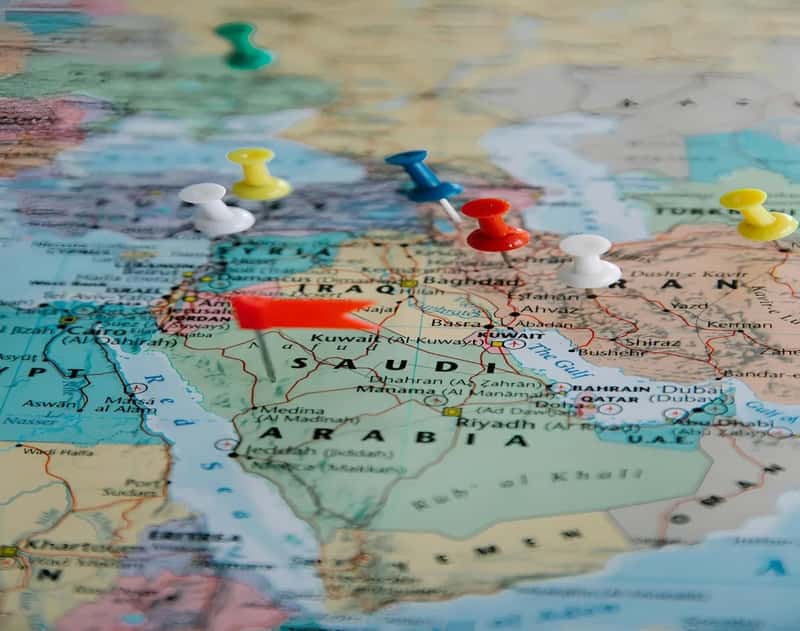
Syria sits just above Afghanistan, offering a slightly wider but still extremely limited set of travel options. Syria and Iraq ranked only slightly higher, with access to 26 and 29 destinations, respectively. That narrow margin above the very bottom does little to change the daily reality for Syrian passport holders.
Years of civil war have left Syria’s diplomatic relationships severely strained, and few countries are willing to offer its citizens visa-free entry. The isolation extends beyond travel convenience into broader questions of economic opportunity and mobility. For most Syrians, international travel still requires lengthy visa applications and, often, outright denial.
12. Iraq
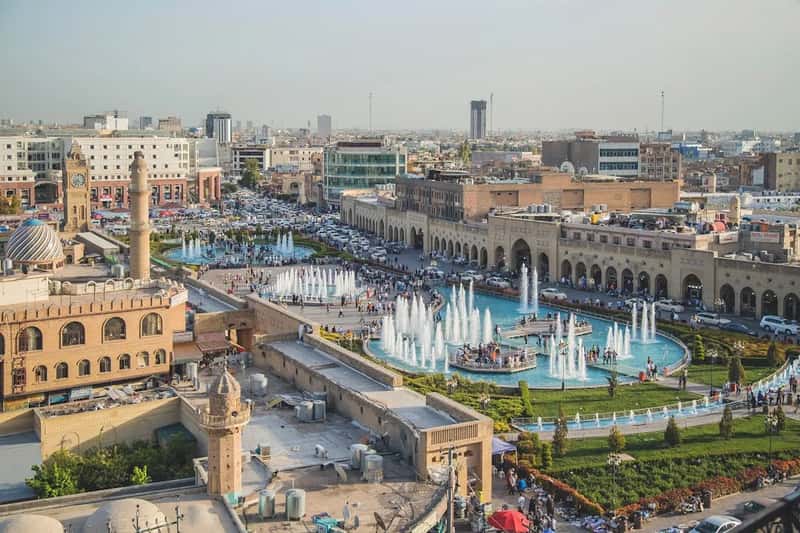
Iraq ranks third from the bottom, with a passport that grants access to a modest number of destinations compared to the global leaders. In 2026, Iraq holds the 99th spot on the Henley Passport Index, offering visa-free or visa-on-arrival access to just 29 destinations. That places it firmly among the world’s most restricted travel documents.
Decades of instability following years of conflict have made it difficult for Iraq to rebuild the kind of diplomatic trust that leads to visa waivers. The result is a passport that offers its holders far fewer options than most of their global peers. Even neighboring countries in the region often require Iraqi citizens to secure a visa well in advance.
13. Pakistan
Pakistan shares a tied position near the bottom of the index alongside Yemen, both offering a similarly narrow set of travel options. Pakistan and Yemen, sharing 98th place with 31 visa-free destinations, face restrictions partly due to security concerns that influence how other governments set entry requirements for their citizens. That places both countries just above Iraq, Syria, and Afghanistan.
Regional security dynamics play a significant role in how other governments approach Pakistani travelers, often requiring far more scrutiny than passport holders from neighboring nations. This 25-destination gap underscores the severe restrictions faced by Pakistani passport holders, especially when contrasted with the world’s top-ranking passports, which provide access to 192 destinations. The disparity highlights just how uneven global mobility remains.
14. Yemen
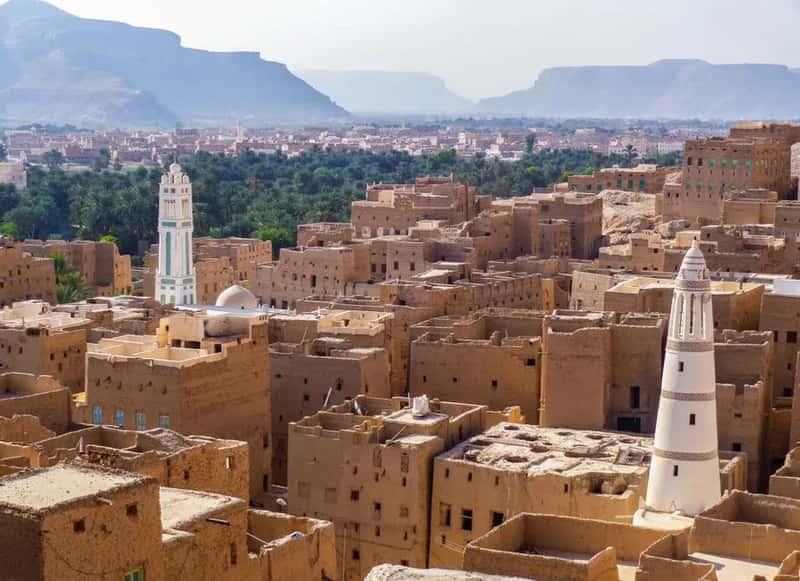
Yemen closes out the list of the five most restricted passports, tied with Pakistan near the very bottom of the 2026 rankings. Yemen’s passport ranks just above Iraq’s, offering only 31 visa-free destinations. That figure has remained largely unchanged across the year’s quarterly updates.
The country’s prolonged civil conflict has made it exceptionally difficult to negotiate new travel agreements with other nations. Yemen’s place near the bottom is due to years of civil war, resulting in severe diplomatic isolation and strained international relationships. For Yemeni citizens, that isolation translates directly into some of the most limited international travel options in the world today.
The distance between the top and bottom of the 2026 rankings tells a broader story about global mobility. A Singaporean citizen can reach 192 destinations without any advance visa paperwork, while an Afghan citizen is limited to a mere fraction of that number. That gap, built from decades of diplomatic relationships, trade agreements, and political stability, shapes how easily people move through the world far more than most travelers realize.