Buying your first home is one of the biggest financial decisions of your entire life. Most people spend years saving for it, dreaming about it, and finally feeling ready for it. Yet the moment they step into the market, the reality hits hard. The process is complicated, emotionally charged, and full of hidden traps that can quietly cost tens of thousands of dollars.
Here’s something that might surprise you. A study from Clever Real Estate found that roughly four out of five Americans who purchased a home in 2023 or 2024 have at least one regret about their purchase, with nearly half saying they’ve struggled to make their mortgage payment. That is a staggering number. So before you fall in love with a listing, let’s talk about the mistakes that drain wallets and haunt homeowners for years. Let’s dive in.
1. Skipping the Home Inspection to Win a Bidding War
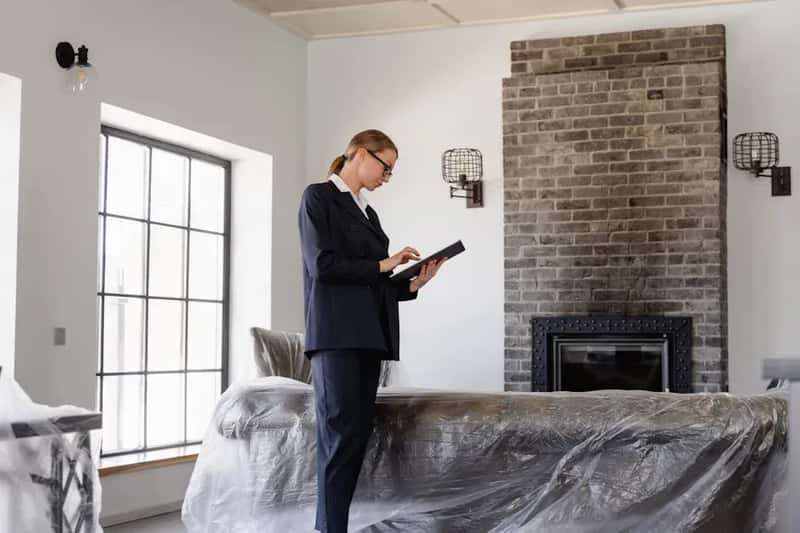
Let’s be real: in a competitive housing market, the pressure to close a deal fast is intense. Sellers love buyers who waive contingencies. It feels like the right move in the moment. It almost never is.
In a competitive market, buyers often feel pressured to waive inspections to make their offer more attractive to sellers. This decision can be financially devastating if the property has significant structural issues or hidden damage. A professional inspector identifies problems with the foundation or roof that are invisible to the untrained eye.
Skipping inspections to save a few hundred dollars can cost over $10,000 in surprise repairs after closing. That is the definition of penny-wise and pound-foolish. An inspection may uncover roof leaks, foundation cracks, or plumbing problems, issues that can easily cost tens of thousands to repair. Never, ever waive it lightly.
2. Underestimating Hidden Maintenance Costs After Closing

Here’s the thing people don’t talk about enough. Owning a home is not just paying a mortgage. The real financial shock often comes from all the things breaking down after you get the keys.
Nearly half of homeowners spent more than $5,000 on unexpected repairs in 2024, up from roughly a third in 2023. That is a sharp and alarming jump in just one year. One report found that the vast majority of homeowners faced unexpected repairs in 2024, and nearly half said those surprises strained their budgets.
According to the National Association of Home Builders, maintenance for a post-2010 home may cost roughly three percent of its value each year. For older homes, that figure rises to about five percent annually. Think about that on a $400,000 home. That’s up to $20,000 per year in upkeep. Most first-timers simply don’t factor that in.
3. Forgetting to Budget for Closing Costs

Ask almost any first-time buyer what they saved for, and they’ll say the down payment. That’s completely normal. It’s also only half the picture, and many buyers learn the hard way that the other half stings just as much.
Many buyers focus solely on the down payment and forget to budget for the fees required to finalize the transaction. Closing costs typically range from two to five percent of the total loan amount and include appraisal fees and title insurance. Failing to set aside these funds can derail the purchase at the very last moment or deplete emergency savings.
On a $500,000 home purchase, closing costs will be two to five percent of the total, meaning somewhere between $10,000 and $25,000. That is real money, on top of your down payment, often due in cash at closing. Buyers face other closing costs including loan origination and underwriting fees, as well as agent commissions and expenses such as a home appraisal or inspection, and collectively, those costs generally range from three to six percent of the loan amount.
4. Not Shopping Around for the Best Mortgage Rate

I think this is one of the most underrated and most financially damaging mistakes on this entire list. People spend weeks choosing paint colors but spend exactly one hour choosing a mortgage lender. That imbalance is shocking.
Experts strongly advise shopping around for mortgage rates. According to a 2023 study by the Consumer Finance Protection Bureau, mortgage rates can differ by around 50 basis points of the annual percentage rate. Shopping around for cheaper lenders can result in $100 a month or more of savings for first-time home buyers in today’s high-interest rate environment. Failure to shop is money lost.
Another one of the biggest first-time home buyer mistakes is not shopping around for lenders. Don’t stick with one quote from one lender while looking for financing options. You’ll want to shop around and compare offers from different lenders. Interest rates, loan terms, and fees can vary significantly between lenders. Getting multiple quotes allows you to find the best deal that suits your needs and saves money over the span of your loan.
5. Ignoring the Impact of Their Credit Score

Your credit score is not just a number on a screen. In the mortgage world, it is the difference between a comfortable monthly payment and one that genuinely hurts every single month. First-time buyers often underestimate just how massively it shifts the numbers.
Based on FICO’s mortgage calculator data from October 2025 on a $400,000 loan, a borrower with a 760 or higher credit score saves approximately $536 per month and close to $193,000 in total interest compared to someone with a 620 to 639 score. That’s nearly $200,000 in savings just from having a better credit score.
In 2024, the average credit score for a first-time homebuyer was 734, according to the Federal Reserve Bank of New York. For repeat buyers, the average score was 775. That gap matters enormously. Your credit score plays a huge role in the mortgage approval process and the interest rate you qualify for. Before applying for a mortgage, you should review your credit report and take steps to improve your score if necessary, which may include paying off debt, correcting errors, and making all payments on time. The better your credit score, the better your loan terms may be.
6. Exceeding Their Budget Because of Emotional Buying

Honestly, this one is incredibly human and incredibly costly. You tour a home, it feels like the one, and suddenly you’re willing to stretch your budget by $30,000 “just this once.” The numbers rarely recover from that emotional leap.
It is a particularly common sentiment among first-time buyers, who often have smaller savings, limited budgets, and more conservative loans. About nearly half of new buyers exceeded their budget and well over a third think they overpaid, compared to notably lower figures for repeat buyers.
Without prior experience to guide them, first-time buyers were the most unprepared, with more than a third saying home buying was more difficult than expected. Buying emotionally is like grocery shopping while starving. Everything looks better than it is. With hundreds of thousands of dollars on the line, you want to ensure you’re making a wise financial investment that won’t leave you with first-time home-buying regrets later.
7. Starting the Search Without a Mortgage Pre-Approval

Picture this: you spend three weekends touring homes, you fall completely in love with one, you make an offer, and then it falls apart because you weren’t pre-approved. The whole experience was wasted time and wasted heartache. This happens more than most people realize.
Starting a home search without a pre-approval letter is a fundamental error that leads to wasted time and disappointment. Sellers prioritize offers from buyers who have verified proof of funds or financing already in place. This step clarifies exactly how much house you can afford and prevents you from falling in love with properties out of your budget.
A pre-approval is not a firm offer of credit, though a lender will want to see proof of income, assets, debts and your credit record before providing you with one. It will help you gain a clear understanding of how much you can afford. It also strengthens your position as a serious home buyer in the eyes of sellers. Think of pre-approval as your ticket into the game. Without it, you’re just watching from the parking lot.
8. Draining All Savings for the Down Payment

This is one of those mistakes that feels responsible in theory. You put everything into the down payment, you own more of the home upfront, and you feel financially disciplined. Then the water heater breaks in month two, and there’s nothing left to cover it.
Using every available dollar for the down payment and closing costs leaves a new homeowner vulnerable to unexpected life events. Houses require immediate maintenance and repairs that often arise shortly after moving in. Financial experts recommend maintaining a buffer of three to six months of living expenses separate from the house fund.
The median down payment for first-time buyers is only about nine percent, compared to twenty-three percent for repeat purchasers. So putting down more than necessary while emptying your safety net is a dangerous trade. Ignoring that advice can quickly lead to surprise bills. A failing HVAC system, leaky roof, or even the loss of a major appliance can wipe out savings overnight.
9. Overlooking the Neighborhood in Favor of the House

A house is a structure. A neighborhood is a living, breathing thing that changes over time and shapes your daily life in ways you can barely predict when you’re touring on a sunny Saturday afternoon. First-time buyers routinely make the mistake of falling for walls and countertops while ignoring what’s outside the front door.
Falling in love with a specific house often causes buyers to overlook the surrounding environment and community dynamics. Factors such as local school ratings and crime statistics significantly impact both quality of life and future resale value. Visiting the area at different times of the day reveals noise levels and traffic patterns that might not be apparent during a scheduled showing.
A beautiful home in a declining or inconvenient location may not appreciate in value over time. Thorough research into the neighborhood is just as important as inspecting the property itself. It’s hard to say for sure how much a neighborhood affects long-term satisfaction, but resale data consistently shows that location drives value more than nearly any other factor. Even if you plan on living in your new home for many years, you should still consider its resale value. Knowing what buyers in your area are looking for can help you make smart choices about your purchase. By keeping resale value in mind, you can feel confident that your investment will continue to hold its value and hopefully increase over time.
The Bottom Line

Buying your first home doesn’t have to be a crash course paid for in regrets and financial stress. The mistakes above are remarkably common, and they are also remarkably avoidable once you know to look for them. First-time homebuyers accounted for a record-low share of all buyers in 2024, down significantly from previous years, with the age of the typical first-time buyer climbing to 38, up from 35 the year before, according to the National Association of Realtors. The market is unforgiving right now, and the margin for error is thin.
The good news is that preparation is genuinely free. Getting pre-approved costs nothing. Shopping three lenders instead of one costs an afternoon. Attending your home inspection costs a few hours but can save you thousands. Small decisions made before you close can protect you for years afterward.
The biggest financial mistake isn’t paying too much for a house. It’s walking into the process unprepared. What would you do differently if you could start your home search all over again?