Buying a home in another country rarely comes down to one single moment of “now is right.” It is more like a puzzle made of interest rates, currency swings, local seasons, and a country’s own political mood, all shifting at slightly different speeds. Anyone who has watched a euro price tag turn into a different pound or dollar figure overnight knows the timing question is not just about property values. It is about everything surrounding the purchase too.
Why timing matters more when you buy outside your home country

When you buy at home, you generally deal with one currency, one set of interest rates, and rules you already understand. Buying abroad adds layers: exchange rates, foreign tax rules, and sometimes a completely different legal process for transferring ownership. A property that looks like a bargain in local currency can become expensive once converted back to your own money, or the reverse can happen just as easily.
This is why professionals in the space stress that timing decisions abroad involve more moving parts than a typical purchase. Interest rates and currency fluctuations, including instability between currencies like the British Pound versus the Euro, are among the core factors that determine whether a foreign market is a smart place to buy right now. Getting even one of these elements wrong at the wrong moment can quietly erode the value of an otherwise solid purchase.
Watch mortgage and interest rate cycles before committing

Borrowing costs abroad vary enormously depending on which country you are looking at, and 2026 has produced some sharp contrasts. In the eurozone, rates have settled at notably different levels from country to country even though everyone shares the same central bank. A gap of more than two percentage points separates the cheapest and most expensive mortgage markets in the eurozone, with the average rate for new home loans sitting around 3.43 percent as of April 2026.
Malta currently tops the ranking with the lowest rates at around 2.08 percent, followed by Bulgaria, Spain, Portugal, Croatia and Slovenia, while Spain and Portugal stand out among the larger economies. Outside the eurozone, the picture looks different again. The United Kingdom charges significantly more, with fixed rates starting above 5.0 percent, so buyers comparing markets need to look past the sticker price of the home itself and factor in what financing will actually cost them month to month.
Currency swings can move the price more than the property itself
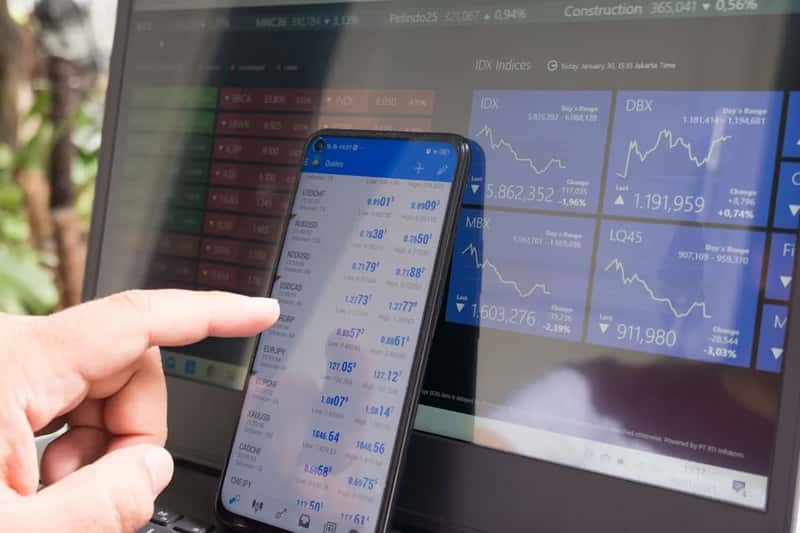
A property’s price tag in euros or dong or pesos is only half the story. What matters just as much is what your home currency buys on the day you actually transfer funds. The price of a property is set in a foreign currency, but if you are paying from a different currency, that exchange rate changes constantly.
The swings can be larger than most buyers expect. A small shift in the exchange rate can change the final cost of a home by thousands, and a 2 percent rate change on a 300,000 euro property can mean a difference of over 5,000 pounds. Historical events show just how fast this can move: after the Brexit vote, the pound’s value fell 10 percent against the US dollar in a single day, which briefly turned UK property into a bargain for anyone holding dollars or euros. This is exactly why serious buyers now treat currency strategy as a separate decision from the property search itself, sometimes locking in rates months ahead of the actual purchase.
Off-season shopping often gives you more room to negotiate

Timing within the calendar year matters too, particularly in markets driven by tourism and holiday demand. Coastal regions in Spain, Greece, or Croatia see a flood of buyers and sightseers every summer, which pushes up both prices and seller confidence. Visiting and negotiating in the quieter months, typically late autumn through early spring, tends to put buyers in a stronger position because sellers face less competition for their attention.
This pattern holds fairly consistently across Mediterranean and Southeast Asian markets alike. Agents are more available, price reductions are easier to secure, and there is simply more time to inspect a property properly without the pressure of a queue of other interested buyers behind you. It will not turn a weak market into a strong one, but it does shift negotiating leverage modestly in the buyer’s favor.
Local market cycles vary wildly, so no single global “right time” exists

One of the most common mistakes is assuming that if it is a good time to buy in one country, it must be a good time everywhere. In reality, real estate cycles are intensely local. Spain, for example, is showing classic signs of a market recovery in 2026, with property sales up across the board after some areas faced a stall due to oversupply in previous years.
Meanwhile other markets are following entirely different rhythms. France’s residential property market returned to growth in 2025 after a prolonged downturn, with house prices rising 1.1 percent, supported by a stable economy and low mortgage interest rates. A buyer who assumes “Europe is recovering” without checking the specific country and even the specific city risks buying into a cycle that has already peaked, or missing one that has barely begun.
Golden visa and residency deadlines can create false urgency

Residency-by-investment programs have become a major driver of overseas property purchases, and they come with their own timing pressures. Countries like Greece, Malta, Cyprus, Panama, and the UAE offer residence through real estate investment, while some Caribbean countries, Türkiye, and Egypt offer a path to citizenship through property purchases. These programs periodically change their minimum investment thresholds or eligibility rules, which can push buyers into rushed decisions.
Athens has seen strong interest partly due to high rental yields and the enduring popularity of the Golden Visa, a good example of how a residency program can add momentum to a market beyond what fundamentals alone would justify. The smart approach is to separate the two decisions mentally: is this a good property at a fair price, and separately, does the residency benefit genuinely add value for your situation? Rushing to beat a program deadline is rarely a good enough reason on its own to buy a specific property.
Regulatory shifts around short-term rentals change the investment calculus

If your plan is to buy abroad and rent the property out, the rules around short-term letting are shifting fast, and that timing matters enormously. New EU-wide regulations expected around 2026 will force online rental platforms to share comprehensive data with local authorities, empowering governments to enforce stricter limits such as maximum rental days per year and mandatory registration.
This has real consequences for buyers chasing rental yield. Because of these incoming EU and local regulations, investors increasingly need to seek out properties that already hold a valid tourist licence or target regions where local regulation is less strict, with many professional landlords planning to pivot toward mid-term rentals to avoid short-term restrictions. Buying before understanding these rules can mean acquiring a property that cannot legally be rented the way you intended, so this is one area where waiting for regulatory clarity is often wiser than moving quickly.
Political and economic stability signals are worth tracking closely

Some of the biggest price swings in international real estate history have come from political shocks rather than gradual market shifts. In the three months following the Brexit vote, 78 percent of commercial property sales in the UK were paid for by foreign investors swooping in on what suddenly looked like a bargain. Similar patterns have played out elsewhere when currencies weaken sharply around elections, policy changes, or trade disputes.
The lesson is not to avoid politically eventful markets altogether, since these moments sometimes create genuine buying windows. Rather, it is to understand that a sudden price drop tied to political turmoil can reverse just as quickly once stability returns, or it can signal a longer structural problem. Distinguishing between a temporary dip and a genuine downturn usually requires paying attention to fundamentals like employment, tourism numbers, and government policy direction, not just the exchange rate on a given day.
Signs it might be smarter to wait rather than buy right now

Not every market signal points toward buying. Rapidly rising mortgage rates in your target country, a currency that has strengthened sharply against your home currency in recent months, or a local market showing clear signs of oversupply are all reasons to pause. Macroeconomic and geopolitical uncertainty, including the lingering effects of global inflation and shifting trade policies, continues to temper aggressive transaction volumes in parts of Europe, and that kind of uncertainty is a reasonable reason to give a purchase more time rather than less.
Another warning sign is buying purely to beat a deadline, whether that is a visa program change, a tax incentive expiring, or simple fear of missing out on rising prices. Waiting a few extra months to properly research zoning rules, ownership restrictions for foreigners, and true resale liquidity almost always costs less than rushing into a purchase that turns out to be a poor fit. A property that is still available and reasonably priced in six months was probably never the once-in-a-lifetime opportunity it was made out to be.
Bringing the pieces together before you sign anything

No single indicator tells the whole story on its own. Mortgage rates, currency levels, seasonal demand, residency program rules, and local political conditions all interact, and a favorable reading on one front can be offset by a less favorable one elsewhere. The buyers who do well tend to check several of these signals together rather than fixating on just the headline property price.
Working with independent professionals, a local lawyer, a currency specialist, and an agent who is not simply trying to close a sale quickly, tends to surface problems before they become expensive mistakes. Budgeting for all associated costs matters too, since local transfer taxes and fees will apply even where the buyer’s home country charges no equivalent tax. Taking the time to line these factors up properly is usually what separates a good purchase abroad from a regretted one.