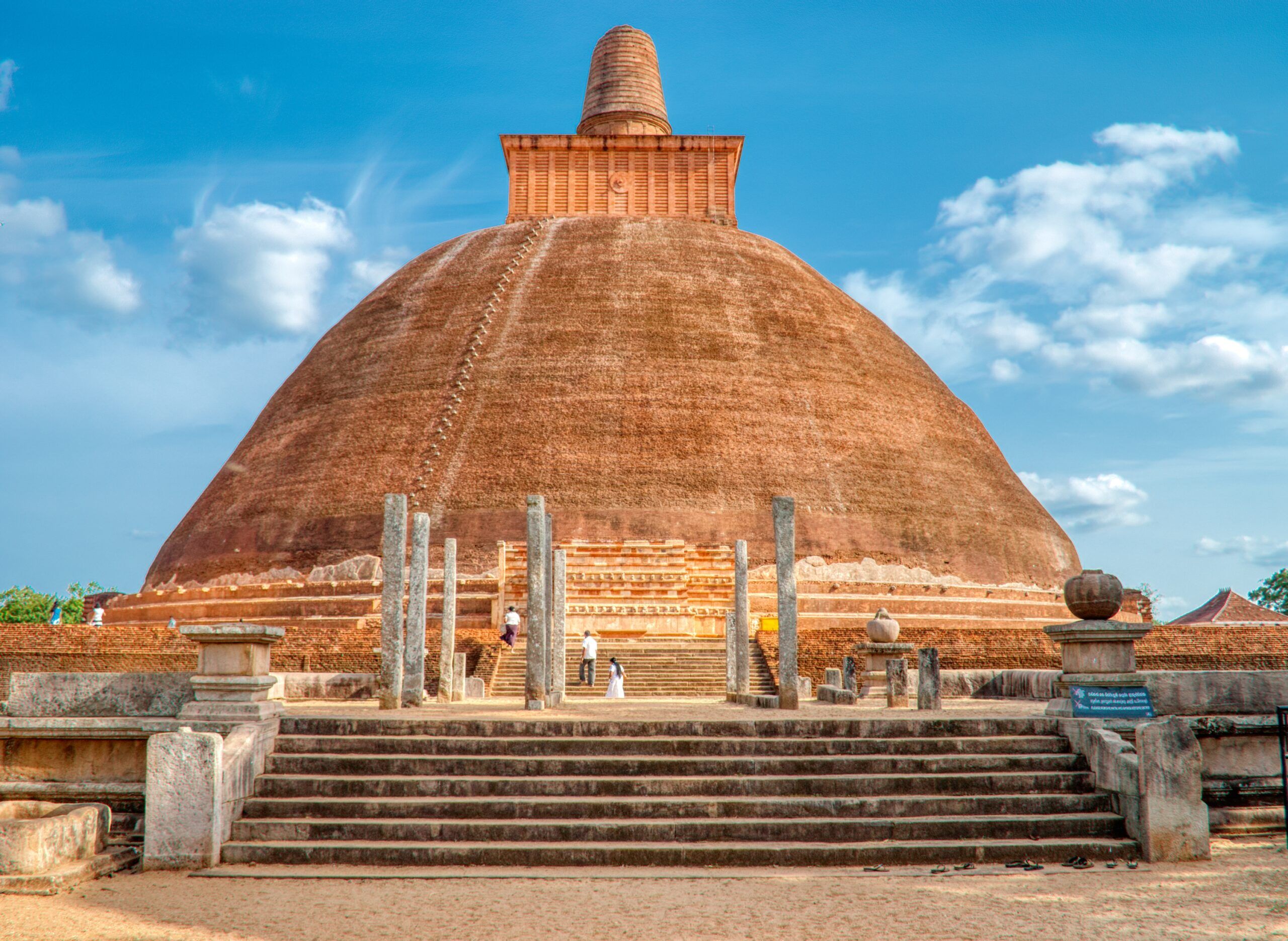
Most people would name the pyramids or the Colosseum if you asked for an ancient giant. Few would think of a brick dome in Sri Lanka. Yet Jetavanaramaya, a colossal fourth-century Sri Lankan stupa, was once among the world’s largest structures, and it has endured earthquakes, neglect and civil war.[1]
“Built to last forever” is a fair description of the builders’ ambition, but the monument hasn’t stayed untouched. It has lost height, been buried by neglect and been patched up more than once. Still, it stands, and the story of how it got here says a lot about ancient engineering and the limits of preservation.
A Brick Mountain in Sri Lanka’s Ancient Capital
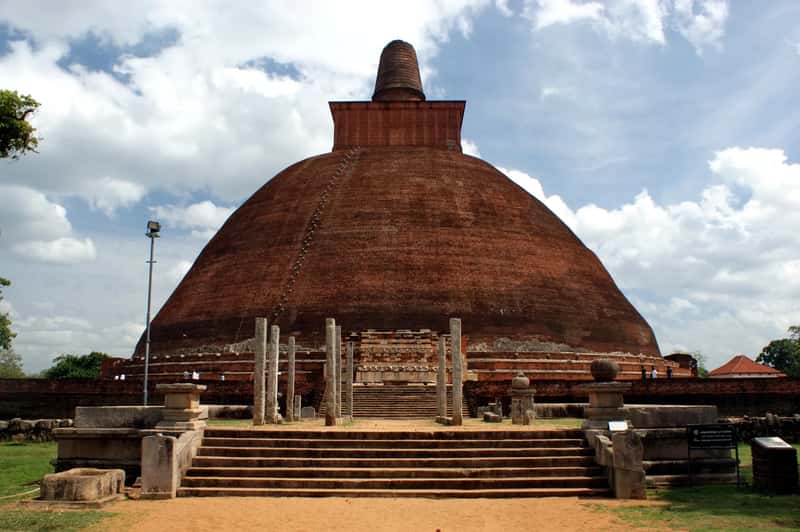
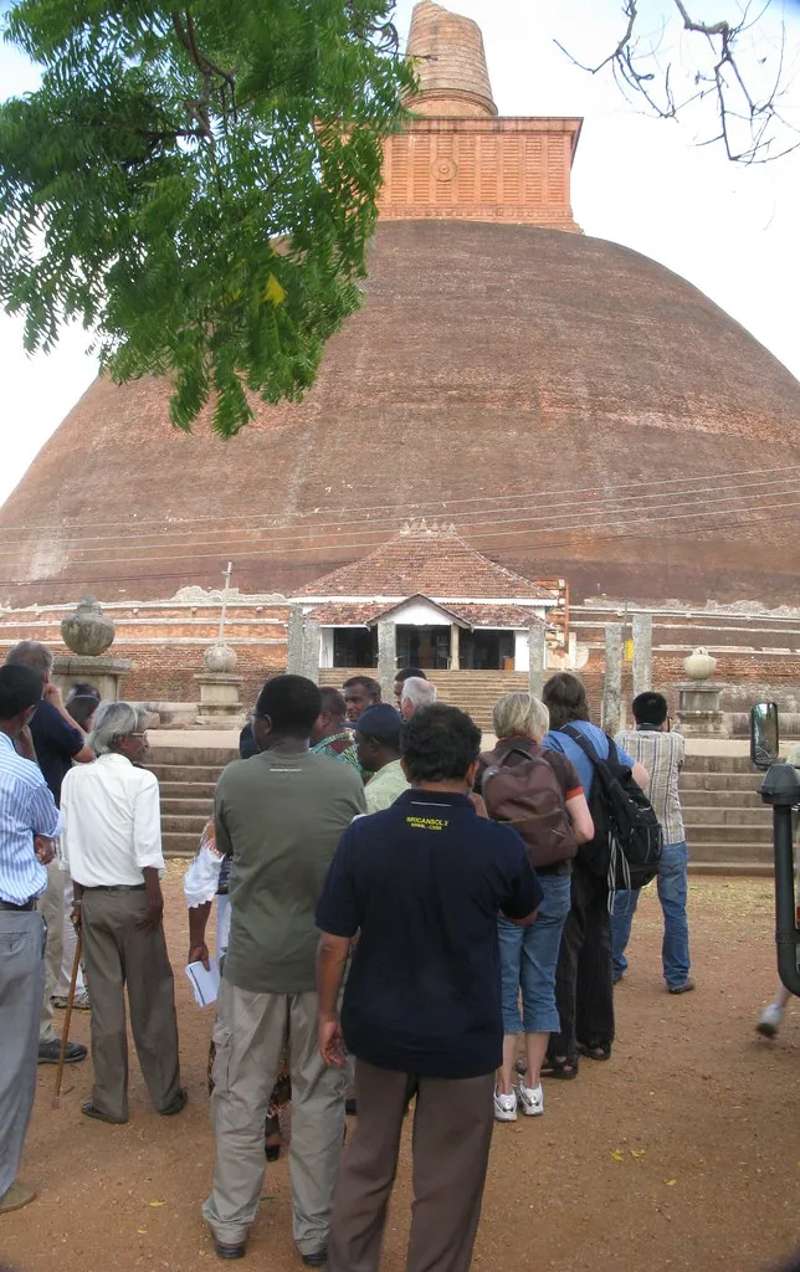
Jetavanaramaya sits in Anuradhapura, in Sri Lanka’s north-central plains. On a full moon day, pilgrims and visitors join local worshippers in rituals that have been performed there, largely uninterrupted, for more than 2,000 years.[2] So the monument still belongs to a living religious landscape, not only to the archaeologists.
The name covers more than the dome. Jetavanaramaya refers to the stupa itself and to the heart of a vast monastic complex known as Jetavana Vihara, designed to house hundreds of monks.[3] One travel summary adds that every structure in the complex was deliberately oriented toward the stupa, reinforcing its spiritual and symbolic importance.[4]
Born From Religious Rivalry
The stupa is usually credited to King Mahasena of Anuradhapura, whose reign is commonly given as 273 to 301[5], although sources vary by a few years. Accounts say he began the project after monastic tensions turned destructive. One account says he started it to show remorse for allowing the destruction of Mahavihara, a Theravada Buddhist monastery.[6]
The details of that quarrel differ from source to source, so it’s best to treat the exact sequence with caution. What’s consistent is the broader picture. The structure represents tensions between the Theravada and Mahayana sects of Buddhism.[5] Construction wasn’t finished in the king’s lifetime, as his son completed the stupa.[5]
Once Among the Tallest Structures on Earth
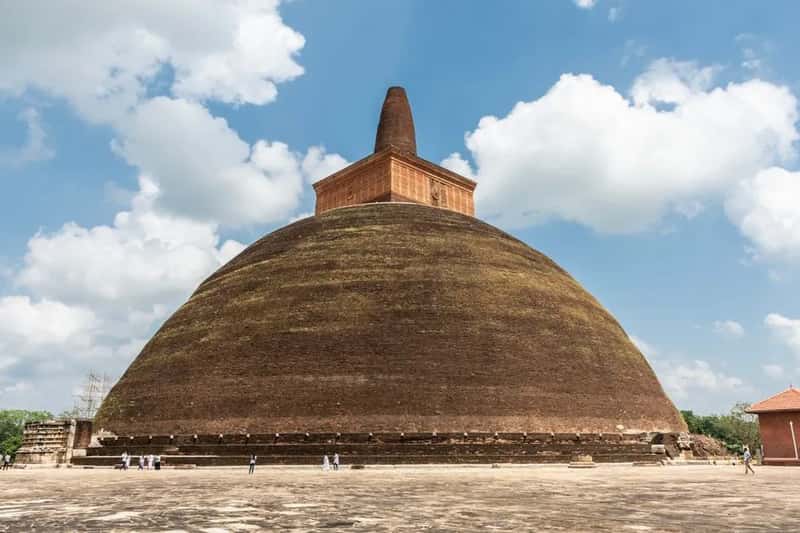
The original scale is hard to picture. At 122 metres (400 ft), it was the world’s tallest stupa and the third tallest structure in the world when it was built.[5] Only the great pyramids of Giza stood higher, which puts a dome of baked brick in very august company.
Time has cut it down. Today Jetavanaramaya stands at roughly 71 meters (233 feet), still monumental, but little more than half its original height.[7] Even so, it remains the largest brick structure by volume ever constructed.[3]
Tens of Millions of Bricks
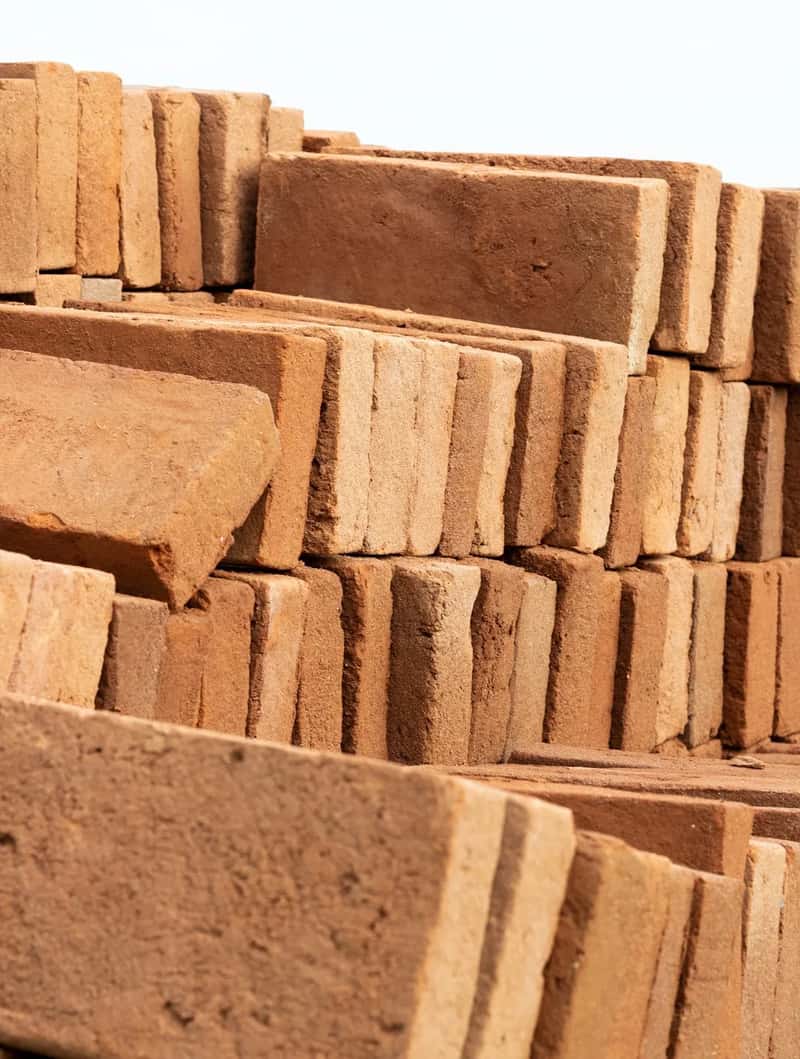
The raw material figures are staggering, though they’re estimates. One summary says the monument used an estimated 93 million baked mud bricks.[4] Nobody can count them one by one, so treat the number as an informed approximation.
Archaeologists offer a comparison to help. They estimate the bricks could build a three-foot-high wall stretching from London to Edinburgh, or from New York City to Pittsburgh.[3] That kind of output implies organized labor, kilns, transport and planning on a huge scale.
Mortar, Relics and Puzzles Inside the Dome
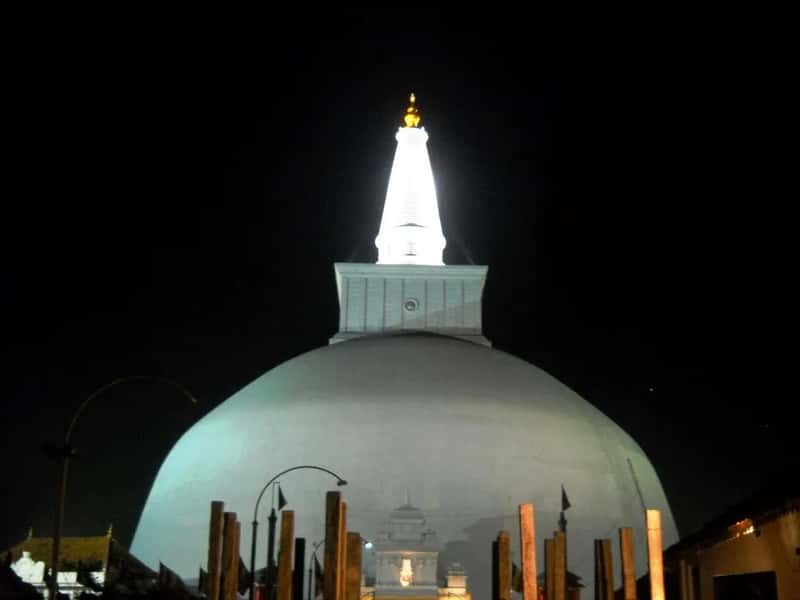
Brick alone doesn’t explain the survival. The original mortar was a mixture of finely crushed dolomite, limestone, sieved sand and clay.[8] That recipe suggests the builders paid close attention to materials, not just to size.
The structure still holds unanswered questions. Excavations have uncovered reliquary caskets embedded throughout the stupa at different structural levels.[8] Researchers also admit gaps in their knowledge. Of the carved Naga motifs at the base, one specialist says “we still don’t know exactly how they were fixed in place.”[8]
Why the World Nearly Forgot It
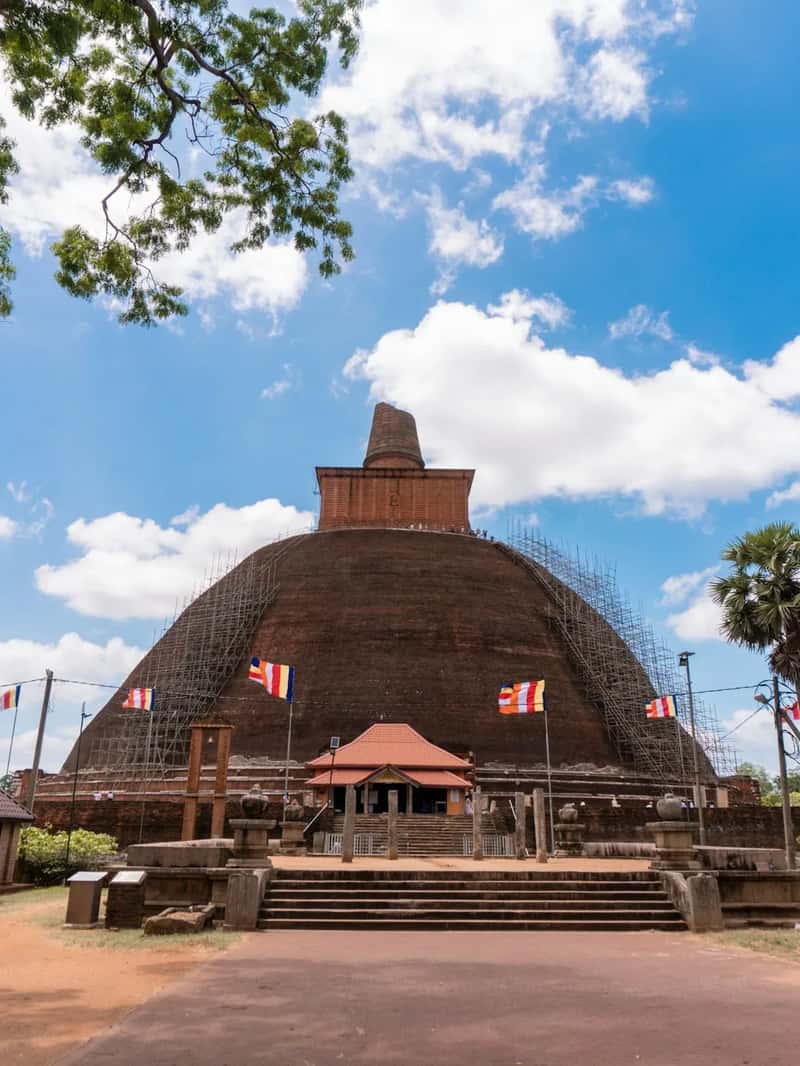
Unlike the pyramids, Jetavanaramaya wasn’t always in view. It was not continuously visible to history, because jungle growth, shifting religious priorities and selective preservation gradually buried both the monument and much of its story.[3] Outside Sri Lanka, it’s still little known.
Nature and neglect did real damage. Earthquakes, monsoon rains and centuries of abandonment caused sections of the stupa to collapse, and the last major renovation took place in the 12th century under King Parakramabahu I.[8] That repair is one reason the dome survives in its present, shorter form.
Restoration Has Been Tricky
Modern conservation hasn’t been simple either. More recent restoration efforts introduced cement into some outer layers, a decision archaeologists now believe may have accelerated deterioration rather than prevented it.[8] It’s a useful reminder that good intentions don’t always mean good repairs.
Protection has grown more formal over time. Anuradhapura was designated a UNESCO World Heritage Site in 1982.[9] Conservation work has also depended on funding, since work in the late 1990s was funded mainly by ticket income from the cultural triangle, and restoration has faced challenges such as brick shortages.[9]
A Monument Nothing Else Matched
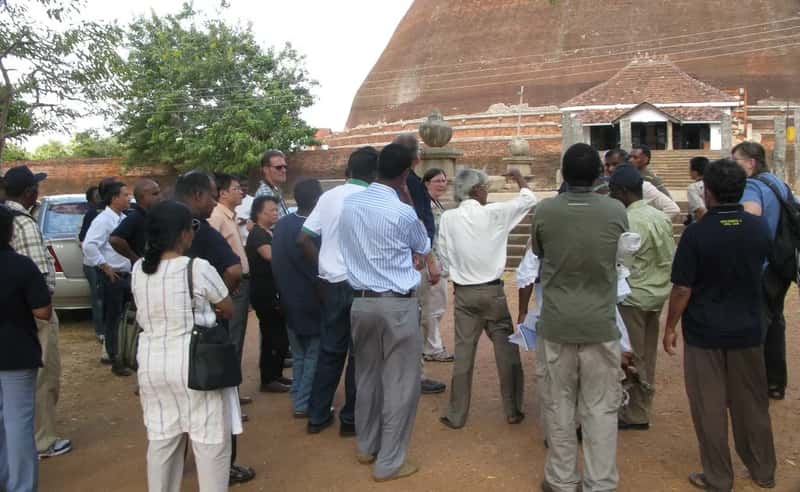
One of the most telling facts is how rarely anyone tried again. For nearly 700 years after its completion, no stupa of comparable scale was attempted in Sri Lanka.[1] One expert quoted by CNN calls it “the last truly gigantic stupa.”[1]
Its religious meaning also endures. The stupa is believed to enshrine part of a sash or belt tied by the Buddha[5], though relic traditions are matters of belief, not verified archaeology. That’s why the site works as both a heritage attraction and a place of pilgrimage today.
What 1,700 Years Actually Proves
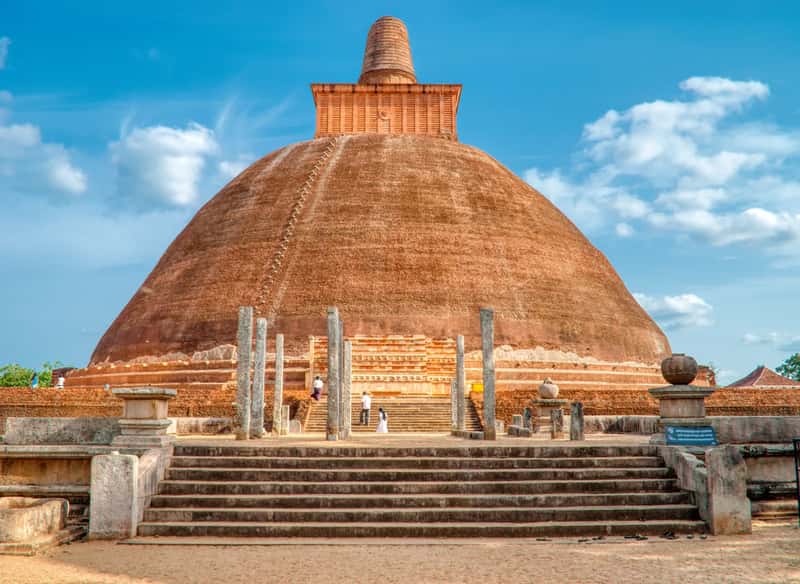
Jetavanaramaya wasn’t literally built to last forever, and it hasn’t. It has shrunk, been repaired, been overgrown and been repaired again. What it proves is narrower and more impressive: a society could organize enough labor, material and knowledge to raise a brick monument that outlasted empires and remains, by volume, the largest of its kind.
The dome now stands as evidence of an ancient society capable of organizing labor, materials and engineering knowledge on a scale that rivalled any civilization of its time.[1] Its survival, patchy and human as it is, may be a better legacy than permanence would have been.