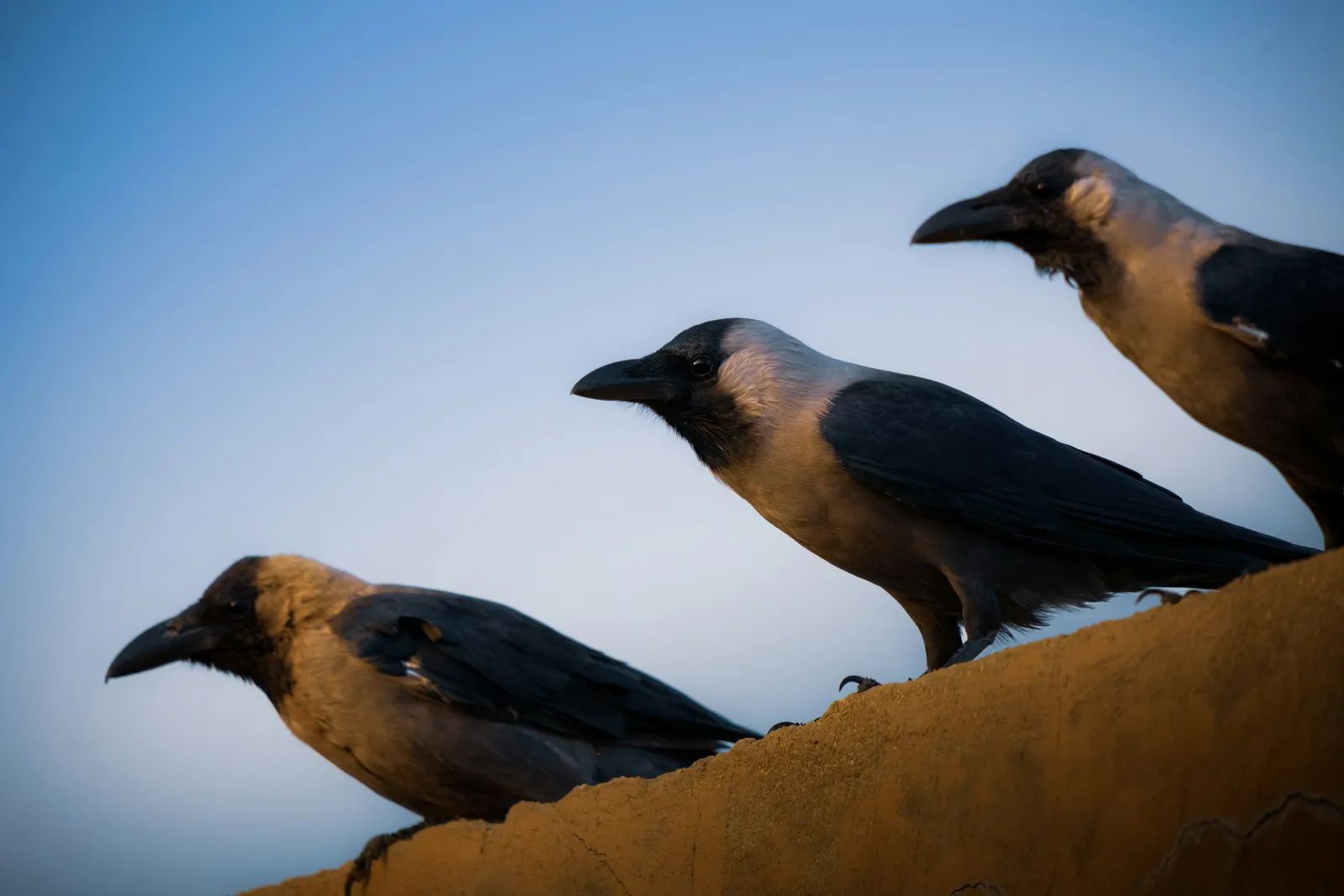
The National Wildlife Federation has introduced a new series called “What’s in My Backyard” that turns attention to familiar wildlife often overlooked in daily routines. Crows feature prominently in this effort, especially during the Halloween season when their dark silhouettes appear everywhere in decorations and imagery. Yet the birds that share neighborhoods across the United States hold far more complexity than their spooky reputation suggests. ([1])
Four Distinct Species Share American Landscapes
Many people assume every crow belongs to a single species, but four separate kinds appear within U.S. borders. The American crow stands out as the most widespread, thriving in varied habitats from cities to forests while avoiding only the driest southwestern deserts. Its all-black plumage and steady wingbeats make it the classic image in popular culture.
The fish crow occupies coastal zones along the Atlantic and eastern Gulf states, with expanding populations now reaching inland along the Mississippi River. Its nasal, double-noted call often sounds like a quick “uh uh,” offering the clearest way to tell it apart from its American relative. Farther south, the Tamaulipas crow appears mainly near Brownsville, Texas, where it favors arid spots and even local landfills. Its glossy feathers carry a subtle purple sheen and its voice carries a frog-like quality.
The endangered Hawaiian crow, known locally as the ʻalalā, represents the sole surviving corvid species native to the Hawaiian Islands. Once reduced by habitat loss and introduced threats, captive breeding programs have supported its gradual return to native forests, where it plays a vital role dispersing seeds from native plants.
Intelligence Sets These Birds Apart
Studies continue to document the remarkable problem-solving skills of crows. They fashion tools to reach food, share nesting duties within groups, and pass knowledge across generations through social learning. Individual birds also recognize specific humans and retain that information for years, sometimes teaching others in the flock which people to avoid.
These abilities explain why crows adapt so readily to human environments. They scavenge scraps, accept offered peanuts, and even steal from other animals or pets when opportunities arise. The oldest recorded American crow in the wild reached seventeen years, underscoring their capacity for long-term survival in changing conditions.
Migration Patterns Prove More Limited Than Expected
Although protected under the Migratory Bird Treaty Act, crows do not undertake the long seasonal journeys seen in hummingbirds or monarch butterflies. American crows qualify as partial or short-distance migrants, with only some individuals shifting toward milder parts of their range while others stay put. Fish crows adjust positions within their year-round territory but rarely travel more than 180 miles from breeding areas.
The Tamaulipas crow and the ʻalalā show no migratory behavior at all. Their movements remain tied to local resources rather than broad seasonal shifts.
Common Look-Alikes Require Careful Observation
Two other birds frequently cause confusion in the same spaces. Grackles, including common, great-tailed, and boat-tailed varieties, share similar dark coloring yet display different body shapes and vocalizations. Ravens appear larger and shaggier, with a distinct call and a preference for soaring rather than the continuous flapping typical of crows.
Distinguishing these species adds depth to backyard observations and supports broader appreciation for local biodiversity. The National Wildlife Federation encourages continued learning about these and other wildlife neighbors featured in seasonal imagery.
Observers who take time to note calls, flight patterns, and habitat preferences often discover that the crows around them represent a richer story than Halloween stereotypes allow. The new series aims to foster exactly that kind of closer attention to everyday wildlife.