There is a strange tension in American travel right now. Nationally, crime statistics are dropping to levels not seen in decades. The data is genuinely encouraging. Yet many travelers are quietly crossing certain cities off their road trip lists, telling friends at dinner tables and in online forums that something just “feels different” in places they once loved to visit.
Feelings, of course, are not always facts. Still, they can be shaped by real patterns – persistent crime concentrations, neighborhood disorder, and that subtle unease that lingers when street conditions visibly change. So let’s separate the noise from the signal and take a real, evidence-based look at which U.S. cities are still giving travelers pause in 2026. Let’s dive in.
1. Memphis, Tennessee – The Numbers Are Hard to Ignore

Memphis has one of the highest crime rates in the country. According to FBI 2024 data, the city recorded 2,501 violent crimes per 100,000 residents, nearly six times the national average of 359.1. That figure is not a typo. Think about what that means for a visitor walking around Downtown or Beale Street after dark.
Aggravated assault accounts for roughly three-quarters of all violent offenses, with gun involvement in assaults rising to nearly three-quarters of cases. Memphis ranked among the top large cities for both violent and property crimes, leading in aggravated assault, larceny-theft, and motor vehicle theft.
There are signs of recent improvement – Memphis saw a roughly 30 percent decrease in homicides by the end of 2024, with overall crime dropping to a 25-year low across major categories. Honestly, that is real progress worth acknowledging. Despite these improvements, Memphis has drawn federal attention, with President Trump placing it early on the list of cities for potential federal intervention.
2. Detroit, Michigan – Decades of Struggle, Slow Recovery

Detroit has the third-highest murder rate among cities of similar size and remained near the top across several violent crime categories, continuing its long struggle rooted in decades of economic decline, population loss, and inadequate resources following the city’s 2013 bankruptcy. If you have driven through parts of Detroit, you know the landscape tells a story before a single statistic does.
Cleveland and Detroit share similar urban profiles. Detroit is marked by high violent crime rates, particularly assault, and the city’s significant population decline has created tens of thousands of abandoned properties that serve as hubs for criminal activity. Still, there are genuine improvements happening on the ground.
Detroit’s mayoral office reported that in 2025, the city is seeing the fewest homicides, shootings, and carjackings in more than 50 years. Detroit also achieved an 11 percent reduction in aggravated assault rates, implementing comprehensive community policing programs that emphasize building trust between law enforcement and neighborhood residents. The trajectory is improving, but the baseline remains far above the national norm.
3. Baltimore, Maryland – Robbery Capital With a Recovery Story

Baltimore ranked second in murders while maintaining its position as the nation’s leader in robbery rates. The city’s crime challenges stem from decades of economic decline, the opioid crisis, and other systemic issues. For travelers, those systemic issues translate into blocks where staying alert feels less optional and more essential.
Baltimore, despite leading the nation in robbery rates at 487 per 100,000 residents, managed a 19 percent reduction from its 2024 levels, indicating that even cities with the highest crime rates are benefiting from enhanced law enforcement strategies and community intervention programs.
As of mid-2025, robberies and auto thefts are down compared to the previous year, while the homicide clearance rate jumped from 40.3 percent in 2020 to 68.2 percent in 2024. That clearance rate jump matters. It means more crimes are actually being solved, which changes community dynamics over time. Baltimore is a city in genuine recovery, though it still has a long road ahead.
4. St. Louis, Missouri – Still at the Top of the Wrong Lists

St. Louis continued to appear near the top of nearly every crime list, underscoring its long-standing struggles. According to FBI 2024 property crime data, St. Louis recorded 5,707 property crimes per 100,000 people, ranking it among the three worst cities in the country.
Here’s the thing about St. Louis that makes it so frustrating to analyze – the city has pockets of genuine beauty, rich history, and a thriving arts scene. Yet the stats refuse to cooperate. St. Louis had a homicide rate of 48.6 per 100,000 in 2024, down from 72.1 in 2019, a meaningful reduction – yet still alarmingly high by any national standard.
Murders in St. Louis fell approximately 22 percent in the first half of 2025, the lowest mid-year murder numbers in more than a decade. That is real and significant. I think it’s worth giving credit where it’s due, while also recognizing that sitting at roughly 49 homicides per 100,000 residents is still catastrophically high compared to the national average.
5. Oakland, California – Property Crime at Historic Highs

Oakland ranked second nationally in violent crime among the largest cities in 2024 and first in property crime rate, with 7,230 property crimes per 100,000 residents – the highest property crime rate among all large U.S. cities. Travelers booking visits to the San Francisco Bay Area frequently ask whether they should venture to Oakland. The data suggests caution is warranted.
Oakland topped the list in multiple property and violent crime categories, leading all medium-sized cities in aggravated assault, robbery, larceny-theft, and motor vehicle theft. That is an almost unprecedented sweep across crime categories for one city. Think of it like a city that dominates the wrong kind of leaderboard across every single event.
Oakland and Detroit followed Memphis as the cities with the highest violent crime rates among cities with populations over 100,000 in 2024, with 1,925 violent crimes per 100,000 residents in Oakland. FBI-reported data and local police figures both show Atlanta and Oakland saw decreases in motor vehicle theft and robbery through 2025, with overall property crimes and homicides trending downward. The trend is improving, but the starting point was very steep.
6. Cleveland, Ohio – Abandoned Buildings and Persistent Violence
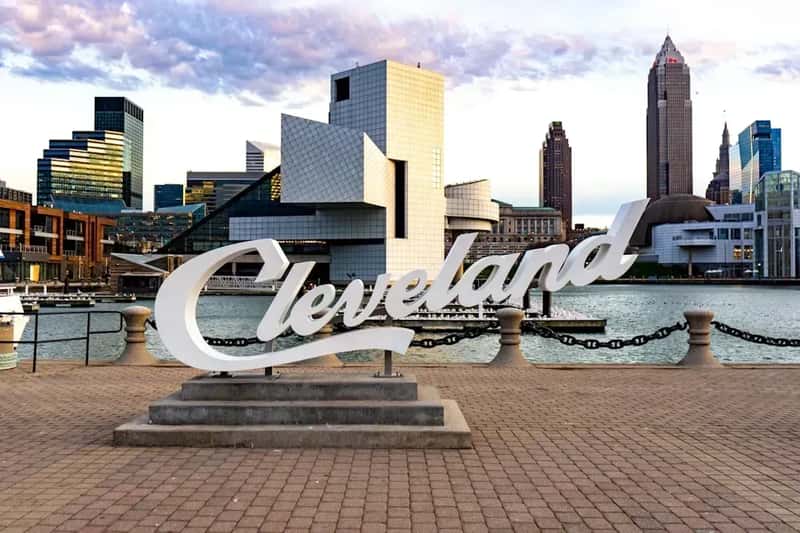
Cleveland had the highest burglary rate among medium-sized cities, in addition to its staggering violent crime rates. Travelers who visit for sports events or the Rock and Roll Hall of Fame often stick closely to the revitalized downtown corridor, and honestly, that instinct is backed by data.
Cleveland is marked by high violent crime rates, particularly assault. The city’s significant population decline since the 1970s has created approximately 20,000 abandoned properties that serve as hubs for criminal activity, contributing to elevated property crimes and homicides. Twenty thousand abandoned properties. That is roughly the equivalent of an entire mid-sized American city left to decay.
Detroit and Cleveland both achieved 15 percent reductions in robbery rates in 2025, indicating measurable progress. Yet the macro trend masks deep local divergences – in many cities, rates of homicide, robbery, aggravated assault, or vehicle theft remain far above national averages. Cleveland is a prime example of exactly that phenomenon.
7. Washington, D.C. – The Capital’s Crime Contradiction
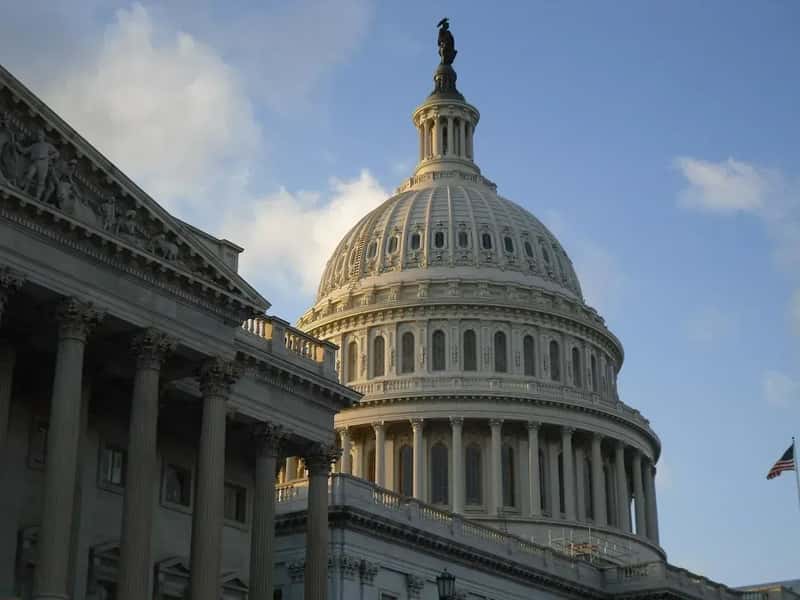
2023 was a terrible year for crime in D.C. – homicides hit a two-decade high, and carjackings saw an alarming surge, with a homicide rate of approximately 41 per 100,000 residents placing D.C. among the most violent major cities in the United States at that specific moment. That peak is why travelers still approach the capital with heightened wariness even as conditions improve.
Total violent crime in 2024 dropped by 12 percent compared to 2023, homicides fell by 11 percent, and carjackings decreased by an incredible 53 percent, directly addressing a key area of public concern. D.C. Mayor Muriel Bowser has claimed that D.C.’s crime is at a 30-year low despite the unacceptable spike in 2023, and according to the Metropolitan Police Department, all crime was down by 15 percent in 2024 compared to 2023.
Washington D.C. ranked 40th out of 50 cities in a SmartAsset safety study, with the nation’s capital having the second highest rate of drug overdose deaths of major cities at 64 per 100,000 residents. As of mid-2025, violent crime is down another 26 percent compared to the same period in 2024, showing the positive trend is accelerating. The direction is encouraging, but perception still lags reality here by a meaningful margin.
8. Portland, Oregon – From “Keep Portland Weird” to Keep Portland Safe
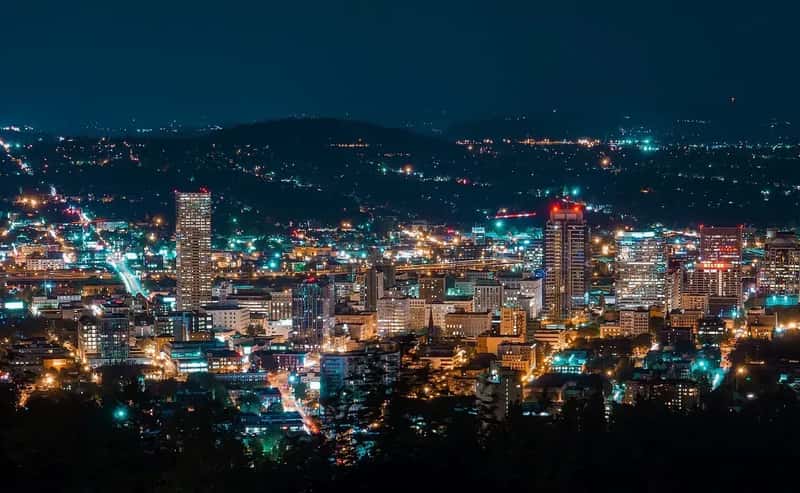
Portland recorded 6,246.4 total crimes per 100,000 residents in 2024, ranking second among major U.S. cities behind only Memphis in total crime rate. That is a number that would surprise a lot of people who think of Portland primarily as a quirky Pacific Northwest destination known for food carts and Powell’s Books.
According to a 2025 travel safety report, Houston, Detroit, Denver, Washington, Seattle, Philadelphia, Minneapolis, Los Angeles, Dallas, and Portland are considered among the most dangerous cities in the U.S. for international travelers, based on a calculation of crime rates and overseas visitor numbers. Portland’s inclusion on that list is something local officials have been wrestling with.
It’s hard to say for sure exactly when Portland’s safety reputation shifted so dramatically, but the combination of property crime, visible homelessness, and a difficult period of civil unrest created a narrative that is still being reversed. In many cities, rates of homicide, robbery, aggravated assault, or vehicle theft remain far above national averages even as national trends improve. Portland illustrates perfectly how national progress does not automatically trickle down to every zip code.
9. Seattle, Washington – Burglary Capital of the Nation

Seattle ranked worst in the nation for burglary, continuing a troubling trend that has persisted despite efforts to address property crime. The city’s overall property crime rate of 5,007.6 per 100,000 residents is nearly 185 percent higher than the national average. That figure alone puts it in a class that most American travelers would find startling.
A report found that Seattle ranked as one of the top five cities with high crime rates in 2024, with FBI data placing Seattle fourth among major U.S. cities with the highest total crime rate per 100,000 residents. Notably, Seattle is not listed as one of the top 10 cities for highest violent crime rate, which is a meaningful distinction. The issue is overwhelmingly property-based, not violent, but for travelers, having a rental car broken into or a bag stolen can ruin a trip just as effectively.
Total crime in Seattle was on pace to be lower than 2024, when there were 46,001 total reported crimes, including 5,408 reports of violent crime. Through late summer 2025, crime totaled just over 25,000, a modest decrease from the same period the prior year. Seattle officials are clearly working on this problem, but travelers remain skeptical until the numbers demonstrate a more dramatic turnaround.
10. San Francisco, California – The Perception Gap Is Real
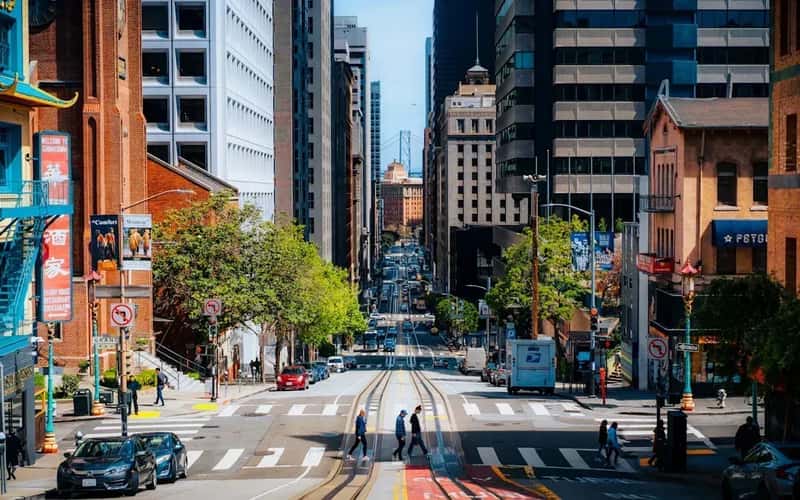
Few American cities have endured more damaging viral coverage in recent years than San Francisco. Videos of brazen shoplifting raids and the visible Tenderloin drug crisis created a perception that made international headlines. San Francisco ranks 37th safest among the 50 largest cities, despite having the second-highest housing costs in the country.
Violent crime was down 14 percent and property crime down 31 percent in 2024 compared to 2023 – a substantial drop, especially when compared to the national figure of only about 2.4 percent for violent crime. Interestingly, crime levels in San Francisco are now at their lowest since 2001. That is a fact that genuinely surprises most people, including many longtime residents.
Good news for tourists: property crimes in popular tourism spots like Fisherman’s Wharf, Pier 39, and North Beach were 60 percent lower in 2024 versus 2023, and a further 46 percent lower in 2025 versus 2024. The data suggests San Francisco is recovering meaningfully, though visitor perceptions shaped by years of negative headlines will take more time to catch up with the improving reality on the ground.
11. Chicago, Illinois – Violent Pockets in an Uneven City
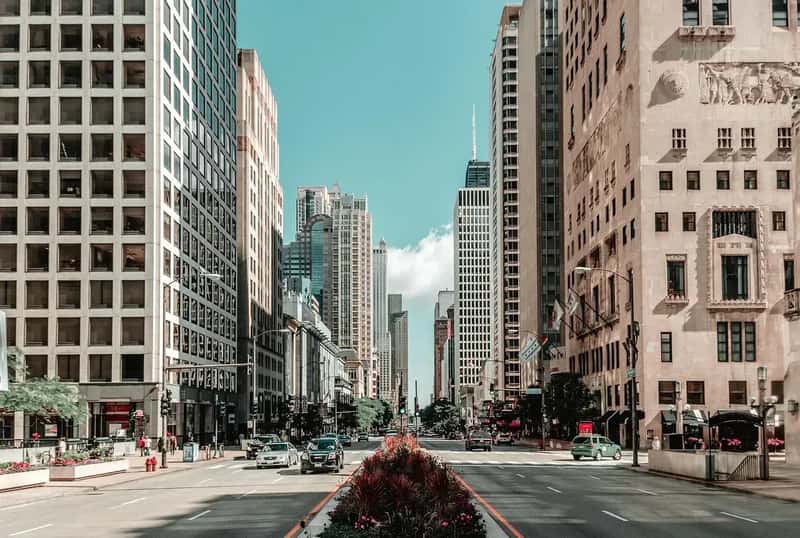
Chicago ranked 38th out of 50 cities in a SmartAsset safety study, with the fourth worst violent crime rate among the 50 largest cities. An estimated 3.2 people per 100 experienced a violent crime each year, with 86,506 total crimes reported. Property crime was also worse than average, with an estimated 6.1 incidents per 100 adults.
Let’s be real – Chicago is not the monolithic danger zone it is sometimes portrayed as in political speeches. The city has thriving neighborhoods, world-class restaurants, and genuine cultural vitality. Chicago has historically had higher crime rates compared to many U.S. cities, but it has also seen crime falling in recent years, like much of the rest of the country.
Still, New York City and Chicago have not returned to their 2019 pre-pandemic levels for most crimes, and their recovery has been slower than that of many peer cities. For travelers, that uneven geography of safety – some neighborhoods perfectly fine, others genuinely dangerous – makes Chicago a city that rewards local knowledge more than almost any other on this list.
12. New York City, New York – Progress Interrupted by Assault Surge

Felony assaults in New York City increased for the sixth year in a row, now reaching a level not seen since 1997. This is a significant problem, as felony assault is a serious and high-volume offense that outnumbers murders by 97 to 1. That ratio is genuinely jarring when you stop and think about it.
As of 2025, murders and shootings in New York are at or near all-time lows, and the city’s murder rate remains below the national average. At the same time, highly publicized individual acts of violence and the visible impact of challenges such as homelessness and untreated behavioral health issues contribute to a persistent sense of public disorder. That disconnect between the statistics and the street-level feeling is something New Yorkers themselves debate constantly.
When looking at all reported offenses, not just the seven major crimes, these are about 25 percent above pre-pandemic levels and at a level not seen since before 2000. Half of all violent crimes in the transit system occur at just 30 of the city’s 472 stations, generally the city’s busiest, and the highest per-rider risk occurs late at night and early in the morning. Knowing which stations and which hours carries more weight for New York visitors than almost any general statistic.
The Bigger Picture: Fear vs. Facts in 2026

It is worth stepping back and putting all of this in perspective. Violent crime fell 4 percent nationally in 2024, including a 15 percent drop in murders. Property crime declined 8 percent, with motor vehicle theft down nearly 20 percent after several years of increases. These are genuinely historic declines.
The rate of reported homicides was 21 percent lower in 2025 than in 2024 across 35 study cities, representing 922 fewer homicides. When nationwide data is reported by the FBI later this year, there is a strong possibility that homicides in 2025 will drop to about 4.0 per 100,000 residents – what would be the lowest rate ever recorded in law enforcement or public health data going back to 1900. That is an extraordinary claim backed by credible research.
Here’s the thing, though. Not all cities enjoyed declines in any type of crime, and despite nationwide decreases, some places still face soaring crime rates. At stake are billions in government spending on public safety, the viability of businesses and urban centers, and the extent to which Americans are safe – and feel safe – in their homes and communities. The cities on this list are not lost causes. Many are actively improving. What they share is a reputation shaped partly by real data and partly by lingering perception from harder years. Travelers who visit any of them in 2026 would be wise to research specific neighborhoods, stay aware of their surroundings, and never let a single headline or ranking substitute for nuanced, current local knowledge. What do you think – did any of these cities surprise you? Drop your thoughts in the comments.