You spent hours on the living room, the kitchen smells incredible, and the bathroom is spotless. But the moment your guests step through the front door, something else is already talking – and it’s saying the wrong thing. Research from Princeton University found that people form first impressions in as little as one-tenth of a second, and that snap judgment doesn’t just apply to faces. It applies to rooms. Your entryway is the verdict before the trial even starts.
Most people assume the big offense is obvious – shoes everywhere, a coat thrown over the railing. But the mistake that quietly tells guests to mentally check out shows up in homes that look reasonably tidy. It happens in homes that smell fine. Once you see it, you’ll notice it in every entryway you ever walk into again.
The Actual Mistake: Your Entryway Has No Sense of Arrival
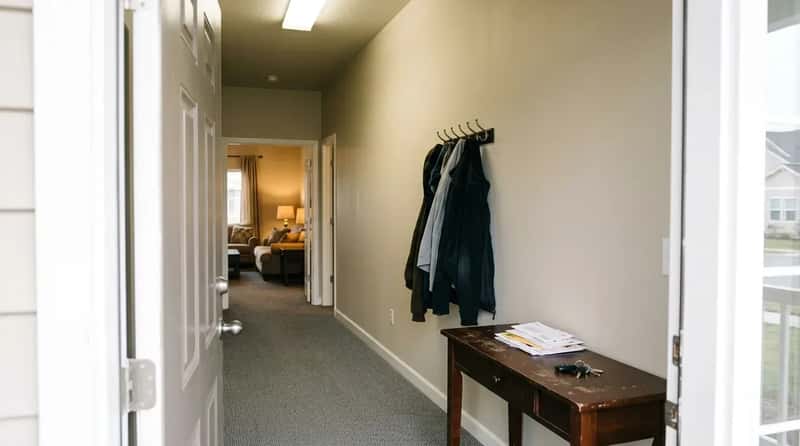
The single biggest entryway mistake isn’t any one missing item – it’s the complete absence of intentional design. When a foyer feels like a holding pen between the front door and the “real” house, guests unconsciously register that the home hasn’t started yet. There’s no signal that says you’ve arrived somewhere worth arriving. That blank, personality-free space feels sterile in a way that sticks even after guests move into a beautifully decorated living room.
Designers call it the “First 10 Seconds” rule – the narrow window in which your nervous system decides if a home is a sanctuary or a source of low-grade stress. An entryway without a focal point, without warmth, without any deliberate detail fails that test every single time, no matter how clean everything else is. It’s the design equivalent of a host who doesn’t look up when you walk in.
At a Glance
- First impressions of a space form in as little as one-tenth of a second
- Guests subconsciously evaluate warmth, order, and personality before they say hello
- An entryway without a focal point reads as unfinished – even in an otherwise stylish home
- The “First 10 Seconds” effect colors the entire visit, not just the doorway moment
- Intentional design – not expensive design – is what separates welcoming from forgettable
The Lighting Problem Nobody Talks About Honestly
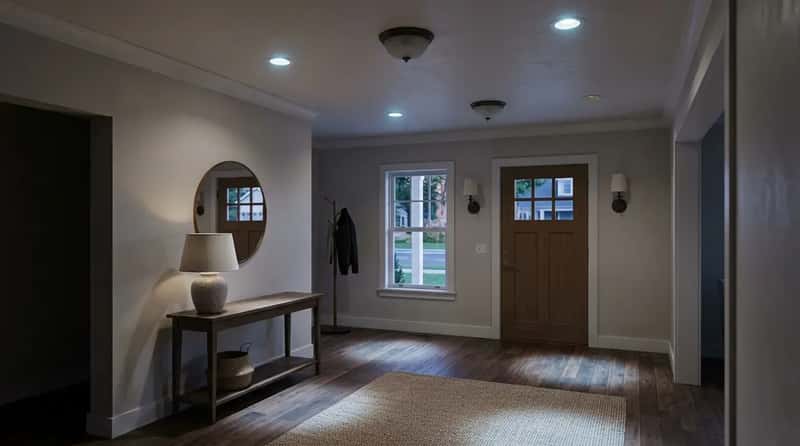
Here’s what most decorating articles quietly skip: bad entryway lighting doesn’t just look dull – it physically makes guests feel uneasy. Cool-toned bulbs or bright white overhead light create a clinical atmosphere that registers before anyone consciously thinks about it. One second inside and the room already feels like a waiting room. That chill is hard to shake, even after guests settle into the warmer spaces deeper in your home.
Overhead recessed lighting alone flattens a room and strips it of warmth and depth. When you want your entry to feel like a welcome, not an interrogation, layering matters. A statement pendant or chandelier gives the eye something to land on. Wall sconces or a table lamp on a console add softer, eye-level glow that turns a passthrough into an actual room. That layered warmth is what separates a home that feels lived-in from one that just feels staged.
Quick Compare
- Single overhead fixture: Flat, clinical, unflattering – the “wating room” effect
- Statement pendant or chandelier: Instant focal point, adds height and personality
- Wall sconces: Eye-level warmth that makes the space feel considered
- Console table lamp: Softest option – best for narrow entries with no overhead flexibility
- Layered mix of two or more: The gold standard – warm, dimensional, and welcoming
The Clutter That’s Actually Invisible to You
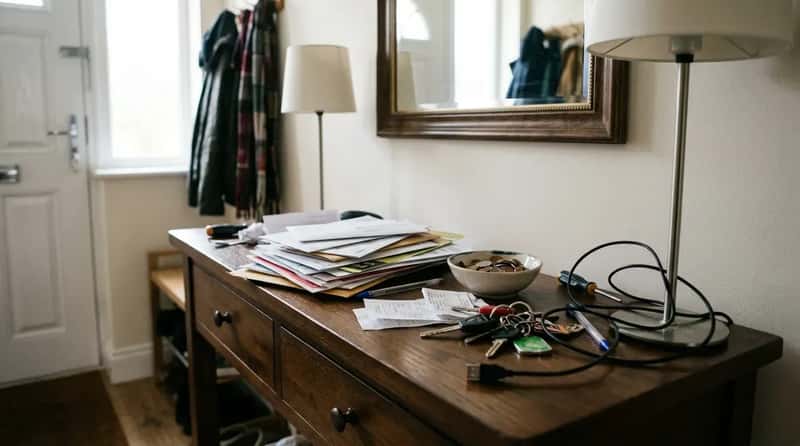
Most homeowners think they’ve handled clutter. They haven’t. The sneaky version isn’t a pile of shoes – it’s the stack of mail that’s been on the console since Tuesday, the random charging cable, the keys spread across three surfaces. When guests walk in and see a table crowded with receipts, loose change, and random small objects, it sends a message of disorganization before a single word is spoken. And the worst part? You stopped seeing it weeks ago.
Research published in the Journal of Environmental Psychology shows that cluttered, poorly maintained spaces increase stress and negative impressions – and guests may not be able to name why they feel slightly uneasy, but their body already responded. That’s what makes this mistake so costly. The fix is simple: give every item a designated home instead of just a landing spot. A tray, a drawer, a lidded basket. The difference between a surface that looks styled and one that looks abandoned is almost always just that one decision.
No Rug = No Room (Guests Feel It Instantly)
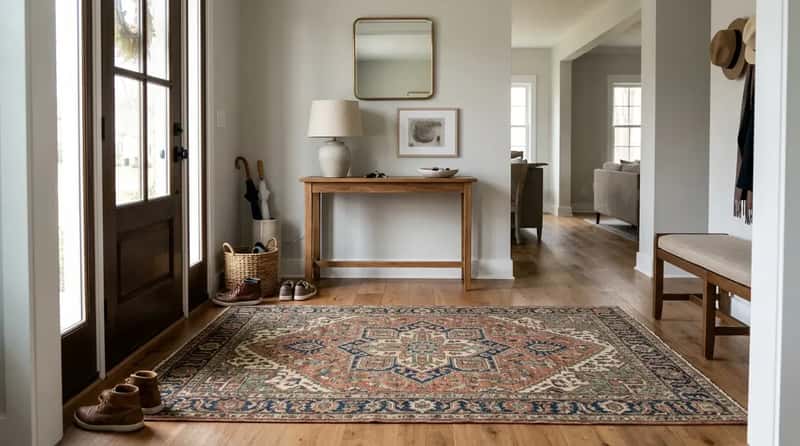
Skipping the entryway rug is one of the most common and most damaging mistakes designers flag, yet most homeowners treat it as optional. It isn’t. A bare floor – especially tile or hardwood – makes an entryway feel cold, unfinished, and like something got left off the to-do list. The shift that a properly sized rug creates is almost architectural: the space stops feeling like a hallway and starts feeling like a room. Guests feel that difference in their first two steps, even if they can’t explain it.
An entryway rug anchors the space, adds texture and pattern, and quietly handles the practical job of catching dirt at the door. Size matters enormously here. Too small and it looks like an afterthought; too large and it overwhelms whatever space you have. Get the size wrong and you’ve traded one visual problem for another – but get it right and the whole entryway snaps into focus.
Fast Facts
- The most common entryway rug size is 3×5 feet – works well for a standard foyer
- Narrow or hallway-style entries are best served by a runner (typically 2–3 ft wide, 6–14 ft long)
- Leave 12 to 24 inches of exposed floor around the rug where space allows
- Always test door swing clearance before buying – a thick rug can block a front door from opening fully
- Low-pile, flatwoven, or washable materials hold up best in high-traffic entryways
The Missing Mirror and Why It Matters More Than Aesthetics
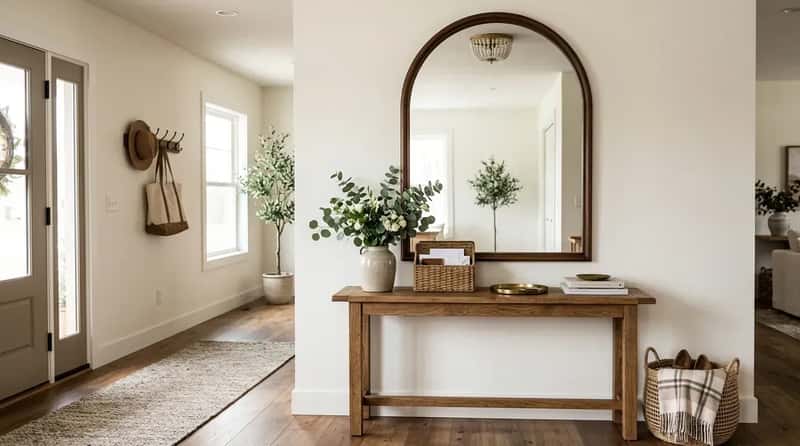
A mirror in the entryway isn’t just a decorating cliché – it’s one of the smartest functional moves in the entire house. Without one, a narrow entry stays narrow, a dark entry stays dark, and the space feels like it stops at the wall rather than opening up. With one, natural light bounces, the room appears larger, and the whole area gains a focal point that makes it feel considered rather than forgotten.
There’s a subtle hospitality angle to this too. An entryway mirror gives guests a moment to feel put-together before they step fully into your home – and that small, quiet act of consideration lands differently than people expect. An arched mirror adds visual sophistication; a large rectangular one maximizes the sense of space. Either way, it signals that the entryway was designed for people, not just for coats and keys. That distinction matters more than it sounds.
The Smell You’ve Stopped Noticing
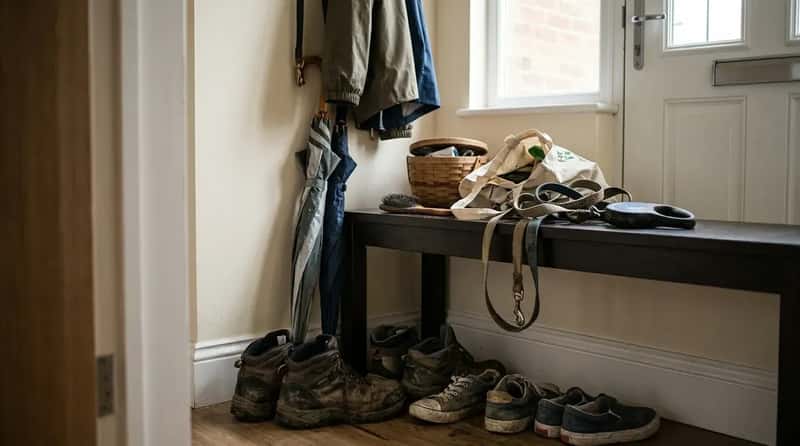
This one stings a little, but it needs to be said. The first thing a guest notices when they walk through your door is the scent that greets them – and entryways happen to be the exact place where shoes, coats, damp umbrellas, and pet gear collect. You’ve gone nose-blind to it. Your guests haven’t. No candle fully masks the combination of yesterday’s sneakers and a damp dog leash if the underlying sources are still sitting right there.
The fix isn’t expensive – it’s consistent. A lidded bin for shoe storage, hooks that get coats off the floor, and a diffuser or dried botanicals work together in a way that a single scented candle never can on its own. A light, neutral fragrance in a clean, well-ventilated space sends a message that the home is genuinely cared for – not just prepped for company. That’s the difference guests feel, even when they can’t say exactly why the place felt so good to walk into.
Worth Knowing
- Nose blindness is real – you typically stop detecting a chronic scent within minutes of being in a space
- The biggest odor culprits in an entryway: shoes, damp outerwear, pet leashes, and reusable grocery bags
- Lidded storage bins neutralize odor at the source far more effectively than any fragrance product alone
- A diffuser with a light, neutral scent (think linen, cedar, or light citrus) signals cleanliness without overwhelming
- Fresh air circulation – even cracking a window nearby – does more than most people realize
Blank Walls That Signal “We Never Finished”
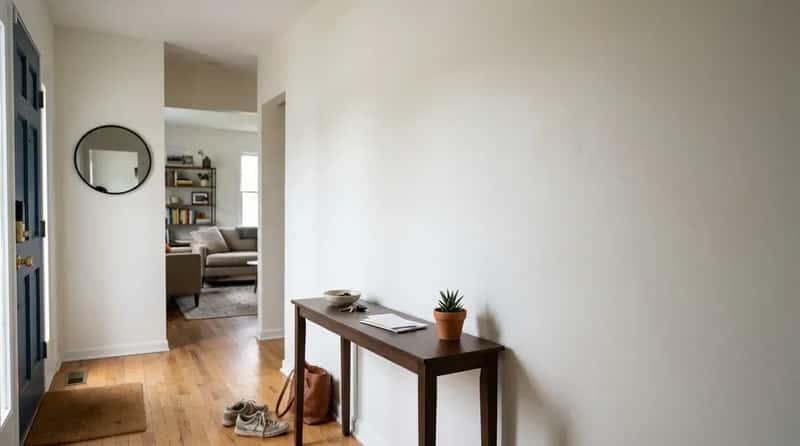
Here’s an opinion worth saying out loud: a completely bare entryway wall is worse than a slightly busy one. Without something to catch the eye, the space feels like a project that ran out of steam. Interior designers consistently flag this as the detail that makes an otherwise tidy entryway feel unintentional – guests read blankness as absence of care, even if everything else in the house is thoughtfully decorated. That one unfinished wall undoes a lot of good work.
One large piece of art – or even two smaller pieces stacked – sends a clear message: you’ve arrived somewhere. It doesn’t need to be expensive or gallery-perfect. A framed print that means something to you, a collection of small frames arranged together, or even a bold paint color on that single wall does the job. Your entryway should tell visitors something about who you are. Blank walls tell them nothing – and nothing reads as “we didn’t bother.”
No Place to Land – And Why Guests Feel Like Intruders
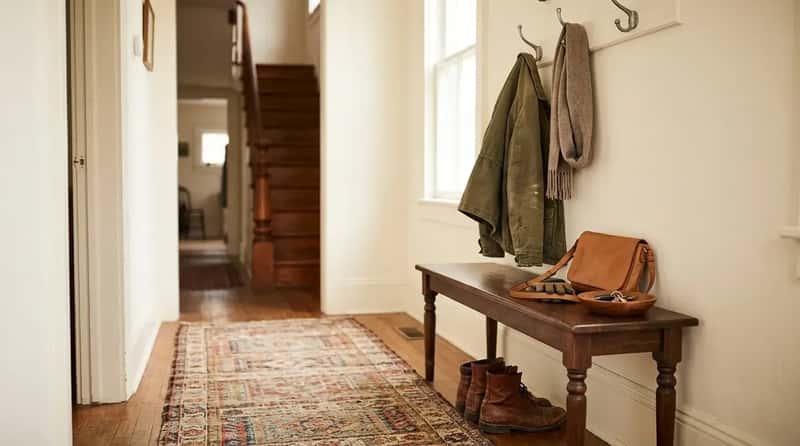
There’s a psychological layer to entryway design that almost nobody talks about in mainstream decorating content: if guests have nowhere to physically land – no surface to set a bag on, no seat to sit while removing shoes, no hook for a coat – they feel like they’re imposing. That discomfort is subtle, but it’s real. Even in a very small entryway, a narrow bench or a single stool shifts the entire dynamic from “visitor” to “welcome.” It’s one of the cheapest emotional upgrades a home can make.
A well-placed bench and a row of hooks also solve a practical problem before it starts. Without them, guests improvise – bags go on the floor, coats get draped over chairs, and the clutter you worked to eliminate comes back within twenty minutes of people arriving. A well-designed entryway gives belongings a home and gives guests a signal: this space was built with you in mind. That signal is exactly what you want someone to feel in their first ten seconds inside your door.
Why It Stands Out
- A narrow bench or stool costs less than most decorative accessories – and does far more emotional heavy lifting
- Hooks at coat height (around 60–66 inches from the floor) keep outerwear off chairs and out of sight
- A slim console table with one drawer handles the “key and mail” chaos in under a square foot of floor space
- Small entryways benefit from vertical storage – tall hooks, wall-mounted shelves, over-door organizers
- When guests have a place to land, they immediately relax – that comfort carries into every room that follows
Your entryway is ten square feet doing the work of a first impression that colors the entire visit. The mistake isn’t one dramatic flaw – it’s the accumulated signal of a space nobody took seriously. Harsh lighting, bare walls, a missing rug, invisible clutter, a smell you’ve tuned out, and nowhere to sit all add up to the same quiet message. And guests feel it before they’ve even said hello.