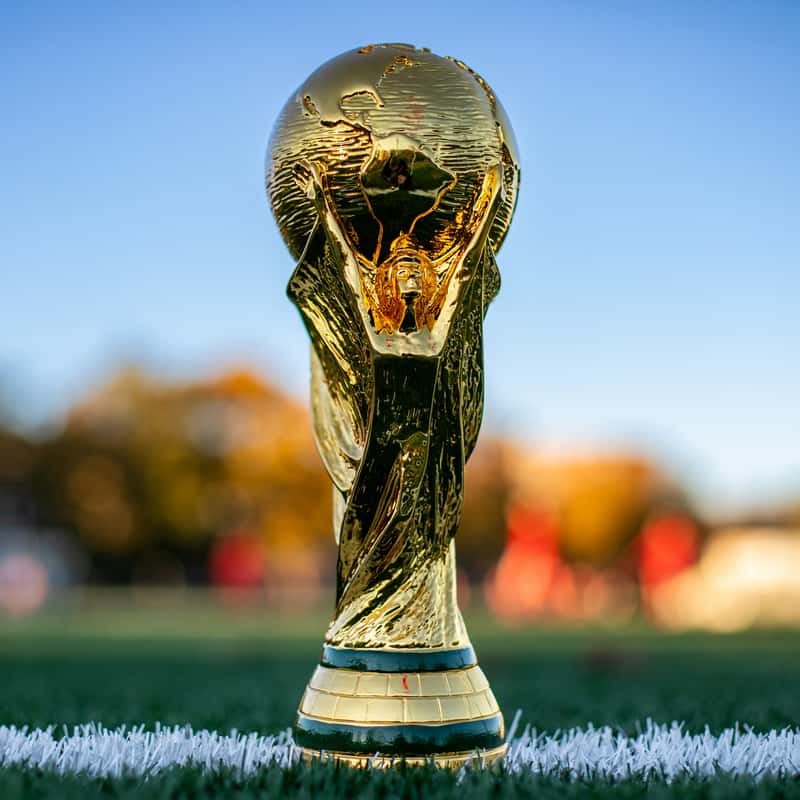
When the opening whistle blew at Estadio Azteca on June 11, 2026, history quietly folded in on itself. Mexico became the first nation on earth to host football’s grandest tournament for a third time, a distinction no other country, not Brazil, not Germany, not even football-mad Italy, can claim. It’s a story that spans more than half a century, two dramatic strokes of fortune, and one stadium that has somehow become the beating heart of World Cup lore.
This isn’t just a trivia footnote. Mexico’s triple hosting says something about how the tournament has grown, how FIFA makes decisions under pressure, and how a single country’s football culture can leave fingerprints across generations of the game. Let’s walk through how it all happened.
A First-Time Host in 1970

The 1970 FIFA World Cup was the ninth edition of the tournament, held from May 31 to June 21 in Mexico, and it marked the first World Cup held outside Europe and South America. Mexico was chosen as the host nation following an October 1964 vote at the FIFA congress in Tokyo, where the only other bid submitted was from Argentina, which would later host in 1978. It was a bold decision by FIFA at the time, since North America had never staged anything close to a global football spectacle before.
The gamble paid off spectacularly. Advances in satellite communications meant the 1970 finals attracted a record television audience, with games broadcast live around the world and, for the first time, in color in some cases. It was the first World Cup ever broadcast on television in color and also the first with an officially sponsored ball, the Adidas Telstar. The tournament gave the world Pelé’s third and final title, a legendary Brazil side, and images that helped globalize the sport in a way it had never experienced before.
Why Mexico Got the Nod the Second Time
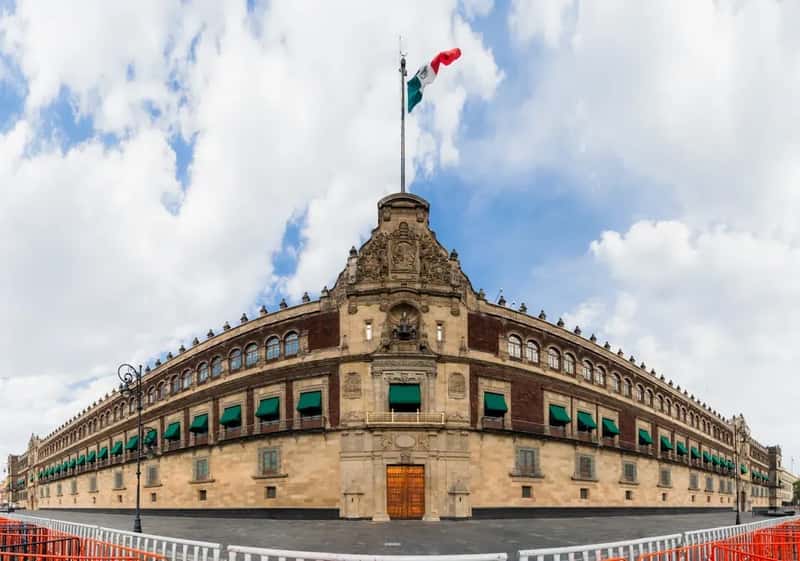
Mexico’s return as host in 1986 wasn’t the original plan. Colombia had originally won hosting rights but later withdrew because of economic difficulties and concerns about meeting FIFA’s requirements, prompting FIFA to consider bids from Canada, the United States, and Mexico before ultimately selecting Mexico. FIFA had originally awarded the 1986 tournament to Colombia back in 1974, but the expansion of the World Cup to 24 teams and rising infrastructure demands made it unrealistic for Colombia to keep up, leading the country to withdraw on October 25, 1982.
This sudden vacancy is what made Mexico’s second hosting possible, and with it came a distinction nobody had held before. Mexico was selected as the new host in May 1983 and became the first country to host the World Cup more than once, having previously staged the 1970 edition. The timing was almost cruelly ironic too. Less than a year before the tournament began, a major earthquake struck Mexico City causing significant loss of life and widespread damage, yet despite the disaster, the Mexican government decided to continue hosting plans since Mexico City’s two main stadiums, including Estadio Azteca, had not suffered structural damage.
Argentina’s Golden Moment in 1986

The 1986 tournament is remembered as much for Diego Maradona as for Mexico itself. Argentina won the World Cup for the second time, captained by 25-year-old Maradona, who scored the “Hand of God” goal and another voted the “Goal of the Century” in the same quarter-final match against England, two of five goals he scored during the tournament while also creating another five for his teammates. That single match at the Azteca has become one of the most replayed and debated passages of football in history.
The final itself delivered plenty of drama on its own terms. Argentina led 2-0 in the final before West Germany staged a spirited comeback to level the score, only for a pass from Maradona to set up Jorge Burruchaga for the winning goal with seven minutes remaining. Argentina beat West Germany 3-2 in the final at Mexico City’s Estadio Azteca. It cemented Mexico, and specifically one stadium, as a place where football legends are made.
Estadio Azteca: The Stadium That Did It Twice Before Anyone Else
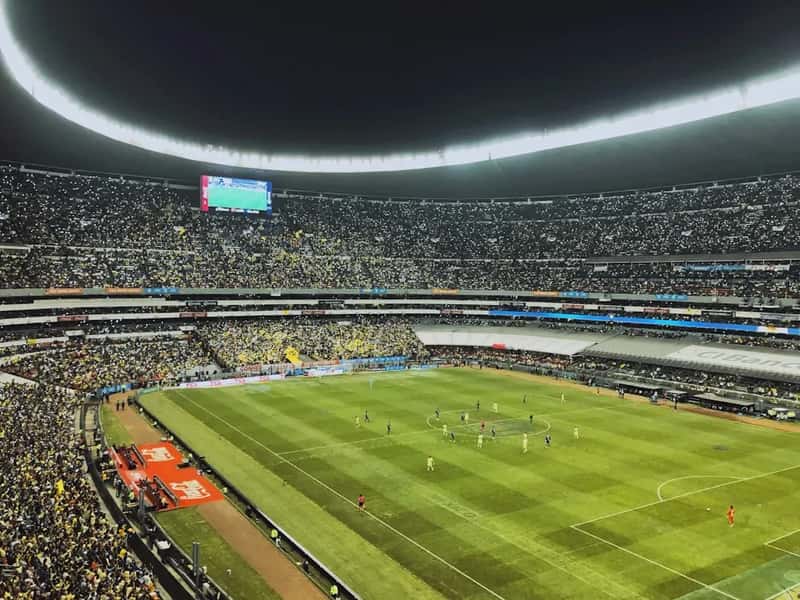
No discussion of Mexico’s hosting legacy is complete without Estadio Azteca, a venue that has quietly built its own separate record book. It was the first stadium to host two FIFA World Cup finals, with Brazil defeating Italy 4-1 in 1970 and Argentina beating West Germany 3-2 in 1986. With a capacity of 87,523, it remains the largest stadium in Latin America and the eighth-largest football stadium in the world.
The stadium’s connection to football royalty runs deep too. Both Pelé’s 1970 team and Diego Maradona’s 1986 team won the FIFA World Cup at Estadio Azteca. The Estadio Azteca has recorded six of the ten biggest attendances in World Cup history. When 2026 arrived, the ground added a third chapter to its story, becoming the only stadium ever to host World Cup matches across three separate tournaments.
The Road to 2026: A Joint Bid With North American Neighbors

Mexico’s third hosting didn’t come solo this time. On April 10, 2017, Canada, the United States, and Mexico announced their intention to submit a joint bid to co-host, with three-quarters of the games to be played in the US, including the final. The host was announced on June 13, 2018, at the 68th FIFA Congress in Moscow, when the United Bid from Canada, Mexico, and the United States was selected over a rival Morocco bid by 134 votes to 65.
The scale of the tournament this time dwarfs anything Mexico experienced before. The 2026 FIFA World Cup is being held in 16 cities across the United States, Mexico, and Canada, consisting of a total of 104 matches, 72 in the group stage and 32 in the knockout stage. Although hosting rights are shared by three countries, the US is hosting 78 games, three times more than Canada and Mexico combined at 13 each. Even with a smaller share of matches, Mexico’s symbolic role as the birthplace of this North American tournament carries enormous weight.
What Makes 2026 Historically Unique
Beyond Mexico’s individual achievement, the 2026 edition is breaking new ground on multiple fronts simultaneously. The tournament is the first FIFA World Cup to be hosted by three nations and the first to include 48 teams, an expansion from the previous 32-team format. It will last 39 days from June 11 to July 19, 2026, making it the longest World Cup ever, a result of FIFA’s decision to expand the number of competing teams.
For Mexico specifically, the layered significance is hard to overstate. Mexico became the first country to host or co-host the World Cup three times, having hosted the 1970 and 1986 tournaments. The opening match took place on June 11, 2026, at Estadio Azteca in Mexico City, fittingly bringing the tournament back to where it all started fifty-six years earlier. It’s a neat symmetry that football historians will likely reference for decades.
Mexico’s Own Playing Record as Host

Interestingly, Mexico’s best performances as a national team have consistently come on home soil, though a deep run has always eluded them. Mexico reached the quarter-finals in both 1970 and 1986, a level of success they have not matched at any World Cup played elsewhere. In 1970, Raul Cardenas’s squad bowed out following a 4-1 loss to Italy, while in 1986 Bora Milutinovic’s men suffered penalty shootout heartbreak against West Germany after a goalless draw through extra time.
Head coach Javier Aguirre, who played on that 1986 side, has spoken candidly about what this third hosting means personally and nationally. He described the World Cup being on home soil as the message he keeps repeating in the dressing room, saying nothing has meant more to him in fifty years of football and that he has never felt so emotional about anything, including titles, defeats, relegations, injuries, and sackings. That kind of raw sentiment underscores just how central hosting duties are to Mexican football identity, regardless of results on the scoreboard.
Why This Record May Stand for a Very Long Time

Looking ahead, it’s worth noting how rare and difficult triple hosting actually is. Only Mexico, with three hostings, along with Italy, the United States, France, Germany, and Brazil have hosted the event more than once, and the 2026 FIFA World Cup is the first to be hosted by more than two countries. Under FIFA’s current confederation rotation rules, the 2030 World Cup cannot be held in North America because CONCACAF countries are already hosting in 2026, nor in Asia following Qatar’s 2022 hosting.
Looking further out, the tournament’s trajectory shows no signs of returning to single-country simplicity anytime soon. To mark the tournament’s 100th anniversary in 2030, there will be three host countries, Morocco, Portugal, and Spain, with three additional countries, Argentina, Paraguay, and Uruguay, hosting celebratory centenary matches, while Saudi Arabia is set to host in 2034. With FIFA increasingly favoring multi-nation bids and rotating confederations, it could be many decades, if ever, before another single country matches Mexico’s three-time hosting feat.
A Legacy Written in Color, Chaos, and Comebacks
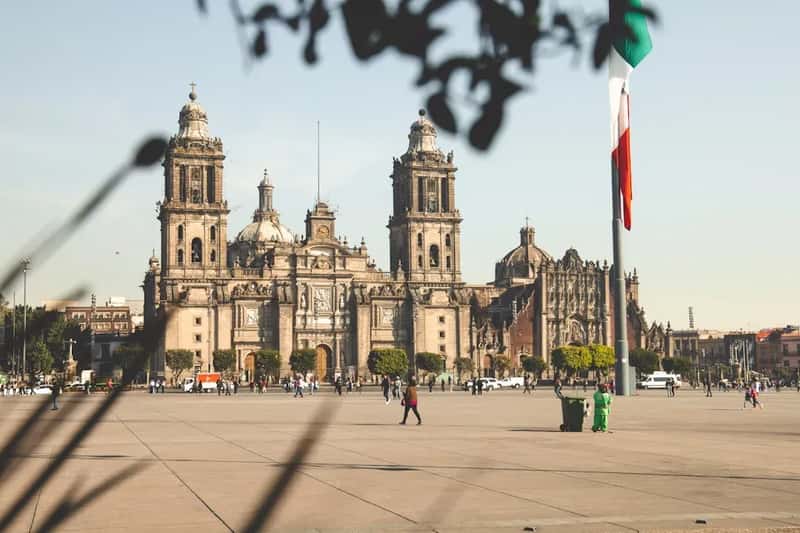
What stands out most about Mexico’s hosting history isn’t just the number three, it’s the sheer improbability behind two of those three occasions. The 1970 tournament required FIFA to bet on a country outside the traditional European and South American footballing axis. The 1986 edition only came to Mexico because Colombia’s economy couldn’t keep pace with FIFA’s ballooning demands. Only 2026 was won through deliberate, modern bidding strategy rather than circumstance or last-minute rescue.
Mexico’s story is really a story about resilience matched with opportunity, about a football culture that has repeatedly stepped up when the tournament needed a home. From Pelé’s technicolor triumph to Maradona’s controversial magic to the shared spectacle of 2026, Mexico has quietly become the one constant thread running through the World Cup’s most transformative decades. No other nation can say the same, and given how the hosting landscape is evolving, it’s entirely possible no other nation ever will.