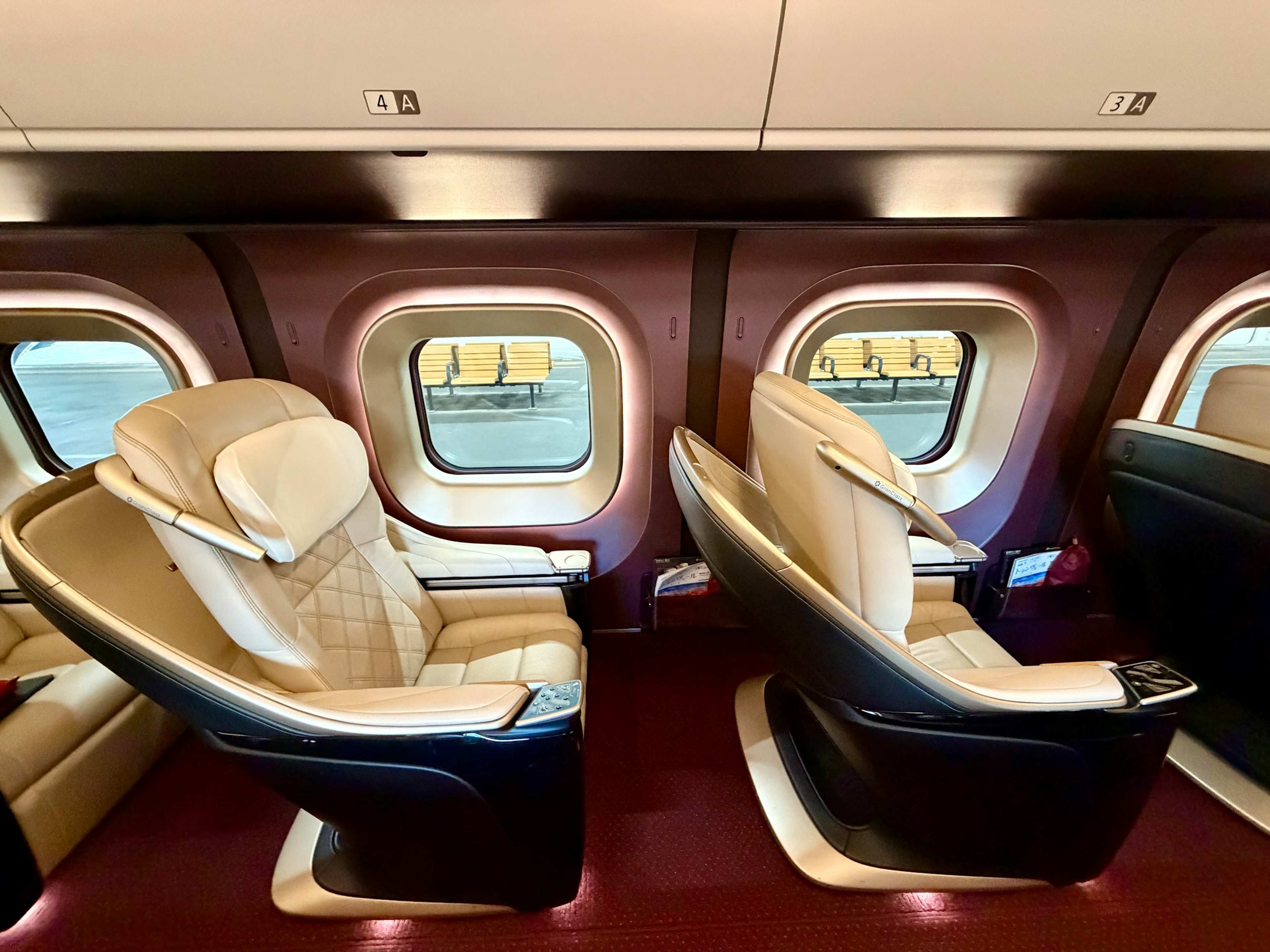
Europe is experiencing something remarkable right now. While travelers once viewed trains as the slower, old-fashioned option, the continent’s high-speed rail network has quietly transformed into a sleek, efficient alternative that puts flying to shame on many routes. Today, around four-fifths of people choose to travel by high-speed trains on journeys of less than two and a half hours, according to the International Union of Railways, and once you factor in airport security lines, transfers from city centers, and baggage claim hassles, it becomes clear why. These trains arrive directly in the heart of cities, not some remote airport an hour away. Out of 297 routes served by both rail and a direct flight, the rail trip is faster on 68 of them, and that number is steadily climbing as Europe continues investing billions in its rail infrastructure. The scenery alone makes it worth considering, but the convenience seals the deal.
Madrid to Barcelona: Spain’s Speed Champion
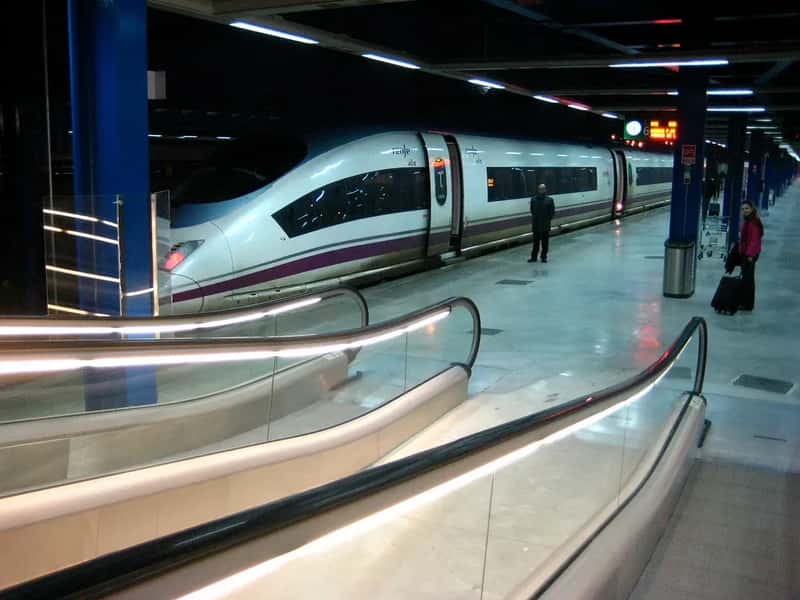
The Madrid-Barcelona high-speed rail line connects the cities in 2 hours 30 minutes, and this route has become something of a poster child for how rail can obliterate air travel’s dominance. The 621-kilometre standard-gauge railway line was inaugurated on 20 February 2008 and is designed for speeds of 350 km/h, though trains typically cruise at slightly lower speeds in regular service. The route operates with multiple carriers including Renfe’s AVE, low-cost operator Ouigo, and newcomer Iryo, giving travelers genuine competition and often rock-bottom fares. Ouigo offers around 5 departures per day from only €9, though baggage fees apply.
The journey itself cuts through some of Spain’s most striking landscapes, passing through Zaragoza and skirting Catalonia’s western countryside. The rapid ascent of rail popularity and the strong competitive threat it poses to airlines is nowhere more clearly displayed than in the history of the HSR line between Madrid and Barcelona, Spain’s most popular high-speed train route. Airlines that once dominated this corridor have watched their market share evaporate as travelers discovered they could skip airport hassles and arrive refreshed in the heart of Barcelona or Madrid. At peak times Madrid to Barcelona trains depart every 30 minutes, with the fastest services taking just 2 hrs 30 mins to reach the Spanish capital, making this one of the most frequent and reliable high-speed connections in Europe.
Paris to Barcelona: The Mediterranean Connection
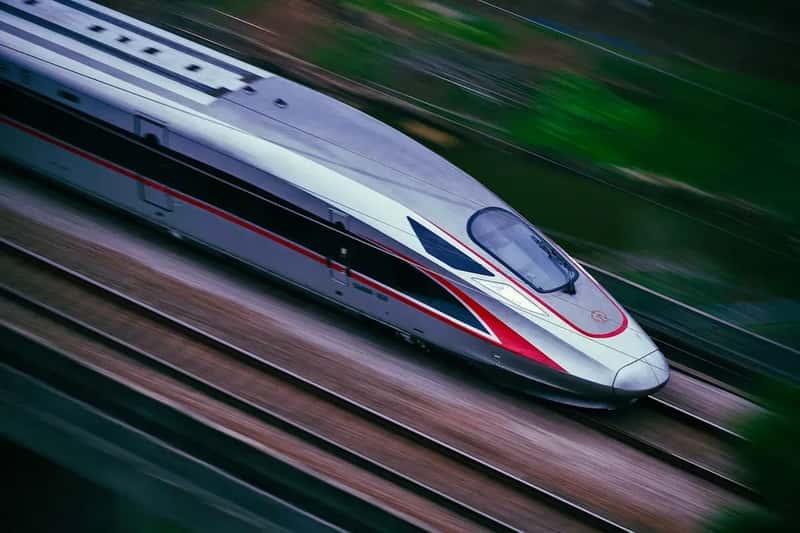
Paris to Barcelona takes a leisurely 6h50 city centre to city centre for the 1,073 km, compared to a tedious 5 hours by air once ground transportation, check-in time and airport security are included. This route has quietly become one of Europe’s most scenic high-speed journeys, operated by double-deck TGV Duplex trains that whisk passengers south through France at speeds touching 320 km/h. The trains depart from Paris Gare de Lyon and arrive directly at Barcelona Sants station, eliminating the need for expensive airport taxis or shuttles. Passengers reach Paris Gare de Lyon from Barcelona in 6 hours and 45 minutes, and the journey offers glimpses of lavender fields, Mediterranean coastlines, and even flamingo flocks in southern France.
The route passes through notable French cities including Montpellier, Nîmes, and Perpignan before crossing into Spanish Catalonia. With TGV INOUI, you can travel at speeds up to 320 km/h from Paris to Barcelona on an extremely comfy train, with onboard wifi, power outlets at every seat, and a buffet car serving French and Spanish specialties. What makes this route particularly appealing is the practical advantage over flying. When you add up the travel time to Charles de Gaulle airport from central Paris, the mandatory two-hour early arrival, security queues, baggage collection, and the journey from Barcelona airport into the city, the train actually wins on total door-to-door time while offering infinitely more comfort and workspace.
London to Paris: The Channel Tunnel Marvel
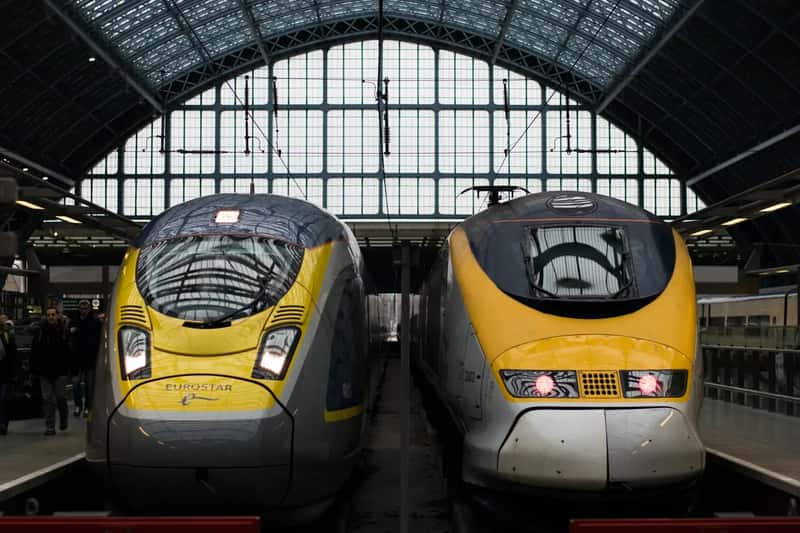
The Eurostar connects London to Paris with tickets starting from $52 and travel time of just 2 hrs 16 mins, making it one of the most compelling alternatives to short-haul flying anywhere in the world. Operated by Eurostar, the e320 runs between London, Paris, Brussels, and Amsterdam, with a top speed of 320 km/h. The journey begins at London’s magnificent St Pancras International station and deposits passengers at Paris Gare du Nord, both located in the absolute heart of their respective cities. Taking the train from Brussels to London can slash three hours and 18 minutes off the total journey time compared to flying, while London to Paris saves one hour and 41 minutes.
The route’s engineering accomplishment remains staggering even decades after completion. The journey takes about 2 hours and 16 minutes, but you are only in the Channel Tunnel underwater for approximately 20 minutes, with the rest offering scenic views of the English and French countryside. Border controls happen before boarding in London, meaning passengers simply walk off the train in Paris and start exploring immediately. According to Eurostar statistics, a journey from London to Paris already emits 90% less greenhouse gas than the equivalent short haul flight, and produces less carbon per passenger than a single car journey from central London to Heathrow Airport. The service operates roughly hourly during peak times, and unlike airlines, Eurostar allows two large suitcases plus hand luggage with no weight restrictions.
Milan to Rome: Italy’s Red Arrow
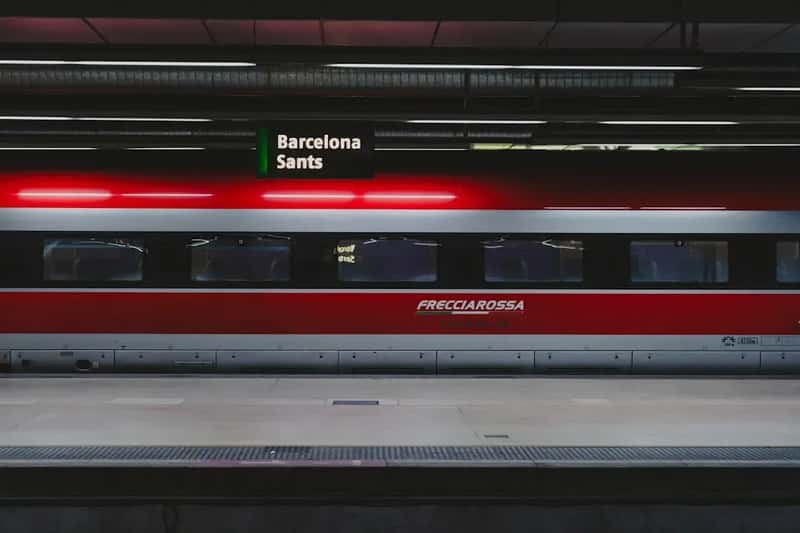
Italy’s Frecciarossa with a top speed of 320 kph is the fastest train in Europe, carrying passengers from Milan to Florence or Rome in under three hours. Italy’s high-speed network has become so successful that it contributed to the collapse of flag carrier Alitalia, which couldn’t compete with trains that were faster, cheaper, and more convenient for domestic travel. The increasing success of Italy’s high-speed rail networks since 2008 has been cited as one of the main reasons that the flag carrier airline Alitalia, which focused on domestic flights, went bankrupt and ceased operations in October 2021. The Frecciarossa trains now operate in direct competition with private operator Italo, both offering premium services at competitive prices.
The Milan-Rome corridor showcases some of Italy’s most beautiful landscapes, from the Po Valley plains through the Apennine Mountains and into Lazio. Trains reach speeds that make the roughly 500-kilometer journey feel remarkably brief, all while passengers enjoy reclining leather seats, onboard wifi, and elegant Italian design. The trains stop at major cities including Bologna and Florence, making it easy to break up the journey or continue exploring. For travelers, the practical advantages are immense. Both Milan’s Centrale station and Rome’s Termini station sit in central locations with excellent metro connections, meaning you can step off the train and be in the city’s historic heart within minutes, not the hour-plus journey from Fiumicino airport.
Berlin to Munich: Germany’s Rapid Connection
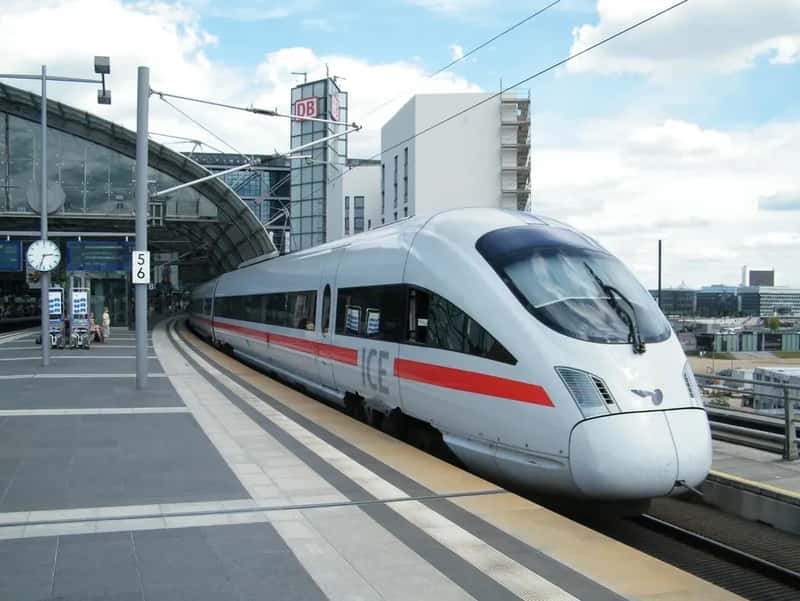
The VDE 8 project involved building more than 143 miles of new track with 27 tunnels and 37 viaducts, cutting 2h30m off the journey time, and the 186mph high-speed trains now connect the two hubs in less than four hours. This route represents Germany’s commitment to making rail genuinely competitive with domestic flights, and it has succeeded. The ICE 3 operated by Deutsche Bahn can reach speeds of up to 320 km/h, and whilst the high-speed rail network is not as developed in Germany as in other European countries, certain stretches such as that between Cologne and Frankfurt allow this flagship train to reach its maximum velocity.
The Berlin-Munich route cuts through the heart of Germany, passing through historic cities and varied landscapes that make the journey itself part of the experience. The complete line, which opened in 2017, took more than 26 years of planning and construction, representing one of the most significant infrastructure investments in modern German history. Travelers benefit from ICE trains that offer restaurant cars, quiet zones, family compartments, and first-class service that rivals business-class airline seating. The convenience factor matters enormously here – both Berlin and Munich airports sit far outside their respective city centers, while the Hauptbahnhof stations are perfectly positioned for immediate access to hotels, attractions, and onward connections. For business travelers especially, the ability to work productively during the journey with reliable wifi and power outlets transforms travel time into productive time.