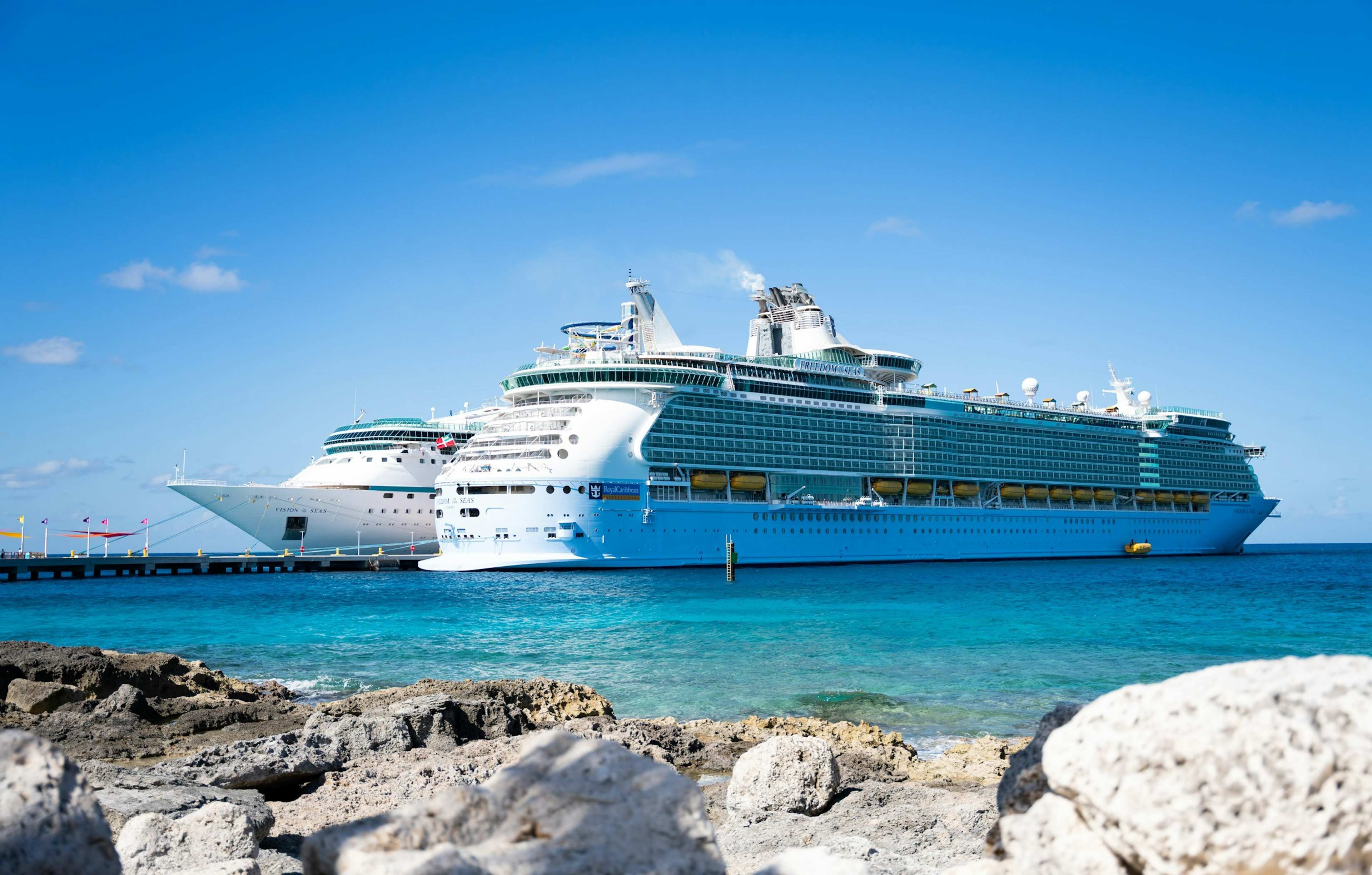
You’ve scrolled past the photo a hundred times, your neighbor down the street, wine in hand, somewhere off the coast of Alaska or the Caribbean, again. It’s tempting to assume they hit a lottery ticket or married into money. They didn’t, and once you hear the actual reason, it barely has anything to do with wealth at all.
It’s not bragging rights, and it’s definitely not unlimited cash sitting in a retirement account. The real explanation is stranger, more practical, and honestly a little contagious once you understand it. Here’s what the cruise lines, the receipts, and the retirees themselves actually admit.
The Math Doesn’t Work the Way You Think

Here’s the part that surprises people the most: a week at sea can sometimes cost less than a week at home. A short three-night cruise in Europe can start around $140 per person, and with some planning, a full seven-day sailing can be booked for roughly $700 per person, about $100 a day. That single number covers meals, activities, and a bed, no separate grocery run, no gas bill, no surprise dinner tab.
Compare that to what cruise lines report as the industry average: $286.05 per passenger per day once onboard spending is included, or about $2,002.35 for a full week. That sounds steep until you stack it against a week of hotel rooms, restaurant bills, and a rental car back home. For a retiree running the numbers on a fixed income, cruising doesn’t feel like splurging, it feels like the cheaper option that happens to include a balcony.
Fast Facts
- Short 3-night European cruise: from about $140 per person
- Full 7-day sailing: roughly $700 per person, or about $100 a day
- Industry average onboard spend: $286.05 per person, per day
- Full week at that average: about $2,002.35 all in
They’re Not Paying for Surprises Anymore

After decades of unpredictable bills, mortgages, tuition, medical costs, most retirees want exactly one thing from a vacation: a number they can trust in advance. Cruise pricing delivers precisely that, and it matters more than it sounds. Meals, entertainment, and even upgraded packages like unlimited drinks can all be locked in and paid for before the ship ever leaves the dock.
That means no mystery invoices waiting in the mailbox, no fighting over resort fees, no last-minute surge pricing. For someone living off Social Security and a modest 401(k), that certainty is worth more than any onboard water slide or midnight buffet. Knowing the exact cost months ahead isn’t a minor convenience for retirees, it’s the whole reason the trip feels safe to book.
The “Pack Once” Trick Nobody Talks About

Ask any retiree who’s done both a European bus tour and a European cruise which one they’d book again, and the answer is almost always the same. It’s not the scenery, it’s the suitcase. Book a cruise and you unpack exactly once, then wake up in a new country without ever touching a zipper again.
Since cruises are a mode of transport in and of themselves, seniors don’t have to worry about the chaos of packing and unpacking at each port, moving to different hotels and rooms every night, and the other concerns that come with traveling by land or air to the next destination.
A maritime attorney who works closely with cruise passengers
That single detail, no repacking, no new hotel every two nights, is quietly the biggest reason older travelers choose ships over itineraries. It sounds small until you’ve hauled a suitcase up three flights of stairs in a hotel with no elevator, twice in one week.
The Numbers Are Bigger Than You’d Guess
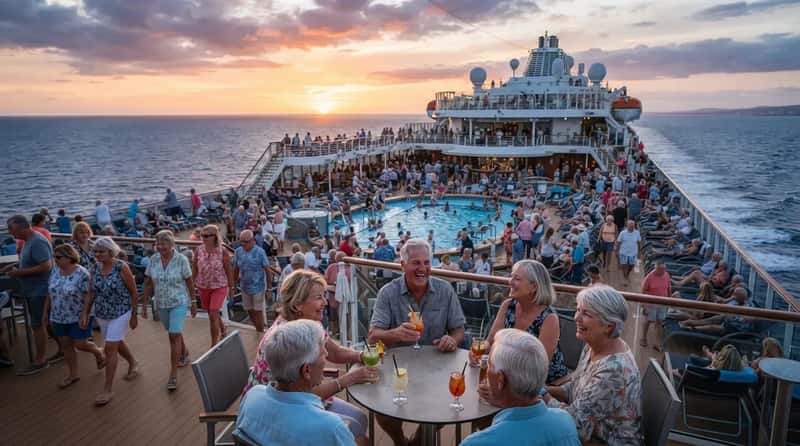
Your neighbor isn’t some rare outlier hooked on an unusual hobby, they’re part of a demographic wave most people wildly underestimate. In 2025, an estimated 13.5 million passengers aged 55 and older took ocean cruises, according to AAA Newsroom, representing 65% of the entire cruise market.
That means nearly two out of every three people on a typical mainstream ship are sitting in that same retirement-age bracket as the person down your street. It’s not a coincidence you keep seeing the same kind of sunset photo in your feed, it’s just math. The industry’s actual customer base looks almost exactly like your neighborhood block party.
At a Glance
- 13.5 million passengers aged 55+ cruised in 2025
- That group makes up 65% of the entire cruise market
- Roughly 2 out of every 3 cruise passengers are retirement-age
Retirees Spend More Time Onboard Than Anyone Else

It’s not just that more retirees cruise, it’s that they cruise longer and spend more once they’re onboard, and that changes the entire equation. Seniors tend to choose longer itineraries at higher price points, largely because retirement removes the two biggest obstacles working travelers face: limited vacation days and a boss who needs an answer by Friday.
Unlike someone squeezing a trip into two weeks of PTO, a retiree can say yes to a 14-day sailing without asking anyone’s permission. That flexibility alone reshapes what a vacation even means once the 9-to-5 disappears completely. Time, not money, turns out to be the real luxury item here.
Some Retirees Have Quietly Given Up Land Entirely
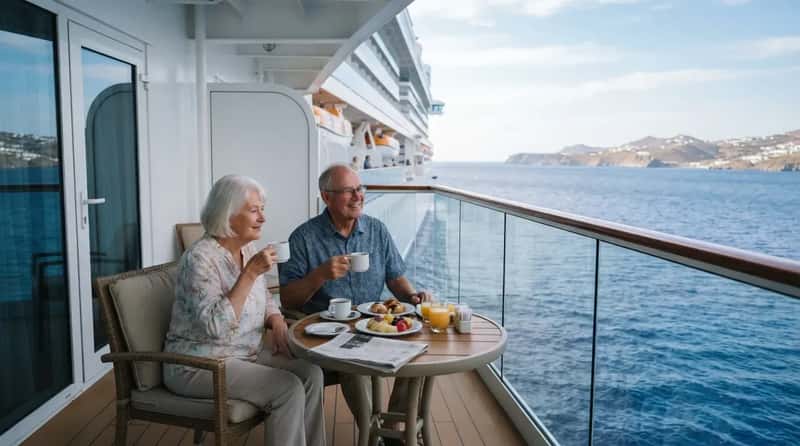
This part sounds like a joke until you actually run the numbers: some retirees have decided a cruise ship is simply a cheaper, easier place to live than a house. Living onboard full-time can run roughly $36,500 per person, or about $73,000 per couple, per year.
That figure competes directly with assisted living costs in many parts of the country, and it comes with no lawn to mow, no roof to patch, and no dishes piling up in a sink. Add in daily housekeeping and rotating restaurants, and “serial cruising” stops sounding eccentric fast. For a growing number of retirees, it’s not a midlife crisis, it’s a spreadsheet decision.
Worth Knowing
- Full-time life at sea: about $36,500 per person, per year
- For a couple, that’s roughly $73,000 annually, combined
- No mortgage, property taxes, lawn care, or home repairs to budget for
- Daily housekeeping and rotating restaurants included in the price
The World Cruise Boom Is Bigger Than Anyone Expected

If a week in the Caribbean sounds impressive, plenty of retirees have stopped thinking in weeks and started thinking in months instead. Royal Caribbean’s Ultimate World Cruise, a 274-day voyage, picked up unexpected TikTok fame and became the longest sailing in the industry’s history.
It’s not alone. Regent Seven Seas unveiled its own record-breaker, a 154-day Sense of Adventure voyage covering 39,722 nautical miles across 77 ports in 41 countries and six continents. These aren’t fantasy brochures collecting dust, they’re selling out to retirees who’ve decided that months, not days, is the right unit of time for a retirement trip.
Accessibility Quietly Became a Cruise Line Selling Point
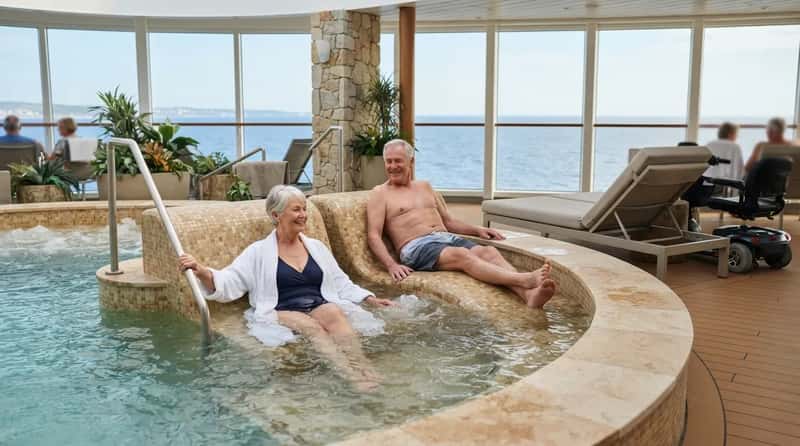
Here’s something rarely said out loud: modern cruise ships have quietly become some of the most physically accommodating vacation environments built in the last decade, and that’s very much on purpose. Newer vessels are designed with mobility in mind from the blueprint stage, not as an afterthought.
Ships like the Allura feature wheelchair-accessible staterooms, spa therapies, a mineral-rich warm seawater pool, and heated lounge beds built right in. For a retiree managing a hip replacement, mild arthritis, or just the general wear of aging joints, that’s not a luxury add-on, it’s the difference between a trip that’s possible and one that isn’t. Very few land vacations offer that level of built-in ease without extra cost and extra hassle.
Why It Stands Out
- Wheelchair-accessible staterooms designed in from the start
- Spa therapies and a mineral-rich warm seawater pool onboard
- Heated lounge beds built into the ship, not rented separately
- Mobility considered at the blueprint stage, not bolted on later
It’s Actually a Cure for Something Nobody Wants to Admit

Underneath the glaciers and buffet lines is a less glamorous truth: cruising quietly solves a problem retirement creates on its own, isolation. Ships pack hundreds of built-in social opportunities into a single week, shared dining tables, group excursions, trivia nights, lounges full of people in the exact same life stage.
For someone whose social circle shrank the day they clocked out for the last time, that structure isn’t a bonus, it’s often the entire point of the trip. Nobody has to plan a dinner party or coordinate five schedules to get a table of new friends. The ship just hands it to them, every single night.
The Retiree Cliché Is Actually Fading, Fast

Here’s the twist most people miss entirely: the “cruises are for old people” stereotype your neighbor’s photos seem to confirm is actually fading fast, in real time. Global cruise passengers hit a record 37.2 million in 2025, and roughly one-third of all cruisers are now under 40.
Royal Caribbean logged a 19% jump in Gen Z customers in 2025 alone, and nearly 90% of all passengers now say they intend to sail again, the highest repeat-intent number the industry has ever recorded. So while your retired neighbor keeps posting from the pool deck, the person sitting next to them at dinner is increasingly thirty years younger, chasing the exact same convenience for a completely different reason.
The Bottom Line

Your neighbor isn’t cruising nonstop because they’re flush with cash or chasing bragging rights. They’ve found the version of retirement everyone secretly wants: predictable costs, zero repacking, built-in friendships, and a schedule that answers to nobody but them.
Cruise lines figured out exactly what retirement quietly takes away, structure, certainty, and easy company, and rebuilt all of it on a boat. That’s the real secret hiding behind every one of those photos: it was never indulgence. It was the most rational move available.