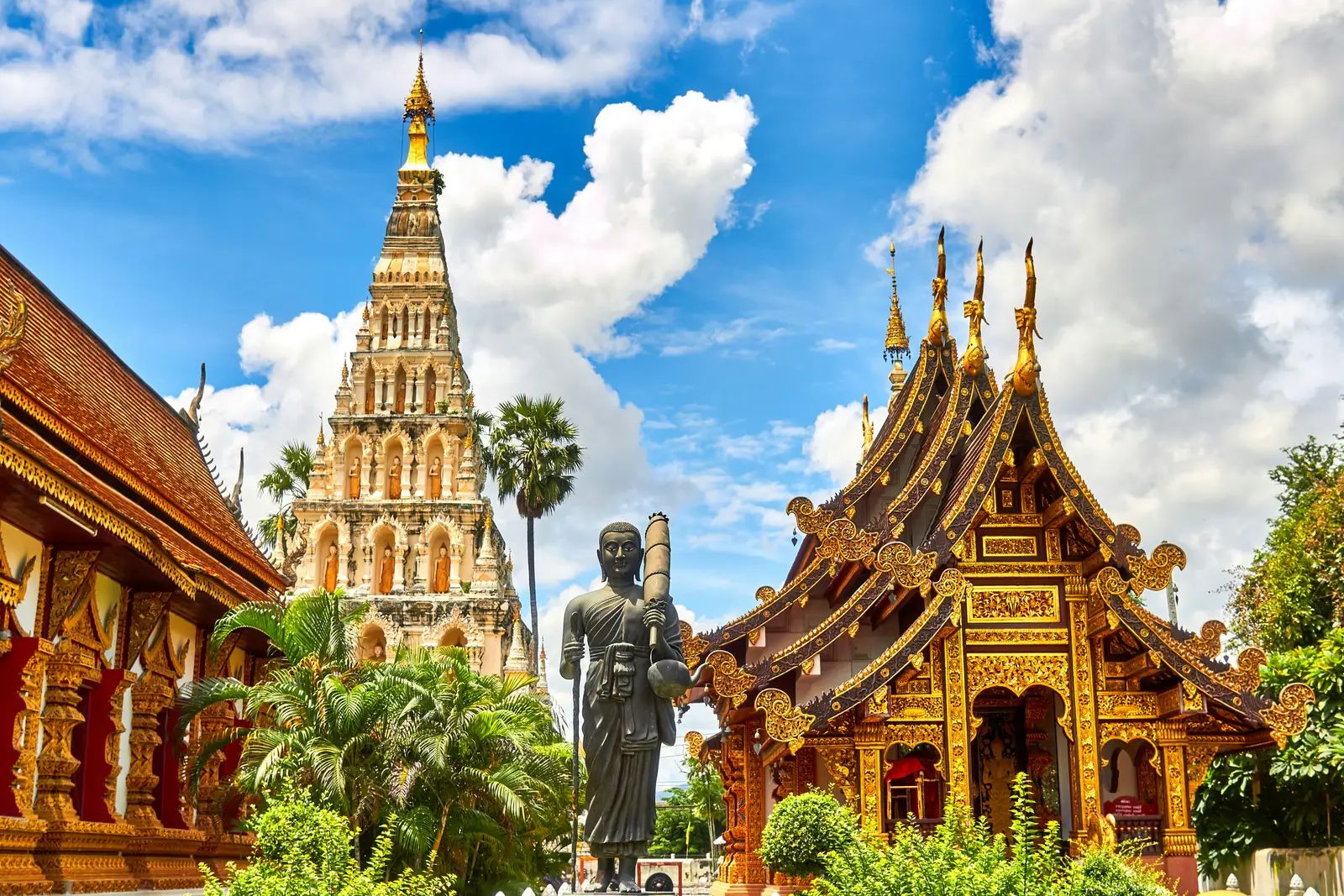
Thailand draws millions each year with its golden temples and lush hills, yet many travelers sense that the most lasting impressions come after the usual sightseeing ends. The shift happens quietly when daily routines replace staged shows and a visitor is treated as a neighbor rather than an audience member. One operator that arranges such access is Enchanting Travels, whose itineraries in the north aim to create direct links between guests and the people who live there. ([1])
From Temple Steps to Personal Blessings
Chiang Mai offers an early chance to move past observation. Travelers begin before dawn at the base of a mountain where monks in saffron robes walk barefoot through quiet streets. The sound of morning chanting fills the air, and the group joins the procession rather than watching from a distance. The route continues up a winding road to Wat Phra That Doi Suthep, where 306 steps lead to a golden pagoda overlooking mist-covered valleys.
Lower on the same slope sits the centuries-old Wat Umong. Inside its stone tunnels the pace slows. A monk ties a simple white yarn bracelet around each wrist and pours sacred water over the hands in a brief, private blessing. The gesture is part of ordinary temple life, not a performance arranged for outsiders, and it leaves a tangible reminder that lingers for weeks afterward.
Learning the Rhythm of a Family Homestead
A short drive south reaches the Hang Dong district and the home of Mr. Prapat. Here the day centers on shared tasks rather than lectures. Guests sit with the family to weave baskets from local reeds, the rough texture and steady repetition creating an immediate sense of participation. Later they move through kitchen gardens, crushing herbs and cooking over an open fire using recipes passed down in the household.
The meal that follows is ordinary and generous. Techniques picked up at the fire become practical knowledge carried home, and the hosts gain direct support from the visit. The atmosphere feels less like tourism and more like an afternoon spent with neighbors who happen to live in northern Thailand.
Following Tea Trails in the Hills
Further north the landscape changes to the evergreen slopes around Mae Tang. Travelers carry woven baskets into the fields alongside members of local hill tribes who gather Assam tea leaves. The work stays light on the land because the plants rely only on mountain spring water. After the picking, everyone pauses for a cup of hand-roasted tea whose flavor carries the scent of the surrounding forest.
The pause is restorative. It connects the visitor to the daily labor that sustains the community and to the simple pleasure of tasting a place rather than merely photographing it. The experience underscores how small choices in travel can align with long-standing local practices.
Riverside Days at the Bush Camp
The final stretch leads deeper into the forest to the Chiang Mai Bush Camp beside the Ping River. Guests stay in canvas tents with private patios and wake to the sound of flowing water. Mornings include watching mahout families guide elephants into the river for their bath, an activity that supports both animal welfare and steady local employment.
Evenings bring quiet conversation over traditional coffee. The setting removes the usual barriers between traveler and host, allowing moments that feel private rather than packaged. The camp operates as a long-term partnership with the families who care for the animals, so the visit contributes directly to ongoing livelihoods.
Travel That Leaves Room for Connection
These experiences share a common thread: each one is built around existing community rhythms instead of added spectacles. Partners range from historic temples to family farms and conservation camps, and the operator states that the goal is to sustain those relationships over time. When logistics are handled with care, the traveler’s attention stays on the place itself.
The yarn bracelet that remains on a wrist weeks later serves as a quiet marker of that shift. It recalls not a checklist of sights but the simple fact of having been welcomed into someone else’s ordinary day. For many, that memory becomes the reason to return.