The room smells like someone else’s soap.
The ceiling fan ticks once, then stops.
You are exhausted. The flight was long. The day was longer.
But your brain? Your brain is fully, terrifyingly awake.
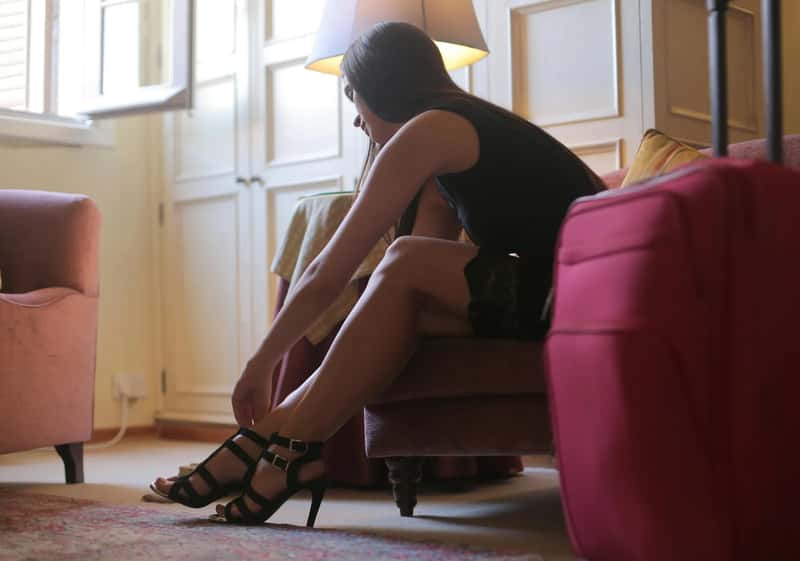
And somewhere on the floor beside the bed – placed just so, toes pointed toward the door – your shoes sit. Ready. Waiting. As if you already know something is coming that hasn’t arrived yet.
This is the distance between the composed, seasoned traveler you perform at the check-in desk – rolling bag, carry-on, loyalty card – and the ancient, trembling creature curled inside your ribcage who is still, on some fundamental level, sleeping in the open savanna. You perform confidence. You perform ease. You lay out your toiletry bag with practiced efficiency. But the shoes stay near the bed. They always stay near the bed. Because some part of you has never left the wilderness. Some part of you is always one loud noise away from running.
1. The Night Watch You Never Agreed to Keep
You did not decide to stay vigilant tonight.
Your brain decided for you.
We often experience troubled sleep in a novel environment. Sleep researchers call this the first-night effect (FNE). It is, in fact, a manifestation of one hemisphere being more vigilant than the other – a kind of internal night watch to monitor unfamiliar surroundings during sleep.
Think about that. Half your brain is asleep. The other half is pacing the perimeter.
The hotel room is climate-controlled, key-carded, and surveilled by twelve cameras. Your amygdala does not care about any of this. It registered the unfamiliar ceiling, the unfamiliar hum of the HVAC, the unfamiliar distance to the nearest exit. It filed a threat report. And now, while you lie there pretending to rest, one hemisphere is running a security check that won’t clock out until morning.
The shoes near the bed are not a quirk. They are your body’s contingency plan. They are evidence that you already know, on a cellular level, that readiness is survival.
2. The Evolutionary Debt You’re Still Paying
The hotel is not the savanna. But your neurons haven’t gotten the memo.
Your brain is designed to be aware of potential dangers in your surroundings. It’s how early humans survived. Sensing the presence of predators or other threats helped them stay safe.
That blueprint was written over hundreds of thousands of years. The hotel room has existed for maybe two hundred. The math is not in your favor.
Every unfamiliar creak. Every stranger in the hallway. Every elevator that stops on your floor and pauses one beat too long before the doors slide open again. Your nervous system catalogs all of it. It is not being dramatic. It is being exactly what evolution designed it to be: a threat-detection engine running on ancient firmware in a modern shell.
It’s perhaps easiest to think about hypervigilance as a natural instinct gone awry. “Hypervigilance is a basic human survival mechanism,” as one psychologist explains. “It allows us to sense predators and threats to our safety.”
The shoes are the instinct made physical. A bridge between ancient fear and modern movement.
3. The First-Night Effect Is Actually a Feature, Not a Bug
You think you slept badly. Your brain thinks it did its job perfectly.
The first-night effect is associated with a surveillance system in one brain hemisphere during sleep, which manifests as heightened vigilance toward monitoring external stimuli. This surveillance system may be useful for protecting vulnerable sleepers from abnormal events in unfamiliar environments.
Your brain is not malfunctioning. It is performing.
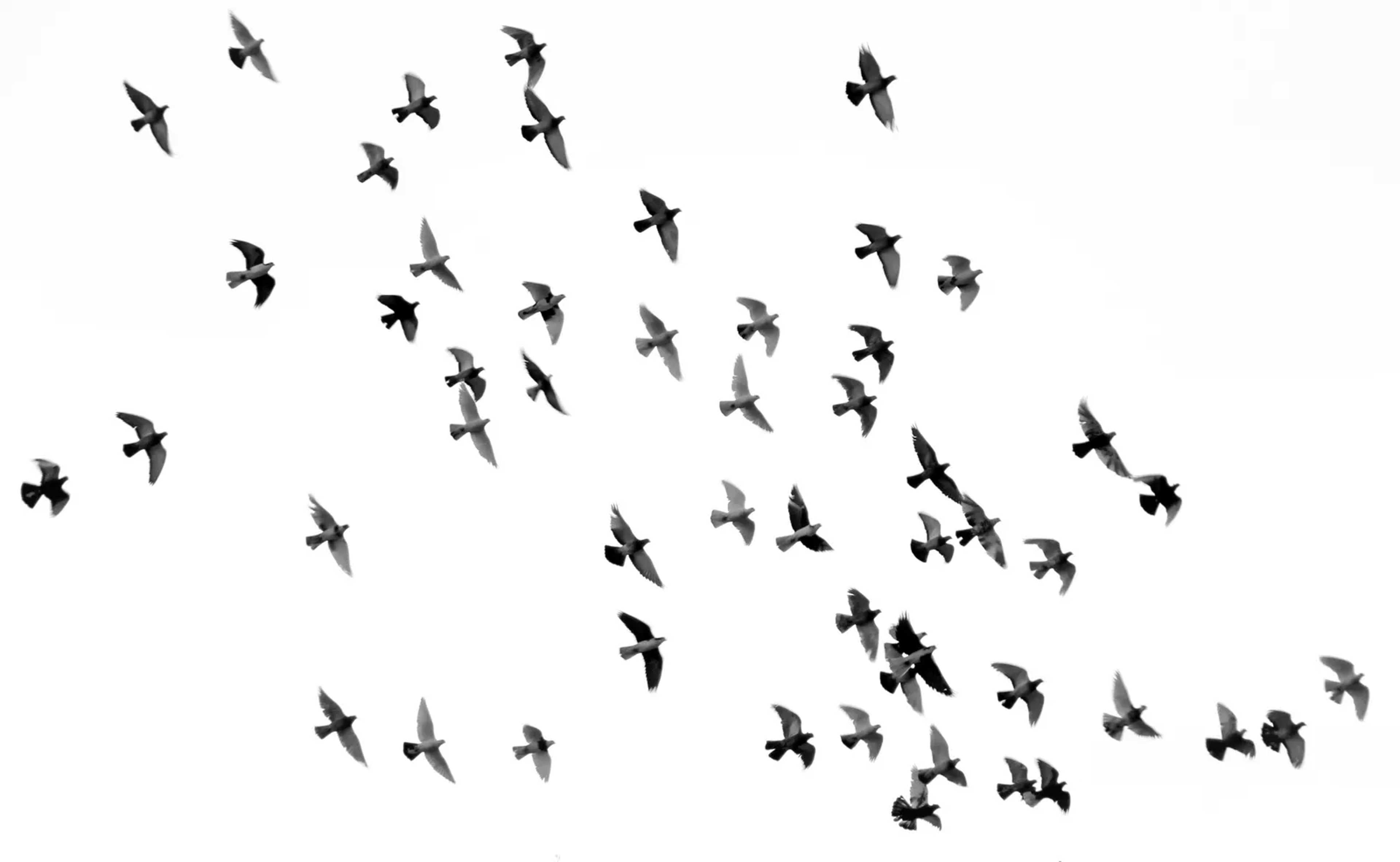
Some birds show unilateral sleep in risky situations – when they sleep at the dangerous edge of a group rather than in the middle – so that the waking hemisphere can detect predators while the other half rests.
You are, neurologically speaking, the bird at the edge of the flock.
You are the one facing outward. The one who chose the seat with the wall behind it. The one who noted where the fire exits are before even putting down the bag. You did it automatically, the way you’ve always done it. The shoes are the last piece of the ritual – the final signal to the nervous system that yes, if the alarm sounds, you will not be caught barefoot and blinking in the dark.
4. The Exit Strategy as Identity Architecture
The traveler who keeps their shoes by the bed has already mentally rehearsed leaving.
Not just this room. This version of themselves.
The more places you connect with, the harder it becomes to answer the simple question: where are you from? For some, it feels like belonging everywhere and nowhere at the same time.
The exit strategy is not just physical. It is psychological. It is the secret conviction, carried in the back of the mind like a spare key, that you could walk away from this room, this city, this iteration of yourself, and survive. That you are never so settled that you cannot be uprooted. That the door is always, on some level, still an option.
This is both a freedom and a wound.
The traveler who is perpetually ready to leave is also, somewhere beneath the performance, perpetually afraid of being left. The shoes by the bed are armor. They are proof that you got here under your own power. And they are proof that you can leave the same way.
If you experience recurring hypervigilance, you may start to develop behaviors to calm your anxiety or counteract perceived threats. The shoes are that behavior. Ritualized. Refined. Carried from city to city like a talisman against the unknown.
5. The Personal Inventory: A Room in Lisbon, 3 a.m.
I will tell you about the room in Lisbon.
Third floor. Tiled floors. Window that faced an alley and another window, and in that window, a figure that turned out to be a coat on a hook. I had been traveling for eleven days. I was deeply, profoundly tired. I put my shoes by the bed – toes pointing at the door – as I always do, as I have always done, in every room in every city. I did not consciously decide to do it. My hand simply placed them there. And then I noticed. And I sat on the edge of the mattress and stared at those shoes for a long time.
What, exactly, am I planning to run from?
The question is not rhetorical. It is the question. When someone experiences trauma, the body’s protective alarm system – the fight-or-flight response – is engaged in full force. Normally, once a threat passes, that system quiets and returns to baseline. But sometimes something changes – the “off switch” doesn’t fully reset. Instead, the brain and body remain sensitized, ready to detect danger at all times. I am not a person with PTSD in the clinical sense. But I am a person who has moved enough, lost enough, rerouted enough, that my nervous system has learned to treat arrival as a temporary condition. To treat all rooms as rooms I will eventually leave.
6. The Amygdala Does Not Read Yelp Reviews
The hotel has 4.7 stars. The neighborhood is objectively safe.
Your amygdala does not care.
Hypervigilance has been described as a heightened state of awareness. “It’s your brain’s way of protecting you by scanning the environment for signs of danger and being extremely aware of your surroundings.”
The amygdala operates on pattern, not rationality. It does not distinguish between the alley in a dangerous city and the cobbled lane outside a boutique hotel. It registers darkness, unfamiliarity, and distance from known territory, and it fires accordingly. The threat assessment is running whether you invited it or not.
Safety concerns play a critical role in the first-night effect. The subconscious mind remains on high alert in unfamiliar environments, constantly scanning for potential dangers or threats. This instinctive vigilance is an evolutionary mechanism designed to protect us from harm.
So you leave the shoes out. Not because the room is dangerous. Because your brain does not know the room is safe. There is a difference. And in that difference lives an entire psychological autobiography.
7. The Temporary Self and the Borrowed Room
A hotel room is the most honest mirror you will ever stand in front of.
It shows you exactly who you are when you are stripped of your context.
Travel’s anonymity creates psychological freedom to explore different aspects of self without social consequences. In a borrowed room, no one knows your name unless you gave it to the front desk. No one knows your history, your failures, the specific architecture of your grief. You are only a room number and a checkout time.
And yet. The shoes go in the same place. The charger goes on the same side. The toiletry bag opens to the same order. Because even while the self becomes temporarily anonymous, it insists on its rituals. The body knows who it is even when the mind is negotiating. The exit strategy – shoes, door, corridor memorized on the way in – is both the most primitive and most revealing thing about you. It says: I have been in situations from which I needed to leave quickly. It says: I have learned not to be caught unprepared. It says: I carry my readiness like a second passport.
8. The Hypervigilant Body Speaks in Small Gestures
It is not always shoes.
Sometimes it is the phone face-up on the nightstand, volume on, screen unlocked. Sometimes it is sleeping in your clothes. Sometimes it is the door-stopper wedged under the handle of the hotel room at 2 A.M. in a city where nothing has happened and nothing is likely to happen and yet.
People experiencing hypervigilance may become preoccupied with scanning their environment for possible threats. They might overreact to loud and unexpected noises, exhibit an overactive startle response, or become agitated in highly crowded or noisy environments.
These gestures accumulate into a portrait. A portrait of a person who has learned, somewhere along the way, that safety is not a given. That environments change. That exits matter. The seasoned traveler who does all of this with smooth efficiency and a practiced smile is still, under the surface, running the same threat-assessment protocol as the first-time traveler who cannot sleep at all.
Hypervigilance is a biological adaptation to stress. It’s your brain’s method of trying to keep you out of harm’s way by being highly alert and aware of your surroundings. The body is not wrong for doing this. The body is ancient and correct. The question is only whether the threat still matches the response.
9. The Paradox of the Person Who Feels Safest While Moving
Here is the secret some frequent travelers carry.
They sleep better on planes than in their own beds.
One of the paradoxes of travel is how it can make you feel both untethered and more connected than ever. Identity and belonging are tied closely together, and stepping into unfamiliar cultures often tests both.
For some people, motion itself has become the signal for safety. Not arrival. Not belonging. The act of being between places – the airport terminal at midnight, the train pulling out of an anonymous station, the rental car on an unknown highway – is the moment the nervous system finally releases its grip. Because in motion, there is no need to make a home. There is no need to evaluate whether the room is safe. The movement is the answer to the threat. You are already leaving. You are already somewhere else.
Transitory spaces, such as airports, train and bus stations, were reported to evoke feelings of alienation, particularly through the anonymity they entailed. But for the hypervigilant traveler, that anonymity is not alienation. It is relief. It is the only place where the guard dog inside the skull stops barking and simply walks alongside you in quiet companionship.
The shoes near the bed are the land-based version of this. They are transit made stationary.
10. What the Shoes Are Really Saying
The shoes are not about fire alarms.
They are not about crime statistics or safety ratings or the deadbolt on the door.
The shoes are a confession. A quiet, nightly confession that you have never fully believed – on some mammalian, nerve-deep level – that you are allowed to stop. That arrival is real. That this room, this night, this version of your life is stable enough to surrender your readiness to.
Hypervigilance keeps your nervous system braced for impact, even when no danger is present. While it may have once helped you stay safe, over time it can make connection exhausting, rest difficult, and trust feel risky.
The shoes are the physical manifestation of a belief system about the world. The belief that the ground can shift. That comfort is a temporary contract. That you should always, always know the way out.
While hypervigilance may once have felt protective, over time it becomes exhausting, intrusive, and disruptive to daily life. Sleep becomes restless, concentration frays, relationships feel strained, and just relaxing feels impossible.
This is the heaviest thing about the shoes by the bed. It isn’t the habit itself. It’s what the habit reveals about the cost of a life lived in transit – not just physical transit, but the internal kind. The perpetual state of almost-arrived. The identity that has become so fluent in leaving that it has quietly forgotten how to stay.
There is a version of this story that ends with a prescription. With breathing exercises and grounding techniques and advice about how to signal safety to your nervous system before you sleep. But that is not the story being told here. Because the traveler who places their shoes by the bed already knows all of this. They know it the way they know their frequent flyer number: by heart, in the dark, without having to look.
What they may not know – what is worth sitting with in the particular quiet of a hotel room at 3 A.M. – is that the vigilance and the wandering and the readiness to leave are all the same thing wearing different clothes. They are the answer to a question that was asked a very long time ago, in a life or a childhood or a moment that may be difficult to name. The brain learned something then. It learned it well. And now it places the shoes by the bed in cities you cannot always remember the name of in the morning.
The question worth asking – not urgently, not with alarm, but in the same quiet tone you would use to speak to someone who has been keeping watch all night – is simply this: what would it feel like, just once, to put the shoes in the closet?