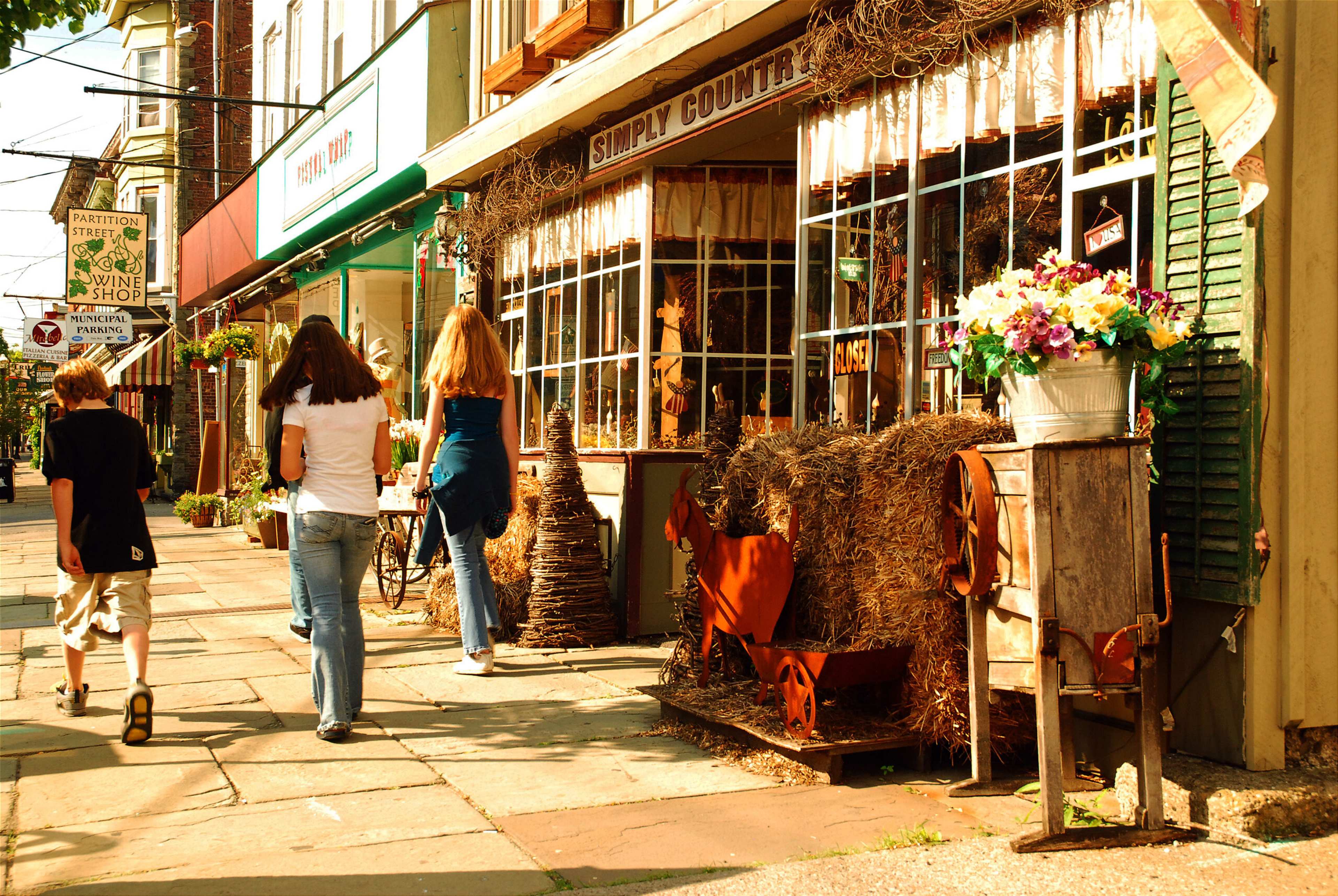
The menu is in a language you don’t speak.
The street outside smells like spice and exhaust and something you cannot name.
You chose this. You paid for the flight. You packed the bag.
And yet, here you are – scanning the laminated back page for something that looks like it came from home. There it is. The chasm between the fearless wanderer you perform on social media and the quietly terrified person who just wants a bowl of something familiar at 7 PM in a city where no one knows your name. You are both people simultaneously. You always have been. The traveler is the costume. The hunger underneath is the truth.
1. The Biological Override

Your brain doesn’t care about your itinerary.
It doesn’t care about the rooftop restaurant with the five-star reviews or the night market that smells like cardamom and possibility.
What it cares about is survival. Pattern recognition. The known over the unknown.
The brain’s limbic system, which is responsible for processing emotions and memories, is closely linked to the sense of smell and taste. This is not poetry. It is architecture. Deep, ancient, wired-in architecture.
Comfort foods tend to be familiar – they signal safety and pleasure to your brain, especially during times of uncertainty or change.
Uncertainty. Change. Two words that describe every single moment of being somewhere foreign.
When you order the pasta in Bangkok instead of the pad see ew, you are not being unadventurous. You are obeying a biological command older than the concept of travel itself. Your nervous system has staged a quiet coup. And the menu, in that moment, is just the battlefield.
2. The Dopamine Transaction
It’s not about the food itself. It never was.
It’s about the chemical negotiation happening the moment you recognize something on the plate.
Research has shown that the brain’s reward centers are activated when we consume comfort foods, releasing feel-good hormones such as dopamine and serotonin. This is a transaction. You hand over the moment of cultural immersion, and in return, you receive a brief, warm flood of the familiar.
This can lead to a conditioned response, where the mere thought or smell of a particular comfort food can trigger a positive emotional response.
You don’t need to eat it. You just need to see it. The name on the menu is enough to begin the process.
Your brain is not weak for doing this. Your brain is extraordinarily efficient. It found a shortcut to safety in a room full of unknowns. The problem is that the shortcut leads somewhere that doesn’t actually exist – a home that was never as safe as the dopamine is telling you it was.
3. The Mythology of the Safe Home
Here is the uncomfortable truth that no travel influencer will post.
The home you are hungry for never existed in the form you remember it.
This is nostalgia in action – a powerful connection between food, memory, and emotion that our brains are wired to make. But nostalgia, by its very neurological design, is a selective editor. It keeps the warm kitchen and cuts the cold arguments. It keeps the smell of Sunday dinner and removes the anxiety that sat at the table beside you.
Nostalgia is a social, self-relevant, and bittersweet – although mostly positive – emotion that arises when reflecting on fond past memories and serves key psychological functions.
Bittersweet. Mostly positive. Not entirely true.
The home encoded in your comfort food craving is a fiction. A beautiful, necessary, neurologically constructed fiction. You are not hungry for a place. You are hungry for a feeling that was already complicated when it was real, and has only grown more perfect in its absence. That is the ghost you are chasing across every foreign menu in every country you will ever visit.
4. The Sensory Time Machine
Smell reaches the brain faster than any other sense.
Before your eyes have processed the décor, before you’ve read a single word, the kitchen exhaust has already sent a message to your amygdala.
When we eat something tied to our past, the flavors, smells, and textures activate brain regions responsible for memory and emotional regulation.
Beyond emotional connections, the texture and flavor of comfort foods also play a crucial role in satisfying our cravings. Creamy, indulgent textures and rich, savory flavors can provide a sensory experience that transcends mere nourishment, transporting us to a state of culinary bliss.
In a foreign restaurant, surrounded by unfamiliar acoustics and unfamiliar light, this sensory pull becomes almost gravitational.
You didn’t choose comfort food. Comfort food chose you – via your nose, your brainstem, and a thousand meals eaten in rooms that felt, at least for a moment, like they belonged to you. The sensation arrives before the decision. The hand is already pointing at the menu item before the rational mind has even opened for business.
5. The Anecdote at the Counter
I remember a specific Tuesday afternoon in Marrakech.
The medina was extraordinary. Disorienting in the best possible way. Colors and sounds folding over each other in a heat that felt personal, almost confrontational.
I walked past a riad with a hand-painted sign advertising a simple tomato soup. The same soup my mother made from a can on sick days when I was seven years old. It cost almost nothing. It tasted like nothing special.
I ordered it immediately. No hesitation. No menu consultation.
As anyone who has lived abroad will tell you, homesickness hits in unexpected ways – sometimes, it sneaks up on you in the form of food cravings. Suddenly, you find yourself yearning for that particular brand of peanut butter, your favourite childhood candy, a scone, or the unmistakable comfort of a traditional home-cooked meal.
I sat there in a 600-year-old city eating a bowl of tinned nostalgia. And I felt, for approximately eleven minutes, completely safe. Even though the apartment I grew up in was long gone. Even though the person who made that soup was long changed. The safety was a hallucination. And I ate every last drop of it.
6. The Threatened Belonging Response
Travel, at its core, is a sustained act of identity disruption.
You remove yourself from the social fabric that confirms who you are. No one here knows your job title. No one knows your history. You are, briefly and completely, a stranger to everyone – including yourself.
The psychological foundation of homesickness lies in the human need for attachment, belonging, and environmental mastery. When individuals relocate, these needs are temporarily disrupted, leading to feelings of displacement and unfamiliarity.
Research has specifically identified that when belonging is threatened, the preference for comfort food surges. The food becomes a social surrogate. These foods often remind us of social bonds and connections with loved ones, acting as a social surrogate when we feel isolated.
Think about that. A bowl of soup as a stand-in for community. A familiar pasta as a proxy for the people who once knew your name before you had to perform it for strangers.
In the absence of belonging, you eat the memory of it. You consume the ghost of connection because the real thing is thousands of miles away. And your nervous system, practical and relentless, accepts the substitute without complaint.
7. The Identity Continuity Problem
When everything around you changes, who are you?
The address is different. The language is different. The currency, the gravity of the light, the sound of traffic at midnight – all different.
For many, these plates represent identity continuity: a bridge between past and present selves. They remind diners who they are and where they come from, providing the same emotional stability that psychologists link to wellbeing.
Food carries emotional weight because it’s woven into our memories and identities.
This is the deeper hunger. Not sodium. Not carbohydrates. The hunger is for continuity. For the thread that connects the person you were to the person now sitting in a restaurant in a country that does not carry your history.
The comfort meal is a kind of self-documentation. Proof of existence across time. You ate this before. You survived before. The food confirms both. Without it, the discontinuity of being a stranger in a foreign place can feel, at a cellular level, like dissolution. And dissolution, however briefly and irrationally, feels like death.
8. The Culture Shock Nobody Admits To
Culture shock is not what the travel brochures describe.
It is not a single dramatic episode of overwhelm in a crowded foreign square.
It is quiet. It is cumulative. It lives in small moments of sensory dislocation – a light switch on the wrong side, a toilet that flushes differently, a sky that holds the sun at an angle your body doesn’t recognize.
Food is the reminder of home, which can ease homesickness if they are authentic. Homesickness can be understood as one stage of culture shock. This line of theory points out that a newcomer enters a new environment with excitement and will experience a honeymoon stage.
Everything that seemed exciting becomes frustrating: language barriers, different food, unfamiliar social norms.
The comfort food order is often the first honest signal that you have passed through the honeymoon and arrived at the reckoning. The excitement has metabolized into exposure. The novelty has become noise. And somewhere beneath the performance of the adventurous traveler, a quieter person is ordering the thing they recognize and asking, in the most private possible way, to be held.
9. The Predictability Hunger
Chaos is expensive. Neurologically expensive.
Every unfamiliar stimulus costs your brain processing power. Every new sound, every unrecognized face, every menu in a language you can only partially translate – all of it draws from a finite cognitive account.
In a world that often feels chaotic, the reliable and predictable satisfaction of a favorite dish can be incredibly grounding. You know exactly how it will taste and how it will make you feel.
Predictability is not a small thing. Predictability is the nervous system’s oxygen.
At the core, comfort food is about emotional safety. Choosing a meal that’s tied to positive experiences can make us feel secure, cared for, and less vulnerable.
Abroad, in the noise and stimulation of the unfamiliar, the act of ordering something predictable is a controlled micro-environment. A thirty-second construction of emotional shelter. Your brain doesn’t require the whole journey to be familiar. It just needs this. This plate. This texture. This moment of absolute certainty in a city built entirely of questions.
10. The Home That Was Always Moving
Here is what the comfort food order is really confessing.
Not that you are unadventurous. Not that you are afraid. Not that you lack sophistication or cultural curiosity.
It is confessing that the home you carry inside you was never fixed to a specific address. It was always a feeling – impermanent, constructed, partially fictional. Homesickness involves a deep sense of loss for familiar surroundings, relationships, and routines that provide a sense of identity and security. But if the identity was already fragile at home, then movement simply exposes what was always true: the security was assembled, not given. The safe home was a collaborative story you told yourself with the help of the people and the food and the rhythms that surrounded you.
Food’s sensuality can also become symbolically representative of travel, immobility, or entangled homeland and diasporic identities.
Remove the people. Remove the rhythms. Cross nine time zones. And suddenly the only surviving piece of that story is on the menu in front of you. The comfort food is not a regression. It is an archive. The last artifact of a home that was always more portable than permanent, more myth than map.
And this is what nobody tells you about the serious traveler, the perpetual mover, the person who has made a habit of departure: the deeper you go into motion, the more acutely you feel the absence of the thing you never entirely had. The “safe home” becomes more vivid the further you travel from it – not because it existed in sharp detail, but because distance grants it the soft focus of a memory that was never tested by the present tense.
You were not homesick for a place. You were homesick for a version of yourself that felt held. That felt legible to others and to yourself. That did not have to perform its own coherence over dinner in a restaurant where no one knows your middle name. In uncertain times, comfort food is more than a craving; it is a coping mechanism. Behind every biscuit or bowl of soup lies a story of resilience – a small act of self-preservation disguised as indulgence. The order is not weakness. It is intelligence. The intelligence of a body that has learned, across a lifetime of impermanent rooms, that the only home that truly travels with you is the one stored in the taste of something that once, in a moment you half-remember, made you feel like you were enough.
The next time you find yourself reaching for the familiar thing on a foreign menu, don’t apologize. Don’t scroll past it guiltily toward the more adventurous option to prove something to the traveler you’re supposed to be. Instead, order it. Eat it slowly. And notice what it is you’re actually hungry for – because it was never really about the food.
It was about the feeling that somewhere, in a life that keeps moving, you once sat still long enough to belong.