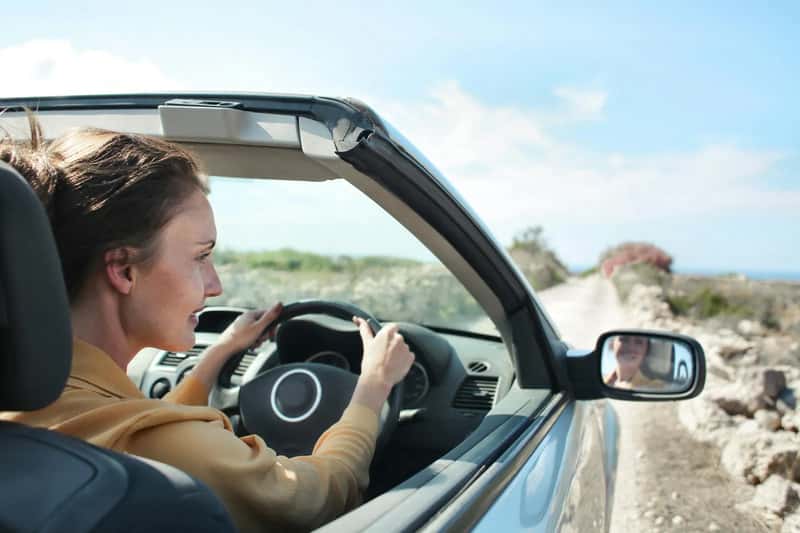
You volunteered before anyone asked.
Before the route was decided. Before the playlist was loaded. Before someone could say, “I’ll drive.”
Your hand was already out for the keys.
You told yourself it was about comfort. Legroom. Control over the music. But that was the polite version – the version you hand to people when they aren’t owed the whole truth.
The real version is quieter and older. It lives in the part of you that was shuttled, scheduled, and redirected for most of your life. It lives in every classroom where you sat in an assigned seat, every career counselor who handed you a pamphlet, every relationship where you deferred. You weren’t just volunteering to drive. You were reclaiming something. The wheel was just the first available symbol.
1. The Locus Has Always Been the Issue
There is a concept in psychology called locus of control.
Internal locus: you believe your outcomes are shaped by your choices.
External locus: you believe things happen to you, not because of you.
Most of us are raised, quietly and persistently, toward the external. Do this. Go here. Be this. The accumulated weight of that redirection doesn’t disappear when you hit adulthood. Research examining the psychological predictors of behavior has specifically focused on traffic-locus of control, illusion of control, desire for control, and risk perception as key components of perceived invulnerability – not just in driving, but in how we interpret agency over our lives.
The person who grabs the wheel isn’t reckless.
They are recalibrating.
They are, for the first time in a week, deciding when to accelerate and when to slow down. No one is giving them a deadline. No one is grading the route. Research reinforces the conclusion that cognitive factors may exert a relatively autonomous influence, independent of demographic or experiential variables. In other words: this isn’t about age. It isn’t about experience. It is about belief. And the driver, for those few hundred miles, believes they are in charge.
2. The Autonomy Hunger
You were hungry before you got in the car.
Not for food. Not even for the destination. You were hungry for the specific psychological nutrient that psychologists have spent decades trying to name and quantify. According to self-determination theory, human motivation relies on three basic psychological needs: autonomy – the feeling you’re choosing your behavior versus feeling controlled or compelled by others – competence, and relatedness.
Autonomy. The word sounds clean and clinical.
But what it actually means, lived and bone-deep, is this: the feeling that your hands are on your own life.
When those needs are met, research shows people tend to be more self-motivated, feel more satisfied, and experience greater well-being. By contrast, when people are motivated to act because of external pressures, they have more trouble staying engaged and feel less fulfilled.
Every morning you check a calendar someone else built, sit in meetings shaped by someone else’s agenda, and take roads others have already decided are the right ones – you are running a deficit. The road trip is a deposit. The driver’s seat is the teller window.
3. The Childhood Architecture
Think about the last time, as a child, you made a truly unilateral decision about your direction.
Not where to sit at lunch. Something real. Something with stakes. Where to go. What pace to travel at. What to skip and what to linger over.
Most of us can’t remember it, because it rarely happened.
Achieving independence and autonomy, setting personal goals and making plans, and acquiring values and ethics are developmental tasks that all adolescents must realize. Being self-determined is a developmental task that all young people must confront, and it is pertinent to their whole-person development. But the systems that surround children – school schedules, family routines, extracurricular obligations – often thwart that development quietly, consistently, and with the best of intentions.
The result is an adult who learned, at a cellular level, that their pace doesn’t matter.
Until they find a steering wheel.
The architecture of that childhood doesn’t vanish. It becomes the blueprint for every small rebellion you mount as an adult. The late-night walk no one knows about. The long lunch you didn’t rush. The road trip where you said, before anyone else could: “I’ll drive.”
4. The Controlled Regulation Trap
Here is the part no one wants to admit.
Most of modern life is controlled regulation in disguise.
It is dressed up as freedom – you chose your job, your apartment, your social calendar – but the choosing happens inside a set of invisible rails. SDT researchers have proposed and demonstrated that only controlled regulation depletes energy; autonomous regulation can actually be vitalizing.
Read that again.
Controlled regulation depletes you. Autonomous regulation restores you.
This is why Monday mornings feel like grief and open highways feel like oxygen. This is why the passenger seat – even on a beautiful drive – carries a faint claustrophobia that has nothing to do with the car. When needs are satisfied, it has been shown to improve vitality, life satisfaction, and positive affect. On the other hand, need frustration can lead to more negative outcomes, such as emotional exhaustion.
The driver isn’t just navigating a route.
They are managing their own depletion.
5. The First Time I Took the Keys
I remember the first road trip where I drove the whole way without being asked.
It was a six-hour stretch through flat, unremarkable country. I had spent the previous three years inside a life that had been largely organized by other people’s expectations – a job I hadn’t exactly chosen, an apartment in a city I’d followed someone else to, a daily rhythm that felt borrowed.
I didn’t tell anyone that.
I just took the keys. I set the cruise control at my own speed, not the speed limit, not the speed everyone seemed to agree was appropriate. I chose when we stopped. I chose where we ate.
And I remember noticing, somewhere around hour four, that my shoulders had dropped about two inches.
Not because the road was beautiful. Because the decision to be on it was entirely mine. That small, almost embarrassing act of self-direction felt like the first clean breath in a long season of recirculated air. Self-determination has a deeply personal and psychology-relevant meaning: the ability or process of making one’s own choices and controlling one’s own life. I hadn’t read the theory then. But my nervous system already knew the data.
6. The Passenger Identity
There is a version of you that only exists in the passenger seat.
Quieter. More deferential. Watching the landscape pass without having voted on the speed.
That version of you is not weak. But it is a version that was trained into existence – shaped by every institution that required you to wait your turn, follow the sequence, trust the driver who knew better.
The social context can either support or thwart the natural tendencies toward active engagement and psychological growth, or it can catalyze lack of integration and fulfillment of need-substitutes. The passenger identity is what grows in the absence of autonomy support. It is what happens when life consistently places someone in the back seat and calls it safety.
The person who always volunteers to drive has felt this.
They have sat in the passenger seat of their own life long enough to recognize the feeling. The faint, polite frustration of watching someone else make the wrong turn and saying nothing. The low-grade tension of a pace that isn’t yours. The way your hand drifts involuntarily toward the door handle, as if part of you is always already half-gone.
7. The Competence Equation
Driving is one of the last domains where many adults feel genuinely competent in a visible, immediate way.
The feedback is instant. You merged cleanly. You read the weather before it arrived. You found the shortcut that the GPS missed.
Competence refers to the experience of mastery and being effective in one’s activity. In a world where most of our daily competencies are invisible – handled in spreadsheets, buried in email chains, measured in quarterly reviews – the road is a rare place where mastery announces itself in real time.
You don’t need a performance review to know you took that curve well.
You felt it in your hands.
A single trip engages attention, decision-making, and emotional regulation in ways that few daily activities can. That engagement isn’t a burden for the person who craves it. It is the entire point. The driver is not exhausted by the responsibility. They are nourished by it. Because in that car, on that road, their competence is undeniable – and they are the one who decided to be there.
8. The Pace as Identity
Speed is not just a number on a gauge.
It is a statement about who you think you are and what you believe you deserve.
The person who drives slowly through a town no one else wanted to stop in – they are not lost. They are insisting. The person who pushes past the scenic turnoff that the passengers are already clapping for – they feel something else pulling them, something up ahead that hasn’t been named yet.
Pace is one of the most intimate choices a person makes.
Human psychological states are inherently fluid, shaped by context, emotion, and situational demands. As a result, preferences can shift significantly even within the course of a single trip. The driver gets to honor those shifts. The passenger has to negotiate them.
When you control the pace of the road trip, you are rehearsing something larger. You are practicing the belief that your rhythm – your specific, particular, slightly irregular rhythm – is legitimate. That it does not need to match the group average. That it does not need a committee vote.
You are practicing having a pace at all.
9. The Exit Strategy
There is something else the driver has that the passenger does not.
The exit.
Not a dramatic one. Not a breakdown on the shoulder or a slammed door at a rest stop. The quiet, sovereign option to pull off. To stop. To say: we are staying here tonight, even though that wasn’t the plan, because something in me needs to.
That option – available in theory to everyone in the vehicle – is functionally only exercised by the person at the wheel.
Driving is more than getting from point A to point B. It is a stage for our humanity, a daily test of how we navigate chaos, connection, and control. The exit strategy is not about running away. It is about the knowledge that you could. That is a fundamentally different psychological state than being driven. The person who knows they can exit at any time is more present than the person who is waiting to arrive.
They are not bracing for the destination. They are inhabiting the movement.
And that changes everything about the interior experience of the trip.
10. The Wheel Is the World in Miniature
This is the heaviest part, so sit with it.
The road trip is not a metaphor for life. That’s too easy, too poster-quote, too neatly resolved.
The road trip is a laboratory for it. A condensed, contained, hours-long experiment in what it feels like when your choices are actually yours.
Conditions supporting the individual’s experience of autonomy, competence, and relatedness are argued to foster the most volitional and high quality forms of motivation and engagement for activities, including enhanced performance, persistence, and creativity. Strip away the clinical language and what you have is this: people do their best work, their most alive work, when they feel like they are choosing it.
The driver knows this instinctively.
They are not choosing the road because they love highways or because they distrust other people’s reflexes. They are choosing it because striving for autonomous goals leads to greater need satisfaction and better well-being, whereas striving for controlled goals can lead to the thwarting of one’s needs. They have spent years in the controlled-goal lane. The road trip is the one place they can legally merge left.
The wheel is the world in miniature. Every turn is a small, private declaration. Every mile chosen at your speed is evidence, accumulating slowly in the body, that you are not simply being carried somewhere by forces larger than yourself.
You are going. On purpose. At your own pace. Through a landscape you agreed to enter.
There is a particular silence that settles over a car around hour three. The conversation has found its rhythm or abandoned itself entirely. The music has softened into background. The road has become familiar in the way only repetition can make things familiar – not known, exactly, but no longer threatening.
In that silence, the driver’s hands are still on the wheel. Not gripping. Just present. And something in their chest, something that has been slightly clenched since Monday, or since last year, or since childhood, loosens just enough to be noticed.
It isn’t the destination doing that. It isn’t the scenery, or the company, or even the freedom from routine. It is the uninterrupted, quiet, almost embarrassingly simple fact of being the one who decided to go – and who has been deciding, mile by mile, how the going feels.
Maybe the question was never really about who drives. Maybe it was always about who gets to decide what the journey is worth, and how slowly you are allowed to move through the parts that matter most to you.
You already know the answer. You’ve known it since the moment you reached for those keys.