You open the app. Again.
Four tabs. Seventeen reviews. A spreadsheet you told yourself was “just for reference.”
The restaurant isn’t even in the same city yet. You’re still at the gate.
There’s a name for the gap between the traveler you perform and the one who actually boards the plane. One of them has a curated restaurant list sorted by neighborhood, cuisine type, and Yelp score. The other one just wants to eat something warm and not feel stupid about it. For a perfectionist, travel can be stressful and anxiety-inducing. But the stress doesn’t start at the airport. It starts the moment you confuse research with control – and control with character.
The Spreadsheet as Self-Portrait
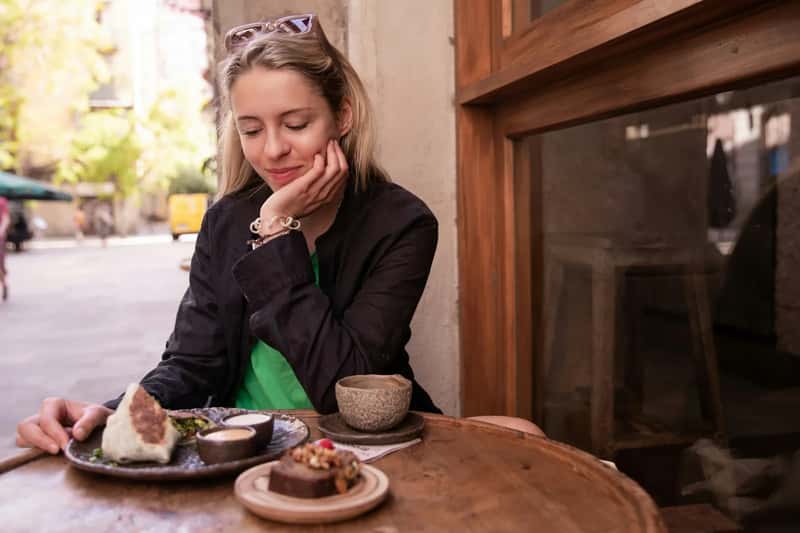
You built a dining spreadsheet.
Thirty-seven rows. Color-coded by day.
You told yourself it was practical. Efficient. But look closer. Each row is not a restaurant. Each row is a preemptive apology – to yourself, for anything that might go wrong. Perfectionists are known to put a lot of pressure on themselves and feel at fault for things that aren’t actually their mistake. The spreadsheet isn’t a planning tool. It’s a defense brief. You are building an alibi before the crime has even been committed.
And the crime, in your mind, is a disappointing bowl of soup.
This is the first tell. When documentation replaces experience, you’re no longer traveling toward something. You’re running from the version of yourself who might choose wrong.
The Myth of the Preventable Moment
Here’s what no algorithm tells you: some meals are supposed to be bad.
Not catastrophically bad. Just imperfect. Cold in the center. Over-salted. Served in a room that smells like last Tuesday. Overplanning will lead to stress and once you hit the road, all your plans will change anyway. The bad meal is not an aberration. It’s data. It’s the territory telling you something the reviews couldn’t.
But you don’t read it that way.
You read a mediocre plate of pasta as evidence against yourself. Evidence that you didn’t look hard enough, scroll far enough, cross-reference adequately. The meal becomes a verdict. And the verdict, in your internal courtroom, is always the same: guilty of insufficient preparation.
This is where the mythology calcifies. The preventable moment. The illusion that a bad experience only happens to under-prepared people.
The Identity You Pack Before the Clothes
You pack an identity before you pack a bag.
The identity reads: competent traveler. Discerning palate. Someone who finds the hidden gem three streets back from the tourist drag. Someone who doesn’t waste a single dinner on mediocrity.
This identity is heavy. Heavier than the suitcase. “Sometimes there’s so much fear around not happening that it actually gets in the way of us even going through with those plans.” The performance of the prepared traveler – the one who always knows where to eat – is exhausting to maintain at altitude. It crowds out the simpler self who might just want to wander and see what smells good.
The prepared identity is a costume. Underneath it, there’s someone who is terrified of looking like they don’t belong somewhere they paid a lot of money to visit.
The Tyranny of the Bad Review
You read the one-star reviews first.
Always. Specifically. With a kind of grim focus that has nothing to do with quality assurance.
You’re not scanning for food safety violations. You’re looking for the version of yourself in someone else’s complaint. “The risotto was mushy.” “The service was indifferent.” “Not worth the detour.” You absorb each one like a small warning flare. Your mind loops through repetitive material, often taking the form of “What if…” questions, followed by imagined negative outcomes. Every one-star review is a ghost of a meal you haven’t eaten yet – and you’re already grieving it.
The tyranny of the bad review is not informational. It’s emotional. You’re not avoiding a bad restaurant. You’re avoiding the feeling of having chosen it.
The Confessional – Point Five, Where It Gets Personal
I did this in Lisbon.
I had forty-two restaurants saved in a Google Map. Color-coded pins. Blue for lunch, red for dinner, yellow for “maybe, if we’re in the area.” I’d spent four evenings researching before the trip. Four evenings I could have spent doing literally anything else. We arrived, exhausted, at 6 PM on a Tuesday. We walked past my pin-perfect dinner destination and smelled something extraordinary from a doorway with no sign, no menu visible, no online presence I’d ever found.
We almost didn’t go in.
We almost chose the spreadsheet over the smell. You’ll wander the streets and into unexpected restaurants. That’s the part the algorithm never predicts: the best meal of the trip will be the one you found by accident, in the dark, because you were hungry and tired and your phone was at 4%.
I think about that meal often. I think about how close I came to missing it.
The Shame Architecture of a Bad Meal
When you do have a disappointing meal – and eventually, you will – notice the architecture of what follows.
It’s not disappointment. It’s something more structural. More interior. Food is more likely to generate tourists’ negative emotions of sadness and shame. Shame is the operative word. Not frustration that the food was mediocre. Shame that you – you, specifically – failed to prevent it. The shame assumes that a better, smarter, more thorough version of you would have known. Would have checked one more review. One more forum post. One more curated travel thread.
The shame architecture is load-bearing. It’s what keeps the research compulsion alive. If you felt mere disappointment, you’d shrug and eat somewhere else tomorrow. But shame demands reparations. And the reparation is always more research next time.
The Control Illusion at 30,000 Feet
Here is what travel does not tell you upfront: you are not in control.
You are never in control. Not at home, and certainly not somewhere where the road signs are in a language you half-read. Never comfortable with uncertainty, you start laying out all the variables you can think of to plan for all the things that might happen in any given scenario. This is a perfectly human response to the vertigo of the unfamiliar. But it is also a trap.
The control illusion at 30,000 feet is the belief that enough information insulates you from the chaos of being somewhere new.
It doesn’t. The kitchen runs out of the fish. The place is closed on Tuesdays. The neighborhood has changed since the review was written. The map and the territory are never the same document, no matter how many tabs you open.
The Research Loop Is a Feelings Loop
Here’s the uncomfortable truth: despite decades of studying worry, the mind can trick you into a ruminative spiral by telling you that you are planning or preparing rather than uselessly worrying.
The research loop is not intellectual. It is emotional.
You are not gathering data. You are self-soothing. Each new review you read gives you a momentary hit of perceived control – a brief chemical reprieve from the ambient anxiety of being somewhere unfamiliar, in a body that needs feeding, with no guarantee that it will be good. It goes beyond normal planning and is often characterized by repetitive thoughts, heightened anxiety, rigid rules, and difficulty shifting attention away from food-related concerns. The research loop is a feelings loop wearing the costume of productivity. And like all compulsions, it provides relief that lasts exactly until the next moment of uncertainty.
The Missed Meal Is Not the Real Loss
You’ve never mourned a mediocre steak.
What you’ve mourned – quietly, privately, in the way you replay the trip on the flight home – is the experience you were too anxious to stumble into. The alley you didn’t walk down. The menu you couldn’t read and so didn’t try. The unplanned hour you filled with more research instead of more city. Some of the trip’s most memorable moments come from unplanned experiences.
The missed meal is not the bad restaurant. The missed meal is the version of the trip that existed outside the spreadsheet – the one you never gave yourself permission to have.
Over-research doesn’t protect you from bad experiences. It replaces good ones.
The Permission Slip You Never Issued Yourself
This is the heaviest part.
Underneath all the tabs and the pins and the saved posts is a single belief, quiet and weight-bearing: that you do not deserve a bad experience. Not because you’re precious. Because a bad experience means you didn’t earn the trip properly. That you are not the kind of person who travels well. That your presence in this city, in this restaurant, in this beautiful and bewildering place – was a mistake.
For perfectionists, an upcoming trip can be a source of stress – and the vacation itself might be hard to enjoy as a result. The permission slip you never issued yourself reads something like this: I am allowed to eat something forgettable. I am allowed to make a choice with incomplete information. I am allowed to be a person in a place, uncertain and hungry, without that uncertainty being a referendum on my worth as a traveler – or as a person.
The research is not about the food. It never was. It’s about the quiet terror of being seen – by yourself – as someone who got it wrong.
Somewhere right now, a meal is happening that no one planned.
A table near a window. The wrong order, brought by accident, which turned out to be exactly right. A conversation started over a shared bottle when the first choice was sold out. Laughter in a language you don’t speak, about something you can’t follow, in a room that smells like garlic and woodsmoke and the particular freedom of being far from anywhere that knows your name.
The map didn’t predict this. The reviews couldn’t have. The spreadsheet had no row for it.
Nobody planned the best parts. They just showed up – hungry, a little lost, and willing to see what was open.