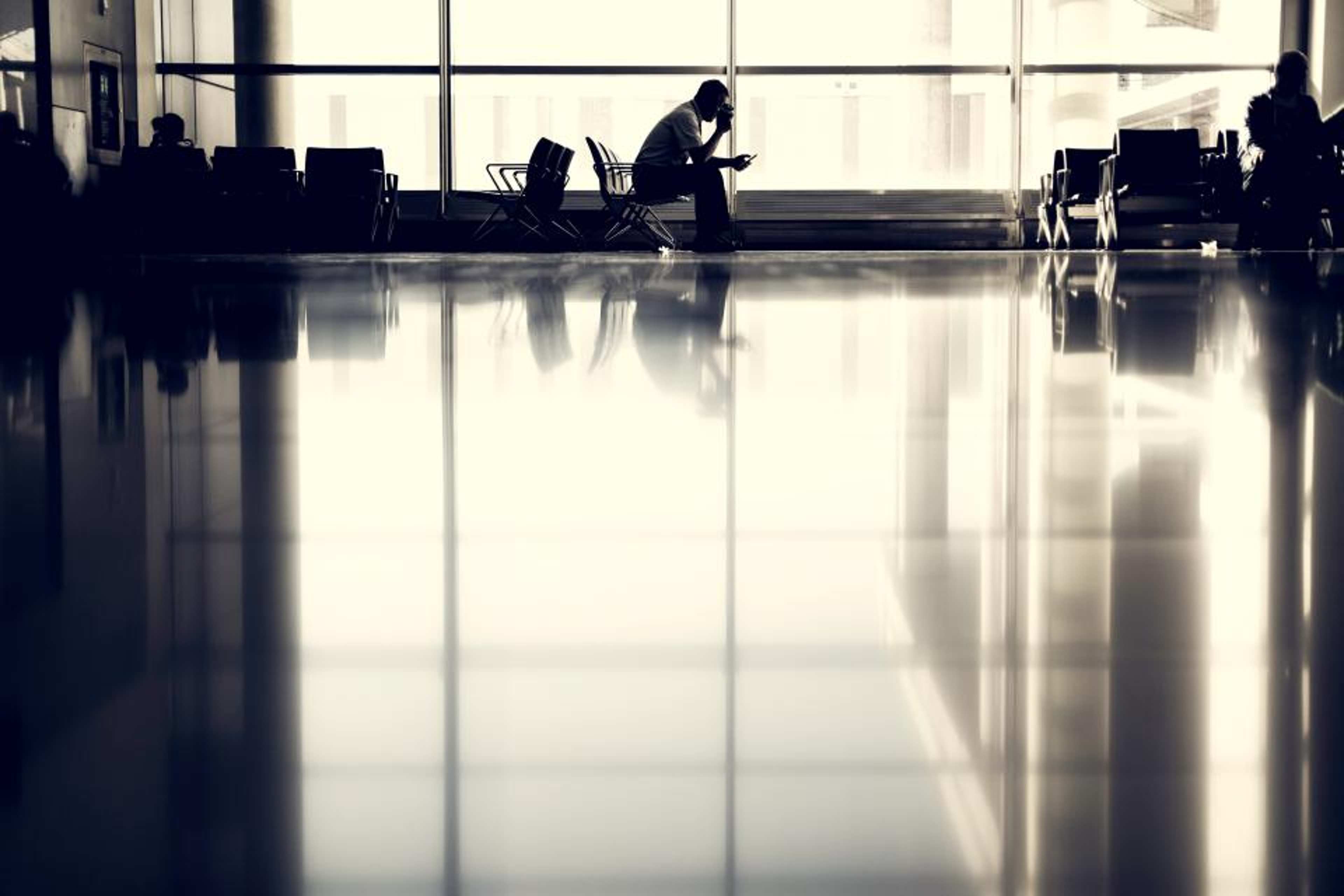
The restaurant hums with noise you didn’t make.
The glass is cold where your hand rests.
Outside, the street moves like a film you’re watching from the back row.
You ordered alone. You chose this seat deliberately. You angled your chair so your back was to the room and your face was to the world.
There’s a gap that opens up between the person you perform in rooms full of people and the person you actually are when no one is waiting for your next sentence. It’s less about being brave and more about separating two things that got fused together somewhere along the way: your sense of worth, and whether anyone is witnessing you at any given moment. That gap is where you live. That window seat is where you negotiate the terms of your existence without having to put anything at risk.
1. The Glass Wall Theory
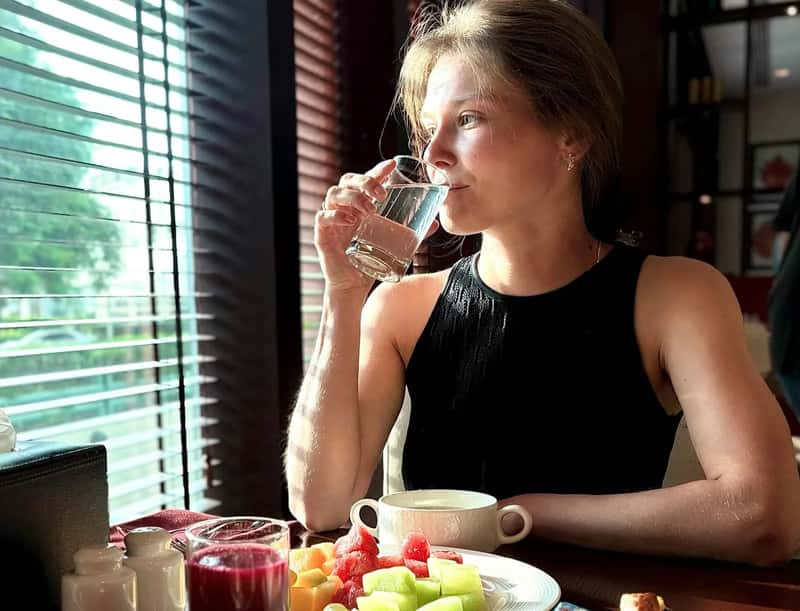
The window is not decoration.
It is architecture with intent.
Psychologists suggest that seating habits mirror our subconscious preferences for control, safety, and interaction – and introverts instinctively choose the window seat, creating a psychological barrier between themselves and the aisle. That barrier is not avoidance. It is calibration.
The glass performs a specific psychological function: it lets the world in at exactly the volume you choose. You can see the couple arguing silently across the street. You can track the delivery cyclist who nearly clips a cab. You can feel the city’s pulse without submitting your own wrist to be read.
You are present and protected at the same time.
That duality – proximity without exposure – is the entire architecture of the window seat. You didn’t stumble into this chair. You engineered it. You picked a table facing the street for people-watching, where light and movement give natural company. That’s not accidental. That’s a system.
The glass wall keeps the world at a useful distance. Useful being the operative word.
2. The Spotlight Effect Reversal
Here’s the lie you’ve been told.
They’re all watching you.
They aren’t.
Psychologists describe the spotlight effect as the tendency to overestimate how much others notice you. When you sit alone at the window, the spotlight you imagine shining on you is almost entirely a fiction your nervous system invented to keep you socially cautious.
The truth is colder and more liberating: the room is not your audience.
You might be convinced everyone is staring, judging. Turns out, most people are too absorbed in their own lives to care. That realization is liberating. When you finally metabolize that fact – not intellectually, but in your body – the window seat stops feeling like a stage and starts feeling like a watchtower.
You stop performing. You start observing.
The reversal is complete. You were never the spectacle. You were always the spectator. The window seat just makes that obvious.
3. The Control of Narrative
You are not passive at that table.
You are writing stories.
When you’re not engaged in conversation, you notice things – the way the chef plates the food, the dynamics between other diners, the rhythm of the restaurant. Solo diners tend to be keen observers of human nature. But it runs deeper than observation. It’s about authorship.
The woman in the yellow coat who stops to check her phone twice. You decide she’s waiting for someone who doesn’t know she came. The old man feeding pigeons with mechanical patience. You decide he did the same thing forty years ago with a child who no longer calls. You’re not invading anyone’s life. You’re building a parallel archive of possible human experience.
This is the psychological reward of watching without being watched.
You hold the pen. Nobody can contradict your interpretation. There’s a quietness that opens up when you stop curating your experience for an audience. In that quietness, you become the author of every small drama unfolding beyond the glass.
That kind of authorship is a profound, low-risk form of power.
4. The Temporary Identity
Nobody at this restaurant knows your name.
Nobody knows your job title, your failures, your last argument, or the version of you that exists in someone else’s memory.
For the duration of this meal, you are whoever you feel like being.
People comfortable with solo dining tend to have a clearer sense of their values, goals, and desires. They’ve spent enough time with themselves to know who they really are beneath the social masks we all wear. The window seat accelerates that clarity because it strips away the social scaffolding that usually props up the performance.
No one is expecting a particular version of you here.
That absence of expectation is a strange, temporary freedom. Identity, in most rooms, is a negotiation. You are the sum of other people’s needs and histories of you. But at the window table, alone, you are ungoverned. In a world that constantly asks us to be available, visible, and socially legible, solitude is a quiet refusal – it says: I am enough, even when no one is watching.
The temporary identity isn’t an escape. It’s a rehearsal for something realer.
5. The Exit Strategy
I remember the first time I asked for a window table deliberately.
It was a Tuesday. A city I half-knew. I sat down, ordered coffee before food, and watched the street like it owed me something. Nobody spoke to me. Nobody needed to. There was something in that hour that felt less like loneliness and more like sovereignty.
What I understand now, that I didn’t then, is that I was practicing the exit strategy.
The window seat offers what no booth in the center of a room can: a psychological escape route. Not a physical one. You’re not planning to leave. You’re preserving the option. Maybe you gravitate toward the window, longing for a moment of solitude, or perhaps you hover near the exit, prepared for a quick escape. Both impulses are the same animal – the need to feel that engagement is chosen, not trapped.
When you can see the street, you can always imagine leaving.
That imagined freedom is enough to make staying bearable. Comfortable, even. The exit strategy is not about fear. It’s about consent. You’re here because you chose it, not because the room closed around you.
That distinction changes everything.
6. The Hypervigilance Redirect
Anxiety doesn’t disappear when you sit alone.
It redirects.
Perceptions of social isolation increase vigilance for threat and heighten feelings of vulnerability while also raising the desire to reconnect. But the window seat performs a quiet trick on that vigilance. It gives the hypervigilant mind a legitimate target. Instead of scanning a room for social threat – the person who might judge you, the table that’s noticing you’re alone – your nervous system points outward.
Toward the street. Toward strangers who cannot evaluate you.
The watching becomes purposeful. You sit with your thoughts without needing constant distraction. This ability to be alone with your mind is what psychologists link to higher creativity and problem-solving skills. The hypervigilance, redirected outward through glass, becomes something almost beautiful. A sensitivity that usually costs you something starts paying dividends.
You notice what other people miss. The slight hesitation before a handshake. The forced laugh. The table where everyone is performing happy.
Your threat-detection system, pointed outward, becomes empathy. Pointed inward, it becomes dread. The window seat changes the direction of the arrow.
7. The Contingent Worth Detox
Most of us were taught, early and quietly, that our worth requires witnesses.
In a household where being seen meant being evaluated, you learn that your value was contingent on observation. If nobody was watching, you weren’t sure you existed in any way that counted. This is what psychologists describe as contingent self-worth – self-esteem that depends on external validation, approval, or social comparison rather than an internal, stable sense of value.
The solo window seat is a slow detox from that childhood curriculum.
Research on solo dining found that people who dine alone comfortably have developed intrinsic confidence, the kind that comes from knowing your own worth rather than needing external validation to feel legitimate. But that intrinsic confidence doesn’t arrive fully formed. It’s built in small, unremarkable hours at tables where no one knows your name.
Each meal alone is a small proof of concept.
You existed here without being verified by someone else’s gaze. The food was good. The light was decent. You were enough company for the experience to be real. There’s a difference between being alone and being lonely. Solo diners understand this distinction intimately. They don’t need others to validate their choices or experiences. They can enjoy a fantastic meal without needing someone else to confirm it was good.
That is a detox. Slow, quiet, cumulative. And more powerful than it looks from the outside.
8. The Mindfulness Bypass
Mindfulness has been sold to you as a practice.
Something you schedule. Something that requires an app or a cushion or a subscription.
The window seat is a backdoor into the same state, without the effort.
Solo dining allows for reflection, mindfulness, and the opportunity to recharge mentally. You find yourself more in tune with your surroundings, enjoying your meal with a heightened sense of awareness. Eating alone can sometimes encourage mindfulness, helping you to savor each bite without distraction.
But the bypass is deeper than just tasting your food.
You start noticing things you’d never noticed when you were with someone else – the texture of an evening, the specific quality of light in a place, the freedom of not having to calibrate your reactions to another person’s experience. You weren’t performing enjoyment. You were just having it. That distinction – between performing presence and actually inhabiting it – is the whole game.
At the window seat, nobody needs your attention. So all of it goes somewhere real.
The light changes on the building across the street and you watch it change and you don’t have to say anything about it to anyone. That’s the mindfulness bypass. No effort required. Just a table, a window, and nobody waiting for your reaction.
9. The Solitude That Isn’t Lonely
This is the heaviest one.
Because this is the one most people won’t say out loud.
Loneliness is not simply the absence of people. It is the absence of resonance. And here is the dark arithmetic that the window seat exposes: you have sat in rooms full of people and felt profoundly, structurally alone. You have made conversation that sounded right and felt hollow. You have laughed at things that landed nowhere inside you.
The window seat, paradoxically, can be the least lonely chair in any building.
People with positive beliefs about being alone reported feeling less lonely after spending time alone, consistent with the notion that they view time alone as a source of rejuvenation and positivity. The solo window seat is the physical expression of that belief system. You have learned – through repetition, through experiment, through honest self-accounting – that your own company carries a specific quality that many rooms full of people cannot replicate.
Others embrace solitude not as an escape but as a return – to themselves, to clarity, to a deeper form of emotional nourishment that only arises in stillness.
That return is what the window seat is really for. Not avoidance. Not misanthropy. Not fear. A return to the frequency that everything else in your day works to disrupt.
You are not hiding from the world beyond that glass.
You are meeting it on the only terms that make the meeting real.
There is a version of you that exists only at that table. It doesn’t have to explain itself. It doesn’t owe its presence to anyone. It watches a stranger cross the street and invents a whole life for them and then lets the invention dissolve and watches another stranger cross and does it again. This version of you is not performing solitude. It is not making a statement. It is simply the version of you that is most undiluted.
The window seat was never about the view. It was always about the distance – not between you and the street, but between you and the version of yourself you have to be everywhere else. Every solo meal at that table is a quiet act of recalibration. A tuning fork held to the self to hear if the note is still true.
The food gets cold. You don’t notice. Outside, the city keeps inventing itself. You keep watching. And somewhere between the second cup of coffee and the check you’re in no hurry to ask for, you remember, briefly and without drama, exactly who you are when nobody needs you to be anything else.