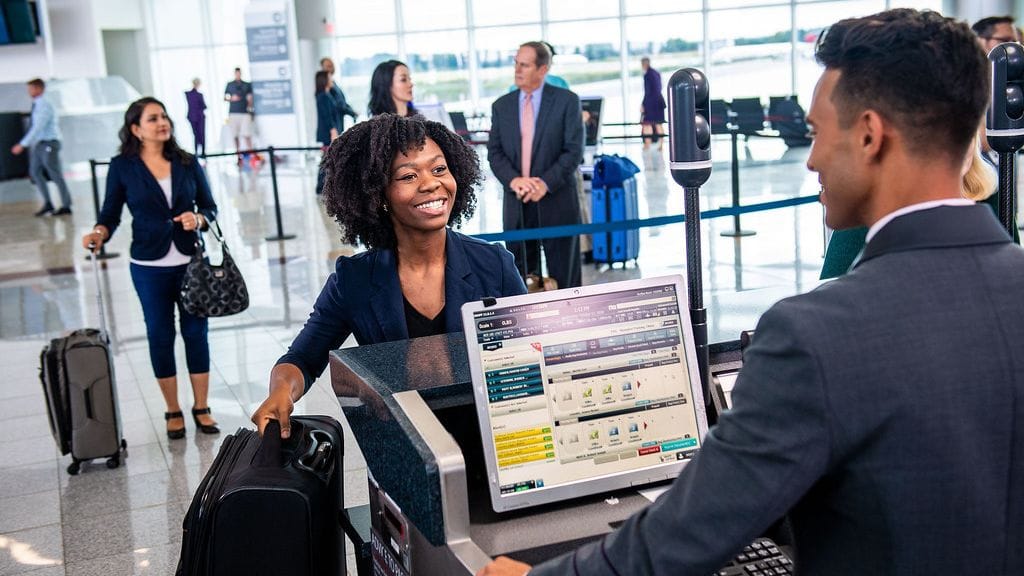
Crossing an international border has never felt more like walking into a silent interview you didn’t know you were scheduled for. Long before you open your mouth to explain your trip, border agents have already begun forming a picture. They are trained observers, backed by powerful databases and increasingly sophisticated technology, and in the time it takes you to hand over your passport, they may have already flagged something. Understanding what they look for isn’t paranoia – it’s practical knowledge every traveler should carry.
1. Your Travel History and Passport Stamps
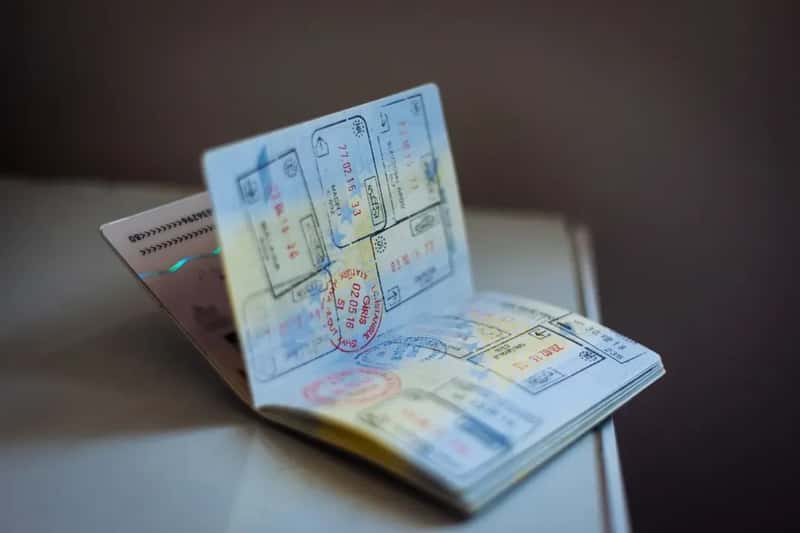
At the nation’s more than 300 ports of entry, CBP officers have a complex mission with broad law enforcement authorities tied to screening all foreign visitors, returning American citizens and imported cargo that enters the U.S. One of the very first things an agent reviews is the physical passport itself. Stamps, visas, and entry marks tell a story – how often you’ve traveled, where you’ve been, and whether those patterns make logical sense for the purpose of your stated visit. A passport showing frequent short visits to the same country, or trips that don’t align with your claimed employment or income level, can raise an immediate flag.
The stakes around passport records have grown more complex in recent years, particularly in Europe. The EU’s Entry/Exit System (EES) records a traveler’s name, travel document data, dates, and border crossing points – and exists to automate the 90-day-in-180 calculation for visa-exempt visitors and eliminate the ambiguity of faded stamps and missing ink. A stamp that does not match the EES record creates a mismatch, and three situations create mismatches most often – and they all lead to manual review. In other words, your paper trail is now cross-referenced against a digital ledger that doesn’t forgive arithmetic errors.
2. Pre-Arrival Data and Watchlist Matches

Most travelers don’t realize that by the time they reach the inspection booth, a significant amount of vetting has already happened. Among its screening techniques, DHS pre-screens 263,000 passengers on international flights that fly into, out of, within, or over the United States. This pre-screening involves checking passenger names against terrorism databases, law enforcement records, and immigration violation histories. The process begins before you even board your plane.
Travelers with passports from countries in the Visa Waiver Program must electronically submit biographical information through the Electronic System for Travel Authorization prior to boarding a U.S.-bound flight, and that information is checked against law enforcement databases, databases of lost and stolen passports, visa revocations, and the TSDB. For each passenger, CBP transmits the resulting status code to Secure Flight specifying whether the database checks indicate a potential threat. Encounters of watchlisted individuals at borders are very uncommon, underscoring the critical work CBP agents and officers carry out every day on the frontlines. Still, a hit on any of these databases – even a clerical error – can result in immediate secondary inspection before a single word is exchanged.
3. Behavioral Detection and Body Language
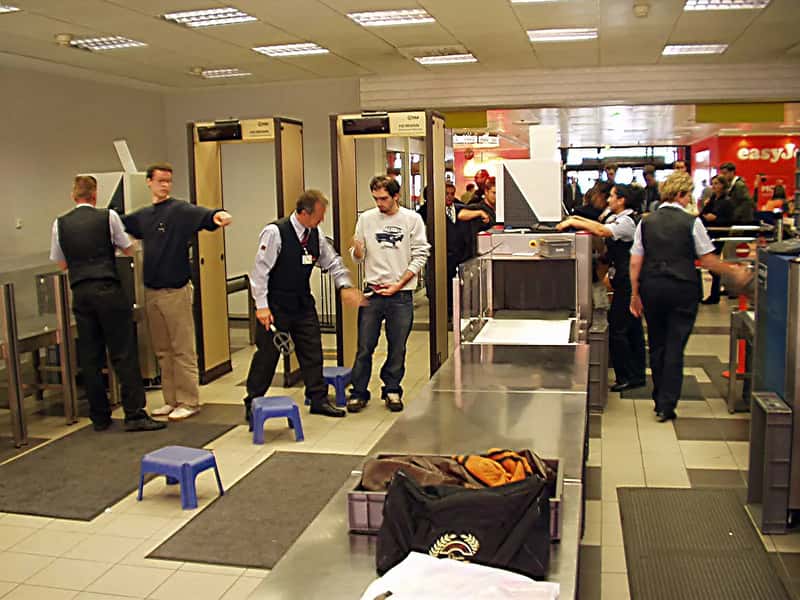
Agents don’t just read documents – they read people. At airports, TSA employs behavioral detection and analysis under the Screening Passengers by Observational Techniques (SPOT) program in an effort to identify suspicious passengers. Officers trained in these techniques are looking for stress indicators that go beyond simple nervousness: micro-expressions, averted gaze, inconsistent physical reactions, or behavior that seems rehearsed rather than natural. A traveler who appears overly calm when they should be mildly flustered can be just as suspicious as one who is visibly anxious.
According to TSA, its behavior detection techniques were nine times more likely to detect high-risk travelers than random selection, based on internal validation studies. Border-focused AI technologies can include algorithms designed to evaluate travelers’ nuanced and almost imperceptible emotional expressions, biometric analysis of fingerprints and facial recognition, and scanner software that can differentiate humans from wildlife in remote border sections. The human eye and digital systems are now working in tandem, making behavioral screening far more layered than it once was.
4. Biometric Scanning and Facial Recognition
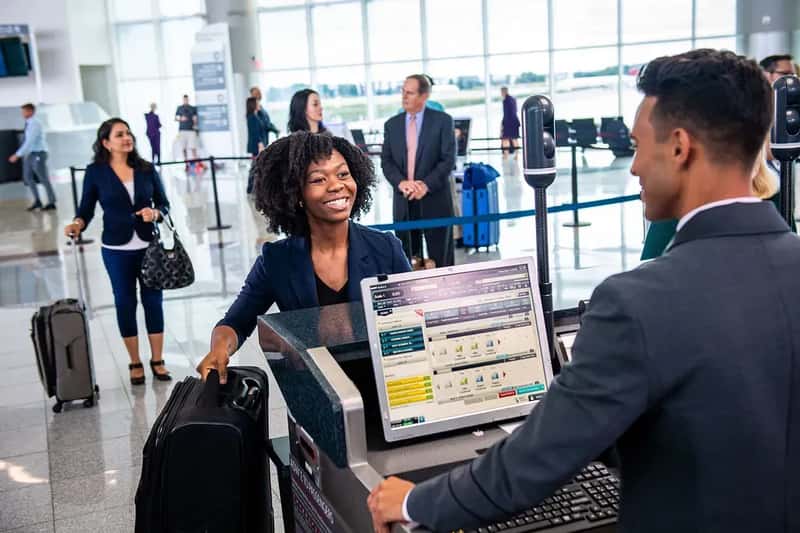
Advanced facial recognition, iris scanning, and fingerprint systems now form the backbone of global travel and immigration networks. Unlike manual verification methods, AI-based biometric systems perform identification in seconds, minimizing delays while enhancing accuracy. When you approach a border checkpoint today, cameras may already be comparing your face against a government photo repository before the agent even glances up. This process happens silently and at speed, and a mismatch or a hit against a flagged identity can immediately redirect a traveler to secondary screening.
CBP’s Unified Processing/Mobile Intake system uses facial recognition to match individuals against the agency’s photo repositories. Integrated with the Traveler Verification Service, the system helps agents quickly identify people with prior apprehensions or security flags to expedite processing at the border. Airports and border crossings are adopting self-service biometric solutions for faster and more convenient identification. For travelers who have never had an encounter with law enforcement, this process is usually invisible. For those with any prior record in the system, the identification can happen faster than a handshake.
5. Electronic Devices and Digital Footprint
Your phone may now carry more weight at the border than your suitcase. In January 2026, U.S. Customs and Border Protection implemented Directive 3340-049B, a comprehensive update to its policies governing border searches of electronic devices such as smartphones, laptops, tablets, cameras, and storage media. CBP has broad legal authority to inspect and search electronic devices – including phones, laptops, tablets, USB drives, and external hard drives – at the border. These searches do not require a warrant, probable cause, or even individualized suspicion, and can be conducted as part of routine screening at any U.S. port of entry.
According to CBP data, more than 55,000 electronic devices were searched during fiscal year 2025, a significant increase from previous years. Analysts predict that this number will rise in 2026, driven by a stronger focus on immigration intent and visa compliance, the growing use of digital intelligence and data-driven screening, and the belief that digital footprints offer more insight than physical documents or luggage. CBP uses a tool called Babel to collect and analyze open-source and social media content related to specific travelers, using AI for translation, image recognition, and text detection to help analysts identify potential threats or people who may need additional inspection. Agents can spot contradictions between what you say at the booth and what’s on your screen in a matter of minutes.
6. Declared Purpose vs. Observable Evidence
One of the most reliable triggers for secondary inspection is a mismatch between what a traveler declares and what the surrounding evidence suggests. Travelers whose processing may take more than a few moments or who may warrant extra scrutiny may be referred for further inspection. Some reasons that a traveler may be referred for secondary inspection include issues with the documentation or information supplied by the traveler, potential administrative immigration violations, inquiries regarding potential violation of civil or criminal laws, or if CBP officers at primary inspection believe, at their discretion, that further inspection is needed. The declared reason for travel – tourism, business, visiting family – is measured against the totality of what agents see: your luggage, your itinerary, your financial documentation, and your behavior.
Officers may look for emails or messages suggesting unauthorized employment, job offers, résumés, contracts, or freelance discussions, statements indicating intent to study, work, or relocate, or messages that contradict the tourist-only purpose of travel – and even informal conversations or jokes about finding work have, in some cases, led to immediate refusal of entry. CBP officials are currently scrutinizing visitors’ travel documentation with heightened vigilance, affecting travelers with valid visas and green cards. Consistency is everything. A single contradictory data point – a work contract visible on a phone screen, a one-way ticket with no return booking, or a hotel reservation that covers only three days of a claimed month-long stay – can be enough to redirect the entire encounter.