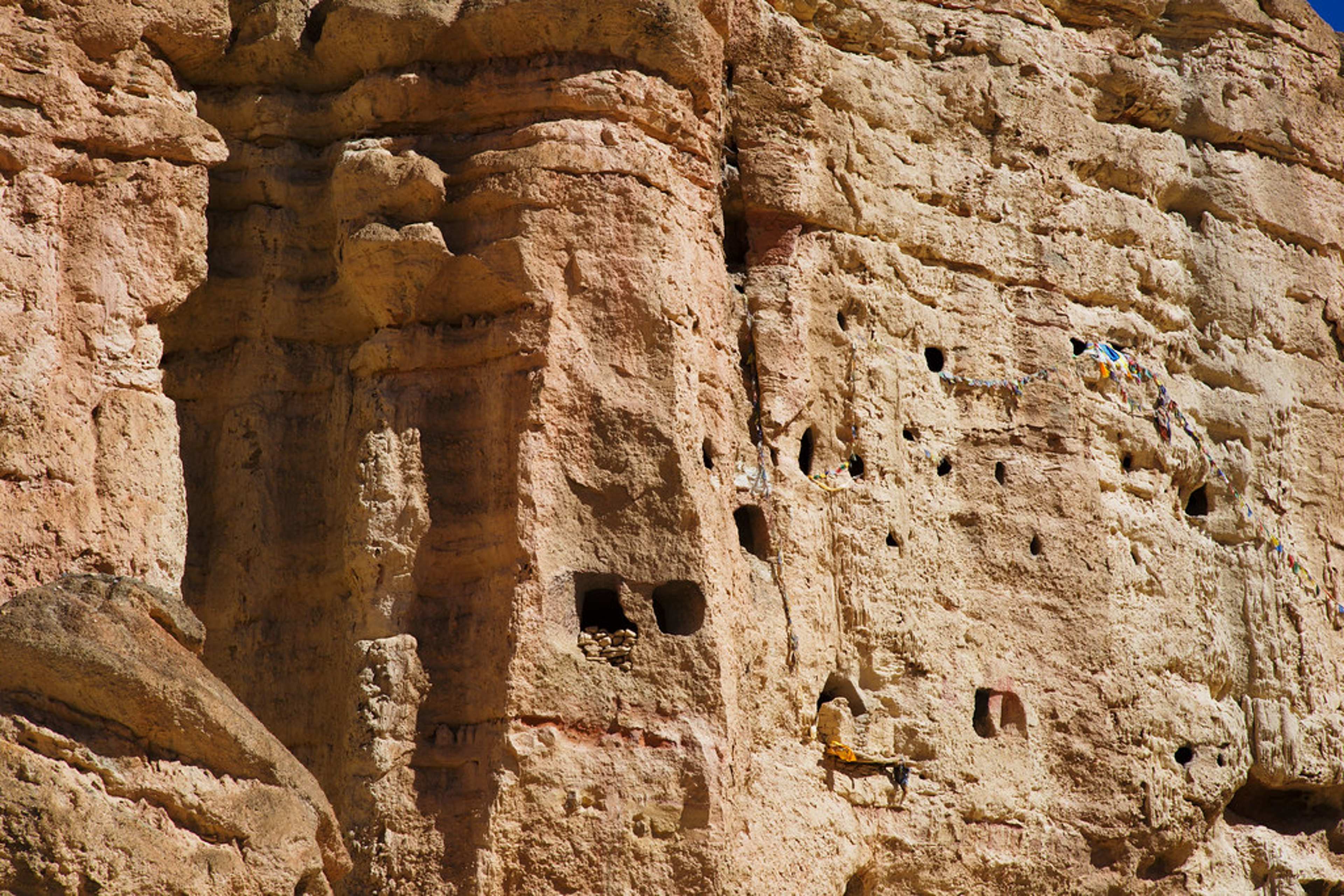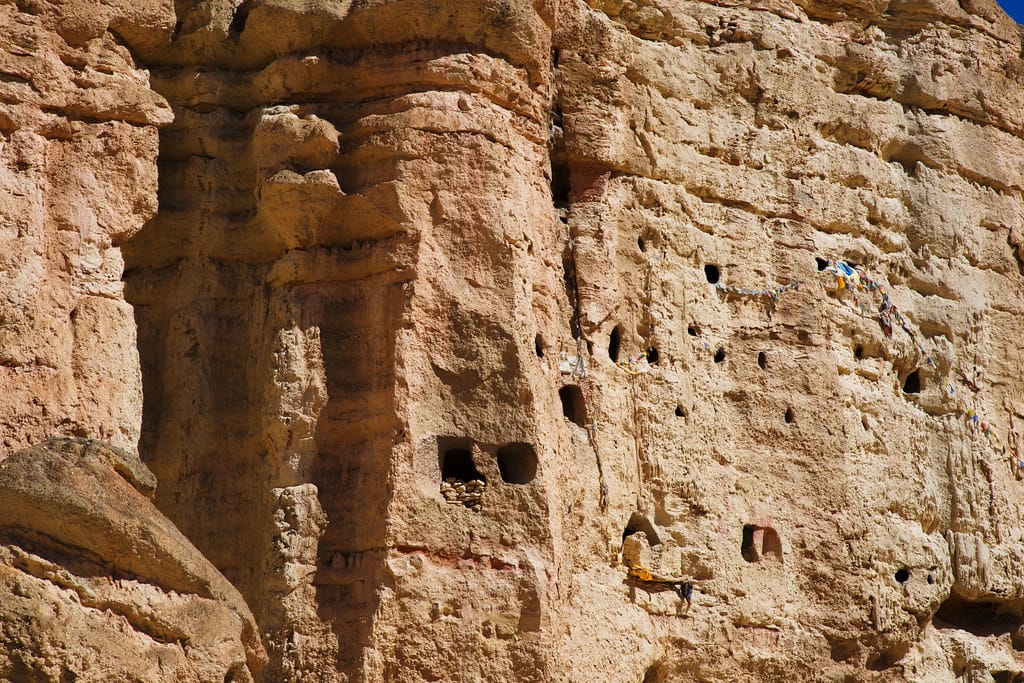
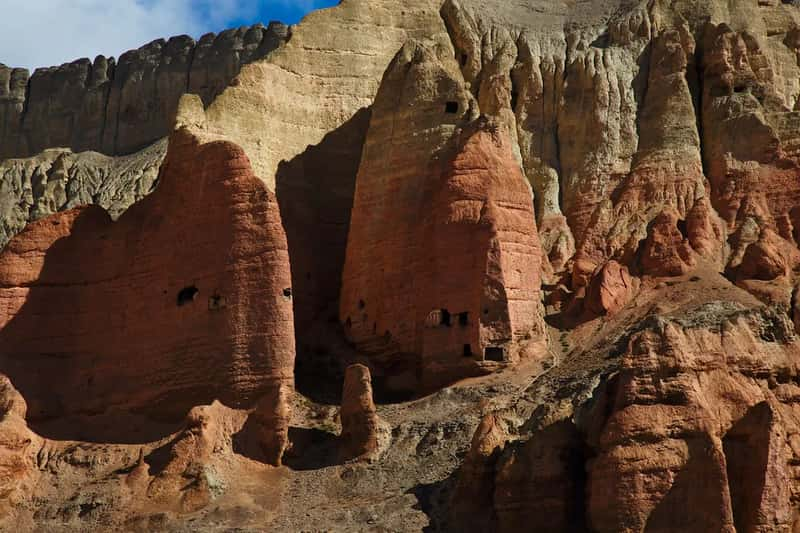
Look up at the steep, sandy cliffs above the Kali Gandaki River in northern Nepal and the rock seems to be full of small, dark holes. Up close, the walls are covered in them.[1] They aren’t the work of wind or rain, and that’s what makes the place so strange.
People cut these openings into the stone over many centuries, then climbed into them to bury their dead, shelter, store goods and pray. Archaeologists have spent years working out which cave did what, and when. The picture is still incomplete, and some of the best evidence comes from just a handful of sites.
Where the Cliffs Stand
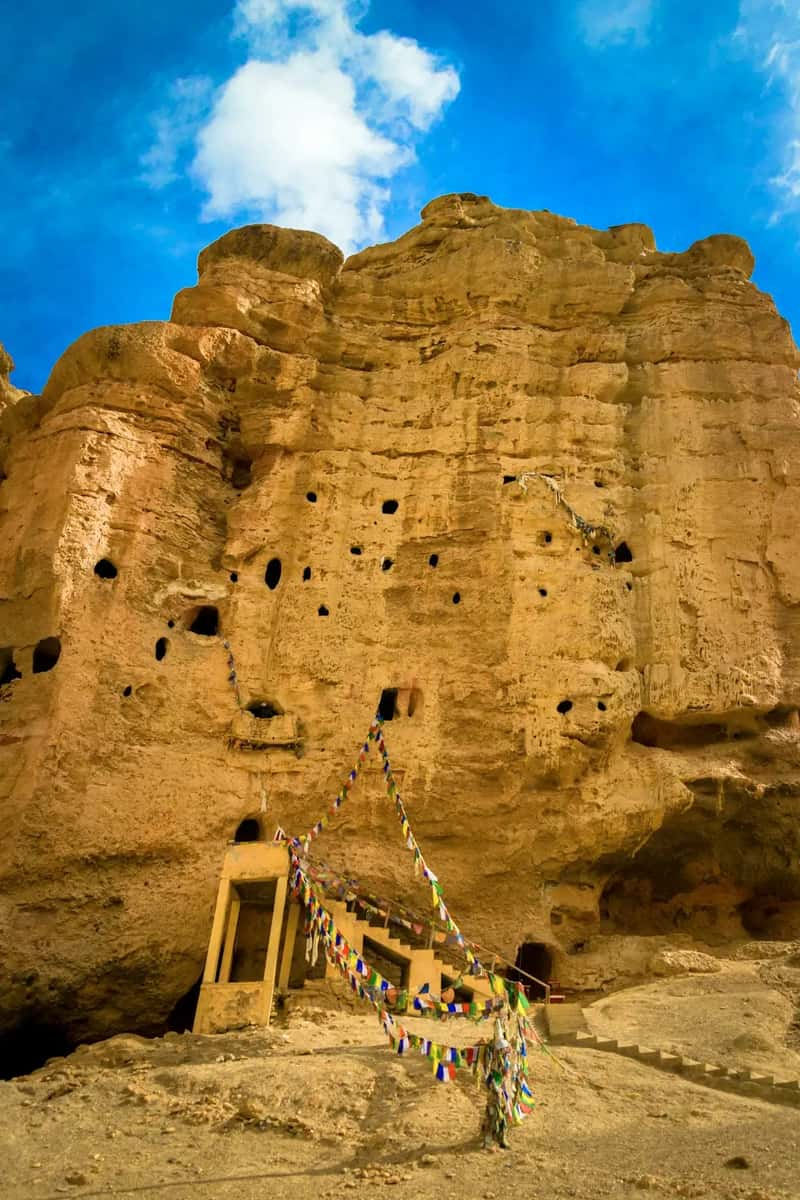
The caves sit in Upper Mustang, a remote district of Nepal close to the Tibetan border. The region was formerly the Kingdom of Lo, with its capital at Lo Manthang.[2] The terrain is dry, windswept and high, closer to a cold desert than most people imagine when they think of Nepal.
The caves lie on steep valley walls near the Kali Gandaki River.[3] Some groups stand alone, while others cluster into vertical neighborhoods. Occasionally they’re stacked eight or nine stories high.[4]
Counting a Number Nobody Has Fully Verified
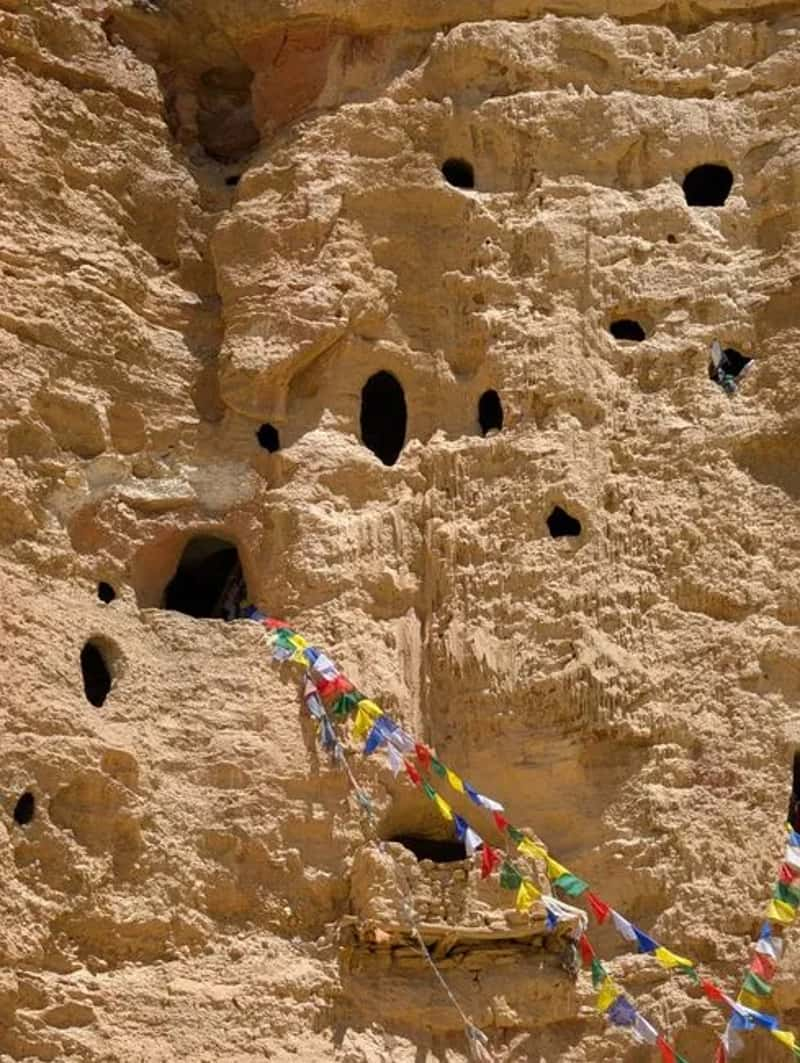
The figure of 10,000 appears everywhere, from UNESCO paperwork to travel blogs. National Geographic’s reporting described it as a conservative estimate for the total number of caves in Mustang.[4] It’s best read as a rough scale, not a survey result.
Far fewer caves have been studied in detail. One academic summary puts the explored number at roughly three hundred, though that comes secondhand from documentary sources, so treat it cautiously. The site has been on Nepal’s UNESCO Tentative List since 1996[3], and a volunteer project run by the Bagmati UNESCO Club in August 2024 aimed at capturing the caves.[3]
Digging Into Soft Rock
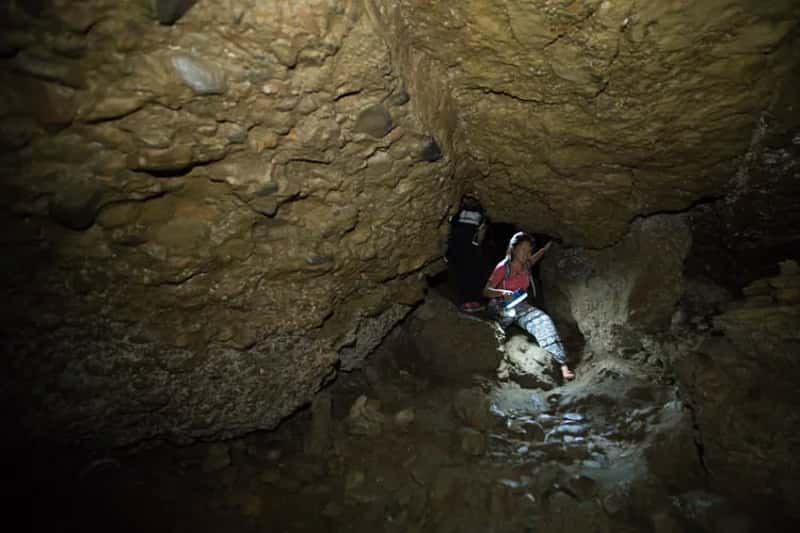
The geology explains a lot. The cliffs are soft, crumbly sandstone, so people could dig shelters into them with relative ease.[1] One research summary describes the rock as a fragile, conglomerate massif that can be worked by hand.
Not every cave was cut from the same direction. Some were dug into cliffsides, while others were tunneled from above.[4] Reaching the high ones took effort, since people had to scale sheer faces or use ropes and long wooden ladders.[1]
Three Lives of a Cave
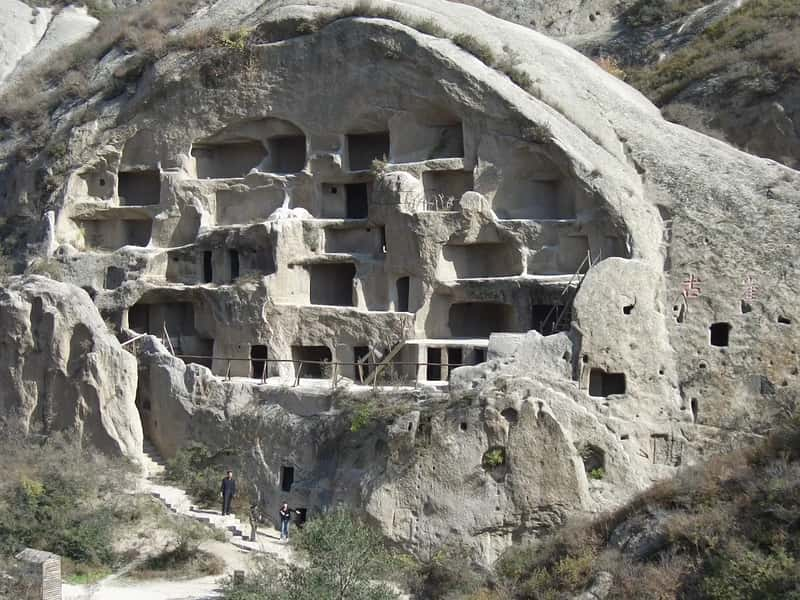
Researchers don’t treat the caves as one project. Archaeologist Mark Aldenderfer divides their use into three broad periods. As far back as 3,000 years ago they served as burial chambers, and around 1,000 years ago they became mostly living quarters.[5]
A later phase followed. By the 1400s the caves are thought to have worked as military lookouts, storage units and meditation chambers.[6] Local people also turned many into Buddhist monasteries and quiet meditation rooms.[1] A single cliff face may therefore hold rooms from very different centuries.
The Mummies of Mebrak
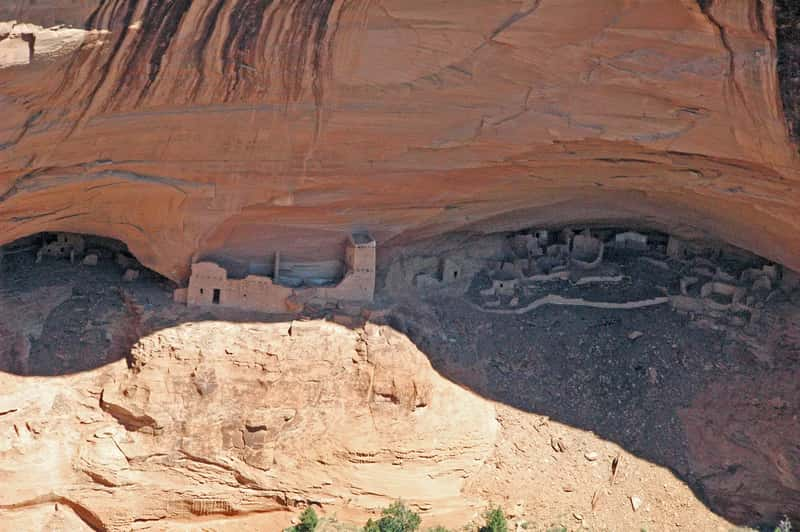
The first big surprise came in the 1990s. In 1995, archaeologists in a cave system at Mebrak made an extraordinary discovery.[7] One cave had been used as a community burial chamber from about 400 BC to 50 AD.[7]
Inside were roughly 30 naturally mummified bodies resting in bed-like wooden coffins with carved decoration and elaborate painting.[7] The chamber sits in the seventh storey of a cave system, some 30 meters above the foot of the rock face.[7] Red and white paint on the wooden beds shows geometric patterns and wild animals.[7]
Samdzong and Its Shaft Tombs
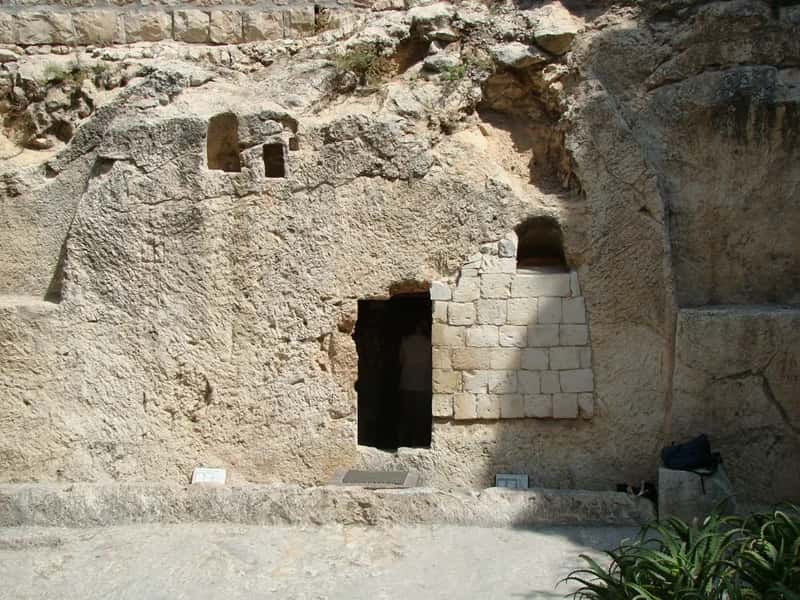
Further north, near the village of Samdzong, a different kind of burial site emerged. It was discovered in 2010 and consists of ten shaft tombs holding both collective and individual burials.[8] Unlike the Mebrak chamber, the burial chambers at Samdzong were shaft tombs.[9]
In 2011 a team led by climber Pete Athans and scientists including Aldenderfer worked there. The most promising site was a cave complex near Samdzong, just south of the Chinese border, where a system of funerary caves had been found in 2010.[5] Radiocarbon work places the genetic study’s Samdzong individuals at roughly 450 to 650 CE.[10]
Bones With Cut Marks
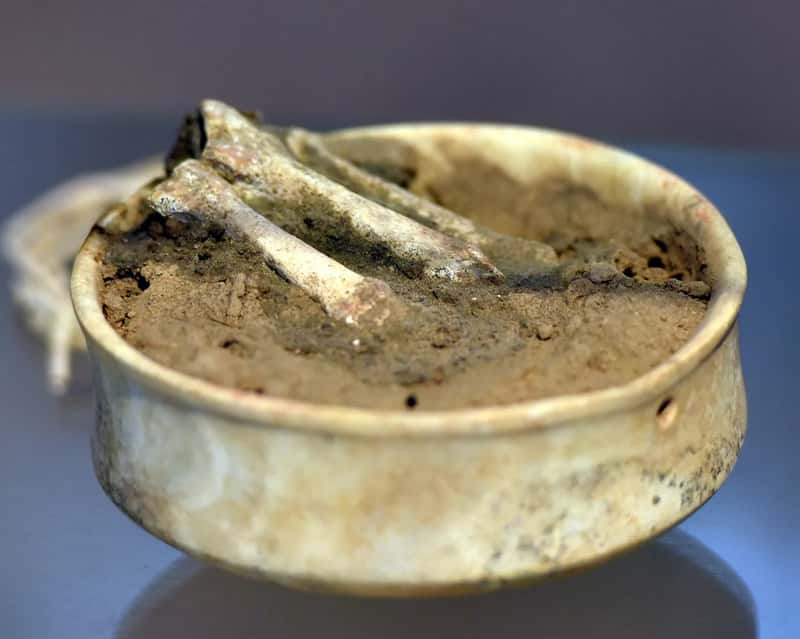
Many of the remains show a puzzling pattern. Scientists reported cut marks, or possible signs of defleshing, on 461 of 2,228 human bones from Samdzong and Mebrak[11], which works out to roughly one fifth of the bones examined. Aldenderfer has said the bodies were treated respectfully, and he did not interpret it as cannibalism.
He has also floated a bigger idea. These rites may have transformed into, or inspired, the Tibetan sky burial ritual.[12] It remains a hypothesis, and an anthropologist outside the project called it workable, which isn’t the same as proven.
What DNA and Trade Goods Reveal

Genetics has added a layer. Earlier ancient DNA studies of three Mustang sites dating from 800 BCE to 650 CE found populations of clear East Asian ancestry, likely migrants from the Tibetan Plateau.[13] A larger 2022 study in Nature Communications expanded that work with more individuals and sites in the Mustang and Manang districts.
The burials also point to far reaching contact. Bodies lay on wooden beds with copper jewelry and glass beads, goods not made locally, which reflects Mustang’s role as a trade route.[4] These valleys, in other words, were crossroads, not dead ends.
Painted Walls and Hidden Manuscripts
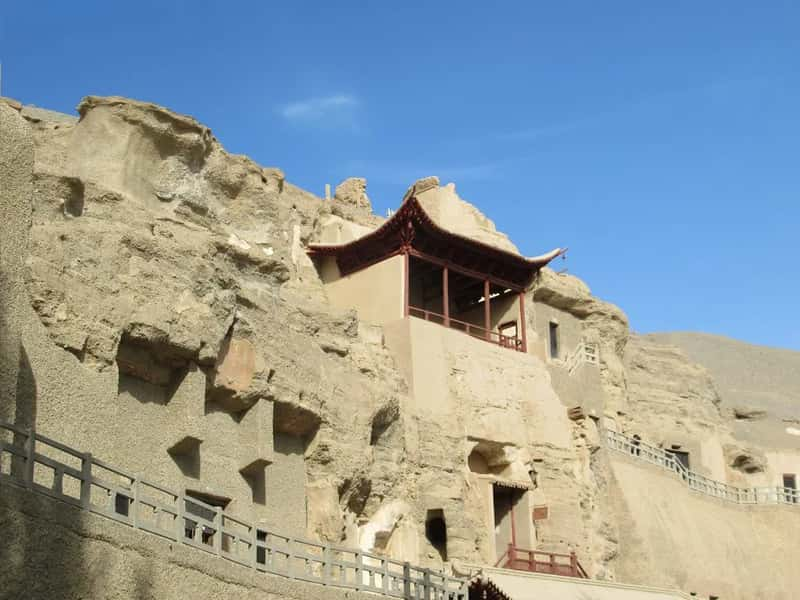
Some caves held art as well as bones. Explorations have led to the discovery of Buddhist paintings, sculptures, manuscripts and artifacts belonging to the 12th to 14th century.[3] One travel site reports that a shepherd found a group of 55 paintings depicting the Buddha’s life in 2007, though that detail comes from a tourism blog.
The climate helps explain why anything survived. The dry, cold mountain air kept paper and paint remarkably preserved.[1] Still, murals are fading in places, and weathering is a steady threat to anything left exposed.
Final Thoughts
The sky caves remind you how little of a place can be known, even after decades of work. A few tombs have been opened, a few chambers mapped, and thousands of openings remain unexamined. As Aldenderfer put it, the next cave could hold anything, which is both the appeal and the honest limit of what we know.
For now, the cliffs of Mustang hold a record of burial, shelter and prayer that stretches across roughly three thousand years. Reading it will take patience, careful fieldwork and respect for a landscape that has kept its secrets well.