Let’s be real, airports are designed for movement, not attention. That makes them perfect hunting grounds for thieves who’ve figured out how to blend in, act fast, and disappear before you even realize something’s wrong. So let’s dive in and see what’s really happening out there.
The Classic Carousel Grab

From a low in 2011 of 97 reported incidences of bag theft, the numbers soared last year to a record high of 477 cases. We’re talking about Sea-Tac Airport alone. Similar patterns have emerged at airports worldwide, from Germany to Miami. The scam itself is deceptively simple: thieves loiter near baggage claim areas, watching for distracted travelers, then grab a bag that looks generic enough to blend in. In one case at LAX, a woman used an AirTag to track her stolen suitcase to another terminal.
The method relies on our exhaustion and assumption that nobody would be bold enough to steal in plain sight. Here’s the thing, though: they absolutely are.
According to a recent report from the Department of Transportation, the number of delayed or lost bags rose to six out of 1,000 bags in February, up from five out of 1,000 the same time last year. Data provided from San Francisco Police Department’s airport bureau shows total baggage theft reports have nearly doubled at SFO, with 119 thefts reported this year as of publication, compared with only 67 in the entire year prior. That’s not just mishandled luggage. That’s actual theft on the rise.
When Baggage Handlers Turn Bad

Airports worldwide have reported insider thefts where baggage handlers quietly remove valuables or even entire suitcases. A traveler at Fort Lauderdale-Hollywood used an AirTag to trace his “missing” bag – straight to an airport employee’s home. Similar incidents have surfaced in Spain and the Philippines, showing just how deep these schemes can go. This is the stuff that keeps frequent fliers awake at night.
Although airline baggage handlers do not have a reason to open checked baggage, they have a brief but uninterrupted opportunity to rifle through baggage during aircraft loading. TSA officials believe that airline employees are responsible for a large percentage of thefts. It’s hard to say for sure, but when your bag takes a detour to someone’s living room, something’s clearly broken in the system.
The problem is that these are people with authorized access. They know the blind spots, the timing, and how to avoid cameras.
The Luggage Tag Data Heist
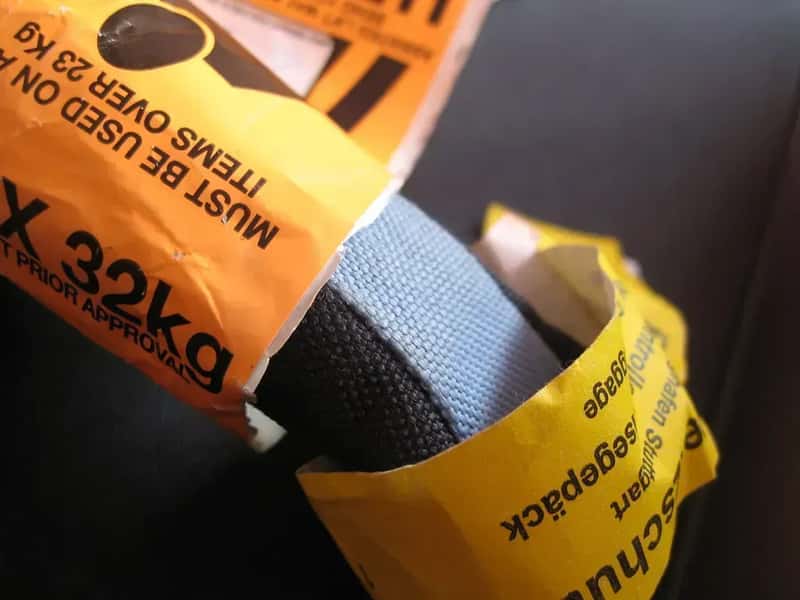
Most people rip off their baggage tags and toss them in the nearest airport trash bin without thinking twice. Turns out, that’s exactly what scammers are counting on. They warned that Delta is “getting an influx of fraudulent claims” where scammers use the information from discarded airline baggage tags – the adhesive ones airlines use on your suitcase handles – to claim “missing items” that aren’t theirs.
A baggage tag contains your name, flight numbers, airline information, baggage number, and sometimes membership numbers. Scammers can then use your name to create a fake email address and, after making up other contact information, can submit a claim to an airline for a lost, delayed or damaged bag to get money. That little sticker is basically your flight identity, and if it falls into the wrong hands, someone else can impersonate you at baggage claims or file fraudulent compensation requests.
The Identical Suitcase Swap
In a sophisticated scam, baggage handlers swap drug-filled luggage for checked bags, even switching luggage tags, and two tourists in Germany were victims in 2023 and spent 24 hours in prison. This isn’t just theft anymore. It’s criminal setup. Imagine checking in a perfectly innocent suitcase, only to be arrested because someone swapped it for one filled with contraband.
The tags get switched. The bags look similar enough. You claim the bag thinking it’s yours, go through customs, and suddenly you’re in handcuffs trying to explain something you didn’t do. In these cases, the real criminals walk away while innocent travelers face serious legal consequences.
Honestly, locking your luggage and taking a photo before you check it might be the only defense here. But even that’s not foolproof.
Distraction Tactics at Security Checkpoints

At the airport, you could be targeted by thieves using distraction tactics. These are classic airport scams in which someone might create a diversion – such as dropping an item or creating a commotion – while an accomplice steals your belongings. This one’s a classic for a reason: it works.
According to TSA, 20 theft cases have occurred at passenger checkpoints since it began baggage screening. TSA baggage screeners have stolen change, paper currency, credit cards, pens, watches, cell phones, and jewelry from carry-on baggage. Not all of these were insider jobs, but many involved teams of thieves who understood the chaos of security lines.
The trick is to create just enough confusion that you take your eyes off your laptop, phone, or wallet for five seconds. That’s all it takes.
Fake Porters and Helpful Strangers

In crowded international terminals, fake porters pose as airport staff and offer to “help” with luggage. They seem friendly – until they vanish with your bag or demand an outrageous tip. Some even wear imitation badges or uniforms to appear official. Airports in Delhi, Manila, and Cairo have all issued warnings about these impostors working the arrival zones.
This scam preys on tourists who don’t know local customs or official uniforms. They look the part, act helpful, and then either disappear with your belongings or extort money by threatening not to return them. Airports in places like India and Nigeria report frequent cases of this scam. At some hubs, luggage helpers are linked to up to 30% of thefts and overcharging complaints.
The Phony Damage Claim Scam

A newer scam targets passengers before they even leave baggage claim. Someone points out that your suitcase looks damaged – then offers to “help” file a claim or leads you toward an unauthorized kiosk. This one’s slick because it sounds genuinely helpful at first.
The scammer approaches you, points to a scratch or dent that may or may not have been there before, and offers to assist with filing a claim right away. What they’re really doing is collecting your personal information, credit card details, or directing you to a fake claims desk where they pocket any “processing fees” you hand over.
It’s the kind of thing you’d fall for when you’re tired, frustrated, and just want to get home.
Online Unclaimed Baggage Scams

The airport luggage sale ad has been circulating on Facebook for the last two months, offering people a “chance” to buy unclaimed suitcases for just $3 each. The scammers claim they’re making space in warehouses by quickly getting rid of thousands of supposedly lost suitcases. These fake Facebook pages pretend to be official airport pages of various international airports from all over the world: New Zealand, Australia, the USA, Oslo, the UK, Qatar, Denmark, Ireland, Malta, and many others.
None of these accounts is affiliated with real airports, and their only goal is to lure individuals into providing sensitive data such as personally identifiable information, banking and credit card details, and passwords. The fake profiles in the comments section make it look legitimate, showing off photos of suitcases supposedly filled with designer clothes, electronics, and perfumes. A network of fabricated profiles comments on the posts, posing as happy customers who received valuable items in their suitcases. Comments include stories of finding expensive shoes, perfumes, electronics, and more.
Wrapping It All Up
Most of these scams work because travellers let their guard down at the end of a trip. But a few smart habits – keeping your tag, locking your bag, tracking your luggage, and guarding your data – can stop thieves cold. The reality is that airports are high-pressure environments where people are tired, distracted, and eager to move on.
Thieves know this. They count on it. The suitcase swap scam and its many variations aren’t going away anytime soon, especially as travel continues to rebound. The best defense is awareness, vigilance, and a healthy dose of skepticism when someone offers to help a little too eagerly.
What would you have guessed was the most common airport scam? Did any of these surprise you?