Political stability rarely makes headlines the way conflict does, yet it shapes almost everything else in a country from investment flows to migration patterns. In a year when global peacefulness has been sliding for over a decade straight, a small cluster of nations keeps standing apart, holding onto calm institutions, predictable elections, and low internal friction even as much of the world grows more volatile.
Ranking stability isn’t an exact science. Different organizations weigh things like rule of law, regime turnover, and absence of violence in different ways, which means lists shift depending on the source. Still, when you cross-reference the 2026 Global Peace Index with governance and economic stability data, a fairly consistent group of eight countries rises to the top.
1. Iceland

Iceland has become something of a fixture at the top of global stability rankings. Iceland retains its position as the world’s most peaceful country for the 19th consecutive year, with no standing army and exceptionally low crime levels, described as outperforming all others by a significant margin. That kind of consistency isn’t an accident. It reflects a small, cohesive population, strong social trust, and a political culture that rarely produces the kind of polarization seen elsewhere.
Qualities that make it the most peaceful nation on Earth include low crime rates, robust education and welfare systems, fair pay for workers, and virtually non-existent tension among the economic classes. Iceland’s isolation and small scale help too, since there’s simply less friction when a country has fewer than half a million people and a tight-knit civic culture. It’s the kind of stability that looks almost boring from the outside, which is precisely the point.
2. New Zealand
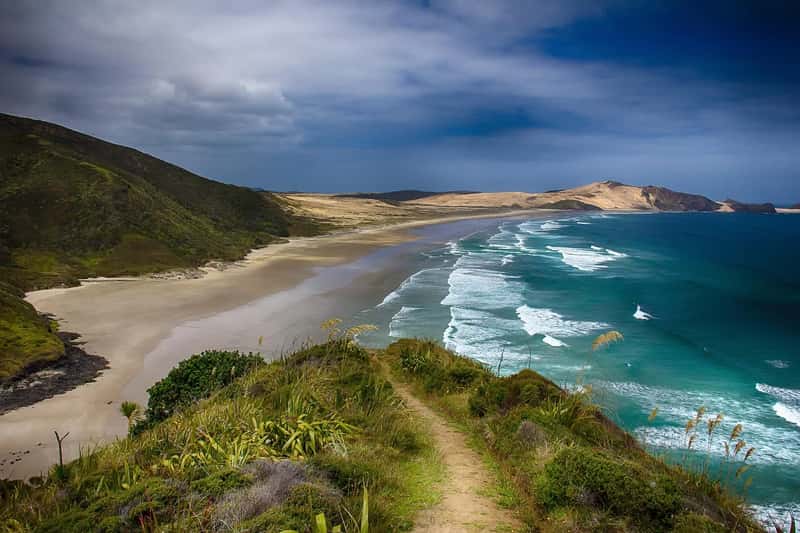
New Zealand has climbed the rankings this year rather than just holding steady. New Zealand moves up to second place, from third, recording the lowest ongoing conflict score across the Asia-Pacific region, offering a level of political stability and societal calm that few countries can rival. Its geographic remoteness plays a role, but so does a political system built on consensus-driven governance and a relatively small, homogenous electorate that tends to punish extremism at the ballot box.
New Zealand’s institutions have weathered global shocks, from the pandemic to shifting trade relationships, without the kind of institutional strain seen in larger economies. The country’s electoral system, which uses mixed-member proportional representation, tends to produce coalition governments that require negotiation rather than confrontation. That structural feature, more than any single policy, has helped keep New Zealand’s politics comparatively even-keeled.
3. Switzerland
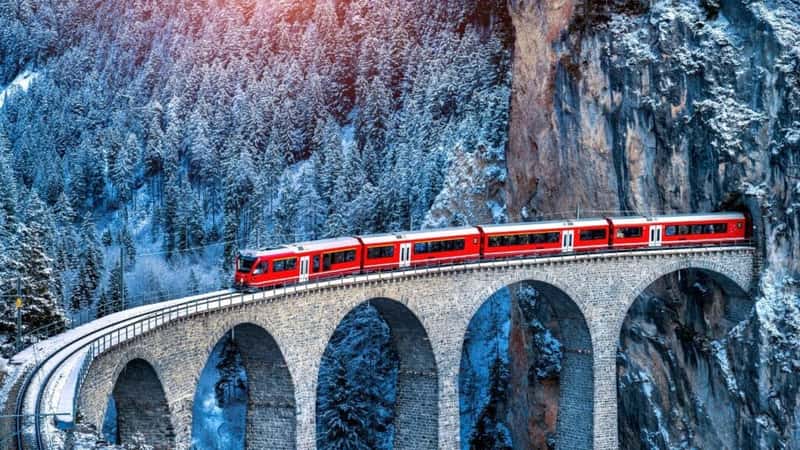
Switzerland’s reputation for stability is almost a national brand at this point. Switzerland ranks third, reinforcing a long-held perception among travelers, underscored by the data, as one of the most consistently stable and secure countries in the world. Its system of direct democracy, where citizens vote on specific policy questions through referendums, gives the population a pressure valve that many other democracies lack.
Neutrality has also been central to Switzerland’s identity for centuries, and it continues to shape the country’s foreign policy posture even as tensions rise elsewhere in Europe. Switzerland is generally called the most politically stable country on Earth, taking a stance of isolationism whenever a conflict breaks out and was not involved in World War II. Combined with a decentralized cantonal system that keeps power spread out rather than concentrated, Switzerland has built a political architecture that resists sudden shocks.
4. Slovenia
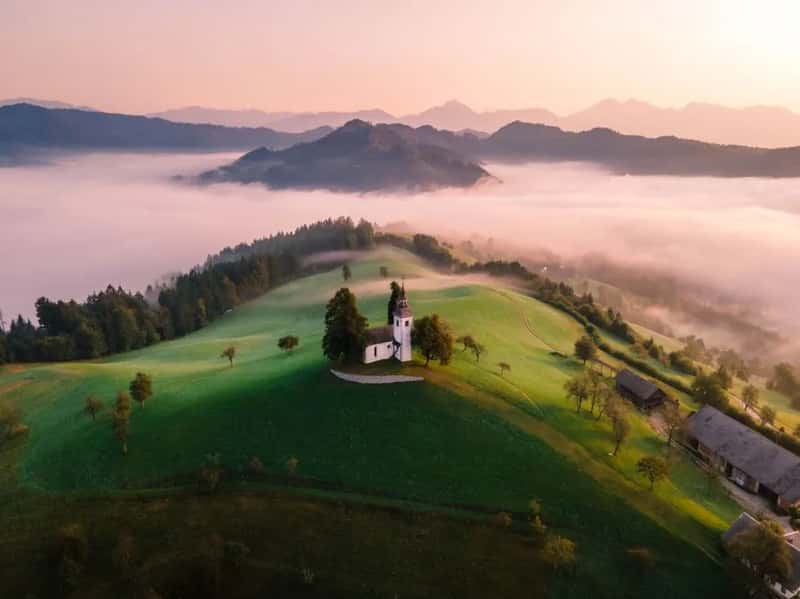
Slovenia is the newer name on this list, and it’s earned its place through steady improvement rather than legacy reputation. Slovenia climbs two places to fourth, emerging as one of the list’s most underrated countries. It’s a small Central European nation that often gets overshadowed by its larger neighbors, yet its institutions have proven remarkably resilient.
The government is particularly stable, and democracy is strong, with the economy growing at a GDP growth rate expected to reach around two percent through 2027. Slovenia’s post-communist transition in the 1990s was notably smoother than many of its regional peers, and that early groundwork of building durable democratic institutions has paid dividends. It’s a useful reminder that political stability doesn’t require a long imperial history or vast wealth, just consistent governance over time.
5. Ireland
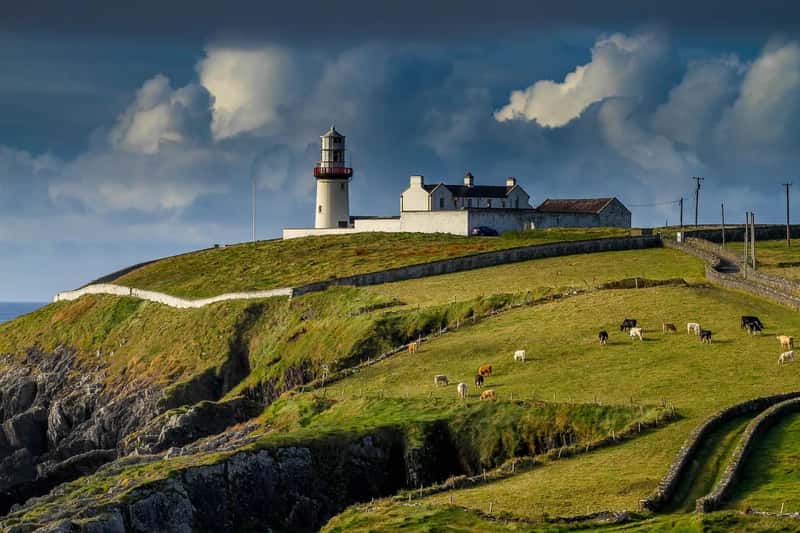
Ireland has spent recent years cementing its place among the world’s calmest democracies. Ireland took second place in 2024’s rankings, marking the country’s fourth consecutive year in the top five most peaceful countries. The country’s economic transformation over the past few decades, from one of Europe’s poorer nations to a hub for multinational business, has coincided with a period of unusual political calm.
Part of Ireland’s stability comes from a political system where the two dominant center-right parties, Fianna Fáil and Fine Gael, have increasingly governed together rather than treating each other as bitter rivals. That convergence has reduced the kind of adversarial gridlock seen in other Western democracies. Ireland also benefits from EU membership, which anchors its economic policy within a broader stable framework rather than leaving it exposed to isolated shocks.
6. Austria
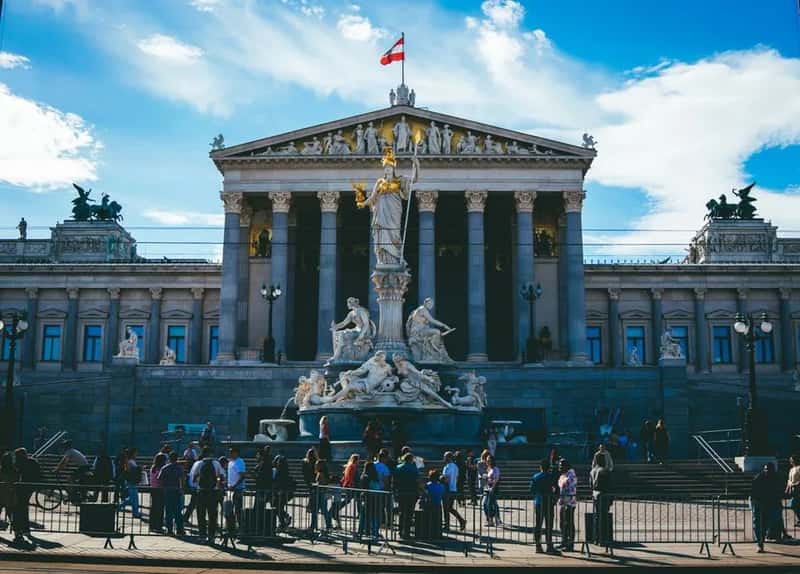
Austria’s inclusion here comes with more nuance than the others on this list. Austria ranked as the third-most-peaceful country in recent rankings, ranking particularly well for political stability, low crime rates, quality of life, and respect for civil liberties. Yet Austria’s recent political history has been anything but smooth on the surface.
A new coalition government formed after the conservative People’s Party, centre-left Social Democrats, and liberal Neos reached a deal, ending five months of political deadlock that followed elections in which the far-right Freedom Party emerged as the largest political force but failed to form a government. The lengthy negotiation period was uncomfortable, but it also demonstrated something important: Austria’s constitutional guardrails held. No party seized power outside the rules, and the eventual coalition, while unwieldy, has continued the austerity and reform agenda without triggering unrest. Stability, in this case, looks less like harmony and more like institutions that simply refuse to break.
7. Portugal
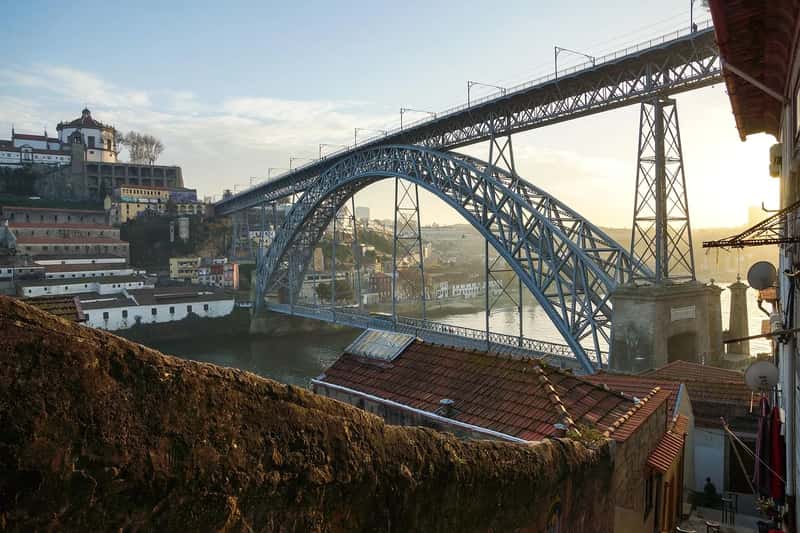
Portugal presents a similar story of underlying resilience despite visible turbulence. Portugal’s recent experience of three general elections in roughly three years, the rise of a populist right-wing party, and high-profile corruption investigations mark a departure from the more predictable politics of the early 2000s and 2010s, and political stability in the narrow sense of governments completing full terms has weakened, though the broader architecture of democratic governance appears resilient. That distinction matters. Frequent elections and messy coalition math are annoying, but they aren’t the same thing as a democracy in danger.
Elections are competitive and accepted, transitions of power occur within constitutional rules, independent institutions function, and international rating agencies continue to view Portugal as a relatively low-risk sovereign within the EU. Portugal’s fifty-year-old democratic system, established after the Carnation Revolution in 1974, has proven durable enough to absorb political churn without institutional damage. That combination of surface volatility and deep resilience is exactly why Portugal earns a spot here rather than being dismissed for its recent electoral turnover.
8. Singapore
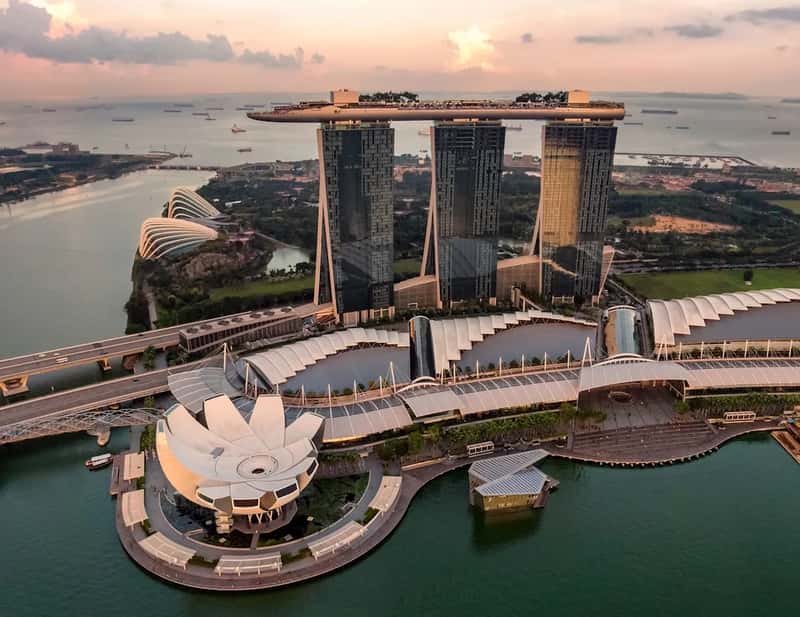
Singapore’s stability looks different from every other entry on this list, built less on democratic pluralism and more on decades of dominant-party governance. The Singaporean party system is moderately stable and socially rooted, functioning as a predominant party system with the ruling People’s Action Party as the largest and most successful party. That dominance has produced extraordinary policy continuity, which international observers consistently reward with high stability scores.
The 2024 leadership transition tested that model without disrupting it. Lawrence Wong succeeded Lee Hsien Loong as prime minister on May 15, 2024, and is seen as a stabilizing figure for the People’s Action Party as it prepares for upcoming elections. Singapore’s model trades some civil liberties and political competition for predictability, and whatever one thinks of that trade-off, it has kept the city-state remarkably calm through decades of regional turbulence, positioning it near the top of nearly every economic and political stability index measured in 2026.
What ties these eight nations together isn’t size, wealth, or even system of government. Iceland and Singapore could hardly be more different politically, yet both land near the top for entirely distinct reasons: one through radical transparency and social trust, the other through continuity and centralized planning. Stability, it turns out, has more than one recipe, and these eight countries each found their own version of it.