
Picture a crocodile. You’re probably seeing something low, slow, and waterlogged – a creature that barely seems to move until it absolutely has to. That image is incomplete, and scientists have the field data to prove it. Across the dense rainforests of West Africa, crocodiles have been quietly doing something that defies every instinct you have about what these animals are: they climb trees. Not by accident. Not because they slipped. Deliberately, regularly, and with surprising agility.
But the tree-climbing is almost the least strange part of the story. The more researchers dig into West Africa’s crocodile populations, the more they find a whole ecosystem of behaviors, adaptations, and survival strategies that nobody expected. There’s a critically endangered species disappearing so fast that experts estimate fewer than 500 adults may remain in the wild. There are cave-dwelling crocodiles turning orange underground. And there’s a quiet scientific scramble to understand all of it before it’s too late.
Yes, It’s Real – Crocodiles Actually Climb Trees
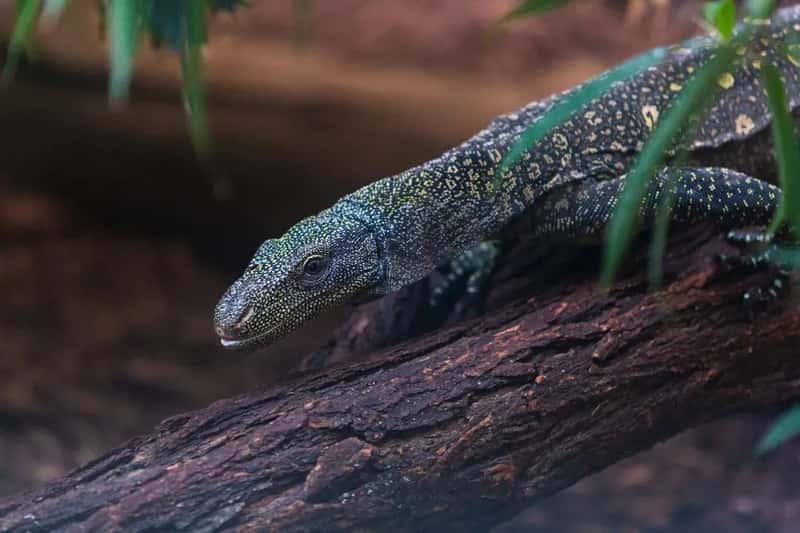
Despite the fact that crocodiles lack the physical adaptations of a climber, they can climb trees and do it regularly, a study published in Herpetology Notes confirmed. The study wasn’t based on a single dramatic sighting – researcher Vladimir Dinets and his colleagues observed crocodile species on three continents – Australia, Africa, and North America – and found that four species climbed trees. West Africa is one of the key regions where this behavior has been documented in the wild.
Some species were observed climbing as far as four meters high in a tree and five meters down a branch. Dinets also received anecdotal reports from people who spend time around crocodiles of the reptiles climbing almost 30 feet. People who spend time around crocodiles have known about the climbing ability for decades, but the study was the first to thoroughly examine the climbing and basking behavior. Scientists, in other words, were among the last to find out.
Why They Do It: It’s Not What You’d Guess
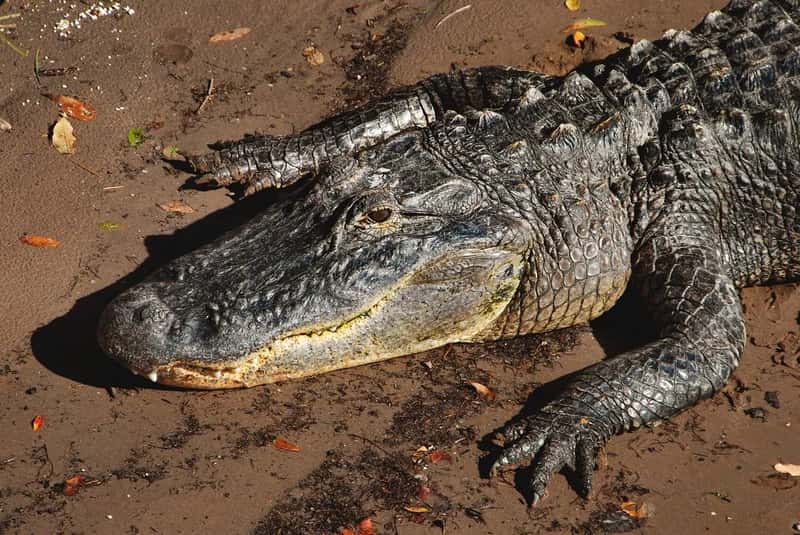
Most people assume tree-climbing would be about hunting – a crocodile lurking above its prey, ready to drop. The reality is more practical and, in its own way, more fascinating. Researchers concluded that the tree climbing and basking are driven by two conditions: thermoregulation and surveillance of habitat. “The most frequent observations of tree-basking were in areas where there were few places to bask on the ground,” the authors wrote, and their “wary nature suggests that climbing leads to improved site surveillance of potential threats and prey.”
Crocodiles typically maintain a preferred body temperature between 30°C and 35°C (86°F to 95°F), and to achieve this balance, they employ behavioral strategies and physiological adaptations that allow them to absorb or dissipate heat as necessary. In the deep forest rivers of West Africa, where dense canopy blocks sunlight from reaching riverbanks, getting up into the trees isn’t a curiosity – it’s a survival strategy. That’s because the slender-snouted crocodile is a forest-stream species. There are no open areas where they can bask, so they use rocks because they stick out of the water, as do the branches of fallen trees, showing their ability to climb.
The Species at the Center of It All: Africa’s Least-Known Crocodile
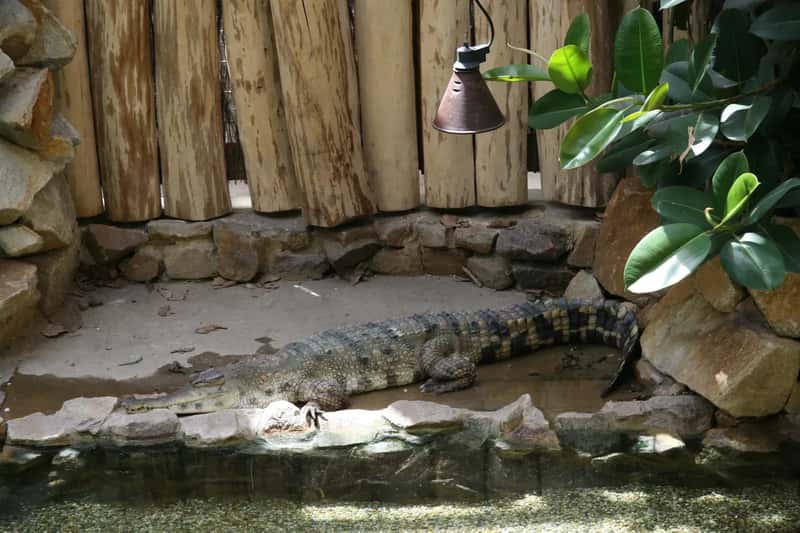
The crocodile most closely associated with tree-basking in West Africa’s forest rivers is not the famous Nile crocodile. It’s the West African slender-snouted crocodile (*Mecistops cataphractus*), a critically endangered species endemic to West Africa. It can grow to approximately 13 feet long and has a narrow snout, which it uses to eat fish and small mammals. Unlike the aggressive, wide-ranging Nile crocodile, this one is largely unknown to the general public – and that obscurity is part of what’s killing it.
African slender-snouted crocodiles are the least-known crocodile species, and estimates suggest that fewer than 500 adult West African slender-snouted crocodiles are left in the wild. It is recognized as Critically Endangered on the IUCN Red List, making it not only one of the six priority crocodilian species for conservation worldwide, but also the most endangered crocodile species on the African continent. That’s a staggering number, and most Americans have never heard of this animal at all.
It Hides in the Shadows – And Scientists Are Struggling to Find It
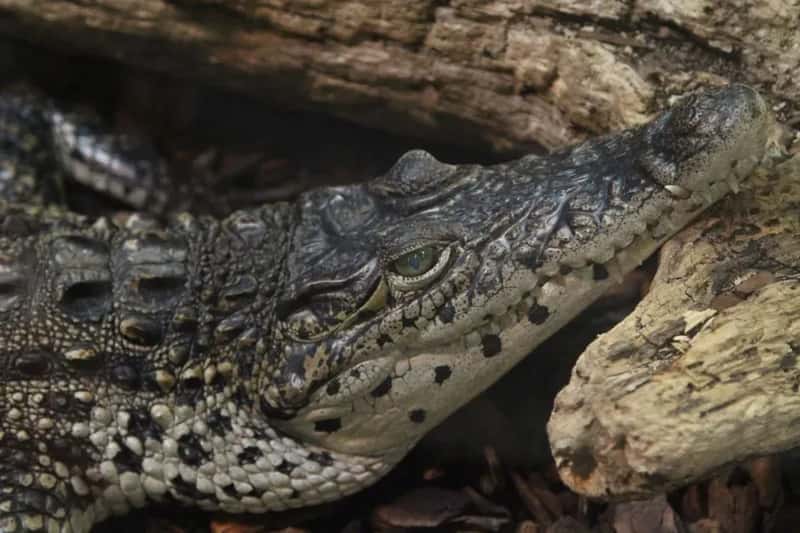
Unlike its Nile cousin, the slender-snouted crocodile is shy and reclusive, avoiding areas with heavy human activity. It prefers dense vegetation and overhanging branches along riverbanks, where it can remain camouflaged. This makes it extraordinarily difficult to count, track, or study. The crocodylians of West Africa are among the most threatened and least researched species in the world. Researchers are essentially trying to understand an animal that actively works to avoid being seen.
The slender-snouted crocodile likes to stay hidden beneath the vegetation that overhangs the river, because when fruit produced in overhanging trees falls into the water, it attracts fish, which the crocodiles then hunt. This layered, strategic use of forest habitat – using the canopy for warmth, the overhanging vegetation for cover, and the resulting fish aggregations for food – hints at a level of ecological sophistication that researchers are only beginning to piece together. Recent research using DNA and morphology has shown that it not only belongs in its own genus, *Mecistops*, but that there are actually two slender-snouted crocodile species.
Smaller and Lighter: The Physical Profile That Makes Climbing Possible
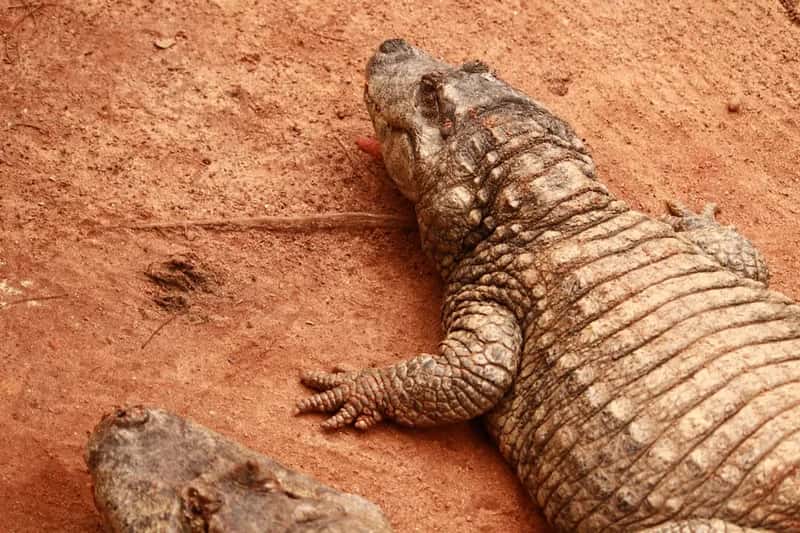
One reason tree-climbing works for West Africa’s forest crocodiles is size. The dwarf crocodile (*Osteolaemus tetraspis*), also common in the region, is the world’s smallest crocodilian species. Dwarf crocodiles attain an adult length of 1.7–1.9 meters (5.6–6.2 feet), with adult specimens typically weighing between 18 and 32 kg (40 and 71 lb). At that size, branches that would snap under a Nile crocodile’s bulk become viable platforms.
Smaller crocodiles are able to vertically scale trees, while their larger counterparts rely on angled branches. As the researchers noted, “climbing a steep hill or steep branch is mechanically similar, assuming the branch is wide enough to walk on.” The crocodiles seen climbing trees, whether at night or during the day, were skittish of being recognized, jumping or falling into the water when an approaching observer was as far as 10 meters away. They’re not putting on a show – they’re exploiting a resource, and they’d prefer nobody noticed.
The Underground Twist: Cave Crocodiles Turning Orange
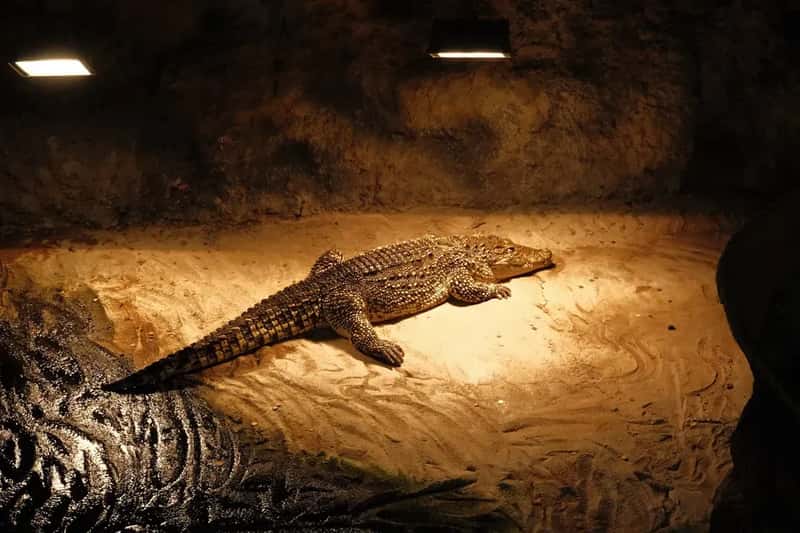
If tree-climbing crocodiles seem strange, consider this: there are also crocodiles in West and Central Africa that have moved underground. Dwarf crocodiles are the world’s smallest living species of crocodile, measuring between 1.5 to 1.9 meters from snout to tail. Typically the species lives in the streams and swampy forests of West and Central Africa, but in 2008, biologists found a group thriving within a cave ecosystem for the very first time. The location was Gabon’s Abanda cave system – and what they found inside was genuinely bizarre.
The cave-dwelling crocodiles have many physical dissimilarities with their forest- and swamp-dwelling cousins. They have broader heads, poor eyesight, and their skin has a strange orange hue. Researchers believe that years of soaking in bat guano had discolored their skin, the same way crocodile leather manufacturers treat crocodile skin with chemicals to bleach off its dark color. Crocodiles captured in the caves appeared to forage exclusively in the caves and ate mostly cave crickets and bats. They have essentially rebuilt their entire diet from scratch around whatever lives in the dark.
The Genetics Are Even Weirder – They May Be Becoming a New Species
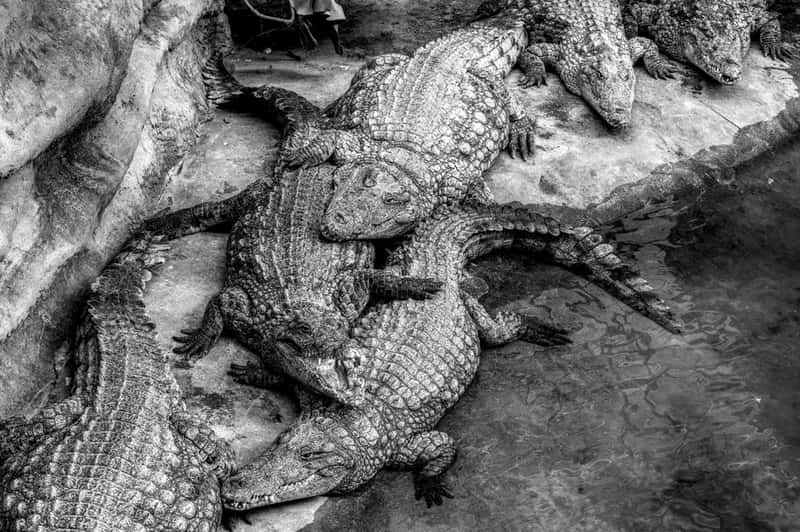
The orange color and the diet shift would be strange enough on their own. But when scientists ran genetic tests on the cave-dwelling crocodiles and compared them to forest-dwelling individuals living just outside the cave entrance, the results were alarming. It turned out the cave-dwelling crocs have a different genetic haplotype, which means the reptile is adapting or mutating to life in the dark. That’s not just an interesting quirk – it’s the early signature of speciation.
The current population size of cave-dwelling crocodiles is not more than 100–200 individuals, according to researcher Matthew Shirley. Recent sampling has identified three genetically distinct populations within the dwarf crocodile group more broadly. The cave population appears to be diverging from surface animals despite their close physical proximity – separated not by mountains or oceans, but by the simple fact that some went underground and never came back. Whether that isolation will eventually produce a fully distinct species is a question scientists genuinely cannot yet answer.
The Race to Protect What’s Left
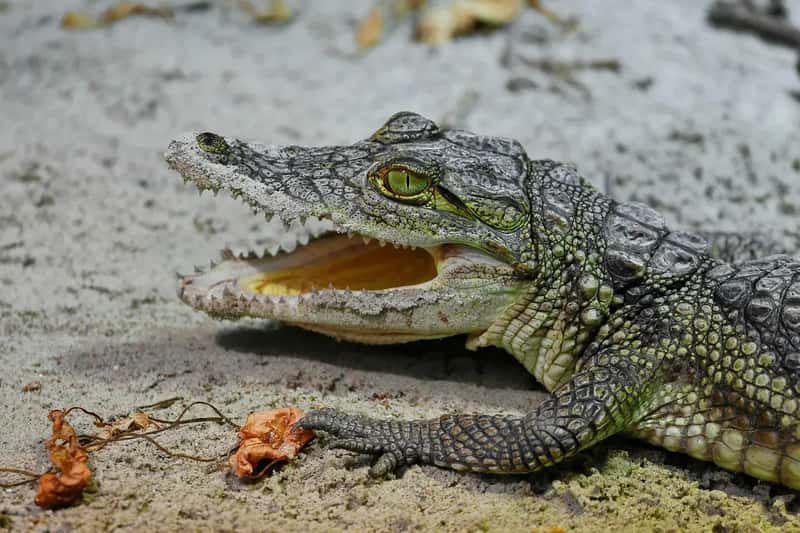
The West African slender-snouted crocodile is under threat from fishing practices, human disturbance, hunting, habitat degradation, and fragmentation across its entire range. The forests where it lives and climbs are being cleared at a rate that outpaces conservation action in many countries. Conservation efforts for the species have intensified since the early 2010s, focusing on captive breeding, reintroduction, and community engagement to address its critically endangered status.
A primary initiative is Project Mecistops, established to coordinate conservation actions across West Africa, including collaboration with the Abidjan National Zoo in Côte d’Ivoire for breeding and reintroduction programs. The project supports the zoo’s efforts to maintain the largest captive population of the species, with juveniles raised to 3–4 years before release into protected habitats, enhancing survival rates through head-starting techniques. Scientist Christine Kouman, who cofounded the conservation NGO EBURCO, is working with others to ensure the rainforest habitat stays well protected. Kouman says she has always had a passion to take care of things that are overlooked or neglected – and the West African slender-snouted crocodile and its habitat in what remains of the Upper Guinean Forest qualify on both fronts.
What Scientists Still Don’t Know – And Why That Gap Matters
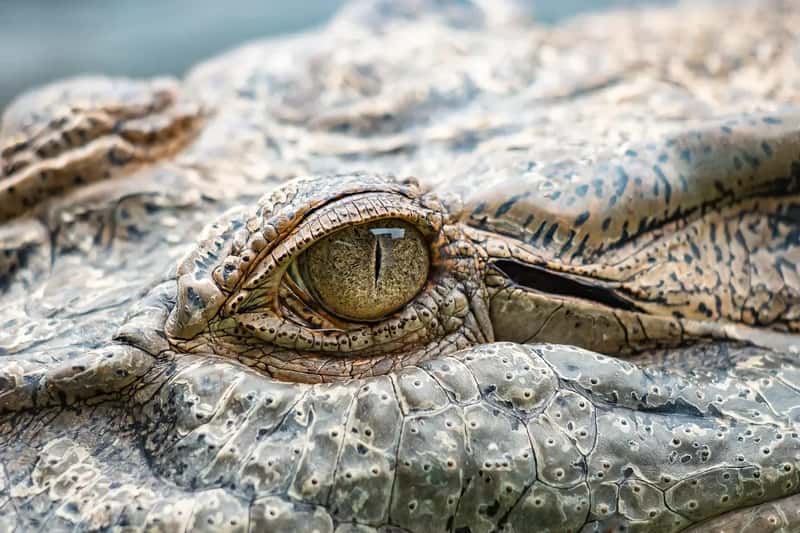
Scientists are now looking to understand the full extent of crocodiles’ climbing abilities, the factors influencing their tree-climbing behavior, and the ecological implications of this newfound skill. Basic questions about population size, breeding range, and habitat use remain unanswered for the slender-snouted crocodile simply because the animals are so hard to find and the regions they inhabit so difficult to survey. The knowledge gap isn’t academic – it directly limits the ability to protect a species that may have fewer than 500 individuals left.
The West African slender-snouted crocodile is listed as Critically Endangered on the IUCN Red List, and the highest priority action for the species is to assess population status throughout its range as a basis for establishing conservation programs. The species inhabits rivers mainly covered by dense or shady vegetation. That dense vegetation is the same feature that makes these crocodiles climb trees for sunlight – and it’s the same feature that makes counting them nearly impossible from the ground. The forest hides them well. Scientists are racing to look harder before the question answers itself in the worst possible way.
The Bottom Line
West Africa’s crocodiles are doing things that have no business fitting into the mental image most of us carry around. They climb trees – up to four meters high – to warm up and keep watch. They hide under overhanging riverbanks and use falling fruit to lure fish. Some have gone underground, turned orange, swapped their diet for bats and cave crickets, and may be drifting toward becoming an entirely new species. And at the center of all of it sits the slender-snouted crocodile: the most endangered crocodile in Africa, so shy and so forest-dependent that fewer than 500 may remain, and scientists are still working out basic facts about how it lives. These aren’t ancient, simple animals. They’re deeply adaptable, ecologically specific, and almost entirely unknown – which is exactly what makes their disappearance so alarming. Had you ever heard of the slender-snouted crocodile before today? Drop it in the comments.