Every year, a new list arrives declaring which countries are the calmest, gentlest, most secure places on Earth. Iceland tops it, Denmark and Ireland trail close behind, and travel forums light up with people planning their next relocation based on a single number. What rarely gets discussed is how that number gets built, what it leaves out, and why a country’s rank can say less about your actual daily risk than most headlines suggest.
Safety indexes are useful tools, but they are also compressions of enormously complicated realities into a single score. Once you start pulling apart how these rankings work, a more nuanced picture emerges, one that matters a great deal if you are actually deciding where to live, travel, or raise a family.
Rankings measure countries, not neighborhoods
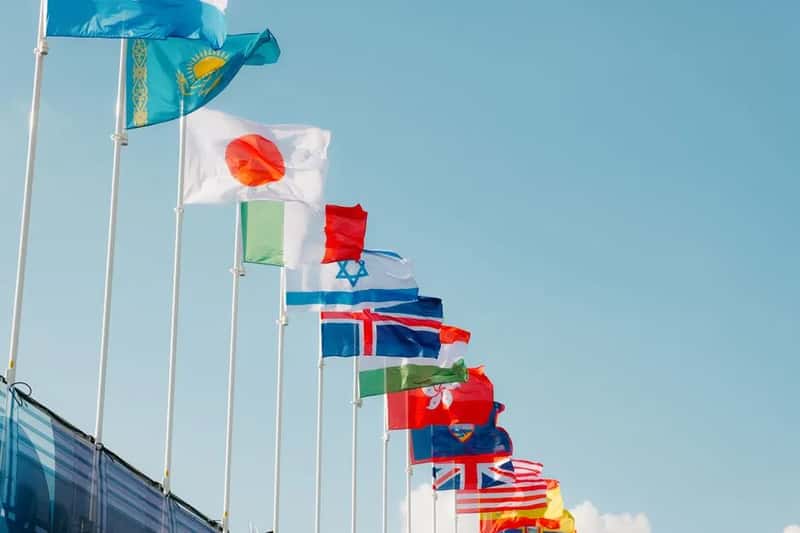
The Global Peace Index, probably the most cited safety ranking in the world, operates at a national level. That sounds obvious, but it creates a real distortion because it neglects significant sub-national variation in peacefulness across regions, communities, and cities, and relies on data from countries that may lack the basic infrastructure to collect accurate statistics on the measured indicators.
A country can rank near the top of every list while still containing pockets with real problems, just as a lower-ranked country can have large regions that feel entirely calm. The number you see in a headline is an average, and averages hide plenty. Anyone using these rankings to choose a specific city or neighborhood is stretching the data well past its intended purpose.
Small and homogeneous nations have a built-in advantage
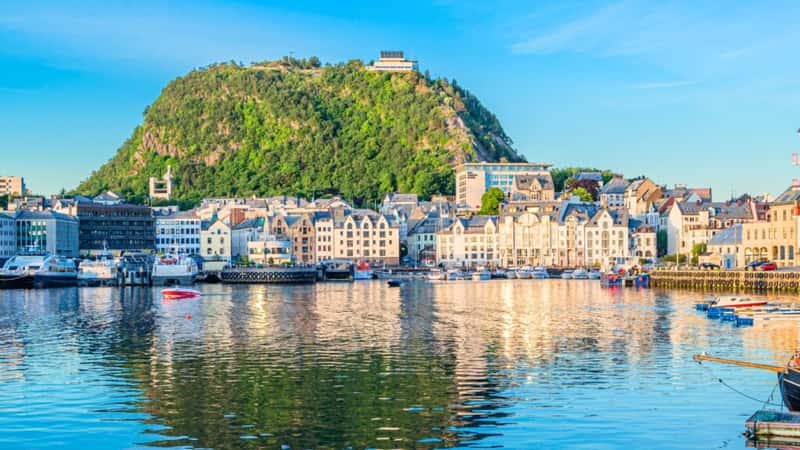
There’s a structural quirk in how these indexes are built that rarely makes it into travel articles. Researchers have pointed out that the methodology may systematically favour small, isolated, and homogeneous nations over larger, heterogeneous countries with complex geopolitical settings and histories.
Even the people who help produce the Global Peace Index have acknowledged this. At an academic seminar, the GPI’s vice-president acknowledged that results for very small countries, such as Iceland, could be misleading in comparison with those of much larger countries. That doesn’t make Iceland less safe. It does mean comparing a nation of a few hundred thousand people to a country of hundreds of millions on the same scale is a shakier exercise than the clean rankings suggest.
Police statistics don’t capture the full picture

One of the more uncomfortable truths in cross-country safety comparisons involves how crime actually gets counted. Analysts have noted that an analysis based solely on police statistics can be misleading when comparing countries, because reporting and prosecution rates vary enormously by nation and by crime type.
Consider sexual assault. In one Australian state, of the 9,138 sexual assaults reported to police in 2022, there were only 1,016 convictions, just an 11 percent conviction rate. Countries with well-run victimization surveys, like the long-running U.S. National Crime Victimization Survey, try to correct for this gap, but many nations simply don’t collect that kind of data, which means their official crime figures may understate the real experience of residents.
“Peaceful” doesn’t always mean gender-safe

A country can score extremely well on overall peacefulness while still showing sharp disparities in how safe different groups feel. Broader research on global safety patterns shows that gender-based safety shows significant regional variations, with Nordic countries leading women’s safety rankings while conflict-affected regions in the Middle East and South Asia show the highest risks for women.
Even within top-tier countries, the experience of safety is not evenly distributed. A low national homicide rate says little about a woman’s experience walking home alone at night, or about how a police force responds to domestic violence reports. These are the kinds of details a single composite score simply cannot convey, no matter how many decimal places it’s reported to.
Natural hazards rarely make the scoreboard

Peace indexes are built around human conflict and crime, not geological or weather risk. That means a country’s exposure to earthquakes, flooding, or road accidents is often invisible in the very rankings people use to judge overall safety.
Even in a country as celebrated for personal safety as Ireland, the physical landscape carries its own risks. Travel researchers point out that the Irish landscape may pose a greater safety risk than its people, with breathtaking cliffs and winding country roads that must be treated with respect, especially during a sudden rainstorm. Separate research on regional safety patterns has also found that countries with low birth rates and older populations tend to be safer, though exceptions like Oman, Bahrain, and the UAE suffer from a high number of deaths on the road. Traffic and terrain, in other words, deserve a place in the conversation that they rarely get.
Perception surveys can produce strange results

Not every safety ranking relies on hard data. Some of the most widely shared ones are built almost entirely from public perception, which produces some genuinely surprising outcomes. On Numbeo’s crowd-sourced index, for instance, Sweden and Belgium, usually high in many other safety rankings, didn’t even make the top 10, with Sweden considered less safe than Barbados, Lebanon, and Ukraine.
That result tells you more about how survey respondents feel than about actual crime rates. As one analysis of the methodology notes, a respondent’s perception can vary widely depending on their background, for example someone from a relatively safe country in Western Europe may have a different view of danger than someone living through a civil war in Latin America. Perception-based rankings are worth reading, but they measure mood as much as reality.
Military spending and geopolitical exposure stay mostly invisible
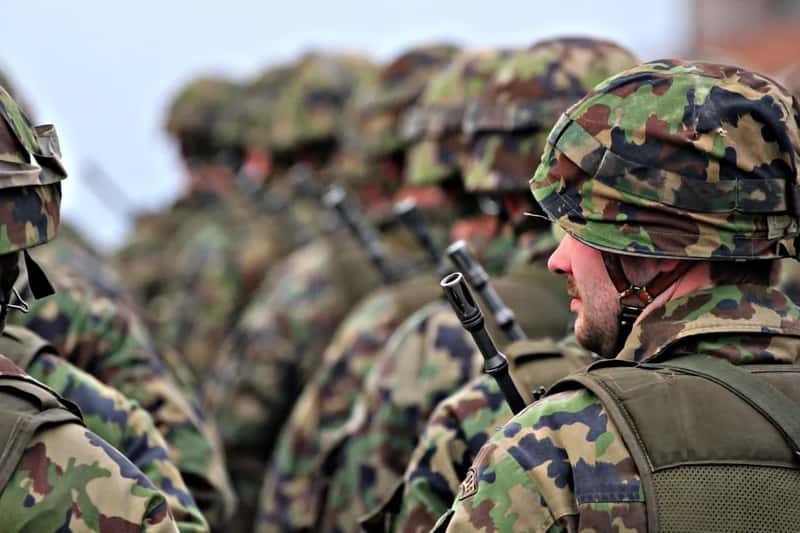
A country can look remarkably peaceful on paper while quietly carrying serious defense burdens that reflect real anxiety about its neighborhood. Denmark is a clear example. Despite ranking near the very top of global peace indexes, Denmark’s overall standing in the Peace Index is weighed down by its performance in the militarization domain, with Denmark registering the steepest decline in this subcategory in 2025, falling from 24th to 59th place.
That kind of detail rarely appears in the “top 10 safest countries” listicles that circulate online, yet it says something meaningful about how secure a government itself feels. Globally, the trend is even starker: led by Europe, global military expenditure reached a record 2.9 trillion dollars in 2025, and excluding the United States, military expenditure increased by 9.2 percent. Rising defense budgets in supposedly calm countries are a quiet signal that the world these rankings describe is shifting faster than the scores let on.
Safety often comes with a steep cost of living

There’s a practical trade-off that safety rankings almost never mention directly, and it’s one anyone actually planning to move should weigh carefully. The countries that dominate these lists, Iceland, Switzerland, Denmark, Norway, tend to combine low crime with a genuinely high cost of living, driven by strong social welfare systems and high wages.
Portugal stands out as something of an exception, which is part of why it keeps showing up on relocation shortlists. Analysts note that Portugal has experienced an economic resurgence, decreasing its unemployment rate from over 17 percent to under 7 percent, and consistently ranks among the best countries for retirement, due in no small part to its high level of safety. That combination of affordability and security is rarer than most rankings let on, which is exactly why it gets singled out so often.
A ranking can lag well behind real-time events

Composite indexes are built from data that is often a year or more old by the time it’s published, which means a country’s score can look stable even as facts on the ground move quickly. The 2026 Global Peace Index illustrates this directly.
Its own compilers acknowledge that the report includes some 2026 data, but most indicators draw on data from 2025 or earlier. Israel’s case shows how odd this can get in practice: its overall score improved by 2.6 percent, driven mostly by improvements in the militarisation domain, even as the country remained engaged in the protracted Gaza campaign, entering its third year, the June 2025 Twelve Day War with Iran, and renewed conflict with Hezbollah in early 2026, while the human costs fall largely outside the 23 indicator framework. A ranking published today can be describing a country that has already changed by the time you read it.
Final thoughts

None of this means safety rankings are worthless. Iceland really does have remarkably low crime, and the broader pattern holds up: common attributes of the world’s safest countries include high levels of wealth, social welfare, education, effective criminal justice systems, and positive government-citizen relationships. These are real, measurable strengths, not illusions.
What’s worth remembering is that a single score can never capture the full texture of life in a place, the neighborhood-level differences, the gaps in what gets reported, the risks that have nothing to do with crime at all. Treat these lists as a useful starting point rather than a final verdict, and the picture you build for yourself will end up far more accurate than any ranking alone could offer.