
Crocodiles kill hundreds of people across Africa every year. They are ambush predators, some of the most efficient killing machines on the planet, responsible for more human deaths on the continent than almost any other large animal. So when you hear that there are villages in West Africa where over a hundred full-grown crocodiles roam freely among children, share ponds with women fetching water, and have not harmed a single local in living memory – your first instinct is to assume that’s either a myth or a dramatic exaggeration. It isn’t.
These places are real. In Bazoulé, Burkina Faso – a sprawling lakeside village around 30 kilometers from the capital Ouagadougou – residents have been living in harmony with more than a hundred crocodiles that share the same village pond where children swim and bathe and women fetch water. Just over the border in Ghana, the town of Paga hosts its own collection of crocodiles living side by side with humans. The question isn’t just whether it’s true. The question is *why* – and the answer turns out to be more layered, and more human, than anyone expects.
The Village of Bazoulé: Where 150 Crocodiles Are Your Neighbors
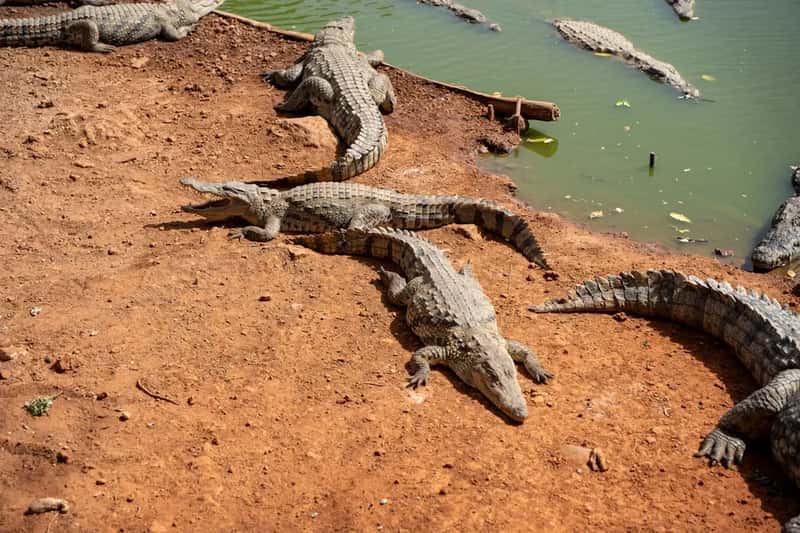
In Burkina Faso, just 30 kilometers from the capital Ouagadougou, lies the small village of Bazoulé, where its people – descendants of Mossi warriors – have chosen the *Crocodylus suchus* as their totem. The village has its own pond, where approximately 150 of these unusually docile creatures reside. This isn’t a nature reserve with fences and warning signs. It’s just a village, and the crocodiles live in it with the people.
During drier months, the crocodiles leave the pond and enter village homes to nest their eggs, yet residents tolerate their presence without driving them away. This peaceful coexistence is so established that the reptiles move freely between water and human dwellings. Despite the fearsome reputation of crocodiles, the villagers have no problem living alongside them – in fact, the Mossi boldly approach the crocodiles to play, and they even sit on and lie next to them. Outsiders who witness this for the first time almost universally describe it as one of the strangest things they have ever seen.
The Legend That Started It All – Crocodiles That Fell From the Sky
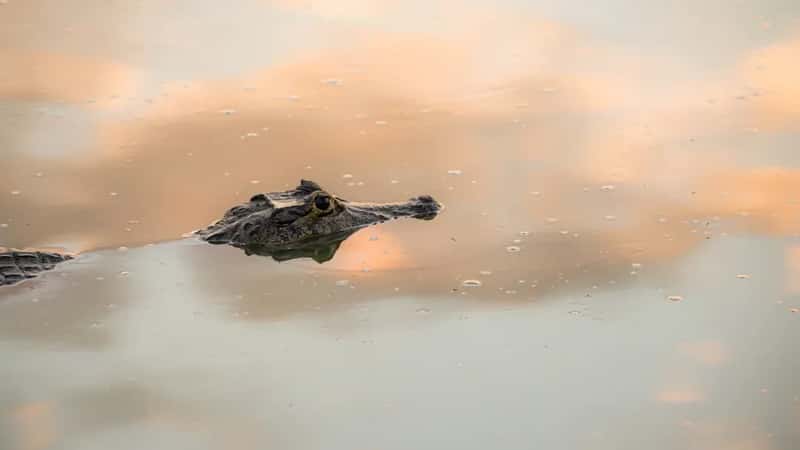
According to local legend, these extraordinary crocodiles fell from the sky with the rain some 570 years ago. The population at that time was suffering from a lack of water and had to travel ten to fifteen kilometers just to get supplies. The traces of the crocodiles revealed that these reptiles lived in burrows full of water. When women came to draw water from those burrows, the crocodiles did nothing. That moment of non-aggression became the foundation of an entire tradition.
Oral history has it that humans and reptiles used to live poles apart, until one fateful day when one of the villagers attempted to fetch water from the pond the crocodiles swam in. When the creatures did not harm them, the relationship between the villagers caring for the reptiles began, in exchange for water – which the reptiles were seen as custodians of. The people of Bazoulé believe that the crocodiles came from the sky along with the rains, and if the crocodiles disappear, the water will disappear too. Sacred and practical – the deal has held for over five centuries.
Paga, Ghana: Where Each Crocodile Holds a Human Soul
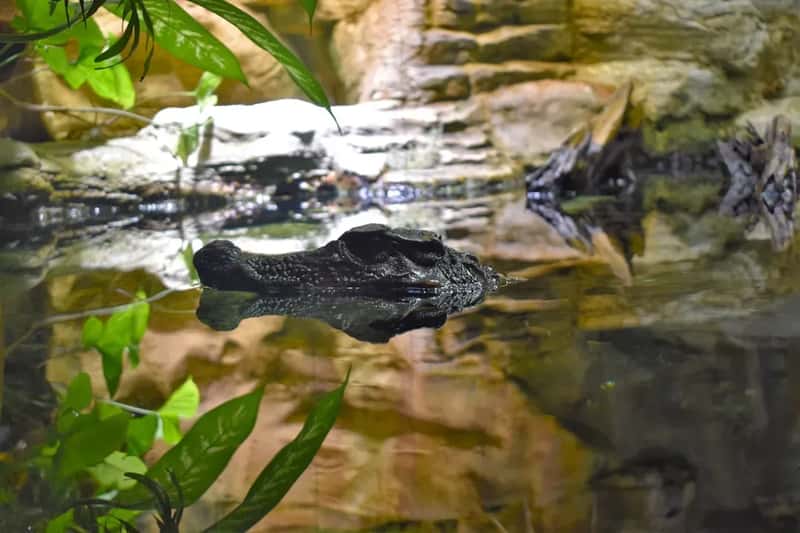
Paga Crocodile Pond is a sacred pond in the town of Paga, Kasena-Nankana West District, Upper East Region of Ghana, serving as a sanctuary for crocodiles venerated as totems embodying the souls of ancestors by the local Kassena people. The locally told origin of the pond was that a crocodile brought a dying man to the pond to drink, who – after surviving – declared the pond to be sacred and that no harm should come to the crocodiles. This legend is claimed to date back about 600 years.
The Kassena people regard the crocodiles inhabiting the pond as sacred embodiments of ancestral spirits, believing that each crocodile houses the reincarnated soul of a deceased villager. This totemic connection holds that harming a crocodile equates to harming one’s own lineage, invoking curses or misfortune upon the offender and their family. High-profile deaths in the community have even coincided with the deaths of some of the sacred crocodiles. That’s not superstition to the people of Paga. That’s history.
The Science Behind the Peace: This Is Not the Crocodile You’re Thinking Of
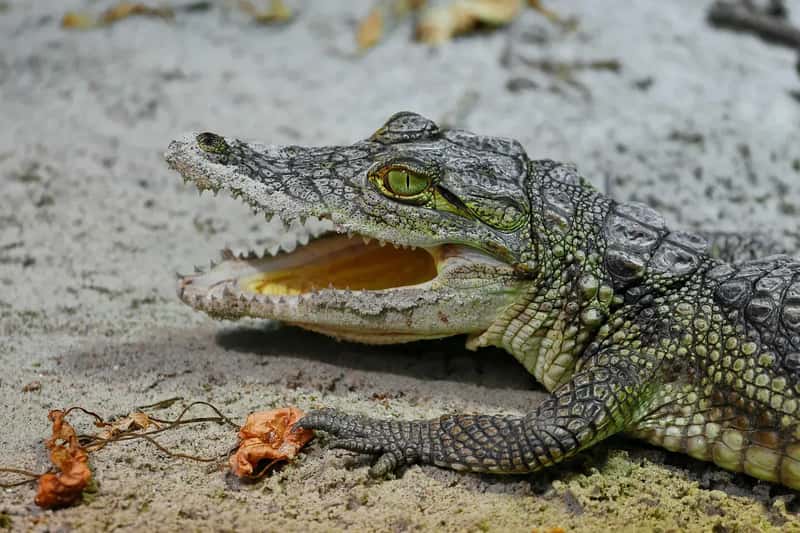
Most people picture the Nile crocodile when they think of a West African attack – a massive, explosive ambush predator responsible for hundreds of deaths annually across the continent. But the crocodiles in these villages aren’t Nile crocodiles. The West African crocodile (*Crocodylus suchus*) is a species related to, and often confused with, the larger Nile crocodile. Through genetic sequencing of living and mummified crocodiles, scientists have proven that the formidable African reptiles are actually two distinct species – *Crocodylus niloticus*, which lives up to the Nile croc’s reputation in size and aggression, and *Crocodylus suchus*, a smaller, more docile and less abundant species.
Adults of *C. suchus* typically attain lengths of 2.0–3.3 meters and weights of 70–100 kg, with exceptional individuals reaching up to 4 meters, making it smaller and generally less aggressive than its close relative, the Nile crocodile. *C. suchus* was known to be more docile than the Nile crocodile and was chosen by the ancient Egyptians for spiritual rites, including mummification. Even ancient priests figured this out – they were aware that *C. suchus* was smaller and more docile, making it easier to catch and tame. The villages of Bazoulé and Paga didn’t just get lucky. They were living alongside a species that, by nature, is far calmer than its infamous cousin.
How the Bond Is Actually Maintained – It’s Not Just Belief
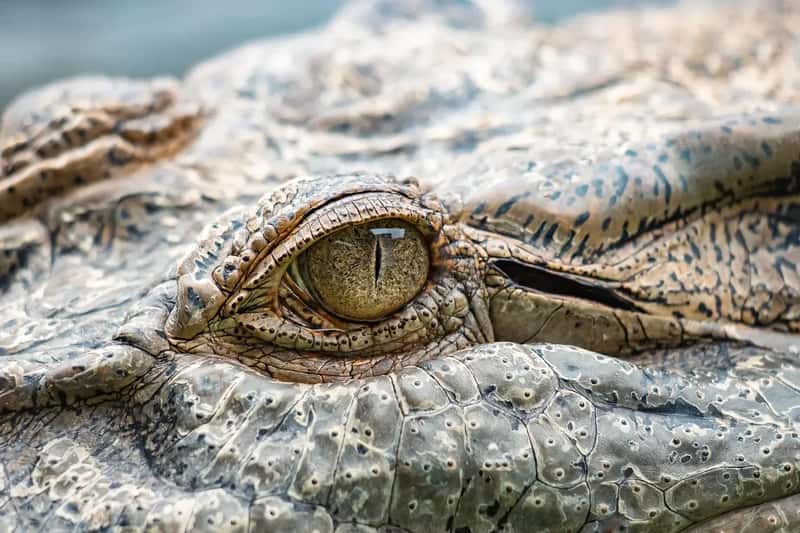
Faith alone doesn’t keep 150 crocodiles calm. The answer is in years of conditioning the crocodiles to trust the people. The local people feed the crocodiles some of their favorite food sources, such as chicken and fish, leaving them full and satisfied. Crocodiles can go up to a year without eating, so being regularly fed by the local people reduces their need to hunt. A well-fed apex predator has dramatically less reason to look at a human as a meal.
As a rule, no one is permitted to feed the reptiles with chicken from another place. It is believed that no crocodile has attacked or killed a villager for centuries, because they are fed with birds that come from the village. When children are born in the village, they are trained to respect the reptiles as part of their socialization. Generation after generation, this creates something remarkable – a community where both humans and crocodiles have been behaviorally conditioned, across centuries, to coexist. It’s less a miracle and more a long-running, multigenerational social contract.
What Happens When Someone Dies in the Pond – and the Crocodiles Respond
The most quietly stunning detail from Bazoulé isn’t that the crocodiles don’t attack. It’s what they reportedly do when a villager accidentally drowns. It is believed that in an instance where a villager drowns, the crocodile does not eat the remains but brings them out for proper burial. Whether or not one takes this claim literally, it reflects just how deeply these communities have reframed the animal – not as a predator to fear, but as a neighbor bound by shared obligations.
People even celebrate the crocodiles through a local festival called Koom Lakre, where villagers make sacrifices and honor their sacred animals. During the ceremony, they pray for continued health and prosperity. Since the original pact was made, the villagers have lived in harmony with the crocodiles – protecting, respecting, feeding, and even burying them like human beings when they die. In Paga, the parallel is even more direct: it is believed that each native of Paga has a corresponding crocodile representing their soul, and local tradition holds that there have been actual instances when deaths of important personalities in the community coincided with that of some crocodiles.
Tourists Now Sit on the Crocodiles – and the Crocodiles Let Them
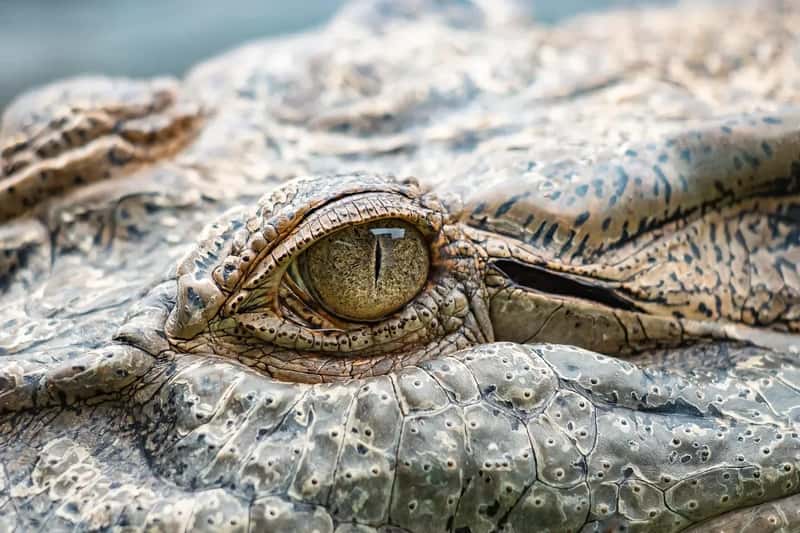
This reverence fosters a distinctive human-crocodile harmony, where locals and tourists routinely feed the animals live chickens, tap their snouts, and even sit upon them, with no recorded attacks despite close physical contact. Tourists can take photographs while holding the crocodile’s tails after a guide has fed them a chicken. That sentence would be insane applied to almost any other wild crocodile population on earth.
The crocodiles of the sacred pond in Paga are protected and reportedly as safe as any domesticated pet. The residents of Paga certainly treat them as such, regularly interacting with the 110 crocodiles in the main sanctuary, Chief’s Pond. What’s even more stunning, no one has ever been harmed by one of the crocodiles. Young children swim in the pond and Ghanaians along with tourists are invited to touch and practically play with the reptiles. At both Bazoulé and Paga, guides will eagerly lure the crocodiles out of the water with live chicken as bait, so that tourists can pat them and take pictures with them. It has become a genuine tourist draw – and a deeply disorienting one for anyone who grew up being told to run from a crocodile.
The Real Threat These Villages Now Face Has Nothing to Do With Crocodiles
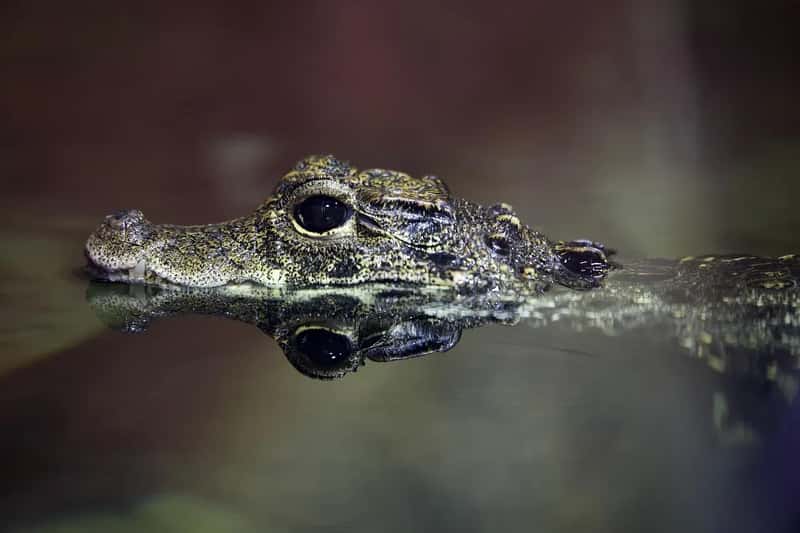
The bigger threats to these remarkable places today come from the outside world, not from within. The village of Bazoulé thrives on tourism, but in recent years, a jihadist insurgency in the area has driven away many potential visitors. The village also finds itself threatened by climate change – lower annual rainfall means the pond, which the sacred crocodiles call home, is at risk of simply evaporating. For a community whose entire spiritual framework connects the crocodiles to the water supply, a shrinking pond is an existential crisis on multiple levels.
There are concerns that Paga’s pond is now too reliant on tourism, with caretakers noting that the elderly crocodiles require specialist care, and the only time additional food is provided to the reptiles is when tourists pay for the chickens during photo sessions. In Mauritania, communities who live in close proximity to West African crocodiles hold a similar belief – that water is essential to crocodiles, and crocodiles are essential to the water, which would permanently disappear if they were not there to inhabit it. Here, too, the crocodiles live in apparent peace with the humans and are not known to attack swimmers. The same pattern runs across the region, and the same fragility applies everywhere: these relationships survived centuries because the communities around them chose, every generation, to protect them.
The Bottom Line
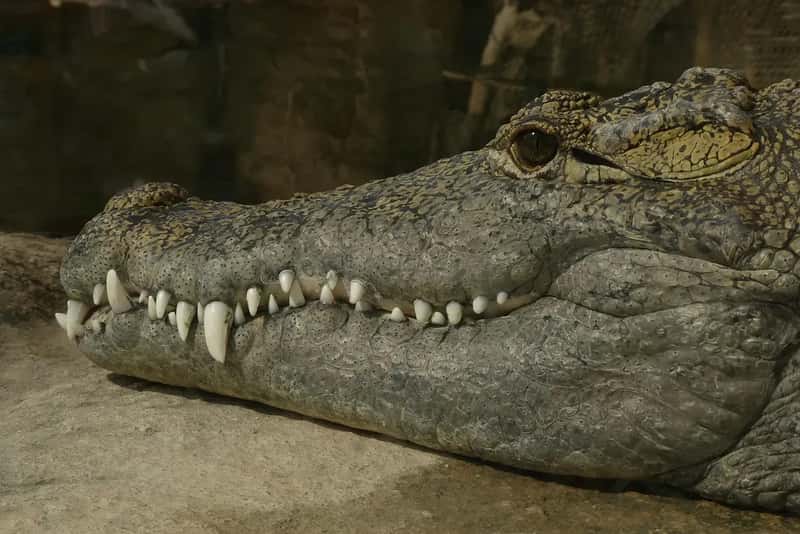
The villages of Bazoulé in Burkina Faso and Paga in Ghana aren’t folk tales. They’re real, documented communities where hundreds of people live alongside over a hundred crocodiles – sharing water, sharing land, and sharing a belief system deep enough to have conditioned both species over centuries. The science helps explain it: the West African crocodile, *Crocodylus suchus*, is genuinely more docile than its Nile cousin. But the behavioral conditioning, the feeding routines, the festival rituals, and the unbroken intergenerational respect are what turned a potentially terrifying dynamic into something extraordinary. This is what happens when a community decides an animal is family. The crocodile cooperates. What’s one place – sacred, strange, or simply jaw-dropping – that you think more people should know about? Drop it in the comments.