Most American shoppers reach for what they think are yams when planning holiday casseroles, yet the orange tubers labeled that way in mainstream supermarkets are almost always sweet potatoes instead. The two vegetables come from entirely separate plant families and offer distinct textures and flavors once cooked. This long-standing mix-up traces back to labeling practices that began decades ago and still shapes what ends up on dinner tables each fall.
A Mix-Up That Started in the Produce Aisle
The confusion stems from how U.S. markets began marketing certain sweet potato varieties. Soft, moist types with bright orange flesh were tagged “yams” to set them apart from firmer, paler varieties that had dominated earlier crops. Enslaved Africans in the Americas had already applied the familiar term to these roots because they reminded them of the staple tubers from their homelands. Over time the nickname stuck in everyday language even though botanists have always classified the two plants as unrelated. True yams belong to the Dioscorea genus and grow as underground tubers on vines native to Africa and parts of Asia. Sweet potatoes, by contrast, are storage roots from the morning glory family and trace their origins to Central and South America. The Library of Congress notes that the plants share no close botanical ties, which explains why their growth habits, skin textures, and cooking qualities differ so sharply.
Key Differences Shoppers Can See and Feel
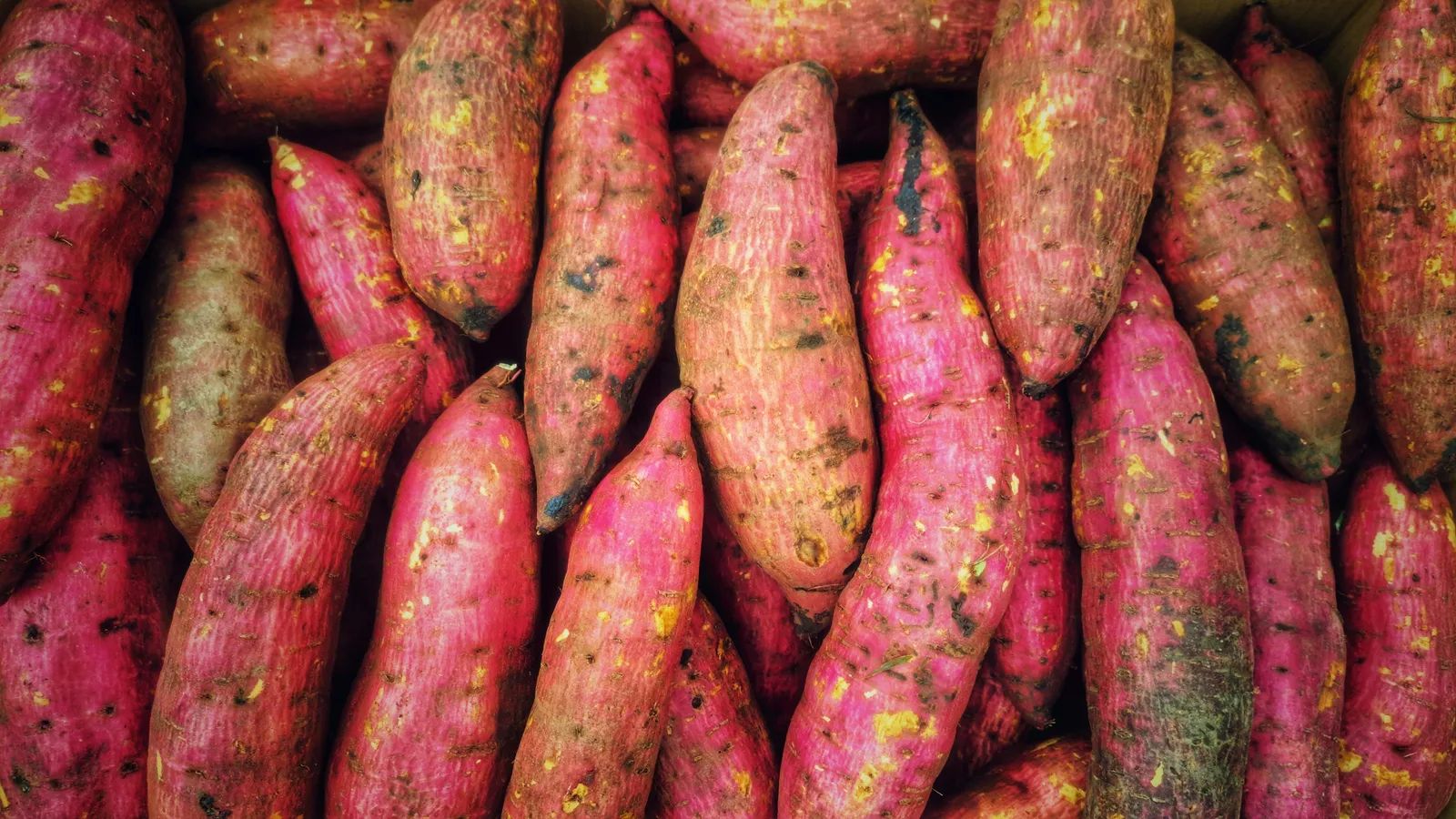
A quick visual and tactile check usually reveals which vegetable sits in the bin. Sweet potatoes typically show thin, smooth skin in shades of white, red, purple, or brown, with tapered ends and a relatively compact shape. Market “yams,” when they are actually sweet potatoes, share those same traits. Genuine yams present tougher, scaly skin that resists peeling and often appear more cylindrical, sometimes reaching several feet in length. Once cooked, the contrast becomes even clearer. Soft sweet potato varieties turn moist and sweet, making them ideal for pies and casseroles. Firmer types stay drier and crumbly. True yams tend to remain starchier and less sweet regardless of preparation method. These traits hold across most common varieties, though individual specimens can vary slightly by growing conditions.
| Feature | Sweet Potato | True Yam |
|---|---|---|
| Plant family | Morning glory | Dioscorea |
| Skin | Thin, smooth | Tough, scaly |
| Flesh when cooked | Moist and sweet (soft types) | Starchy and dry |
| Common U.S. label | Often called “yam” | Rare in mainstream stores |
Choosing the Right One for Holiday Recipes
Recipes that call for “candied yams” or sweet potato casseroles almost always intend the soft orange sweet potato varieties such as Garnet or Jewel. These deliver the familiar moist texture and natural sweetness that define many Thanksgiving sides. Substituting a true yam would produce a noticeably drier, less sweet result that changes the dish. When a recipe specifically names true yams, usually in the context of African or Caribbean cuisine, shoppers should seek the exact variety listed rather than defaulting to supermarket sweet potatoes. International or specialty markets are the most reliable sources for authentic yams. Checking the ingredient list on canned products labeled “yams” also helps, since the first item is frequently sweet potato.
Why the Distinction Still Matters
Understanding the difference prevents last-minute surprises at the stove and respects the cultural origins of each vegetable. Sweet potatoes remain widely available and versatile for American holiday cooking. True yams, though less common, bring their own distinct character to dishes that call for them. Both provide valuable nutrition, including vitamin A, potassium, and fiber, though exact amounts depend on the specific variety and preparation. The next time the produce section presents a bin of orange roots marked “yams,” the label is more marketing shorthand than botanical fact. Selecting the right tuber ensures the finished dish matches expectations and honors the long history behind the names.