Picture yourself staring at a car dealership price tag that reads nearly two hundred thousand dollars for a basic sedan. Your heart might stop for a moment, wondering if there’s been some horrible mistake. Welcome to the reality of car ownership in several countries around the world, where the simple act of buying and maintaining a vehicle can cost more than most people’s homes. When someone mentions a Toyota Corolla costing nearly $200,000, that’s not just COE inflating the price.
Singapore: Where a Certificate Costs More Than the Car

Singapore has created perhaps the most ingenious system for making car ownership astronomically expensive through their Certificate of Entitlement program. In Singapore, buying a car is not just about paying for the vehicle itself, you also need a Certificate of Entitlement (COE), which is the right to own a vehicle that can be used on the road for 10 years.. COE prices have reached as high as $146,002. Think about that for a moment: before you even consider the actual price of your car, you’re already paying what could buy you a luxury vehicle in most other countries.
The financial pressure doesn’t end there. As of 2025, even the most affordable new models cost well above S$100,000, primarily due to high taxes and the Certificate of Entitlement (COE) fees. In fact, industry research in 2025 could not find any brand-new car priced below S$140,000. The system was designed to control traffic congestion, but it has essentially transformed car ownership into a luxury reserved for the wealthy elite.
In recent bidding exercises, Category B COE prices have reached levels around $116,890, marking a 3.4% increase from the previous $113,000 tender. These fluctuating prices create additional uncertainty for buyers who never know exactly how much their car will cost until the bidding closes.
Denmark: The Bicycle Nation’s Car Tax Punishment
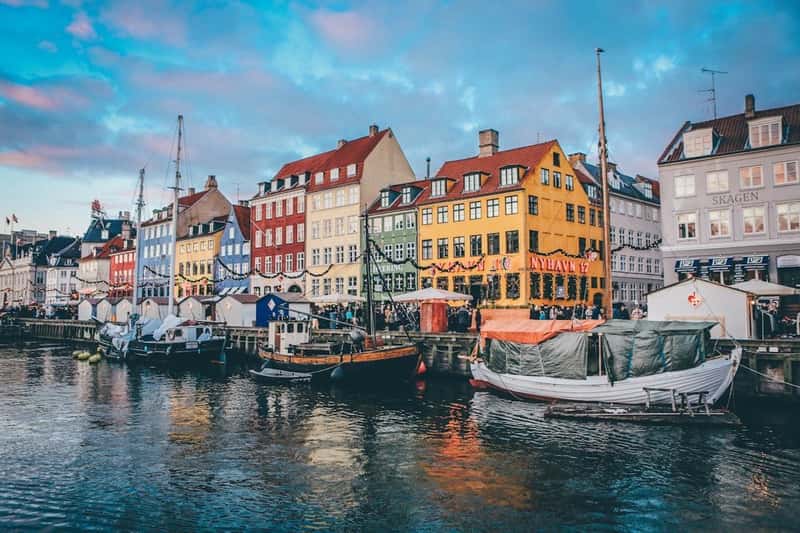
Buying a car in Denmark comes with a 150% registration tax, meaning you pay more than double the car’s value just in taxes. Add expensive fuel and maintenance, and the annual cost of keeping a car can exceed $7,500. Imagine walking into a dealership, seeing a car priced at thirty thousand dollars, and being told you’ll actually pay seventy-five thousand because of taxes alone.
The Danish government has systematically increased vehicle taxation to discourage car ownership. The Danes who drive have an average annual cost of AUD$12,476 to run a car, and an average fuel cost of $3.59 per litre, both of which were the most expensive of all 26 countries analysed. These astronomical costs help explain why cycling has become such an integral part of Danish culture.
The cycling paradise of Denmark was deemed the world’s most expensive country for car ownership on the basis of it having the highest average depreciation at $US1809 (A$2876), the third-highest tax and rego costs at $US355 (A$564) and the highest average fuel spendage at $US2892 (A$4,598). “On top of all that, Denmark had the second-highest fuel price per litre on the date the data was gathered,” researchers concluded.
Norway: Oil-Rich Country Discourages Driving

Norway presents one of the most fascinating contradictions in automotive policy. Despite being an oil-rich country, Norway discourages petrol and diesel cars with high taxes and one of the world’s most expensive toll fees. The annual cost of car ownership is around $6,000, pushing many Norwegians to switch to electric vehicles, which come with tax breaks and incentives. The irony of an oil-producing nation making gasoline cars prohibitively expensive isn’t lost on anyone.
The Norwegian tax system creates a dramatic split between electric and conventional vehicles. In Norway, the registration tax is CO2-differentiated and convex like in Denmark, but not nearly so stiff. Other than the VAT, no taxes are value based. BEVs are exempt (as of 2018), not only of all (re)registration and ownership taxes, but also VAT, road toll, ferry fares, and parking fees.
Taking third in the unenviable podium for most expensive countries for car ownership is Norway – the second Scandinavian country after Denmark. Norway had the third-highest annual running cost of AUD$9,856, the fourth-highest average fuel price at $3.16 per litre, and one of the highest licensing cost at $246. This aggressive taxation strategy has successfully transformed Norway into a global leader in electric vehicle adoption.
Netherlands: Taxing by Weight and Emissions

The Netherlands has developed a sophisticated multi-layered approach to making car ownership expensive. They range from <10% of the cost of the underlying vehicle in the US, through to 150% in Norway, and can also be well above 100% in other Northern European countries such as Netherlands, Denmark and France. This data-file quantifies vehicle taxes by country, which turns out to be a complex calculation, with sliding-scale formulae linked to vehicles' tailpipe CO2 emissions (Norway, Netherlands, France, Denmark, UK, Germany), weight (Norway, France, Australia, Japan), value (all geographies, but especially Denmark) and engine power (Italy, France, Japan, Germany).
Recent tax changes have made the financial burden even heavier. From 2025, BEVs lose full road tax exemption, now 75% discounted (30% from 2026). PHEVs with CO2 emissions below 50 g/km have had their discount reduced from 50% to 25% in 2025 and in 2026 there will no longer be a discount for PHEVs. Registration tax exemption also removed. The Dutch system exemplifies how governments can incrementally increase costs while maintaining the appearance of supporting cleaner vehicles.
The average annual running cost was AUD$8,474, which wasn’t the most expensive running cost overall, but still fairly high in comparison to other countries. Our index also ranked countries based on the cost of fuel and licensing, and the Netherlands had the second-most expensive fuel price and the most expensive cost of licensing, contributing to its rank as the second-most expensive nation in the index. The biggest increases in costs since 2024 were for annual average fuel spending, which rose $253, followed by depreciation with a $184 increase, and a $137 increase to car insurance costs.
Ireland: Hidden Costs Add Up Quickly

Owning a car in Ireland is not just about buying the vehicle, you also have to deal with insurance that can cost over $1,000 per year, fuel expenses exceeding $2,300 annually, and registration fees. With public transport widely available, many choose to avoid the hassle and ,expense. The Irish system demonstrates how multiple smaller costs can accumulate into a substantial financial burden.
Insurance costs in Ireland represent one of the highest expenses for car owners globally. The combination of high insurance premiums, elevated fuel costs, and various registration and licensing fees creates a perfect storm of automotive expenses that price out many potential car owners.
Unlike some countries that rely primarily on purchase taxes, Ireland spreads the financial pain across all aspects of car ownership. This approach means that even if you can afford to buy a car, the ongoing costs might force you to reconsider whether owning one makes financial sense.
These five countries have transformed car ownership from a convenience into a luxury purchase that requires serious financial planning. In the average country globally, taxes add c35% onto the pre-tax purchase price of an ICE vehicle. However, the range is wide, varying from <10% in many US States, to >100% in France, Denmark, Netherlands and of course Norway, which reaches 150%. Whether through massive upfront certificates, crushing registration taxes, or accumulated ongoing expenses, these nations have proven that governments possess remarkable creativity when it comes to making cars unaffordable.