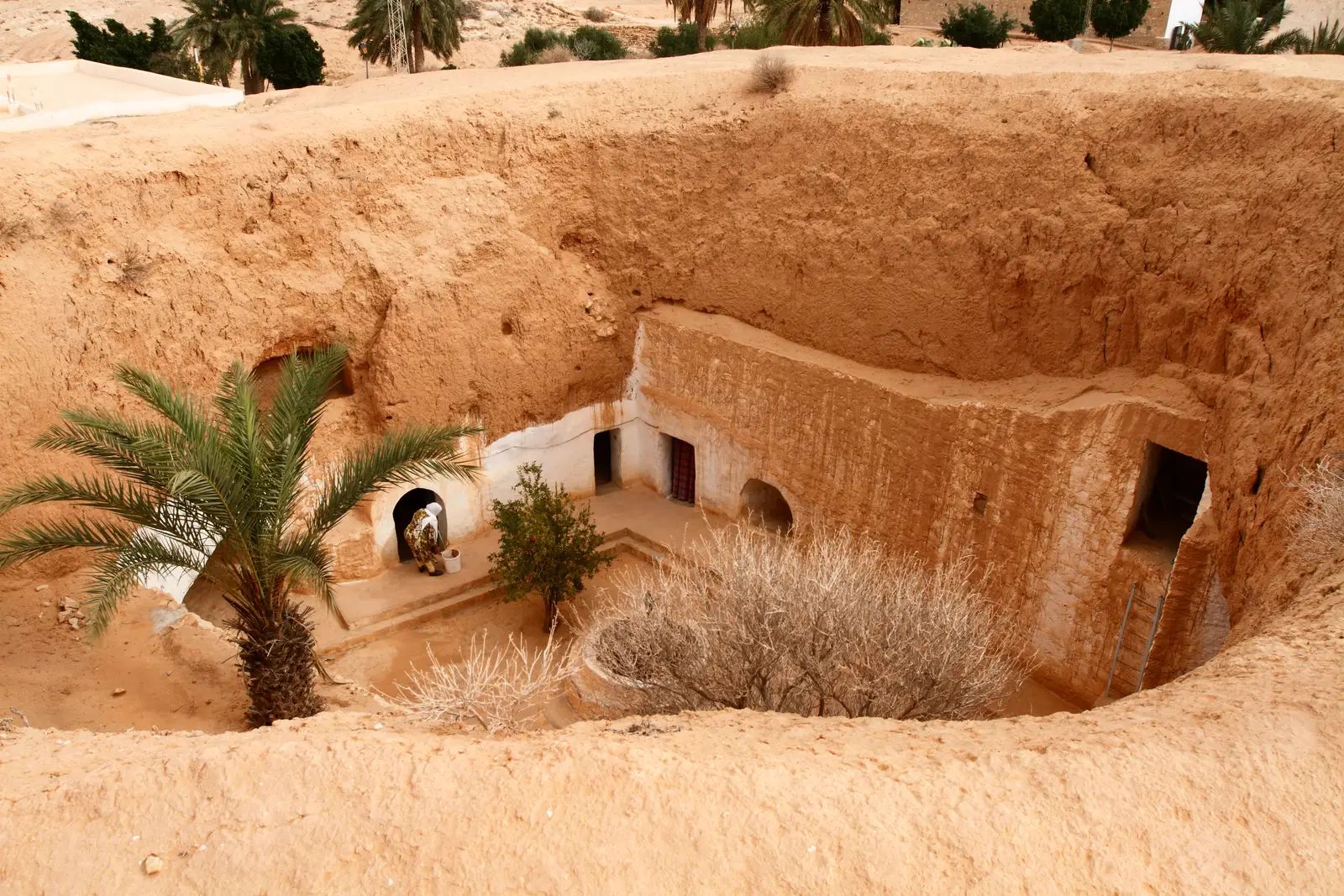
You reach Matmata on a road that climbs gently between rounded, almost bare hills. Then you start to notice craters, circular holes in the ground with openings cut into the inner walls.[1] From the passenger seat, it looks like a landscape pocked by something that fell from the sky.
What looks like a crater field is actually a village. These pits are houses, and the story of how they came to be says a lot about heat, floods, film sets and the families who stayed. The sections below walk through it one frame at a time.
Craters That Turn Out to Be Courtyards
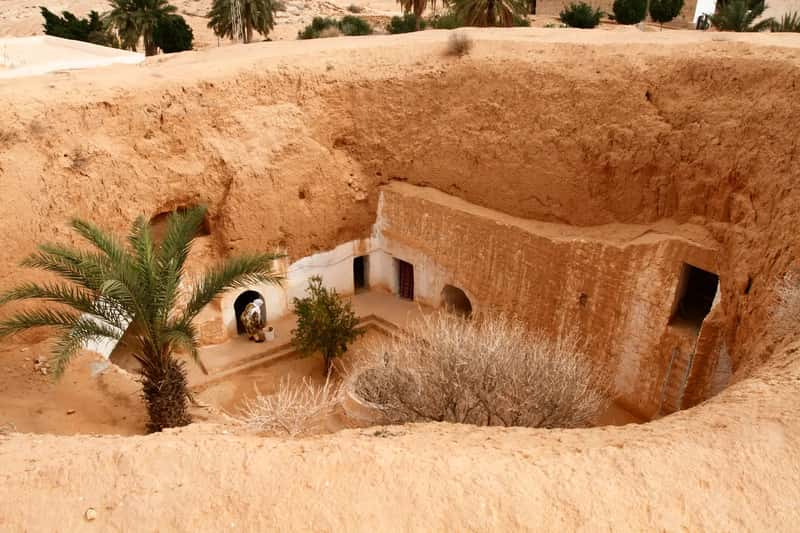
Matmata is in the Gabès Governorate of southern Tunisia. The homes are dug several metres below ground level around open air courtyards, and Berber families of the region have lived in them for centuries.[1] The name comes from a Berber tribe, which gave its name to the village.[2]
From above, the place can look nearly empty. You see a few mounds and some low walls, until you notice the pits opening in the earth like dry wells.[3] The living space is below, which is why a first visit tends to feel like a small optical illusion.
How a Pit House Gets Built
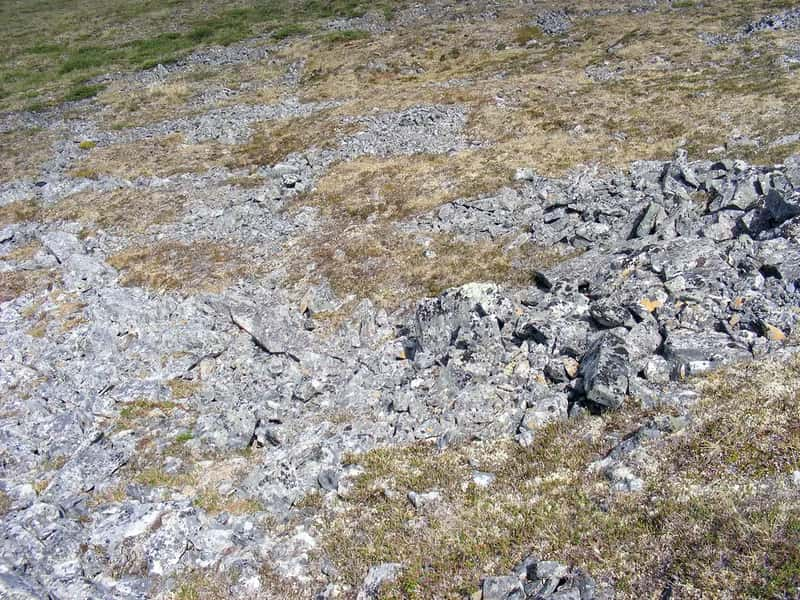
The method is simple to describe and hard to do. Builders first excavated a large, deep pit to form an open air courtyard. Then they carved rooms into the earth around its sides for sleeping, living and storage.[4] The ground itself is the building material.
Sizes vary from house to house. A Tunisian researcher interviewed by IGNANT described courtyards that are between five and ten meters deep, with diameters of seven to fifteen meters.[5] Some larger homes contain several courtyards linked by underground passages, and a sloping tunnel connects the house to the outside world.[4]
Why Dig Down Instead of Building Up
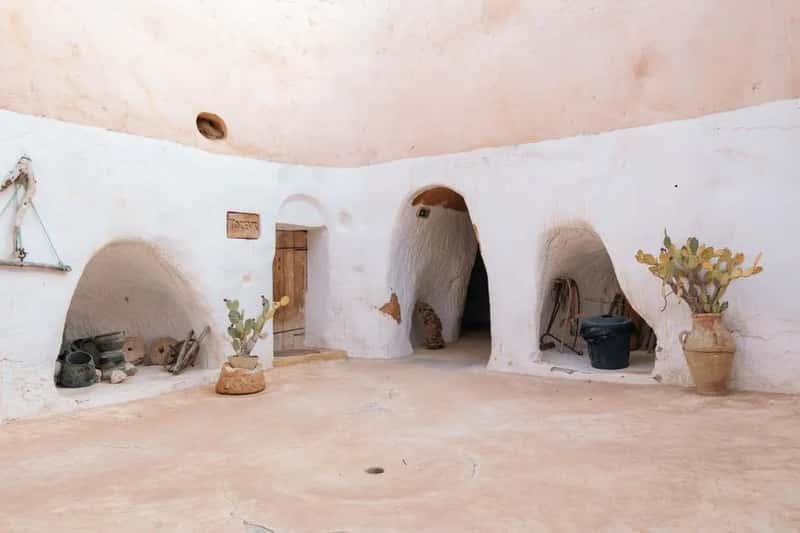
The reasoning is mostly about climate. Summers in this part of North Africa are blisteringly hot, and winter nights can be freezing.[4] Building timber is also scarce, so the ground becomes the architecture.[3]
Underground rooms stay steadier than the air above them. One travel guide reports that temperatures below stay around 18 to 20 degrees Celsius year round, even when the surface reaches 45 degrees in summer.[6] That figure comes from a tourism source rather than a measured study, but it matches the general logic of several metres of soft rock insulating each room on every side.[3]
Inside the Tunnels and Rooms
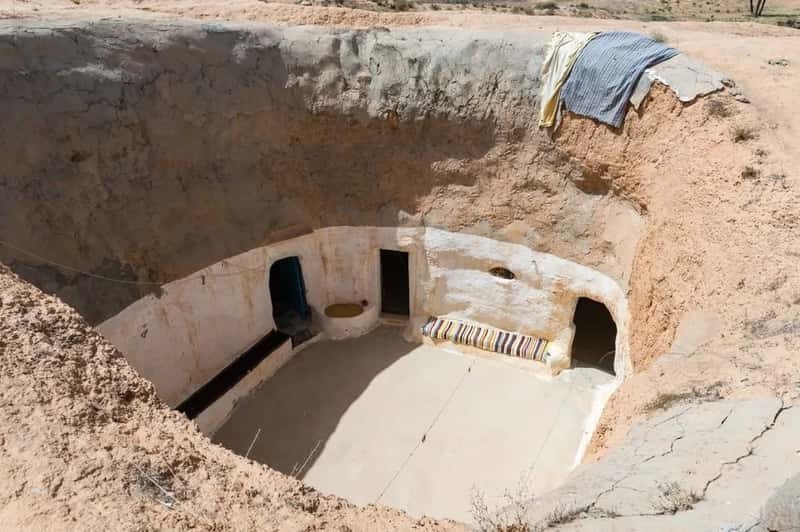
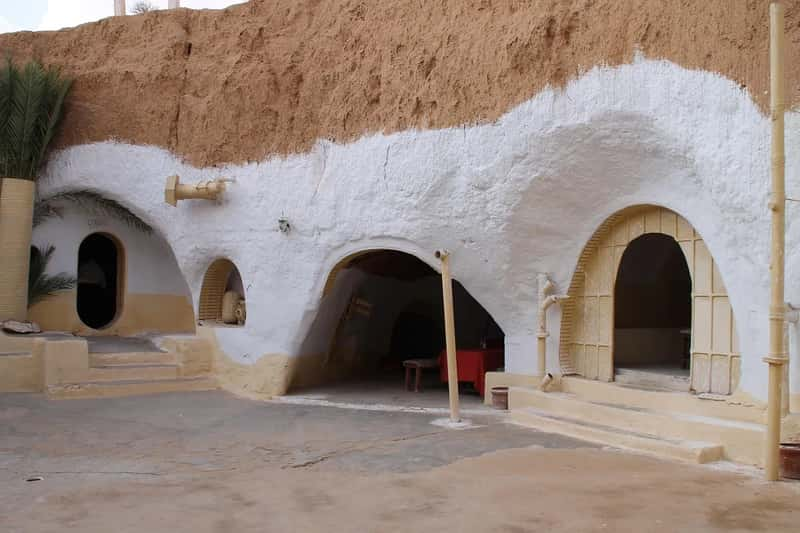
Step through the entrance tunnel and the pit becomes a shared outdoor room. Horizontal tunnels lead off to living rooms, sleeping chambers, storerooms and stables, while the pit supplies light and ventilation.[7] Think of it as a house turned inside out, with the courtyard in the middle instead of a garden at the back.
These are not rough caves. Many pit houses have several storeys cut into the rock, linked by tunnels and staircases. Some complexes join two or three courtyards, so a growing household can expand without breaking the surface.[3]
The Floods That Changed Matmata
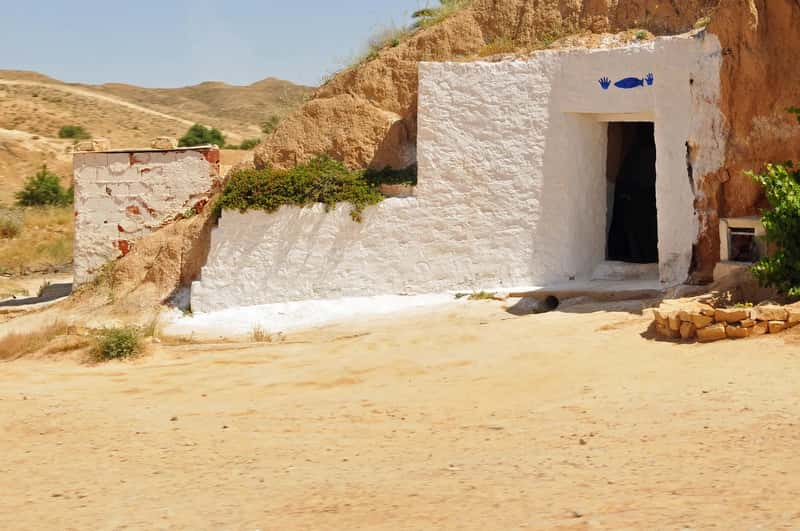
The design has one weak point, and it is water. The homes are durable if built correctly, though they are susceptible to weather damage, particularly heavy rain.[8] In 1969 that risk became real.
Heavy rainfall damaged and destroyed many underground homes as water poured into their open courtyards.[4] That led to the creation of ground level New Matmata. Many former troglodyte residents moved into the conventional houses, while others restored their old homes and kept living underground.[4]
Who Still Lives There in 2026
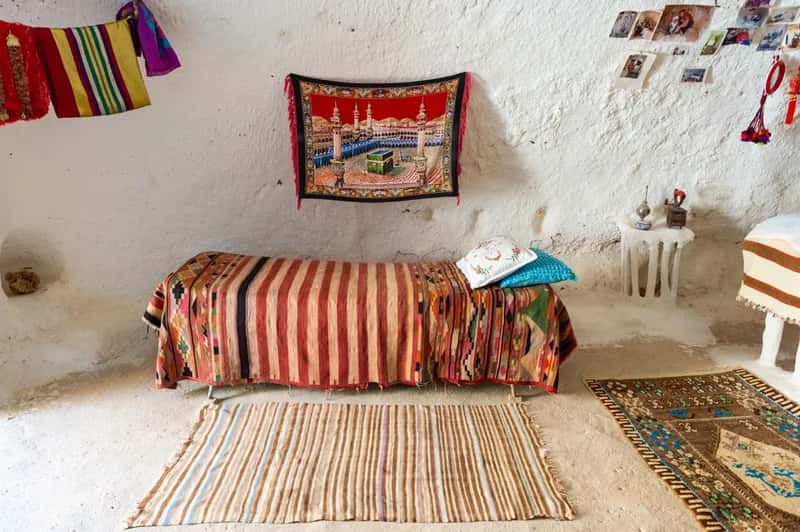
The honest answer is some people, but not everyone. One 2026 guide says most of Matmata’s residents now live in the modern village built above ground in the 1960s and 70s.[7] Another describes several hundred people still living in the underground houses of old Matmata, in a working village where residents and tourism exist side by side.[1]
Tourism Tunisia sums up the present as a mix of inhabited, abandoned and tourism adapted dwellings.[4] A 2025 traveler wrote that most of the underground homes appeared to be abandoned, although some seemed to be used to store livestock.[9] I couldn’t find a recent official count, so treat any precise number with caution.
The Star Wars Connection
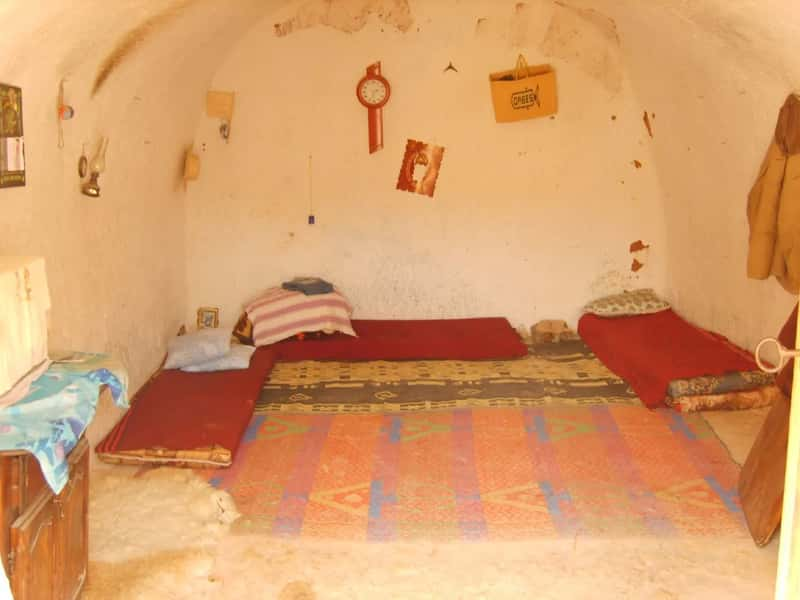
Many visitors first hear of Matmata through a film. George Lucas visited Djerba, was impressed by the desert landscape and unusual architecture, and chose Tunisia for his desert planet.[10] Filming in Tunisia began on March 22, 1976.[10]
Hotel Sidi Driss became Luke Skywalker’s family home on screen. It served as the Lars homestead, with the exterior filmed about 300 kilometers west, on Chott el Jerid.[11] The order of events matters here, because these are genuine, historic Amazigh dwellings, not structures built as accommodation for Star Wars fans.[4] The hotel itself was established in 1968 and consists of five interconnected pit dwellings.[12]
Visiting a Real Pit Home
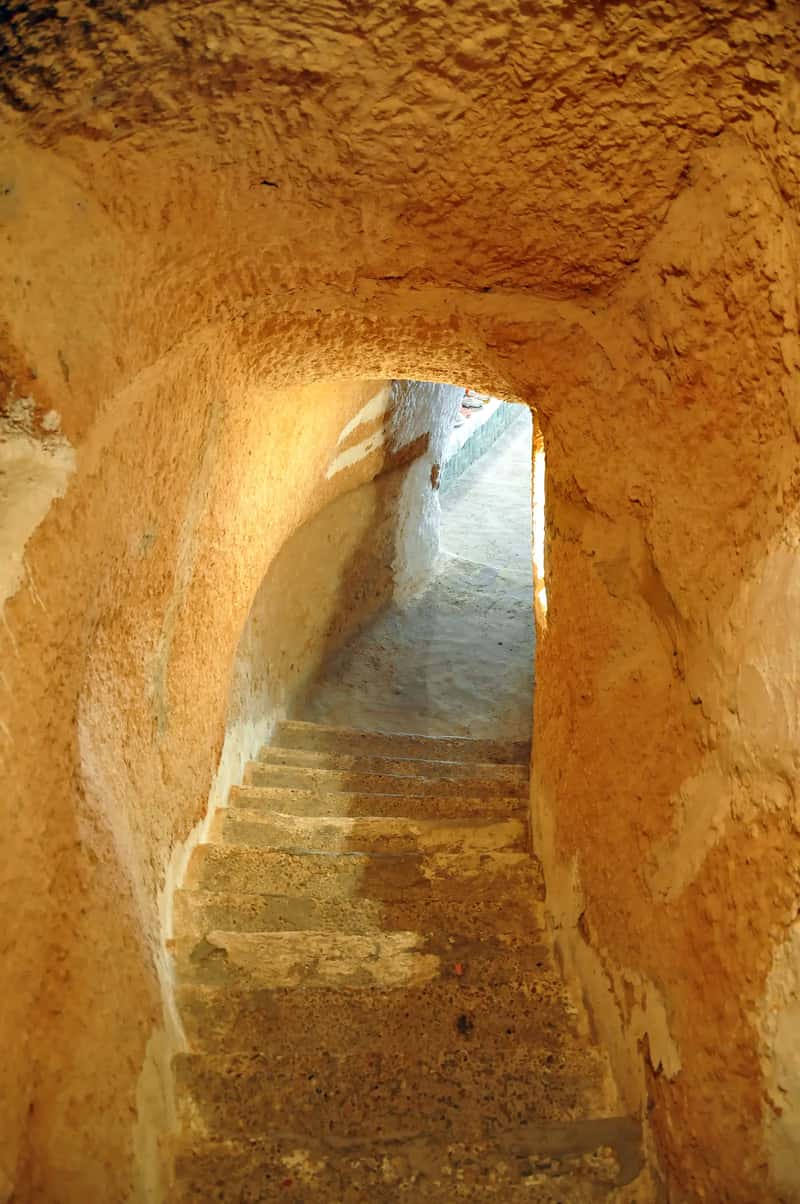
Several families open their homes to travelers. Entry fees are typically 5 to 8 Tunisian dinars per person as of 2026.[7] At the Maison Traditionnelle, a resident family demonstrates traditional weaving, olive pressing and Berber decoration techniques.[7]
Timing helps. Spring and autumn give the best conditions, since summer is very hot above ground even though the houses stay cool inside.[1] If you’re coming from the coast, a shared taxi from Gabès to Matmata takes about 40 minutes.[13] Prices change, so check locally before you go.
Cave Villages Beyond Matmata
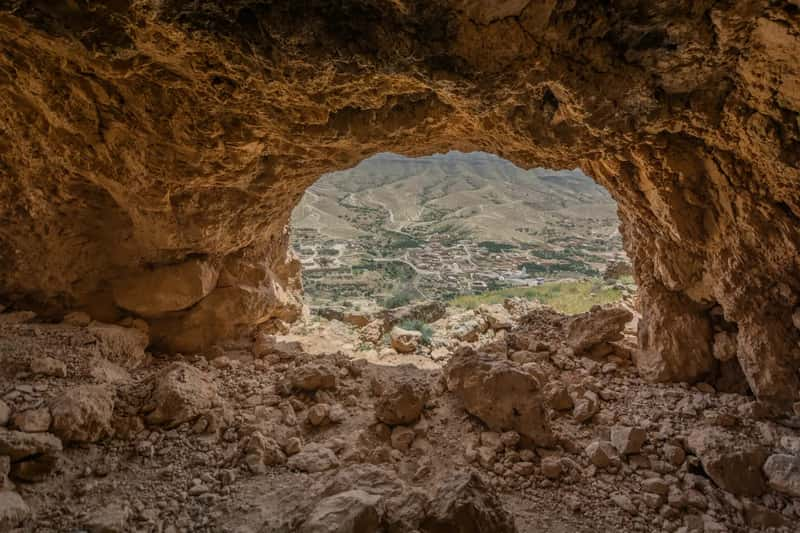
Matmata isn’t the only place where Tunisians built into the earth. Further south, in the Tataouine region, Chenini sits 18 kilometers from Tataouine and is one of the Berber troglodyte villages the south is known for.[14] It was built high up to protect residents from raids, and its homes and storage rooms are carved into the rock face.[15]
Douiret has a similar story with a different arrangement. The old village is made of troglodyte dwellings dug into the hills, and a new village sits on the hillside. The old dwellings are called ghiren, and each bears the family name of its owner.[16] Residents left over time, starting in 1970 according to one local account.[17]
Tourism, Heritage and the Trade Offs

Fame has helped and complicated things. Star Wars brought a surge of visitors and economic benefits, though it has also raised concerns about authenticity and cultural integrity.[18] Souvenir shops, cafes and tour operators now cater to those visitors.[18]
Some homes have found a second life. Several underground houses have been converted into museums and guesthouses.[4] In Douiret, a local association formed to preserve the old village and helped open a restored guesthouse in 2002.[17] Matmata is not a UNESCO World Heritage Site[19], so its protection depends largely on its residents and its visitors.
Final Thoughts
The craters of Matmata are less strange once you know what they answer to. Heat, scarce timber and soft rock pushed builders downward, and a flood in 1969 pushed many families back up again. What remains is a village that is partly lived in, partly abandoned and partly staged for visitors.
If you go, treat the pits as what they are, someone’s home first and an attraction second. That small shift in attitude changes how the whole place looks.