Ask most people to picture a pyramid and they’ll describe Giza: the flat desert, the tour buses, the crowds jostling for a photo with a camel in the background. Yet a few hundred miles south, across the border in Sudan, a much larger collection of ancient pyramids rises from the sand with barely a soul in sight. It’s one of those quiet facts that upends a common assumption, and once you know it, Egypt’s monopoly on pyramid imagery starts to look a little incomplete.
Sudan actually outnumbers Egypt in pyramids
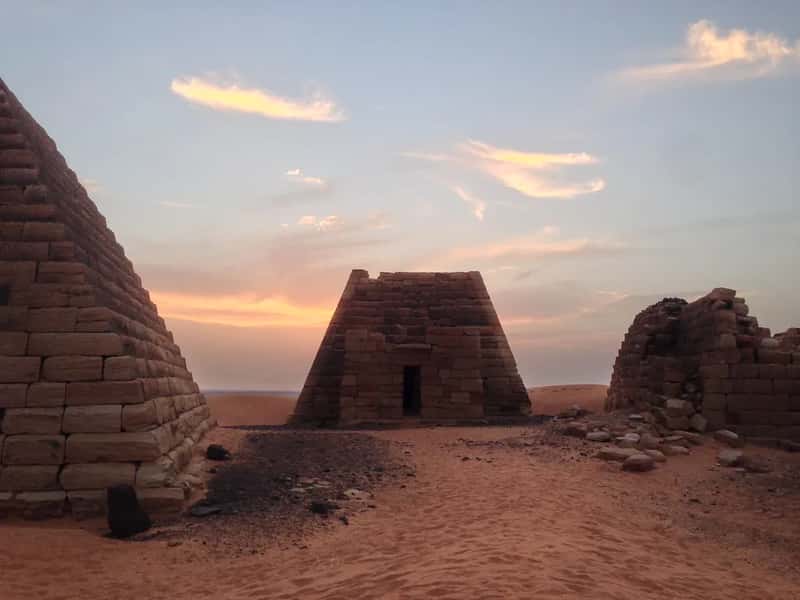
The Nubian pyramids of Sudan outnumber the Egyptian pyramids by more than two to one, and most people who have heard of the pyramids of Giza have not heard of the pyramids of Meroë, Nuri, El-Kurru, or Jebel Barkal.[1] Estimates vary depending on how ruined or buried structures are counted, but most sources put the Sudanese total somewhere between two hundred and two hundred fifty five, against roughly one hundred to one hundred forty in Egypt.
The sheer number of Nubian pyramids, two hundred fifty five compared to Egypt’s one hundred eighteen, speaks to several factors.[2] Kushite pyramid building lasted over a millennium, whilst Egyptian construction largely ceased by 1802 BC.[2] That single detail explains a lot: Sudan simply had far more centuries to keep building.
The Kingdom of Kush and its black pharaohs
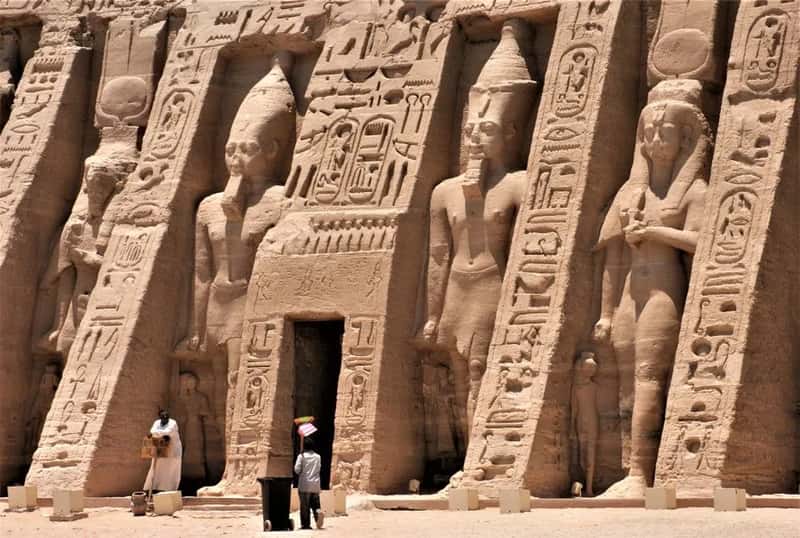
These structures are the legacy of the Kingdom of Kush, a Nubian civilization that grew up along the Nile just south of Egypt and eventually became powerful enough to rule its northern neighbor outright. Taharqa was one of the Black Pharaohs, a line of Kushite kings who ruled Egypt from approximately 760 to 650 BC, conquering the country from the south during a period of political fragmentation.[1] It’s a detail that rarely makes it into popular retellings of ancient Egyptian history, even though it’s well documented.
Kush was not a fringe kingdom borrowing Egyptian ideas out of admiration alone. It controlled trade routes, iron production, and fertile land along the Nile, and it used pyramid building as a direct statement of continuity with the pharaonic tradition it had absorbed. The result was a distinct, long-lived architectural style that outlasted the political dominance that first inspired it.
Nubian pyramids look nothing like Giza
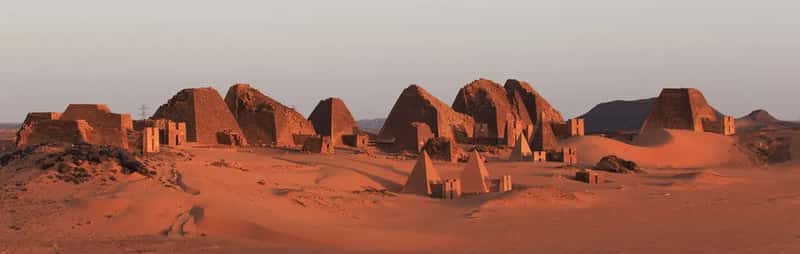
Anyone expecting a scaled-down Giza will be surprised by what they find in Sudan. The Sudanese structures are typically 20 to 90 feet on a side, compared with the 756-foot base of the Great Pyramid of Giza, and the sides slope more steeply, at roughly 70 degrees rather than the 52 degrees of Khufu’s pyramid, giving the Nubian structures their characteristic narrow, almost obelisk-like profile.[1]
They are built primarily of red Nubian sandstone rather than the white limestone of Giza, which lends them a darker, warmer colour against the desert.[1] Seen from a distance at sunrise or sunset, that reddish stone against pale sand gives the sites a completely different visual character than anything in Egypt.
Meroë holds the largest single cluster
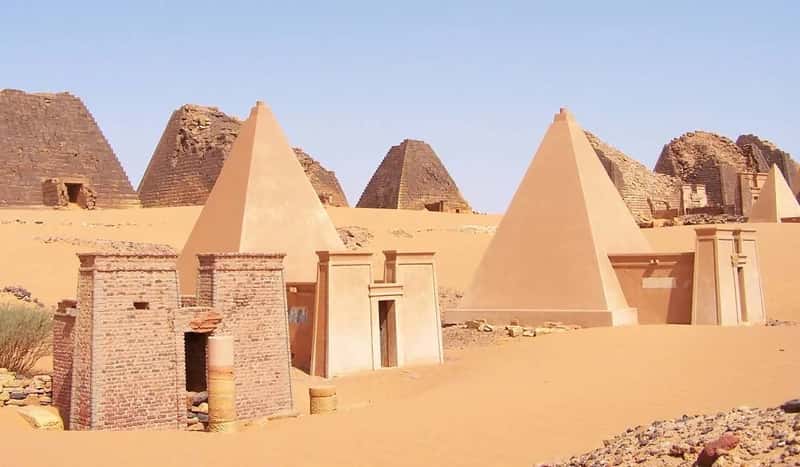
Of all the Nubian sites, Meroë is the one most people mean when they talk about Sudan’s pyramids. Meroë alone contains roughly 100 pyramids, making it the largest single concentration, and the site is a UNESCO World Heritage location, designated in 2011, and is the most-photographed of the Sudanese pyramid fields.[1]
The main site is the northern cemetery, which was used by the royal family from around 300 BC to 350 AD, and its location on a small hill elevates it above the desert and makes it truly spectacular.[3] Standing among those steep, narrow towers with nothing else on the horizon is a very different experience from the managed, ticketed approach visitors take at Giza.
Headstones, not burial chambers
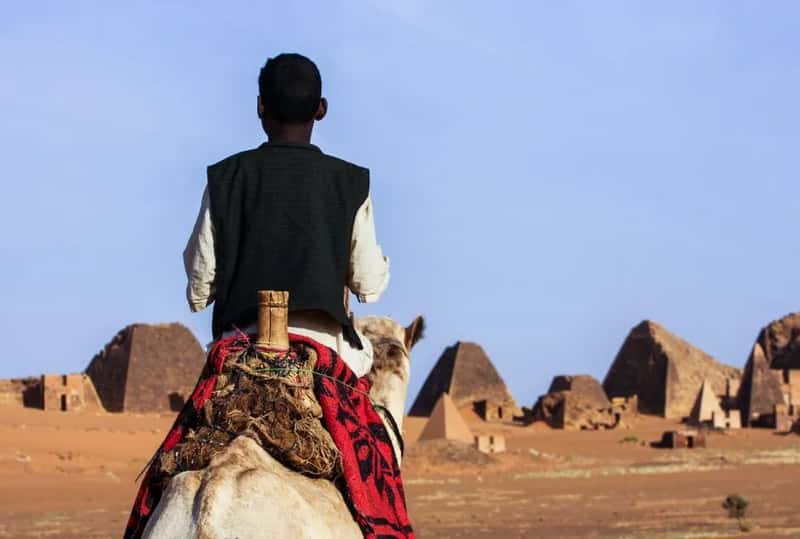
One detail that surprises many visitors is that Nubian pyramids didn’t function the same way Egyptian ones did. Nubian pyramids, unlike Ancient Egyptian pyramids, were built as headstones rather than tombs.[4] The actual burial chambers sat beneath the structure, with the pyramid itself acting more as a monument marking the grave than as the tomb complex itself.
This distinction matters because it partly explains why so many more pyramids could be built here relative to their size. A headstone-style structure requires far less material and labor than a full burial monument, which made large-scale pyramid building sustainable across an entire ruling class rather than just a handful of monarchs.
A history of looting that scarred the sites
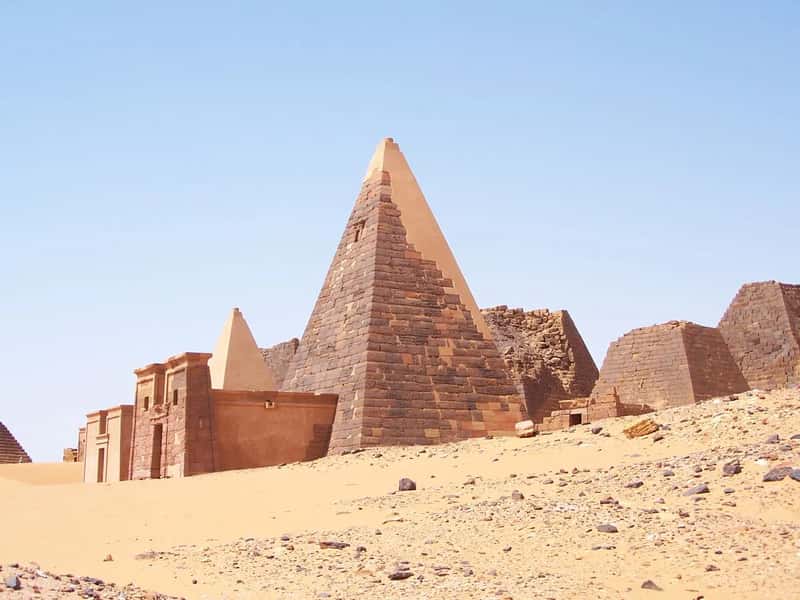
Sudan’s pyramids haven’t survived the centuries untouched, and one episode in particular left a lasting mark. In the 1830s, an Italian treasure hunter called Giuseppe Ferlini destroyed more than 40 Meroë pyramids in the hope of unearthing[4] gold and other valuables believed to be buried inside. He wasn’t acting alone in spirit, either, since almost all the Nubian pyramids have been plundered by tomb raiders looking for treasure, sadly causing significant damage to these sites over the years.[5]
Some of the damaged pyramids have since been partially restored, while others remain visibly truncated, their pointed tops missing entirely. It’s a stark reminder that neglect and looting, rather than time and weather alone, are responsible for much of the condition these sites are in today.
UNESCO recognition came surprisingly late
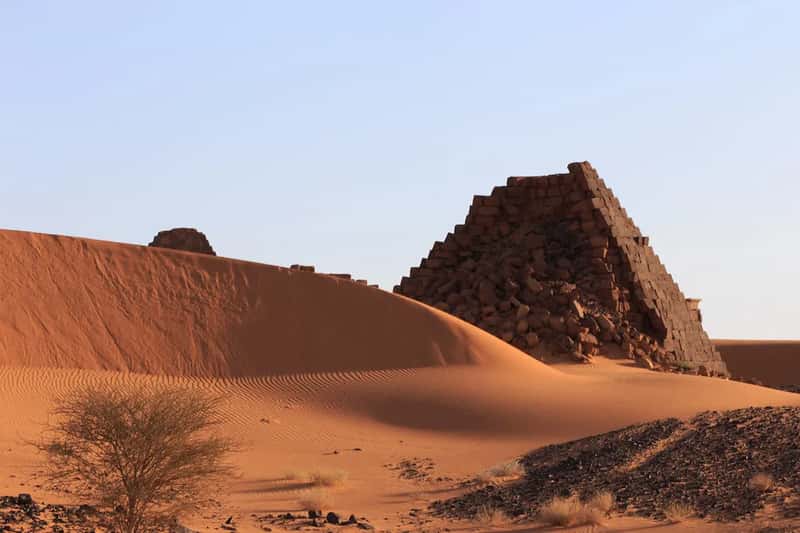
Given the scale and age of the Meroë complex, it’s striking how recently international heritage bodies formally recognized it. The site is a UNESCO World Heritage location, designated in 2011.[1] That’s decades after many far smaller archaeological sites around the world received similar status.
The recognition brought some attention and modest funding, but it never translated into the kind of tourism infrastructure that UNESCO status tends to generate elsewhere. Sudan’s ongoing instability meant the designation arrived just as the country’s ability to capitalize on it was already limited.
Decades of conflict emptied the sites of visitors
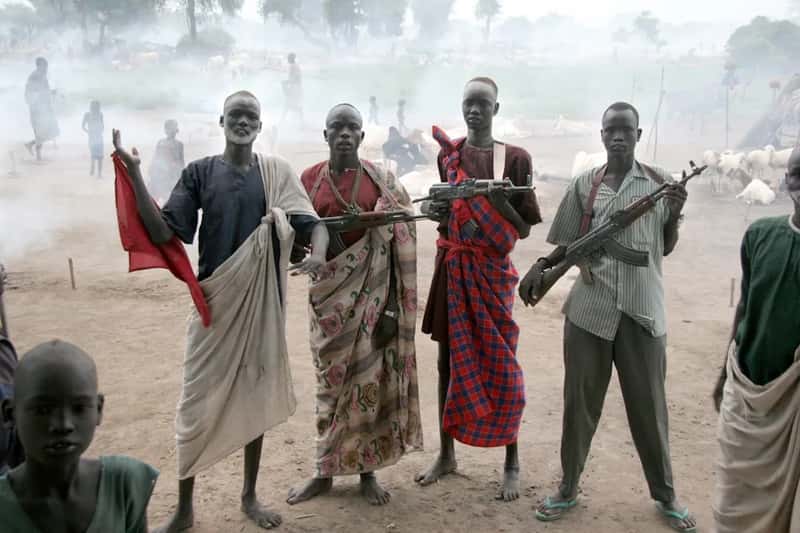
The gap between Sudan’s archaeological wealth and its visitor numbers comes down almost entirely to politics and security. Though the pyramids are one of the main attractions for Sudan’s tourists, the local tourism industry has been devastated by a series of economic sanctions imposed by various Western nations throughout the course of the country’s civil war and the conflict in Darfur, and according to reports, Sudan now receives fewer than 15,000 tourists per year, compared to past estimates of as many as 150,000.[6]
The situation has only grown more serious since 2023. The conflict that began in April 2023 between the Sudanese Armed Forces and the Rapid Support Forces has entered its fourth year in 2026, leaving a trail of widespread destruction.[7] Most Western governments, including the United States and Canada, currently advise against all travel to the country, citing active fighting, landmines, and collapsed infrastructure in many regions.
What visiting looks like for those who still go
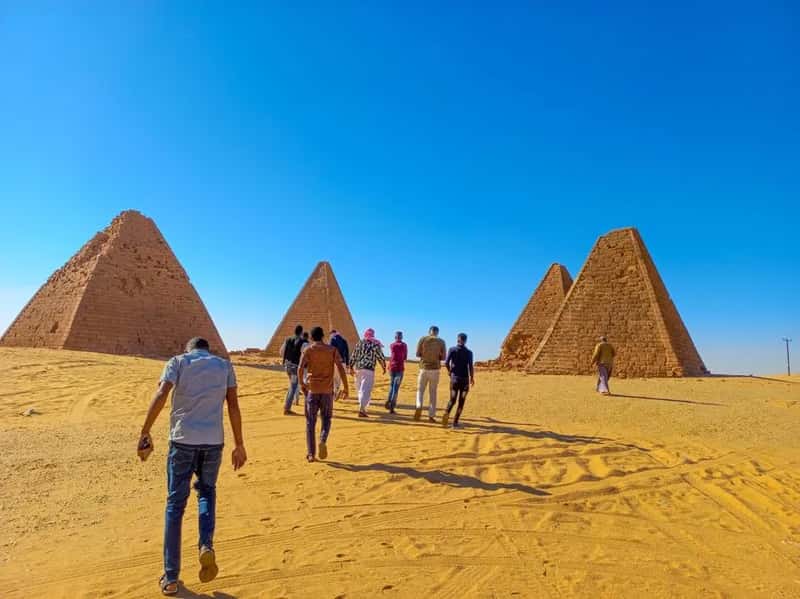
For the small number of travelers who have made it to Meroë in recent years, the experience is strikingly different from anything at Giza. Other than two guys with a camel and an old lady selling tickets, it’s just you, twenty pyramids and a whole lot of desert, and more than likely you’ll be the only tourists there.[8]
Facilities remain minimal. There are no bathrooms[9] at the site, and until recently, you could simply walk up to the pyramids at Meroe from anywhere; it’s now one of the rare archaeological sites in Sudan with a designated entrance and walkway.[9] Anyone considering a trip should treat current travel advisories as the deciding factor, since conditions in Sudan remain volatile and can shift quickly.
A monument waiting for calmer times
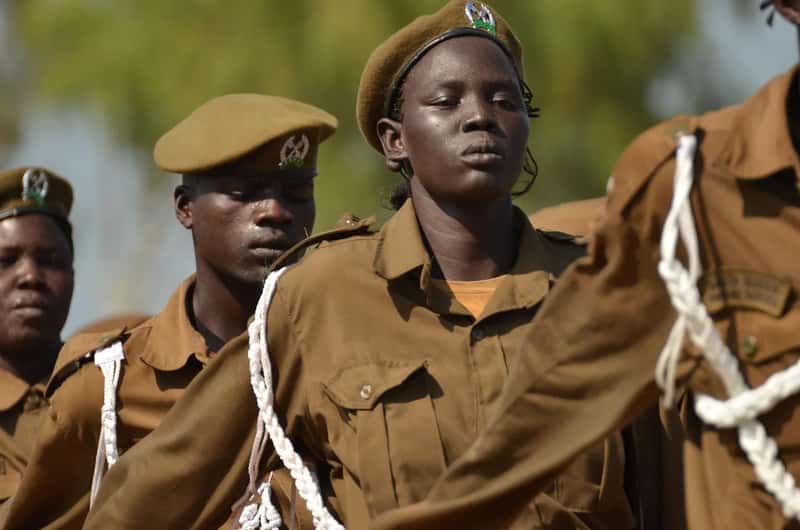
Sudan’s pyramids aren’t a secret exactly, more a fact that never quite broke through into common knowledge the way Giza did. They sit fully documented, UNESCO-listed, and older in tradition than most people realize, yet they remain almost entirely absent from the mental map most travelers carry of ancient wonders. Whenever Sudan’s security situation eventually stabilizes, whoever gets there first will likely have an experience that Egypt simply can’t offer anymore: silence, empty desert, and pyramids with nobody else around to share them with.