Few pieces of transport technology capture public imagination quite like the bullet train. Since Japan unveiled its first Shinkansen line in 1964, high-speed rail has spread across continents, reshaping how people move between cities and, in many cases, outpacing airplanes on medium-distance routes. Speed alone doesn’t tell the whole story, though. Network size, reliability, safety records, and how deeply these systems are woven into daily life all matter just as much.
This list looks at ten countries that have genuinely earned their place among the world’s bullet train leaders. Some built the first networks decades ago, while others are relative newcomers proving that high-speed rail isn’t just a rich-country luxury anymore.
1. Japan
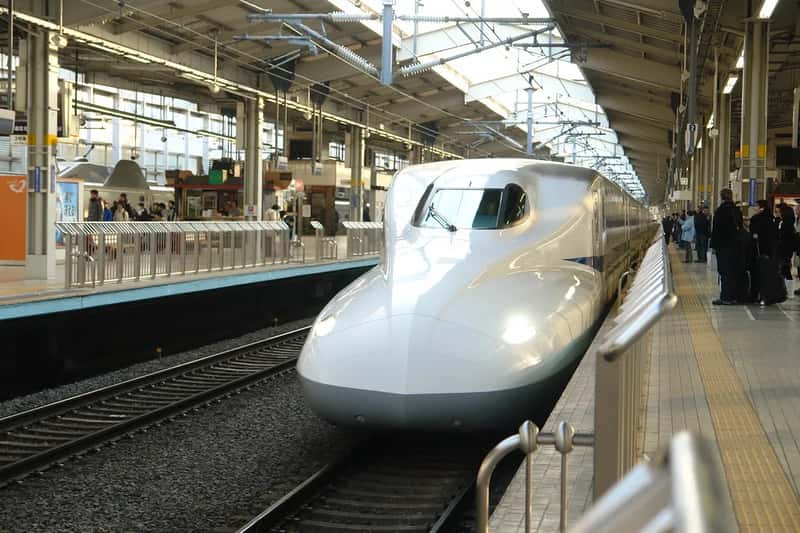
Japan invented the concept of the modern bullet train, and it still runs one of the most respected networks on the planet. The first high-speed rail system, the Tōkaidō Shinkansen, began operations in Honshu, Japan, in 1964, and due to the streamlined nose cone of the trains, the system became known by its English nickname bullet train. That original Tokyo to Osaka run, covering roughly 510 kilometers, cut travel time dramatically and set the template every other country would eventually follow.
What separates Japan from the pack isn’t raw top speed anymore, since China and France have both pushed faster on paper. It’s consistency. After three years, more than 100 million passengers had used the trains, and the milestone of the first one billion passengers was reached in 1976, with cumulative patronage on the entire system since 1964 exceeding 10 billion, without a single train passenger fatality. Current Shinkansen models like the N700S reach speeds of over 320 km/h on routes like Tokyo–Osaka, and Japan continues pushing boundaries with maglev research on the side.
2. China
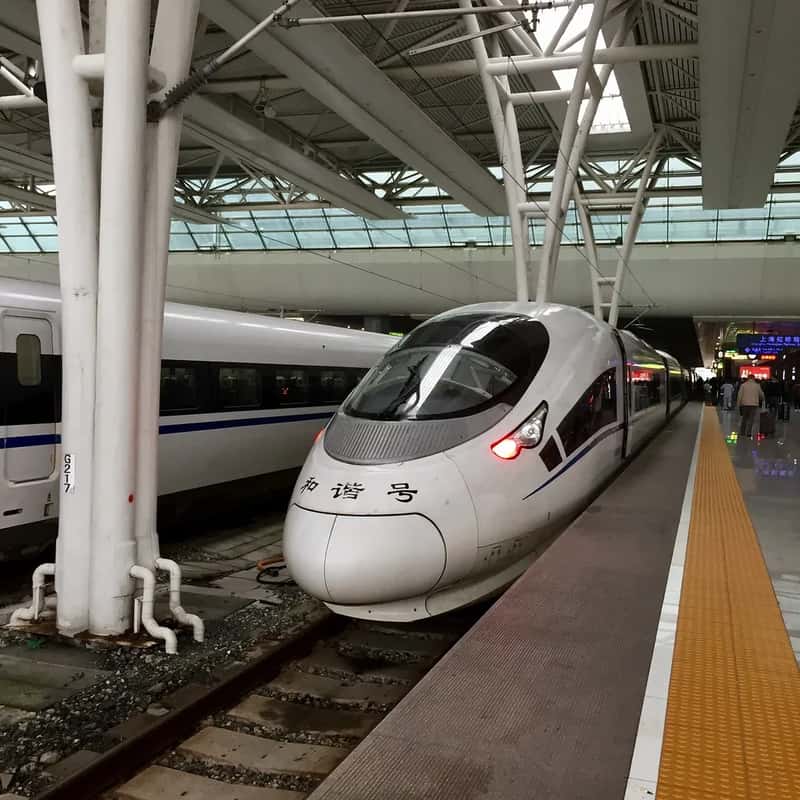
No country has built high-speed rail at the scale China has. China has built 40,493 km of high-speed rail, giving it a network larger than all other countries combined. To put that gap in perspective, Spain, the world’s second-ranked country, operates less than one-tenth as much high-speed rail. This expansion happened remarkably fast, largely built out since the late 2000s to connect major metropolitan hubs.
Speed-wise, China’s commercial trains are formidable too. Its Fuxing trains run at commercial speeds up to 350 km/h on routes such as Beijing–Shanghai. The country is also developing the next generation of high-speed technology. China’s CR450 reached 453 km/h during pre-service trials in October 2025 and is expected to begin commercial operations in 2026 at speeds near 400 km/h. Add in the Shanghai Maglev, and China arguably has both the biggest network and some of the fastest trains anywhere.
3. France
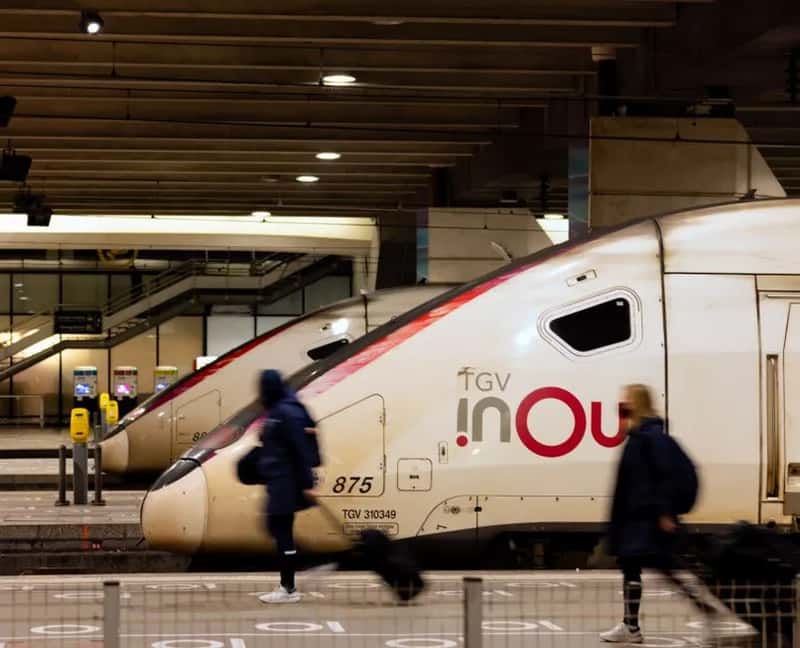
France’s TGV remains one of the most storied names in rail history, and it still holds a record that nobody has come close to breaking. The world record for a conventional wheeled passenger train is held by a modified French TGV high-speed set code named V150, which reached 574.8 km/h in 2007 on a section of LGV Est line. That test run, purely experimental, showed just how far conventional steel-wheel technology could be pushed.
In everyday service, the TGV is far more modest but still impressively fast. National rail operator SNCF runs the fastest conventional train network in the world, with average top speeds of 320 km/h. France was also among the earliest adopters outside Japan, and today high-speed lines fan out from Paris to destinations across the country and into neighboring nations, making the TGV a genuine backbone of European travel rather than a novelty.
4. Spain
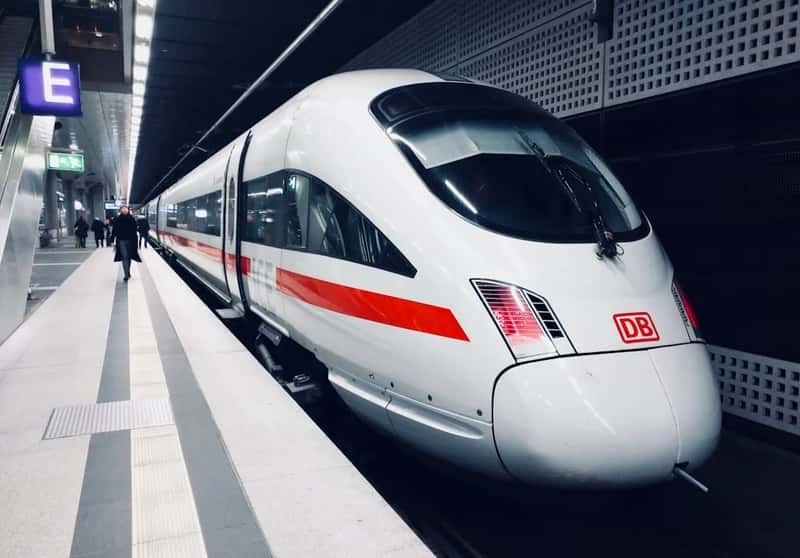
Spain quietly built one of the largest and most technically impressive rail networks in the world, and it did it on almost entirely dedicated, purpose-built track. With 2,275 miles of track, Spain is home to the longest high-speed railway system in Europe, and the second-longest in the world. Because so much of the network runs on infrastructure designed specifically for high speed, service tends to be remarkably consistent.
The AVE brand has become synonymous with efficient Spanish travel. The Alta Velocidad train network serves over 40 million passengers a year and connects all of Spain’s major cities, from Madrid to Barcelona to Seville. On the speed front, in 2006, an S103 achieved a record top speed of 403.7 km/h, a Spanish record speed for rail vehicles, while daily commercial service tops out closer to 310 km/h.
5. South Korea
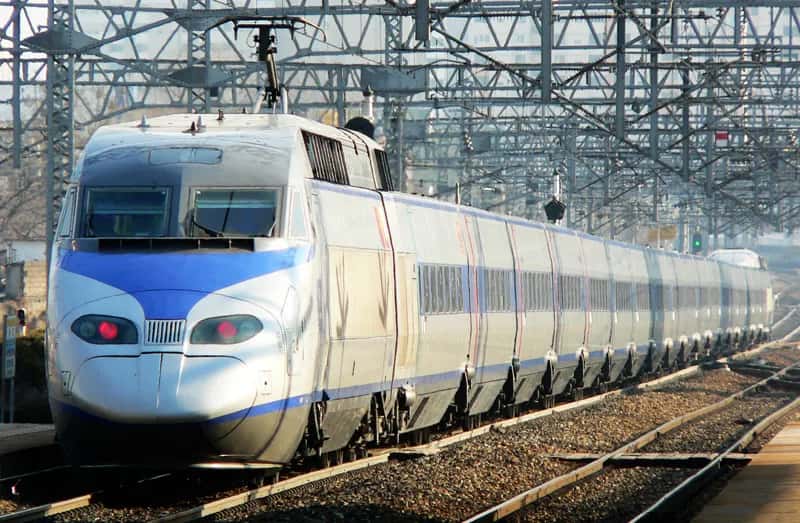
South Korea’s KTX transformed domestic travel in a country where distances between major cities aren’t huge but traffic congestion used to make journeys painfully slow. South Korea’s national railway operator, Korail, runs the country’s high-speed rail service, and the Korea Train Express, more commonly known as KTX, began operation in 2004. What began as technology partly built on French TGV designs has evolved into a fully domestic industry.
The newest generation shows how far Korean engineering has come. The KTX-Cheongryong entered service in May 2024 and operates at 320 km/h between Seoul and Busan, based on the HEMU-430X prototype, which once achieved 421 km/h in testing. The Seoul-Busan corridor in particular has seen dramatic time savings, with the KTX network continuing to expand its reach across the peninsula.
6. Germany
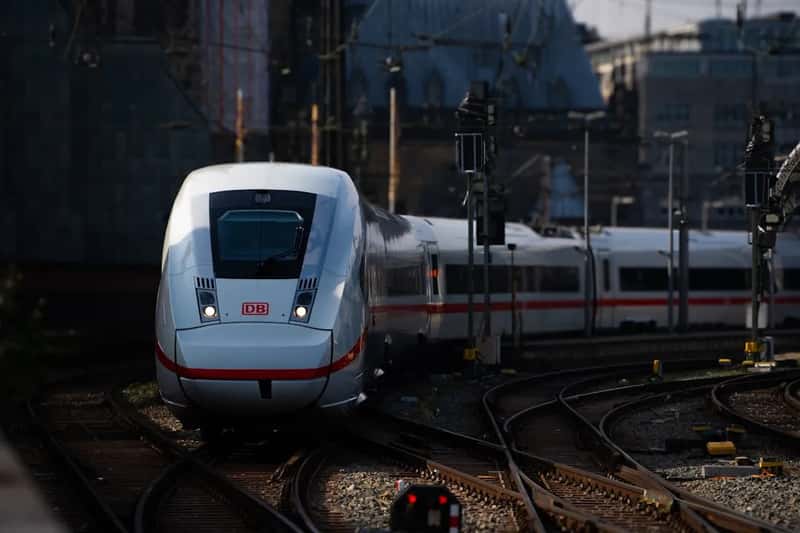
Germany’s ICE network doesn’t chase headline speed records the way France or China sometimes do, but it makes up for that with dense connectivity and cross-border reach. Germany was the third country in Europe to inaugurate a high-speed rail service, with the launch of the Intercity-Express on the new Hanover–Würzburg high-speed railway, operating at a top speed of 280 km/h, similar to the TGV with dedicated streamlined power cars at both ends.
Today’s ICE 3 trains push considerably faster than that original 1991 debut. The ICE 3 is Germany’s flagship high-speed train, reaching operational speeds of 330 km/h, connecting major European cities and known for passenger comfort and cross-border travel capability. One quirk worth noting is that Germany’s network blends dedicated high-speed lines with upgraded conventional track, so journey speeds can vary noticeably depending on which stretch a train happens to be running on.
7. Italy
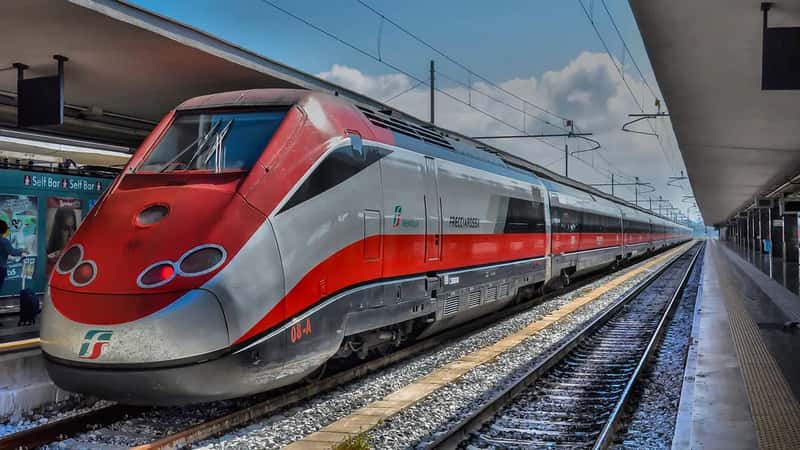
Italy holds a claim to history that often gets overlooked: it was the first European country to follow Japan’s lead into dedicated high-speed rail. In 1977, Italy opened the Florence–Rome Direttissima, one of Europe’s first purpose-built fast rail lines, with speeds up to 250 km/h. That early investment laid groundwork for what eventually became the modern Frecciarossa network.
Today’s flagship train reflects decades of refinement. The Frecciarossa 1000, co-developed by Hitachi Rail and Alstom, was engineered for 400 km/h but operates commercially at 300 km/h, is considered one of the most environmentally sustainable bullet trains with 85% recyclable materials, and links major Italian cities including Rome, Milan, and Naples. Italy’s open-access rail market, where multiple operators compete on the same high-speed lines, has also helped keep fares relatively competitive by European standards.
8. Taiwan
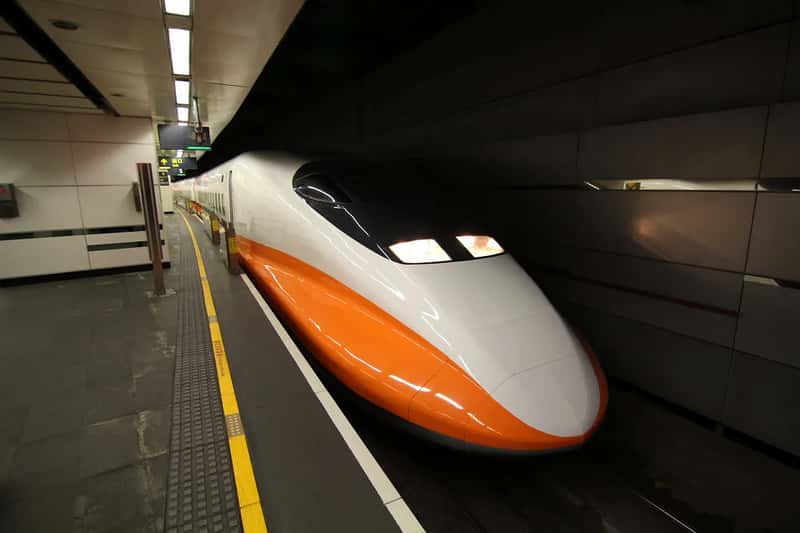
Taiwan doesn’t always get mentioned in the same breath as Japan or China, but its high-speed rail system punches well above the island’s size. The Taiwan High Speed Rail runs along Taiwan’s west coast between Taipei and Kaohsiung with maximum operating speeds of 300 km/h, and it revolutionised local connectivity when it opened in 2007. Built largely on Japanese Shinkansen technology, the system connects nearly the entire western corridor where most of the island’s population lives.
What makes Taiwan’s network notable is how thoroughly it has integrated into daily commuting and business travel, turning what used to be a multi-hour drive down the island into a routine trip of well under two hours. The system has also become a model that other countries in the region look to when weighing whether high-speed rail makes economic sense for a smaller, densely populated geography.
9. Morocco
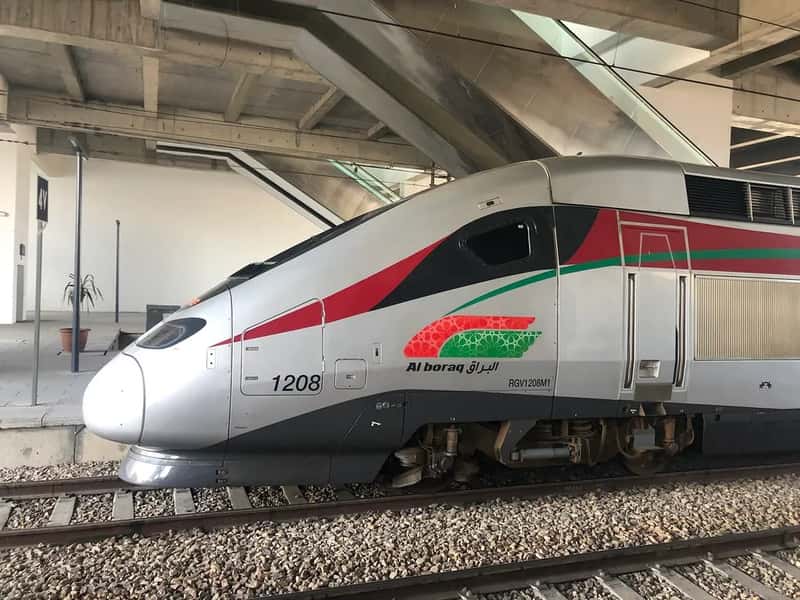
Morocco holds the distinction of running Africa’s only dedicated high-speed rail line, and it did so by partnering closely with French rail expertise. Africa’s first, and so far only, dedicated high speed line carries trains at up to 320 kph between the port city of Tangier and Casablanca. The line, branded Al Boraq, opened in 2018 and has become a genuine source of national pride.
Al Boraq’s technical pedigree comes directly from French know-how. French-built derivatives of TGV Euroduplex double-deck electric trains operate at up to 320 kph on a dedicated 186-kilometer new line between Tangier and Kenitra, part of a $2 billion project that also upgraded the existing Rabat to Casablanca section. During testing, the line even set a continental benchmark: Al-Boraq holds the African rail speed record too, as during pre-service tests in 2017 one of the Alstom-built trains touched 357 kph, more than twice the speed of any other train currently running on the African continent. There are further plans to extend service and shave even more time off the Casablanca route.
10. Indonesia
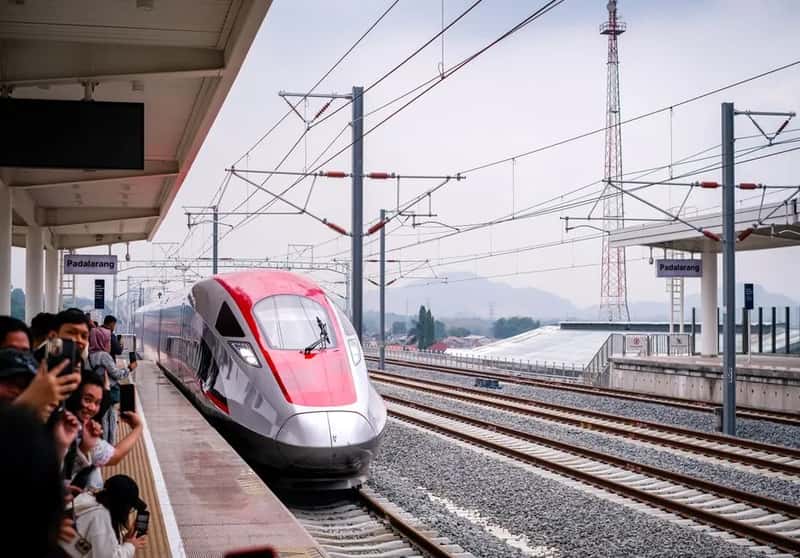
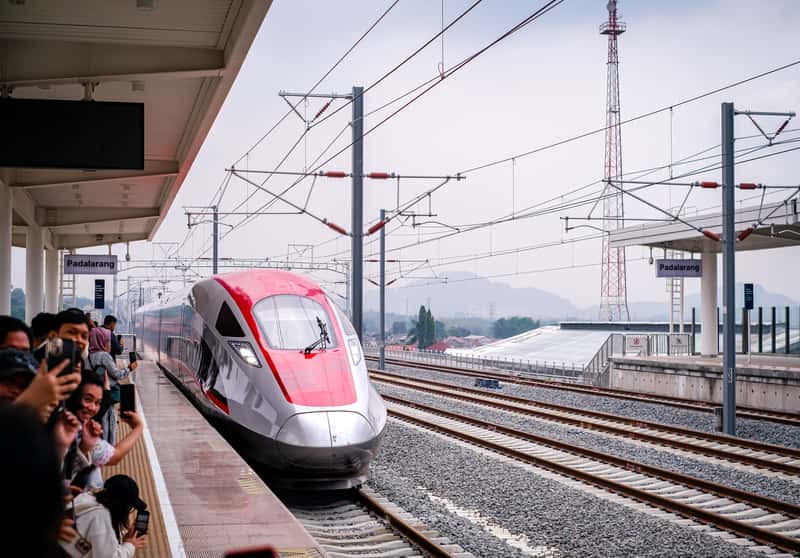
Indonesia’s Whoosh line, launched in October 2023, made history as the first high-speed railway not just in the country but across all of Southeast Asia. It covers a distance of 143 kilometres with a maximum operating speed of 350 km/h, and a design speed of 420 km/h for its KCIC400AF trainset, making it one of the fastest commercially operating railway networks in the world. Built through a joint venture with Chinese rail companies, it uses proven Fuxing-derived technology adapted for Indonesian conditions.
The impact on daily travel between Jakarta and Bandung has been dramatic. The new rail link reduced travel time between these two cities from over three hours down to just 46 minutes, transforming a notoriously congested corridor. There are already ambitions to extend the line toward Surabaya, though the current route remains the only high-speed rail service operating anywhere in Southeast Asia or the Southern Hemisphere.
Taken together, these ten countries show just how differently the bullet train story has unfolded around the world. Japan and France chased pure engineering prestige early on, China scaled the concept to a size nobody thought possible, and newer entrants like Morocco and Indonesia are proving that high-speed rail can take root well beyond the traditional wealthy rail powers of East Asia and Western Europe. The technology keeps evolving too, with China’s CR450 and Japan’s maglev programs hinting at where commercial speeds might head next.
What’s clear is that the appeal of the bullet train isn’t fading. If anything, more nations are lining up to build their own versions, betting that shaving hours off a journey is worth the enormous upfront cost. Whether that bet pays off financially varies case by case, but for passengers, the experience of watching the landscape blur past at over 300 kilometers an hour remains one of modern travel’s genuine thrills.