Most travelers plan around the usual limits, such as 30 days here or 90 days there. A handful of countries work on a different scale. They let visitors settle in for half a year or more without a long visa application.
The rules aren’t identical, and they aren’t always as generous in practice as they look on paper. The five countries below were chosen because their current rules, as reported in 2026, allow stays of six months or longer. The notes on each include the catches worth knowing before you book a flight.
Georgia: A Full Year on Arrival

Georgia, the country in the Caucasus, has one of the most open entry policies anywhere. Citizens of 98 countries, including the United States, get entry for up to one year per entry[1], with no application before arrival. Citizens of the European Union, the United Kingdom, Canada, Australia and several other countries are covered too.
The allowance is up to 365 days per entry, and the clock restarts the next time someone crosses the border.[1] One new requirement matters, though. As of January 1, 2026, tourists entering Georgia must hold valid health and accident insurance with coverage of at least 30,000 GEL, roughly 11,000 USD.[2] Anyone planning to stay beyond a year should look into residency permits well in advance.
Albania: Europe’s Long Stay Outlier

Albania stands out in a region where most countries follow the Schengen rules. It allows Americans to stay for up to one year with no visa required.[3] That contrasts sharply with the ninety day Schengen limit that governs most of the rest of the continent.[3]
The policy has made Albania popular with remote workers and slow travelers. One travel guide notes that to restart the clock without a residency permit, you must leave and stay outside Albania for at least 90 days.[4] Another points out that countries like Albania and Georgia offer long tourist stays as a low cost way to attract visitors, not as a path to residency.[5]
Mexico: Up to 180 Days, Decided at the Desk

On paper, Mexico is simple. Visitors are authorized to stay for tourism, business or transit for up to 180 days.[6] Travelers receive a tourist permit called the FMM. It is included in airfare for international flights, and by land it costs 983 pesos, about 55 US dollars.[7]
The catch is that 180 days is a ceiling, not a promise. The number of days on any FMM is at the discretion of the immigration officer.[7] More visitors are finding in 2025 and 2026 that the full 180 days is no longer guaranteed[8], so it helps to check the stamp before leaving the airport. Beyond the 180 days, the permit can’t be renewed or extended for standard tourists.[7]
Colombia: 90 Days Plus a Second Stretch
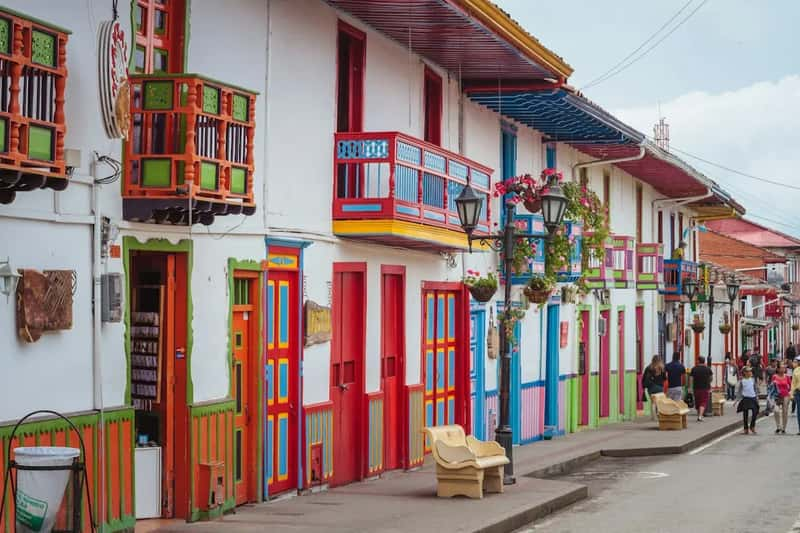
Colombia works in two steps. Migración Colombia normally authorizes a stay of 90 days, which can be extended for another 90 days, for 180 days of tourism per calendar year.[9] The extension is requested online, and the 2026 fee is 150,000 Colombian pesos, with EU and Schengen nationals exempt.[10]
The limit follows the calendar, not your arrival date. January 1 is the reset date.[10] Border runs don’t reset the clock.[10] Someone who arrives in July, for example, can stay until the end of December, leave briefly, and return in January for a fresh allowance. Overstaying means a per day fine paid at the airport before you can board your outbound flight.[10]
Armenia: 180 Days Within a Year

Armenia is the least obvious pick on this list, and one of the most flexible. Nationals of more than 68 countries enter without a visa for up to 180 days a year.[11] That group includes the US, the UK, all EU and Schengen states, Canada, Australia, New Zealand and Japan.[11]
There are exceptions to check. The allowance is 90 days for nationals of China, Iran and the UAE.[11] Armenia has also been running a temporary exemption for people who hold a qualifying residence permit. The current version runs from 1 July 2026 to 1 July 2027 and covers nationals of 111 countries whose permit is valid at least six months from entry.[11] Travelers from other countries can usually apply for an e-visa, which allows stays of up to 120 days.[12]