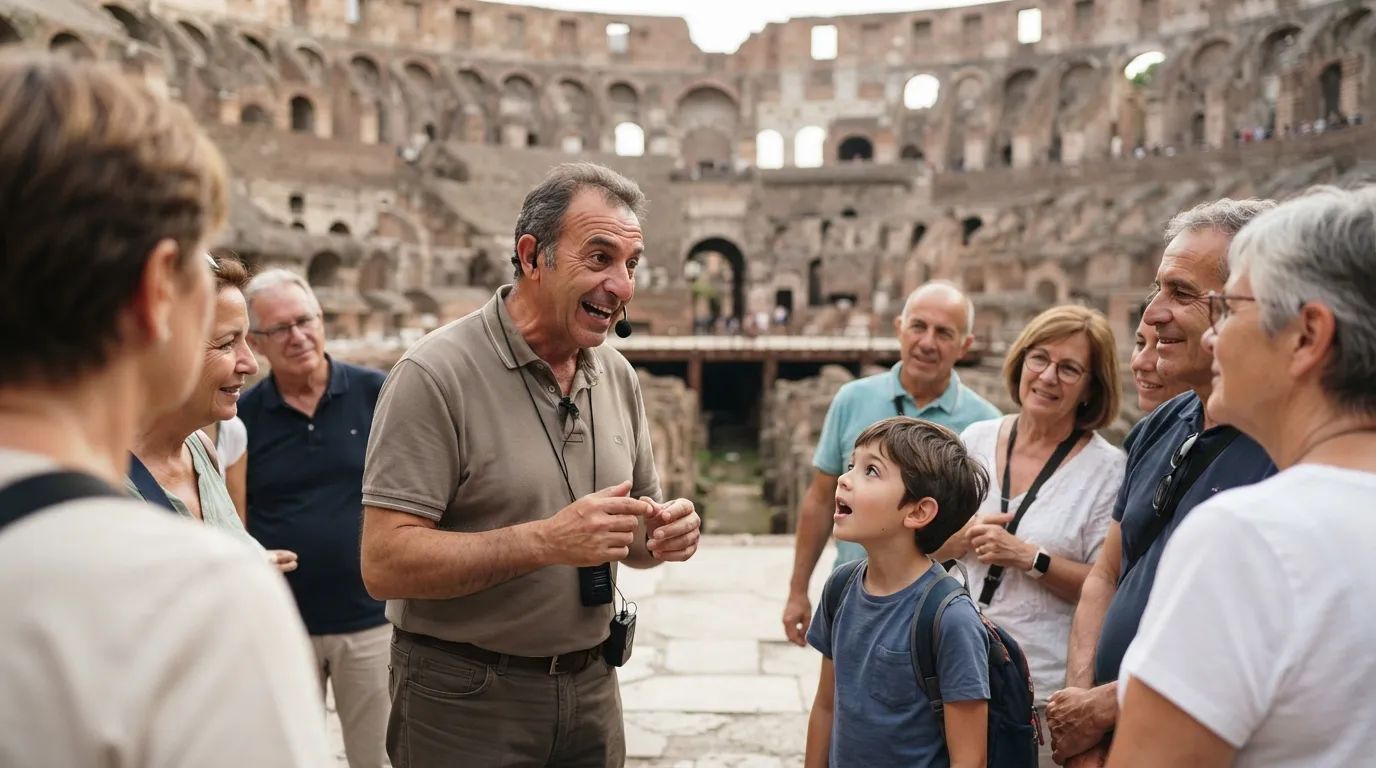
You’d think a guide who has walked the same route a thousand times would be hard to surprise. Ask one, and most will laugh. They can often predict the exact question before the group has found their seats.
The same 21 questions come up on tour buses, walking routes, and museum lines around the world. Some are funny, a few are surprisingly deep, and one has guides pausing before they answer. Start at the bottom of the list, because the answers only get better from here.
#21 – “Is the Tap Water Safe?” The Answer Changes Every Border
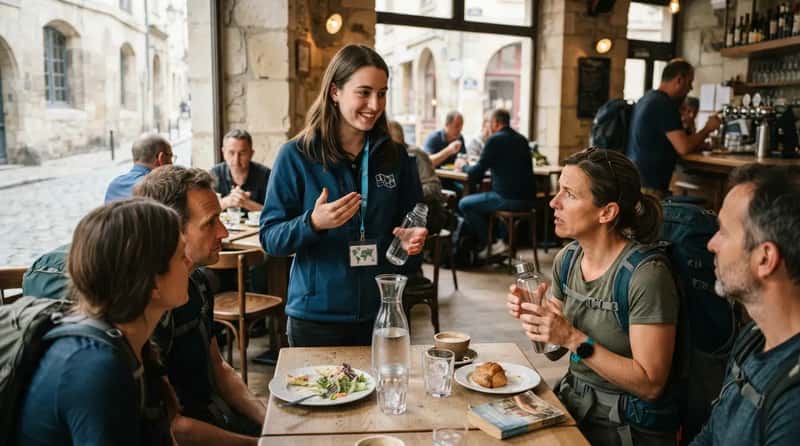
Guides often get this one before the bus has even left the curb. The answer depends entirely on where you’re standing. In many U.S. and Western European cities, tap water is routinely safe to drink, but plenty of destinations advise travelers to stick to bottled or filtered water.
Most people don’t realize that ice cubes, salads, and rinsing your toothbrush count too. A guide’s “yes” in one country can be a “please don’t” in the next. Experienced guides say the classic mistake is assuming the rule from your last trip still applies.
That one is easy compared to the money question guides brace for at #20…
#20 – “Do I Have to Tip You?” The Awkward Math Behind the Smile

This is the question many guides quietly wish people would ask sooner. In the U.S., tipping a tour guide is customary, and for many guides it’s a big part of what they take home. Norms in other countries vary a lot.
The confusion comes from mixed signals. In some places a tip is expected, in others it’s a bonus, and some tours bury “gratuities included” in tiny print. Many guides say they’d rather be asked than be left guessing.
And speaking of things nobody wants to ask out loud, #19 comes up on almost every tour…
#19 – “Where’s the Bathroom?” Asked Within Ten Minutes, Every Time
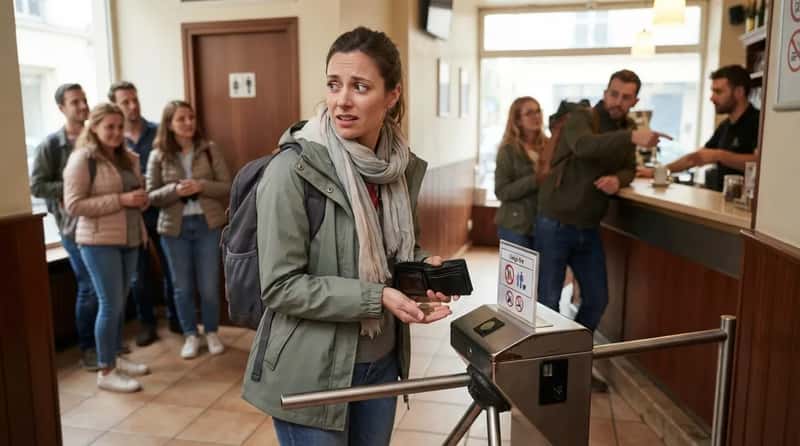
Ask a guide for their most repeated sentence and this is often it. Smart guides plan whole routes around restroom stops. They know a group that’s desperate has stopped listening to the history lesson.
The surprise for many Americans is the cost. In many European cities, public toilets charge a small coin fee. Cafés may also limit their restrooms to paying customers, which leads to some very awkward standoffs at the counter.
Next comes a question no guide can answer, no matter how much they know, at #18…
#18 – “Will It Rain Tomorrow?” Guides Aren’t Meteorologists
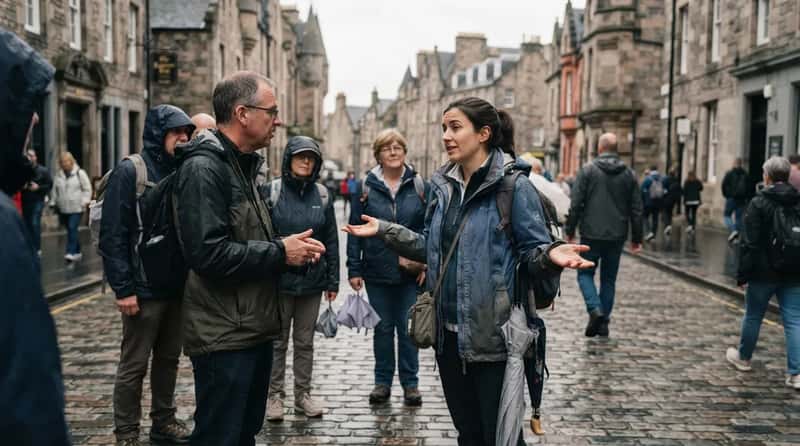
Guides know the seasons, the microclimates, and which neighborhoods get windy. They don’t own a crystal ball. Still, they get asked for the forecast on nearly every trip.
The honest answer is usually a shrug and a suggestion to dress in layers. Many guides say the real trip-wrecker isn’t the weather but the wrong shoes. Aching feet end more sightseeing days than rain ever does. Walking tours often keep going in light rain, so the umbrella matters less than you’d think.
But the next question exposes something uncomfortable about famous cities at #17…
#17 – “Do People Actually Live Here?” Venice Has an Answer
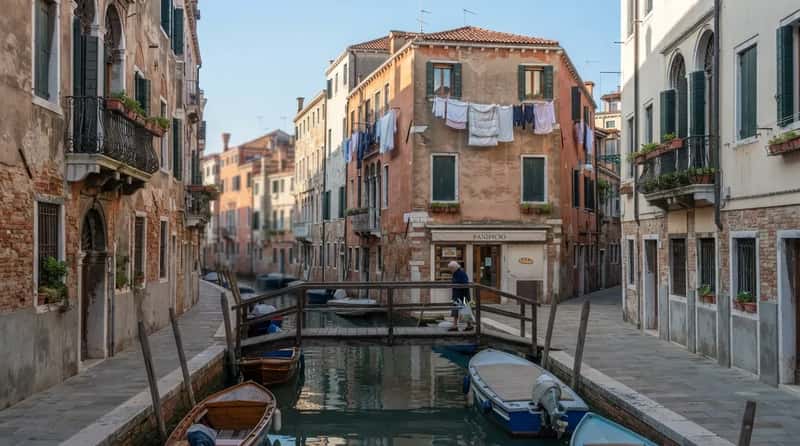
Guides in famous cities hear this when the streets start to feel like a theme park. Venice is the classic case. Its historic center now has fewer than 50,000 residents, a tiny fraction of the visitors who pour in each year.
The city has pushed back. In April 2024 it began a trial entry fee for day-trippers on select days. Locals have been blunt that they want Venice to stay a place where people live, not just a place to photograph.
Wait until you hear what guides say about #16, the most famous painting on Earth…
#16 – “Is That the Real Mona Lisa?” Yes, and Brace Yourself
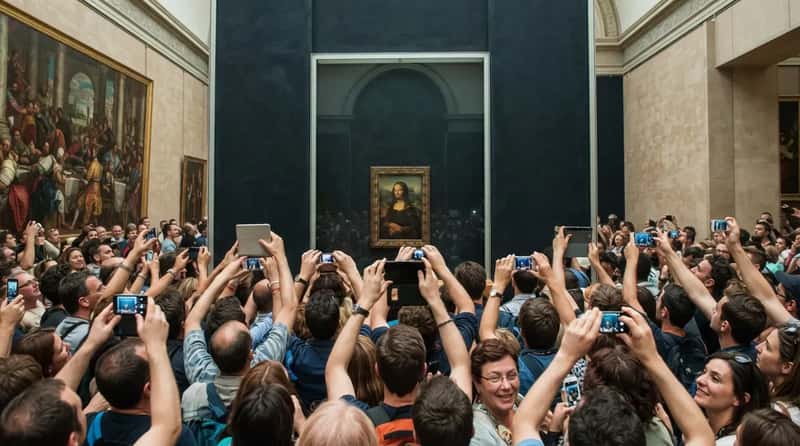
Yes, it’s the real one. Guides at the Louvre answer this daily. The museum drew nearly 9 million visitors in 2024, and a huge share of them want a look at the same small canvas.
The painting measures roughly 30 by 21 inches and sits behind protective glass. Plenty of guides quietly admit the crowd in front of it is more memorable than the portrait. It’s still a must-see for most visitors, but some guides argue the quieter rooms nearby are the better use of your hour.
Fast Facts
- Leonardo da Vinci painted it in the early 1500s, and the sitter is widely believed to be Lisa Gherardini.
- It was stolen from the Louvre in 1911 and recovered in 1913, which helped make it a global celebrity.
- Across the room hangs Veronese’s enormous Wedding Feast at Cana, which most visitors have their backs to.
- The glass is there for protection, so expect to photograph the crowd as much as the canvas.
But the pose at #15 might be the most photographed joke in Italy…
#15 – “Can You Take My Photo Holding Up the Tower?” The Pisa Pose
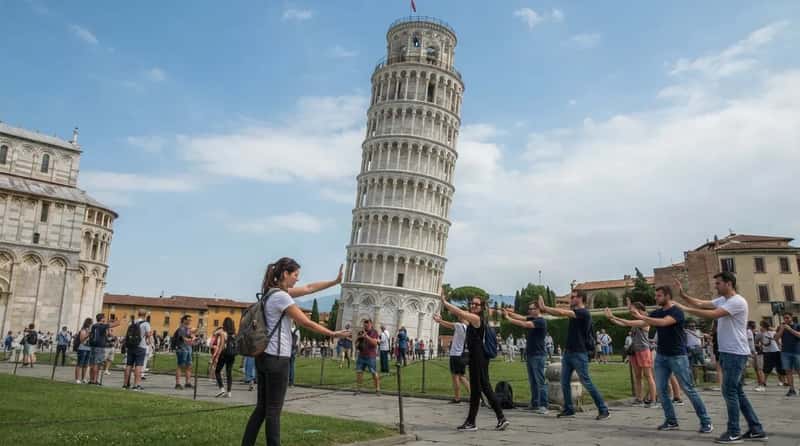
Guides in Pisa have taken this photo more times than they can count. Hundreds of people a day stand in the same spot with their arms out. Guides sigh a little, then they say yes anyway.
Behind the silly pose is a real engineering rescue. Stabilization work that wrapped up in the early 2000s reduced the tilt by roughly 17 inches at the top. The tower now leans about 4 degrees, down from around 5.5. It’s safer than it has been in generations.
The next question is one guides answer very carefully at #14…
#14 – “Is It Safe Here?” The Honest Answer Is Never One Word
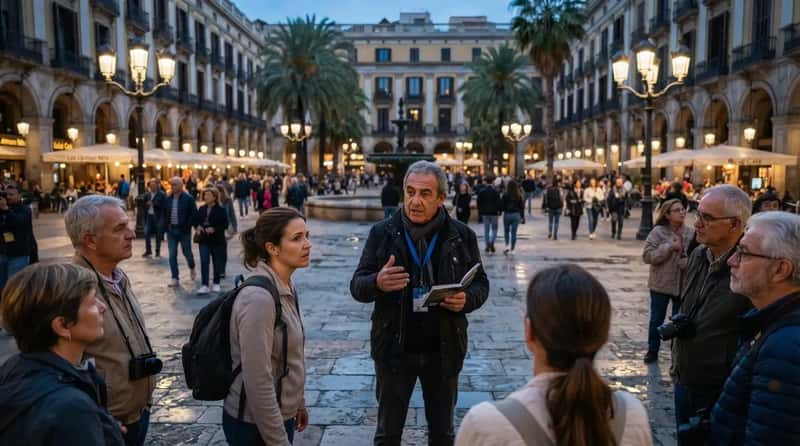
Guides take this one seriously. They live in these places, and they know which blocks feel different after dark. Most won’t say “totally safe” or “dangerous.” They’ll tell you what to watch for.
Pickpocketing in crowded tourist areas is the most common worry guides mention. The U.S. State Department rates countries on a four-level advisory scale, and guides often say that’s a better starting point than a rumor from the internet. Local knowledge fills in the rest.
Now for a question that shows how people picture the ancient world at #13…
#13 – “Did They Really Build This by Hand?” Egypt’s Biggest Myth
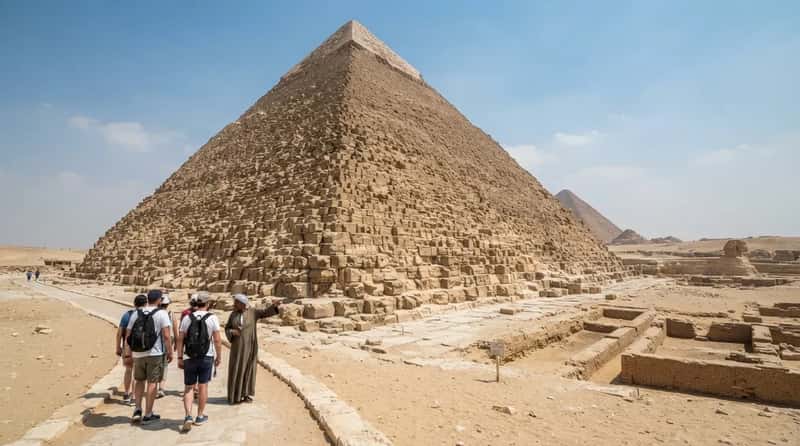
Guides at Giza hear this constantly, often followed by a theory involving aliens. Egyptologists give a simple answer. Yes, people built it.
The Great Pyramid took roughly 2.3 million blocks. Excavations near Giza uncovered workers’ housing, bakeries, and tombs, which suggest organized, well-fed laborers rather than slaves. That contradicts what many movies show.
But the next question is the spookiest one on the list, at #12…
#12 – “Is This Place Haunted?” Guides Know Which Stories Are Folklore

Almost every old building gets asked this. Guides on ghost tours and history tours both field it. The reactions range from a wink to a very serious face.
Many guides say the best ghost stories are local folklore passed down over generations, not documented fact. The real history behind a legend is often stranger than the ghost. A good guide will tell you which parts are verified and which parts are campfire material.
Still, nothing frustrates guides quite like the myth at #11…
#11 – “Can You See the Great Wall From Space?” The Myth That Won’t Die
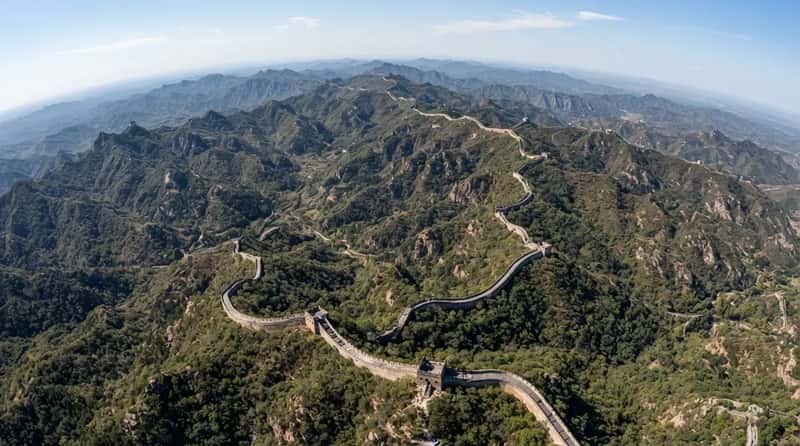
Guides in China have heard this for decades. The popular claim is that the wall is visible from space with the naked eye. It isn’t, at least not from low Earth orbit.
The wall is long but narrow, and its color blends into the surrounding terrain. China’s first astronaut, Yang Liwei, said after his 2003 flight that he couldn’t see it. Guides still enjoy the question, because it opens the door to the real story of how the wall was built over centuries.
The next question is one guides ask themselves, at #10…
#10 – “Why Is It So Crowded?” Because Everyone Had the Same Idea
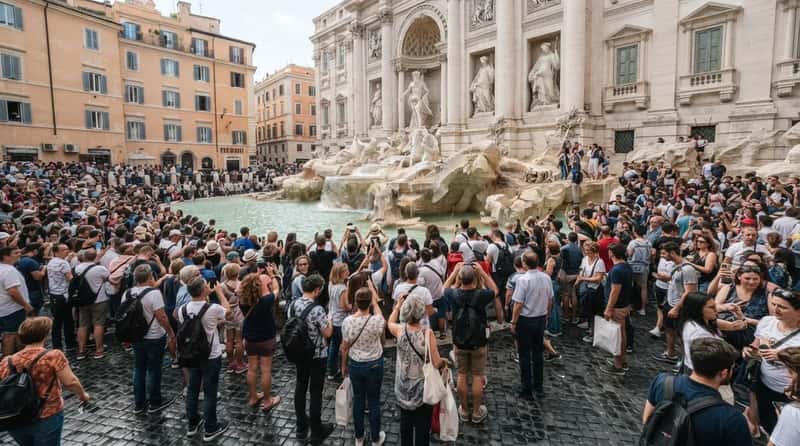
Guides hear this in Rome, Barcelona, Paris, and everywhere in between. The short answer is that travel has roared back. UN Tourism estimated about 1.4 billion international arrivals in 2024, nearly back to 2019 levels.
Guides say crowds are rarely random. Most people arrive at the same hours, at the same landmarks, in the same season. Showing up at opening time or late in the day can change the whole experience.
Worth Knowing
- The first hour after opening and the last hour before closing are usually the calmest windows.
- Midweek visits tend to feel lighter than weekends at the biggest landmarks.
- Spring and fall “shoulder seasons” often mean thinner crowds and milder weather.
- In port cities, guides watch the cruise ship schedule, because a few ships can fill a small old town in an afternoon.
And the next one involves a lot of loose change at #9…
#9 – “What Happens to the Coins in the Fountain?” Rome Has Receipts
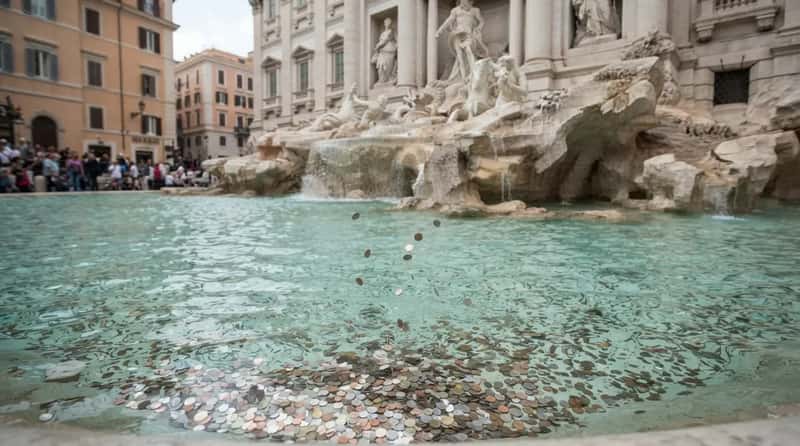
At Rome’s Trevi Fountain, guides get this question all day long. Visitors toss coins over their shoulders and then wonder where they land. The coins are collected regularly and given to Caritas, a Catholic charity.
Reports in recent years have put the annual haul at well over a million euros. That money has reportedly helped fund food programs for people in need. Guides love this answer, because it turns a tourist ritual into something that actually helps someone.
But what guides say about restaurants at #8 is where things get honest…
#8 – “Where Do Locals Actually Eat?” Not Where the Menu Has Photos
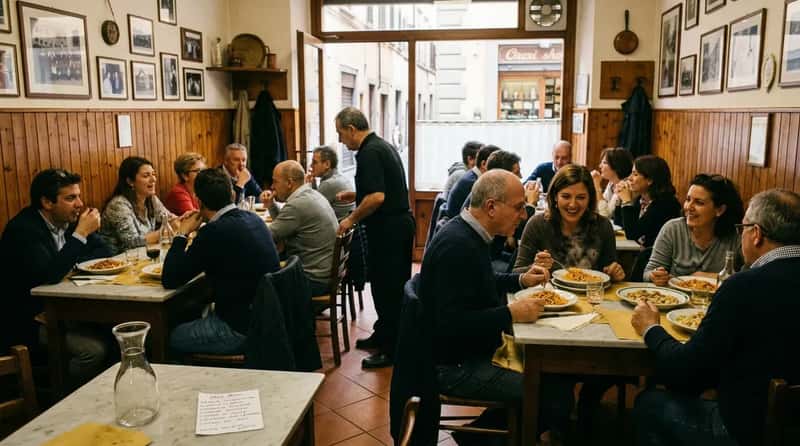
Guides get this question every single trip, and their answers are usually simple. Walk a few blocks away from the main square, and both the prices and the crowds change.
Guides who work in tourist areas often point to the same warning signs. Menus in six languages with pictures of every dish are a classic tourist-trap tell. A short menu and a lunchtime crowd of locals usually signal a better meal.
The next question has guides choosing their words very carefully at #7…
#7 – “Do You Get a Commission From That Shop?” Sometimes, Yes

Sharp-eyed travelers ask this one, and guides notice. In some destinations, tours include shopping stops where guides or operators earn a commission on sales. It’s a known practice in the industry.
Not every guide works that way, and many say they’d rather earn tips for honest work. The real problem comes when the shopping stop eats the time you paid to spend at the sights. Travelers often name this as the biggest hidden cost of cheap tours.
The next question is the one that surprises guides most, at #6…
#6 – “How Do You Remember All of This?” Real Guides Take Exams

Travelers are often amazed by how much guides know. The honest answer is that it’s their job, and the training can be intense. In many countries, guides must pass licensing exams before they can lead a group.
London’s Blue Badge guides are a well-known example, with a famously demanding qualification process. Many guides say they’re still learning years later, because cities keep changing. New research, new excavations, and new rules mean the script is never really finished.
And now for a question about disappointment at #5…
#5 – “Why Is the Famous Statue So Tiny?” Fame Is Bigger Than Bronze
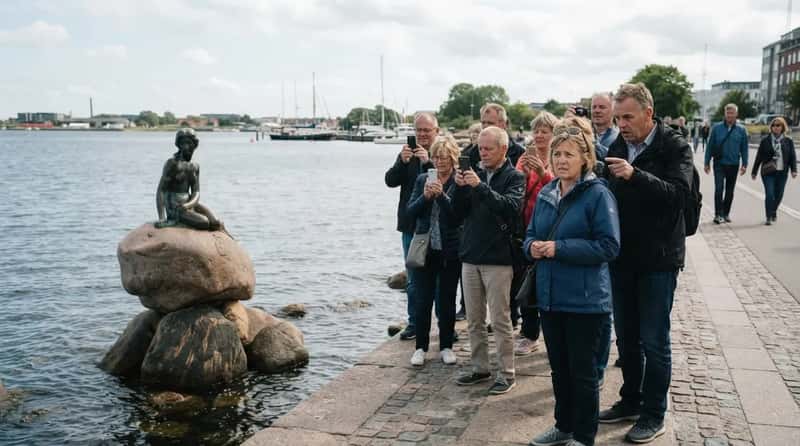
Guides in Brussels and Copenhagen hear this every day. Brussels’ Manneken Pis stands about two feet tall. Copenhagen’s Little Mermaid, unveiled in 1913, is roughly four feet high.
Many visitors arrive expecting something monumental. The Little Mermaid is often called one of the most underwhelming stops in Copenhagen for first-timers. Others argue the small scale is the whole charm, and that the story behind each statue beats the size.
The next question is about time, and it’s a big one, at #4…
#4 – “Can We Skip the Line?” Only the Ticket Line
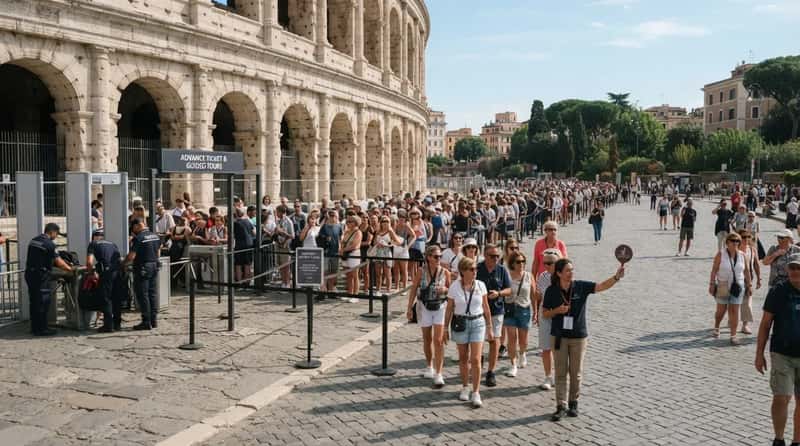
This is a favorite at big museums and landmarks. “Skip-the-line” tickets are real, but the name oversells them. They usually let you bypass the ticket window, not security or the entry queue.
Many major sites now use timed entry. The biggest line-skipper of all is simply booking a slot in advance. Guides say the travelers who show up with nothing booked are the ones who lose half a day.
Quick Compare
- Skip-the-line ticket: Usually bypasses the ticket window, but security still applies.
- Timed-entry ticket: Locks in a slot, so arrive inside your window.
- Guided tour with entry: Often bundles tickets and a set entry time, though the perks vary by site.
- Walk-up with nothing booked: The riskiest option at peak hours, and sometimes sold out entirely.
Next up is a question that makes guides smile at #3…
#3 – “Is This Where They Filmed That Show?” Fans Come Prepared
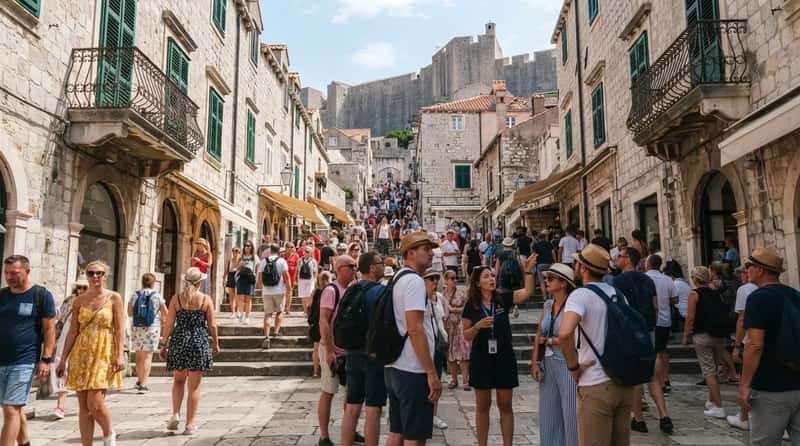
Screen tourism is a huge driver of travel, and guides know it. In Dubrovnik, Croatia, the Old Town served as King’s Landing in Game of Thrones. Guides there get the question before they’ve finished introducing themselves.
The fame came with a price. Dubrovnik has worked toward limiting visitors inside the walls to about 8,000 a day. Guides say the show brought money, and it also brought crowds that locals now struggle with.
But the next question is the one that stops guides cold, at #2…
#2 – “Has Anyone Ever Been Left Behind?” Every Guide Has a Story
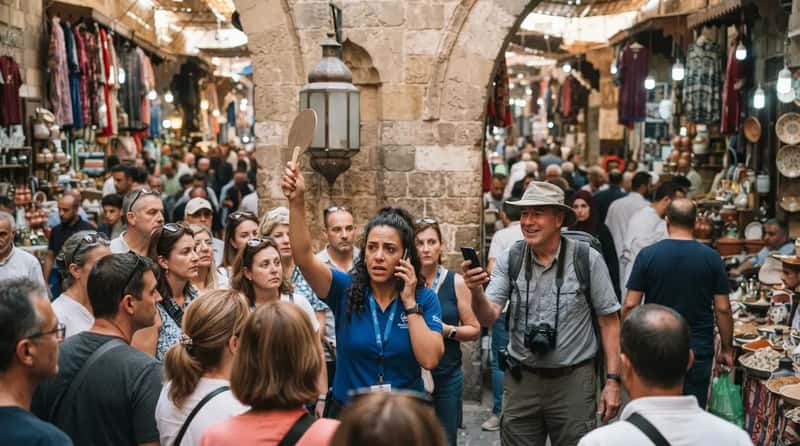
Guides say yes, it happens, and they take it seriously. Headcounts, meeting points, and phone numbers all exist for a reason. A group of 30 can lose one person in a crowded market in seconds.
Most guides say it’s almost never malicious. The usual culprit is someone who wandered off for “one more photo.” Experienced guides repeat the meeting time and place several times, and they admit it still doesn’t always stick.
Why It Stands Out
- Guides count heads at every stop, not just at the start of the day.
- The meeting spot is usually a landmark that is hard to miss.
- Saving the guide’s phone number on day one turns a panic into a quick text.
- Most “missing” travelers turn up within minutes, usually holding a souvenir.
The last question is the one guides say they love most, at #1…
#1 – “Don’t You Get Sick of Telling the Same Stories?” The Truth Guides Love
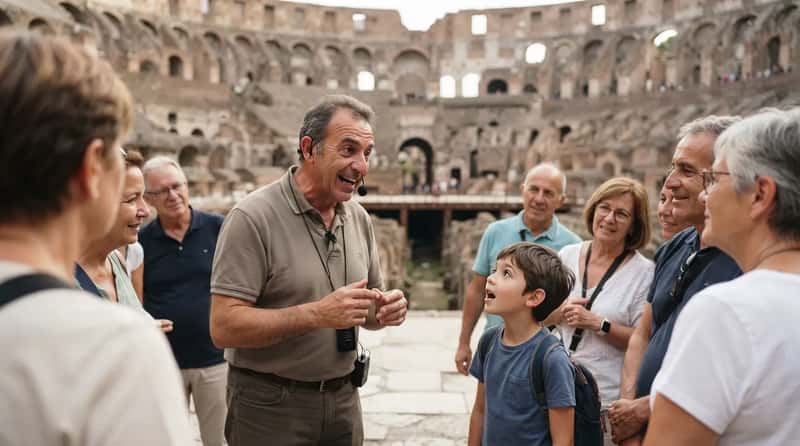
Curious travelers ask this, and the answer is often a surprise. Guides say the stories don’t get old, because the audience is new every time. A joke that lands in the morning may fall flat in the afternoon, so the telling keeps changing.
Many guides say the best moments aren’t in the script. It’s the question from a kid or a stranger that makes them see a place differently. The best guides, they say, are the ones still curious about a place they’ve shown a thousand times.
Look closely and most of these questions aren’t silly at all. They show what travelers really want, which is the truth about a place and not just the postcard version. The tipping and commission questions pull back the curtain on how the business works, while the Great Wall myth shows how stubborn a good story can be.
Maybe that’s why guides never tire of them. Every group arrives sure it’s asking something new, and every group helps a guide see the same old street for the first time again.