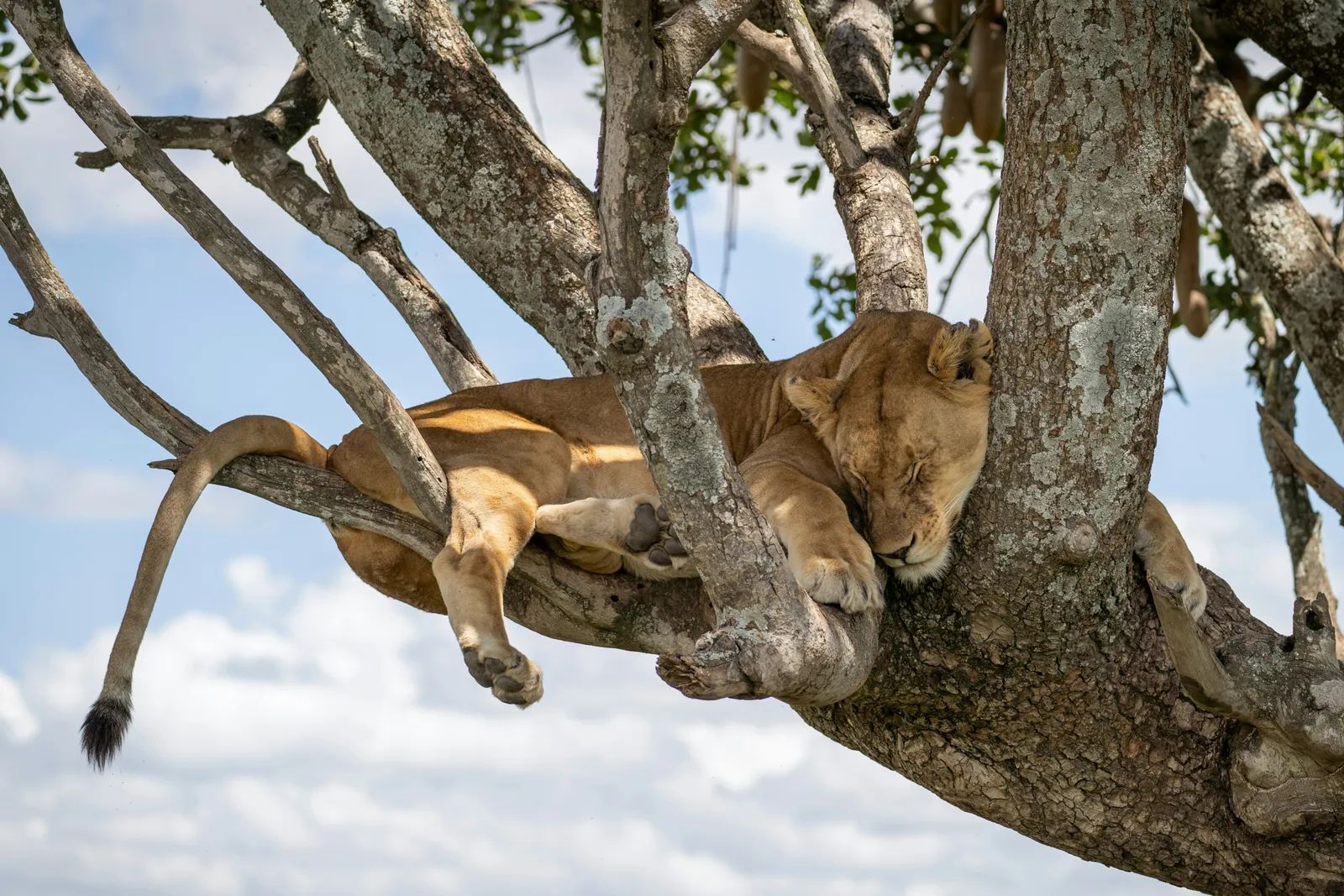
Uganda’s Queen Elizabeth National Park has long drawn visitors eager to glimpse its unusual tree-climbing lions, a behavior rarely seen elsewhere. The park’s southern Ishasha Sector, roughly 500 square kilometers in size, now falls under a new 10-year co-management agreement between the Uganda Wildlife Authority and the Wildlife Conservation Society. The arrangement aims to strengthen biodiversity efforts in an area where lion numbers have dropped sharply.
Agreement Sets Clear Division of Duties
The deal assigns the Wildlife Conservation Society responsibility for day-to-day biodiversity management, community outreach, and tourism development in Ishasha. The Uganda Wildlife Authority keeps full control over law enforcement and direct wildlife protection across the sector. Both organizations will jointly shape work plans and budgets, ensuring coordinated action on shared goals. This structure reflects a growing pattern of public-private partnerships across African protected areas. Officials expect the arrangement to improve efficiency without altering core government oversight of security matters. Implementation begins immediately under the decade-long timeline.
Lions Face Steep Decline in Historic Range
Ishasha’s lions once formed a reliable draw for safari travelers, yet their numbers have fallen to fewer than five individuals. Across the entire Queen Elizabeth National Park, the population dropped from around 400 in the late 1970s to just 39 by 2022. Without new animals brought in from other sites, recovery appears unlikely through natural reproduction alone. Several pressures have converged on the cats. Local herders sometimes clash with the predators, habitat shrinks under expanding settlement, and wire snares set for other species occasionally catch lions. These overlapping threats have reduced the sector’s appeal for both wildlife and tourism operators.
Stakeholders Prepare for Coordinated Action
The Wildlife Conservation Society’s Uganda country director, Simon Nampindo, emphasized that the two groups will collaborate closely on every major activity. “Across all pillars, WCS and UWA will work closely in the co-development and implementation of all activity workplans and budgets,” he stated. Local communities stand to gain from improved engagement programs, while tourism businesses may see new enterprise opportunities once management stabilizes. Park authorities retain the final say on enforcement, preserving the government’s traditional role in security.
Practical Steps Ahead for Ishasha Sector
The partnership covers roughly one-quarter of Queen Elizabeth’s total 1,978 square kilometers. Early priorities include mapping remaining lion habitat, strengthening anti-snare patrols, and exploring options for population supplementation. Tour operators and visitors can expect gradual improvements in guiding standards and community-linked experiences, though the core landscape and access rules remain unchanged. The 10-year horizon gives both organizations time to measure results and adjust tactics as conditions evolve. The agreement signals a measured response to long-standing conservation challenges in one of Uganda’s most distinctive wildlife areas. Success will depend on steady execution and continued cooperation between the partners.