Two government programs promise shorter lines at the airport, and they look almost the same on paper. Both last five years, both involve a background check, and both put you in a faster lane. The differences show up in where your trips end, what the fees add up to, and how long you’ll wait before you’re approved.
Fees and processing times have shifted a little since 2024, and early 2026 brought some disruption of its own. Here’s how the two programs compare right now.
What Each Program Actually Covers
TSA PreCheck is run by the Transportation Security Administration and applies to security screening at U.S. airports. Members keep their shoes, belt, and light jacket on, and don’t need to take laptops or TSA compliant liquids out of their carry on bags.[1] It works at more than 200 U.S. airports, according to one 2026 comparison[2].
Global Entry belongs to U.S. Customs and Border Protection and handles a different checkpoint. It allows expedited clearance for pre approved, low risk travelers when they arrive in the United States.[3] It also covers the first step, since Global Entry includes TSA PreCheck[4].
The Price Tags Side by Side

Global Entry costs $120 for five years. PreCheck costs $76.75 to $85 for five years depending on which of the three enrollment providers you use[4]. The gap is roughly $35 to $43 over the life of the membership.
The Global Entry number is fairly recent. As of October 1, 2024, the fee rose from $100 to $120, the first increase in 15 years, according to the agency.[5] PreCheck went the other way earlier, when it cut its price from $85 to $78 for a five year membership in 2022[5].
Cost Per Year, Kids and Credit Card Credits
Spread across five years, Global Entry works out to about $24 a year. PreCheck lands somewhere between $15 and $17 a year. That’s a difference of less than $10 annually for the extra customs benefit.
Families get a break on the CBP side. Since October 1, 2024, children under 18 are free when a parent or guardian is a member or has applied.[6] Many people also never pay the fee themselves, because many premium credit cards, including Amex Platinum and Chase Sapphire Reserve, reimburse it entirely[2]. Check your card’s terms first, since the rules vary by issuer.
Security Line Wait Times With PreCheck

TSA’s own claim is that about 99 percent of passengers wait less than 10 minutes[7] in PreCheck lanes. Independent data tells a similar story, though with smaller savings than you might expect. A spring 2026 study of more than 184,000 wait time observations at 41 major airports found the median traveler waited under 8 minutes.[8]
In that same dataset, PreCheck cut average security waits from 7.8 minutes to 4.9 minutes[8]. The real payoff comes on bad days. Peak periods like holidays and Monday mornings pushed standard lines to 30 to 45 minutes or more, while PreCheck stayed in the 5 to 10 minute range.[9]
Are PreCheck Lines Getting Longer?
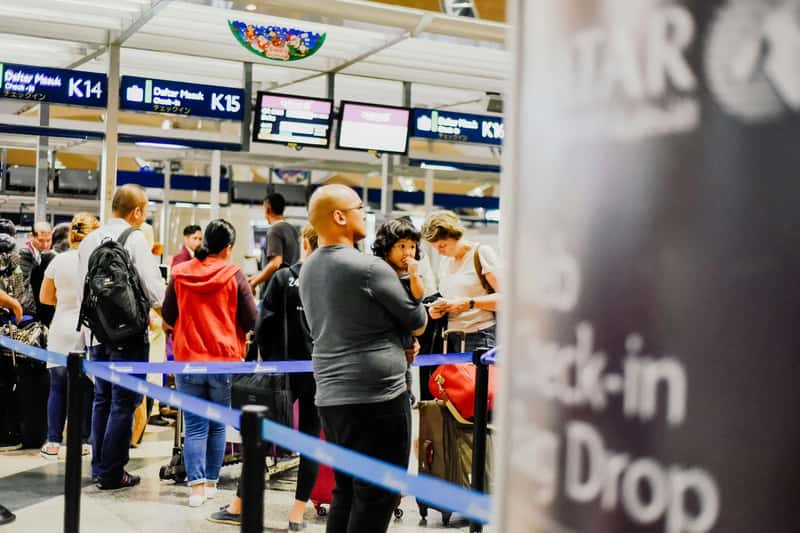
Popularity has a cost. TSA says PreCheck has 20 million pre screened members[10], while another 2026 guide cites more than 18 million enrolled in early 2026[1]. The exact figure depends on the source and the date.
One 2026 analysis noted that some airports are seeing longer PreCheck lines at peak times, with 10 to 15 minute waits more common at major hubs[9]. Still, a 10 minute PreCheck wait beats a 30 minute standard line, so the gap has narrowed but hasn’t closed.[9]
What Global Entry Does at Customs
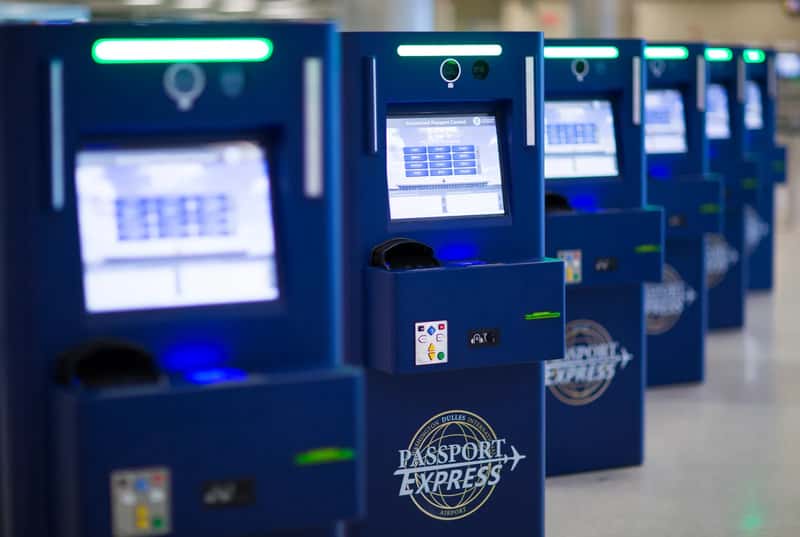
The customs benefit is where Global Entry earns its higher price. Members use automated kiosks instead of waiting for an officer, and they get a separate line. Kiosks are at 62 U.S. international airports and 15 preclearance facilities abroad.[11]
I couldn’t find a reliable, official average for how many minutes Global Entry saves, and the answer depends heavily on the airport and time of day. Return flights that land in clusters with other international arrivals tend to see the biggest difference. For anyone who has stood in a long passport line after a long flight, the appeal is easy to understand.
How Long Approval Takes
PreCheck is the quicker of the two. The online application takes about five minutes, followed by a 10 minute in person appointment.[1] Most applicants get their Known Traveler Number within three to five business days, though TSA says some cases can take up to 60 days.[1]
Global Entry takes patience. DHS says 80 percent of applications are approved for the applicant to schedule an interview within two weeks.[12] The full process runs longer: most applicants without criminal history receive membership within four to six months, and some applications take 12 months or longer.[12] If you have an international trip coming up, apply well ahead of time.
The Interview Step and How to Skip the Appointment Hunt

Both programs require an in person step with fingerprints. For Global Entry, the interview is the bottleneck. Appointment availability varies from weeks to months by location.[12]
There are workarounds. Enrollment on Departure and Enrollment on Arrival let you complete the interview without scheduling an appointment at an enrollment center.[3] With arrival enrollment, a CBP officer conducts the primary processing and the interview together, and collects biometrics[13] as you return from abroad. Some renewals now qualify for video interviews: CBP is running a pilot for renewals that need interviews, with remote sessions taking about 15 minutes.[14]
Who Should Pick PreCheck
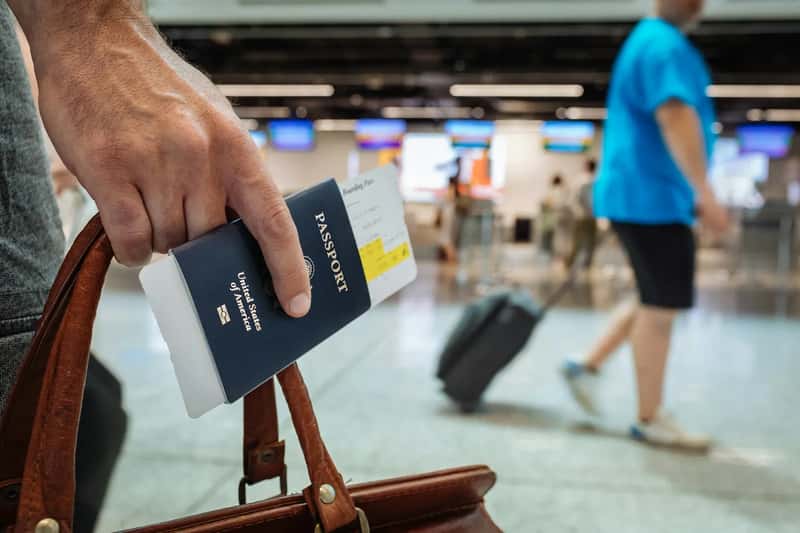
If you fly only within the U.S., PreCheck covers what you’ll actually use. At roughly $78 for five years, it handles domestic security screening.[15] It’s also cheaper, and the approval is faster.
Eligibility matters too. PreCheck is open to U.S. citizens, nationals and lawful permanent residents, while Global Entry also admits select foreign nationals.[16] If a passport isn’t in your plans in the next five years, PreCheck is the practical pick.
Who Should Pick Global Entry

Anyone who expects to leave the country, even once in five years, has a good case for Global Entry. The reasoning is simple: for about $8 more per year, you get PreCheck plus expedited re-entry.[15] Nearly 13 million people were enrolled as of 2025, according to one report[17].
It suits frequent flyers and occasional vacationers alike, as long as you can wait through the longer approval. The fee also can’t be refunded. CBP’s application page says the $120 fee is nonrefundable, even if your application is denied.[6]
What Happened in 2026 and Renewals
The year brought a rough patch. TSA experienced the longest wait times in its 24 year history during the 2026 partial government shutdown.[8] Global Entry services were suspended briefly and then fully restored in March 2026.[16]
Switching between programs isn’t automatic. You can’t directly upgrade from PreCheck to Global Entry and must complete a new application and interview.[18] Renewal costs differ as well: PreCheck online renewal is $70, while Global Entry is $120.[18]